Save 30–50% in Ottawa Kitchens by Preserving Your Layout

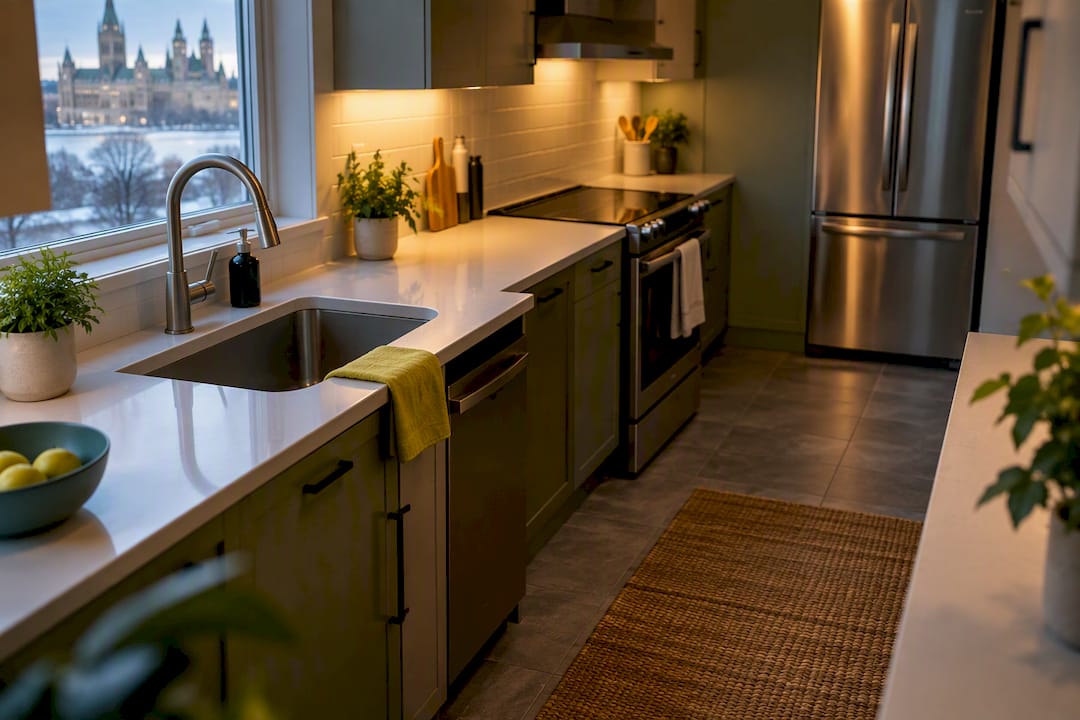
Keeping your existing cabinet layout and refinishing or repainting the cabinets typically costs far less than moving plumbing or replacing cabinets, because you avoid expensive trade work and permits. Refacing or painting a kitchen in the Ottawa area generally runs $2,500 to $8,500, a savings of roughly 30% to 50% versus full replacement, and can wrap up in about 10 days instead of a month or more.
TL;DR:
Keeping the existing kitchen layout prevents costly plumbing, gas, and electrical relocations, which can add thousands of dollars to a full remodel.
Refacing or painting cabinets in Ottawa costs between $2,500 and $8,500 and can be completed in about 10 days, saving up to 50% compared to full replacement.
A layout-preserving refinishing avoids permits, demolition, and trade delays, making the project faster, cheaper, and less disruptive overall.
When the cabinet carcasses are sound and the work triangle is functional, refinishing offers a practical, cost-effective way to upgrade appearance without compromising utility.
Maintaining the layout supports long-term durability and environmental sustainability by reducing material waste and future repair risks.
Table of Contents
Why Layout Preservation Saves Money for Ottawa Homeowners
The math is not complicated once you see where the money actually goes in a kitchen project. A full remodel that moves the sink, range, or refrigerator triggers plumbing, gas line, and electrical work, plus the permits and inspections that come with it. None of that touches your cabinets directly, but it drives the bulk of the invoice. Keep the sink, range, and fridge exactly where they are, and you sidestep relocating plumbing, gas, and electrical lines entirely.
That is the core mechanism behind layout preservation. You are not just saving on cabinets. You are saving on every trade that would otherwise need to open walls, reroute lines, and pull permits to support a new floor plan. For an average Ottawa kitchen with 20 to 30 cabinet doors and drawers, refacing or repainting typically lands in that $2,500 to $8,500 range. A comparable full replacement with reconfigured plumbing and electrical routinely climbs well beyond that, once you add demolition, new carpentry, and the trades needed to move utilities.
By the numbers: refacing or painting saves an estimated 30% to 50% compared with full cabinet replacement, according to RenoQuotes, and that gap widens further once you factor in the cost of moving even one major utility line.
Here is what typically separates a layout-preserving refresh from a full-scope remodel:
Visible finishes (paint, hardware, some counters) drive the cost of refinishing, and those are the items homeowners see and touch every day.
Hidden trade costs (plumbing relocation, gas line work, rewiring, permit fees) drive the cost of a full remodel, and those dollars disappear behind the walls.
Demolition and disposal add cost to replacement projects but do not exist at all when you keep the existing cabinet boxes.
For a kitchen with a dozen upper cabinets and a run of lower cabinets and drawers, that difference alone can mean thousands of dollars staying in your pocket instead of going to a plumber or an electrician you never see again.
When Should You Keep Your Kitchen Layout?
Not every kitchen deserves a straight refinish. Before you commit, run through a short functional check, because the decision hinges on how the space works today, not just how it looks.
Test the work triangle. If the distance between your sink, range, and refrigerator gives you roughly 42 inches (1,070 mm) of clearance to move comfortably, the layout is doing its job. Maytag’s own work triangle guidance notes that when the triangle functions well, moving it usually adds cost without adding much real benefit.
Check the carcass. Solid wood boxes with no water damage or structural sag are strong candidates for painting. Boxes with swollen particleboard, peeling laminate, or warped doors may need refacing instead, and severely damaged boxes may call for partial replacement.
Weigh storage against workflow. If the complaint is “I need more storage,” interior organizers, pull-out drawers, and better hardware often solve that without touching a single wall.
Consider a single targeted move. Sometimes one cabinet run needs to shift a few inches for a new dishwasher or fridge. That is a partial reconfigure, not a full layout change, and it costs far less than reworking the whole room.
Pro Tip: Before you assume you need more cabinets, ask whether you need better organization inside the ones you already have. A $200 pull-out organizer often solves the same problem as a $5,000 wall move.
The Trades and Permits You Avoid by Keeping Your Layout
Certain changes trigger cascading costs almost every time. Moving a sink means rerouting drain and supply lines. Relocating a gas range means a licensed gas fitter and a permit. Adding outlets or moving a range hood means an electrician and, often, a building permit inspection. Each of these brings its own contractor, its own schedule, and its own line item.
Layout preservation cuts that list down to almost nothing. You still hire cabinet specialists, but you are not coordinating a plumber, an electrician, and a general contractor around each other’s schedules. That sequencing matters more than most homeowners realize.
Fewer overlapping trades means fewer delays waiting for one crew to finish before the next can start.
Shorter lead times on materials, since you are not waiting on custom cabinet boxes built to a new footprint.
Lower contingency budgets, since hidden-condition surprises behind walls (old wiring, unexpected framing) simply do not come into play.
As a rule of thumb, moving a sink or range can add thousands of dollars in plumbing, gas, and permit costs alone, on top of the cabinet work itself. Replacing cabinet boxes while keeping their existing footprint skips nearly all of that, which is exactly what a layout-preserving renovation avoids.
What a 10-Day Layout-Preserving Refinish Looks Like
A refacing or repainting project that keeps your existing layout follows a tight, predictable schedule. Full replacements with reconfigured plumbing routinely stretch past four weeks once permits, custom cabinet lead times, and multiple trades enter the picture. Local guidance for the Ottawa market puts a straightforward cabinet refinishing project at one to two weeks, depending on kitchen size and carcass condition.
Assessment and measuring. A specialist inspects every carcass, door, and drawer front, and confirms exact dimensions since old walls are rarely perfectly square.
Prep work. Doors and drawers come off, surfaces are cleaned, sanded, and primed to accept a durable finish.
Spray and finish. Doors and boxes get their coats in a controlled environment, away from kitchen dust and foot traffic.
Reassembly. Hardware, doors, and drawers go back on with any updated pulls or hinges.
Quality check. A final walkthrough confirms alignment, finish quality, and function before the crew leaves.
Because your sink, range, and fridge never move, you can usually keep using parts of your kitchen throughout the process, which is something a gutted, replumbed kitchen simply cannot offer you.
What to Ask Before Hiring an Ottawa Cabinet Painter
A low quote often hides missing steps that can cost you more later. Before signing anything, ask a potential contractor these questions:
Will you inspect the carcass condition before quoting, or just the doors?
What primer and paint system do you use, and is it compatible with my cabinet material (wood, thermofoil, laminate)?
Can I see a physical finish sample before work begins?
How do you control dust and overspray in an occupied home?
What is your realistic timeline, and what warranty backs the work?
By the numbers: a properly scoped Ottawa refinishing project typically runs $2,500 to $8,500 and finishes in roughly 10 days when the layout stays untouched. A contractor quoting far below that range, with no mention of prep work or warranty, is usually cutting corners you will pay for down the road.
A local cabinet painting company may focus specifically on transforming existing kitchen cabinets, with meticulous prep and premium paint applied for a high-end, durable finish, without the expense of full replacement. Such cabinet refinishing processes often run on a detailed timeline built to preserve existing layouts while minimizing household disruption, and may be backed by warranties on cabinet refinishing work. Missing warranty terms, no willingness to show finish samples, and vague answers about measuring or sequencing are red flags worth walking away from.
Does Keeping Your Cabinet Layout Affect Resale Value?
Buyers and appraisers respond to what they see and touch first: finish quality, hardware, and how the kitchen functions during a walkthrough. A well-executed refinish with a smooth, factory-grade finish can read as a recent renovation, even though the layout underneath never changed.
Appraisers weigh functional layout heavily, and a kitchen with a working triangle rarely gets penalized for not having an open-concept reconfiguration. What actually hurts resale value is a dated, chipped, or discolored finish, or hardware that looks worn. Spending your renovation budget on premium paint, updated hardware, and durable counters, instead of on moving walls, often produces a stronger showing during a walkthrough than a reconfigured layout that ate most of the budget on hidden trade work.
There is a practical upside here too. Buyers touring a home cannot verify what plumbing or electrical work happened behind the walls, but they can absolutely see whether cabinet doors close evenly and finishes look fresh. Reallocating funds from demolition and utility relocation toward visible upgrades like refreshed cabinet finishes tends to move the needle more per dollar spent than a wall move that buyers cannot see or verify.
Long-Term Maintenance Costs of Keeping Your Layout
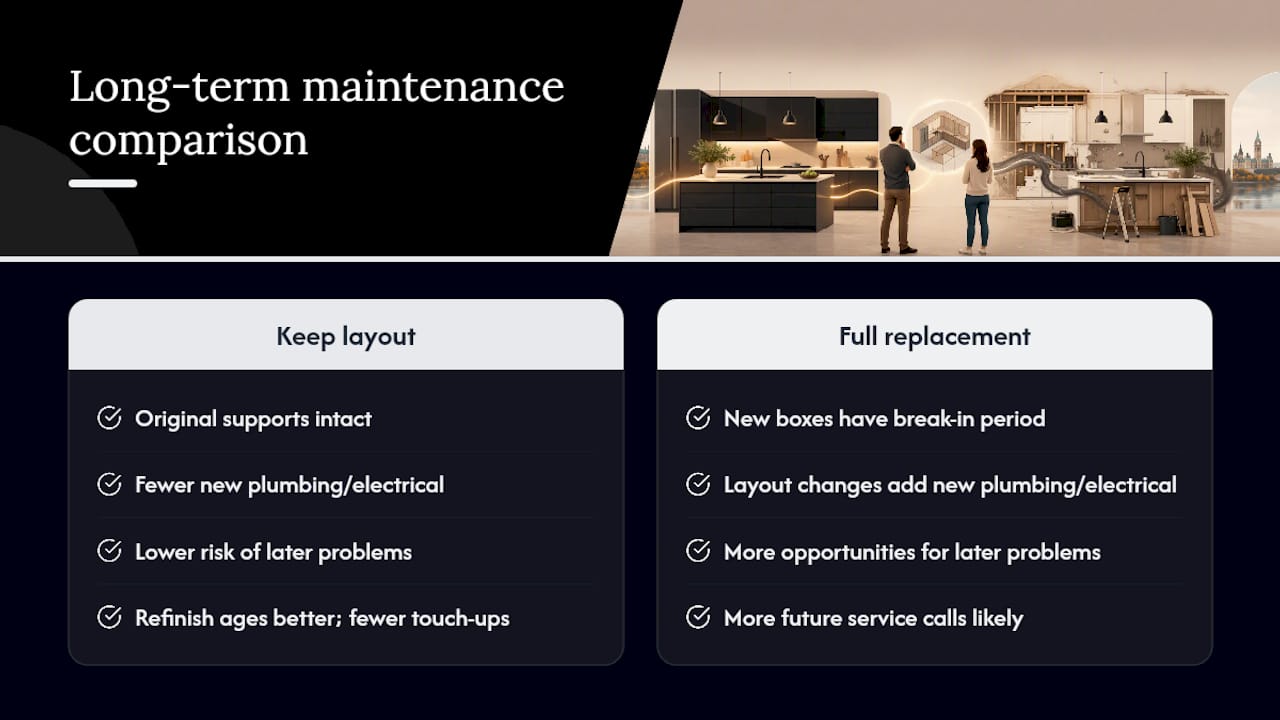
Cabinets that stay in their original position keep their original support structure, water lines, and electrical runs intact, which means fewer opportunities for something to go wrong later. Every wall you open during a reconfiguration is a wall that could develop new problems, from settling drywall to minor plumbing leaks that only show up months after the crew leaves.
A quality refinish also tends to age better than people expect. A properly prepped and sprayed finish resists chipping and yellowing far longer than a quick brush-on repaint, which means fewer touch-ups over the years. Because the carcasses themselves are inspected and, where needed, repaired during the refinishing process, you are not just covering up problems with paint. You are addressing loose hinges, worn drawer slides, and minor structural issues while everything is already apart.
Compare that to a full replacement, where new cabinet boxes come with their own break-in period, and any layout changes introduce new plumbing and electrical connections that need time to prove themselves reliable. Fewer new connections generally mean fewer future service calls. If a single door does take damage down the road, a targeted thermofoil cabinet repair fixes just that piece, rather than forcing a rethink of the entire kitchen.
The Environmental Upside of Refinishing Over Replacing
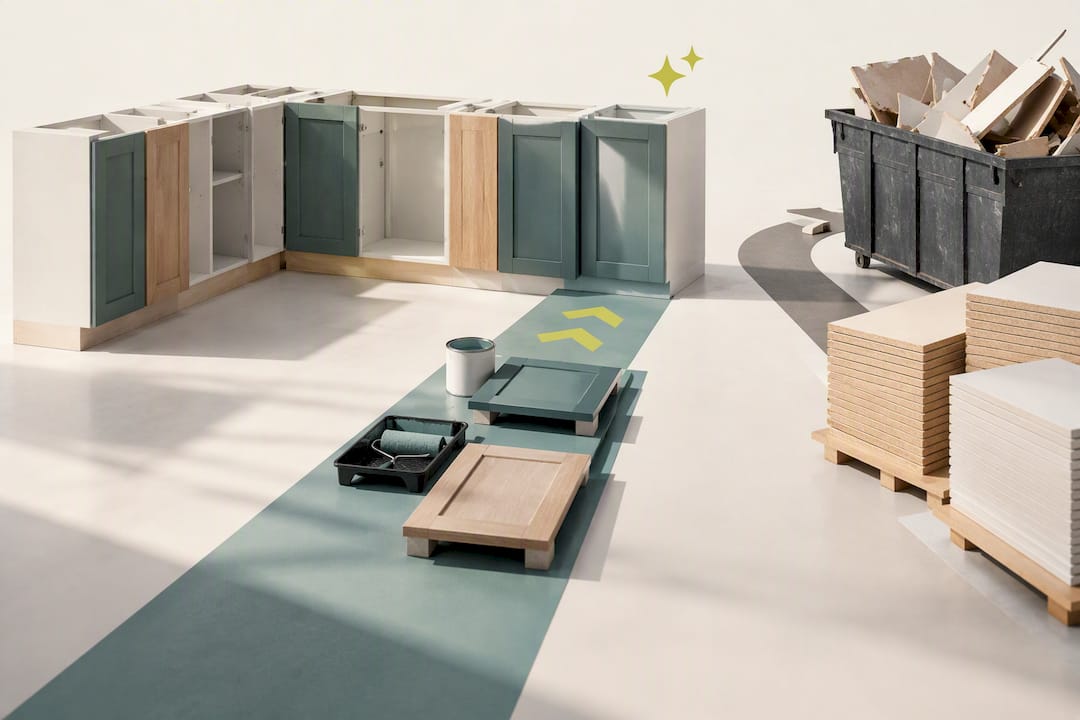
Keeping your existing cabinet boxes and refinishing them instead of ripping them out is a more sustainable choice, because it reuses the material you already have rather than sending usable cabinetry to landfill. That is not a minor footnote. Cabinet boxes are bulky, and demolition debris from a full kitchen gut job adds up fast in truckloads and landfill space.
There is a cost dimension hiding inside that sustainability story too. Disposal fees, dumpster rentals, and the labor hours spent tearing out and hauling away old cabinets all show up on a replacement invoice. Skip the demolition, and you skip those charges along with the environmental cost. New cabinet boxes also require fresh lumber, particleboard, or thermofoil production, along with the transportation footprint that comes with shipping large, heavy items to your home.
Refinishing uses a fraction of the raw material a full replacement demands, since the boxes, frames, and often the doors themselves get a second life instead of a trip to the curb. For homeowners weighing cost against environmental impact, this is one of the rare renovation choices where both incentives point in the same direction.
A Homeowner Perspective: Where the Savings Actually Go
The real win of keeping your layout is not the number on the invoice. It is what that saved money buys instead. Homeowners who skip the demolition and utility work often put that budget toward quartz counters, better hardware, or interior organizers, upgrades that get touched and noticed every single day. A wall move rarely delivers that kind of daily payoff. Weigh both the emotional lift and the financial return before deciding, and you will usually find the layout you already have is worth keeping.
— Ottawa
Get a Local Quote for Cabinet Refinishing in Ottawa
Some local services offer practical alternatives to full kitchen gut renovations for homeowners who want updates without touching plumbing, gas lines, or permits. These services specialize in transforming existing cabinets with meticulous prep processes and premium spray-applied paint, delivering smooth, factory-grade finishes while keeping current layouts fully intact. Projects often follow detailed timelines designed to limit household disruption and may carry warranties for lasting peace of mind.
Getting started is simple. An on-site or virtual estimate walks through your cabinet condition, color and finish options, and hardware choices, so you know the full scope before any work begins. If you are ready to see what a refresh could look like in your own kitchen, request a quote through Ottawa Cabinet Painting’s spray painting quote page and get a clear plan built around the layout you already have.
Sources
FAQ
Does layout preservation actually reduce renovation costs?
Yes. Keeping your sink, range, and fridge in place avoids relocating plumbing, gas, and electrical lines, which are the biggest cost drivers in a kitchen remodel. Refacing or repainting cabinets with the layout intact typically costs $2,500 to $8,500, saving 30% to 50% versus full replacement.
How long does a layout-preserving cabinet refinish take?
A refinishing project that keeps the existing layout generally takes about 10 days from prep through reassembly. Full replacements with reconfigured plumbing or electrical often stretch past four weeks once permits and custom cabinet lead times are factored in.
When should I change my kitchen layout instead of keeping it?
Change the layout if your work triangle lacks roughly 42 inches (1,070 mm) of clearance, or if the cabinet carcasses show water damage or structural failure that painting cannot fix. Otherwise, interior organizers and a quality refinish usually solve storage and appearance concerns for far less money.
What does Ottawa Cabinet Painting charge for cabinet work?
Pricing for full cabinet painting and refinishing is available on request through a quote request, but published starting prices exist for repair work: Single Cabinet Door Repair starts from $50 per door, and Full Kitchen Repair starts from $500.
Does keeping the cabinet layout hurt home resale value?
No. Appraisers and buyers respond more to visible finish quality and function than to whether walls were moved. A well-executed refinish with durable hardware and finishes often reads as a recent renovation without the cost of a full layout change.
Recommended
Comments