Ottawa White Cabinet Paint: Pro Colors That Last to Year 5

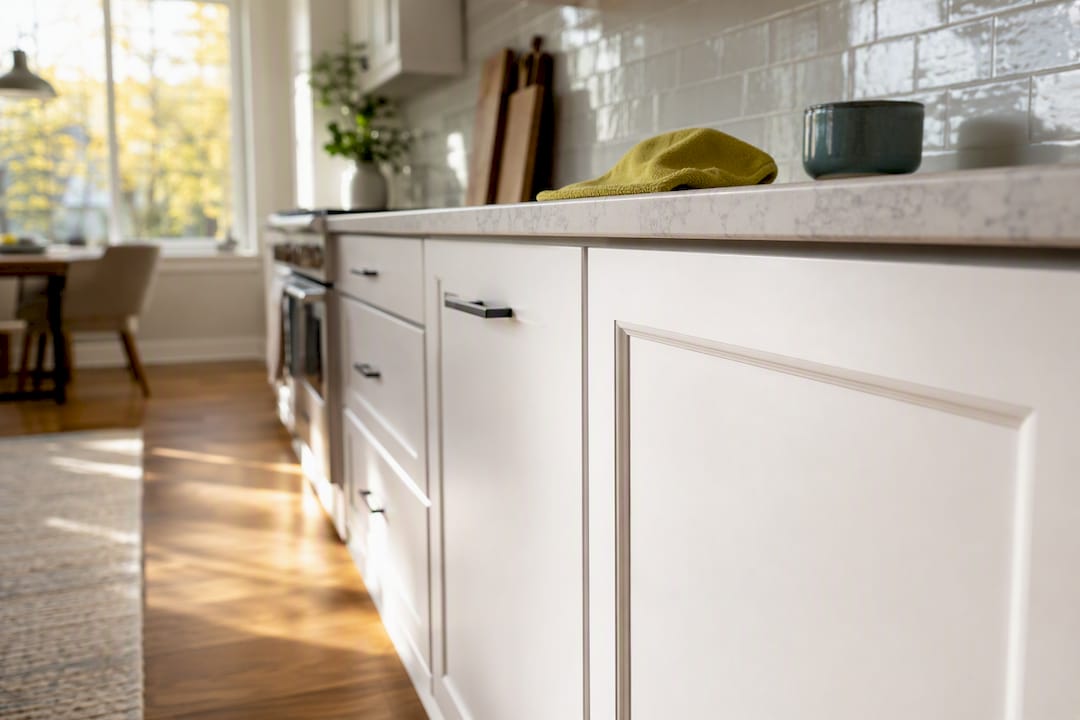
For most Ottawa kitchens, the safest lead colors are Benjamin Moore White Dove for warmth and Sherwin-Williams Pure White or Alabaster for a cleaner, slightly cooler look. The finish that actually holds up under daily use is a waterborne alkyd or urethane-reinforced enamel in satin, not standard wall paint. Lighting and countertop tone will shift which of these reads best in your kitchen, so treat this list as your starting shortlist, not the final answer.
TL;DR:
Cabinet paint durability depends on using professional-grade coatings like waterborne alkyd or urethane-enforced enamels, which resist chipping and yellowing over several years.
White paint colors vary in undertone and brightness, with White Dove, Simply White, and Chantilly Lace best suited for different lighting conditions and countertop materials.
Light reflectance value affects how white appears in different rooms; higher LRVs make a space seem brighter but can feel sterile in large or sunny kitchens.
Proper prep, including cleaning, repairing, deglazing, and priming, is crucial for lasting, high-quality cabinet finishes, especially when applying spray or professional coatings.
Routine maintenance with gentle cleaning prevents fingerprints and grease buildup, prolonging the look and integrity of white cabinets over time.
Table of Contents
Best White Cabinet Paint Colors and Where Each One Works
Choosing among white paints is harder than it sounds because “white” is really a spectrum of undertones. Some lean yellow, some lean blue or gray, and a handful sit close to neutral. Getting this wrong is why so many homeowners end up with cabinets that look slightly off under their own kitchen lights, even though the color looked perfect on the paint chip at the store.
Here’s a working shortlist, drawn from the whites Benjamin Moore and other manufacturers most often recommend for cabinets, along with the undertone and setting where each performs best:
Benjamin Moore White Dove: A warm white with a soft cream undertone. It works well in kitchens with wood floors, warm-toned quartz, or brass hardware, and it rarely looks stark even in dim rooms.
Benjamin Moore Simply White: Slightly brighter and cleaner than White Dove, with just enough warmth to avoid feeling clinical. A strong pick for kitchens that get decent natural light and want a fresh, updated look without going cold.
Benjamin Moore Chantilly Lace: One of the brightest true whites on the market, with minimal undertone. It suits kitchens with abundant natural light and crisp white or marble-look countertops, but it can look harsh in a north-facing room with little sun.
Sherwin-Williams Alabaster: A warm, low-contrast white that has become a default choice for modern farmhouse and transitional kitchens. It pairs nicely with warm gray or beige quartz and wood tones.
Sherwin-Williams Pure White: Closer to neutral than Alabaster, with just a touch of warmth. It’s a dependable choice when you want brightness without the starkness of a true cool white.
Sherwin-Williams Snowbound: A soft, slightly gray white that reads calm rather than bright. It works especially well against cooler countertop tones like white or gray quartz and blue-gray backsplash tile.
Brightness matters as much as undertone. Paint professionals describe a color’s reflectivity using Light Reflectance Value, or LRV, on a scale from 0 (absolute black) to 100 (pure white). Most cabinet whites fall somewhere between the low 70s and mid 80s on that scale. A higher LRV bounces more light around the room, which is useful in a windowless galley kitchen but can feel sterile in a large, sunny space. Checking a color’s LRV on the manufacturer’s page before you buy a sample is a five-minute step that saves a repaint.
Countertop and backsplash materials push these decisions further. Warm quartz or butcher block tends to flatter White Dove or Alabaster, while cool gray or white marble looks sharper next to Pure White or Snowbound. If your kitchen mixes materials, warm oak floors under gray quartz counters, for example, a mid-warmth neutral like Simply White often bridges the gap better than a color at either extreme.
How Light and Surroundings Change the Way White Looks
Undertone is the faint color hiding inside a “white” paint, and LRV is how much light it reflects. Both interact directly with your kitchen’s exposure and fixtures, which is why the same can of paint looks different in two houses.
North-facing kitchens receive cooler, bluer natural light for most of the day, which can make a neutral or cool white look flat or slightly gray. Warmer whites like White Dove or Alabaster usually correct for this.
South- and west-facing kitchens get warmer light, especially in the afternoon, and can push an already-warm white into looking yellow or dated. A cleaner white like Pure White or Chantilly Lace often reads better here.
Artificial lighting matters just as much as sun exposure. Warm LED or incandescent bulbs (around 2700K) amplify a paint’s warm undertones, while cool LEDs (4000K and up) will make the same color look crisper and slightly blue.
As a rule of thumb: pair cooler counters and cooler bulbs with a warmer white, pair warm wood tones and warm bulbs with a cleaner white, and always test your final pick against the actual countertop sample rather than a showroom display, since color perception shifts noticeably next to different stone and quartz tones.
Which Paint Types Actually Hold Up on Cabinets
Color is only half the decision. The paint chemistry underneath it determines whether your cabinets still look sharp in three years or start showing chips and yellowing at the hinges within months.
Standard wall paint, technically a “1K” or single-component system, was never built for the abuse a cabinet door takes every day: slammed shut, gripped with wet or greasy hands, wiped down repeatedly. It lacks the cross-linking chemistry that lets professional coatings cure into a genuinely hard shell, so it stays comparatively soft and prone to scuffing and blocking (that sticky, tacky feeling when a freshly painted surface touches itself). Professional-grade cabinet enamels or shop-applied 2K systems hold up considerably better over time.
That’s why professional painters lean on a different category of product entirely:
Waterborne alkyd enamels combine oil-paint hardness and leveling with the low odor and easy cleanup of a water-based product, making them a practical, popular choice for on-site cabinet work, according to pro buyer guidance from Aryana Painters.
Urethane-reinforced trim enamels, such as Sherwin-Williams Emerald Urethane Trim Enamel, cure to a noticeably harder, smoother finish than standard enamel.
Benjamin Moore Advance gets frequent praise from painters for its self-leveling properties and color flexibility across sheens.
2K polyurethane or catalyzed lacquer systems deliver the highest durability available, but they’re typically shop-applied by professionals using spray equipment and proper ventilation, not something most DIYers can replicate in a garage.
Pro-grade coatings cost more upfront than a can of wall paint, but the trade-off is real: you’re paying for a coating that resists chipping, staining, and yellowing at contact points like handles and edges for years instead of months.
Choosing a Sheen and Understanding How Prep Changes the Outcome
Satin is the sheen most professionals land on for cabinets, and for good reason. It hides minor imperfections in the wood or old finish while still wiping clean easily, striking a better balance than either end of the spectrum:
Satin: Forgiving of small surface flaws, easy to clean, and the most commonly recommended sheen for everyday kitchens.
Semi-gloss: More durable and slightly easier to scrub, but it reflects light in a way that shows every sanding mark or brush stroke underneath.
High-gloss: The most durable and dramatic option, but it demands near-perfect prep since it magnifies every imperfection in the substrate.
The catch is that higher sheens don’t forgive sloppy prep. Satin can mask a slightly uneven surface; semi-gloss and high-gloss will broadcast it under kitchen lighting.
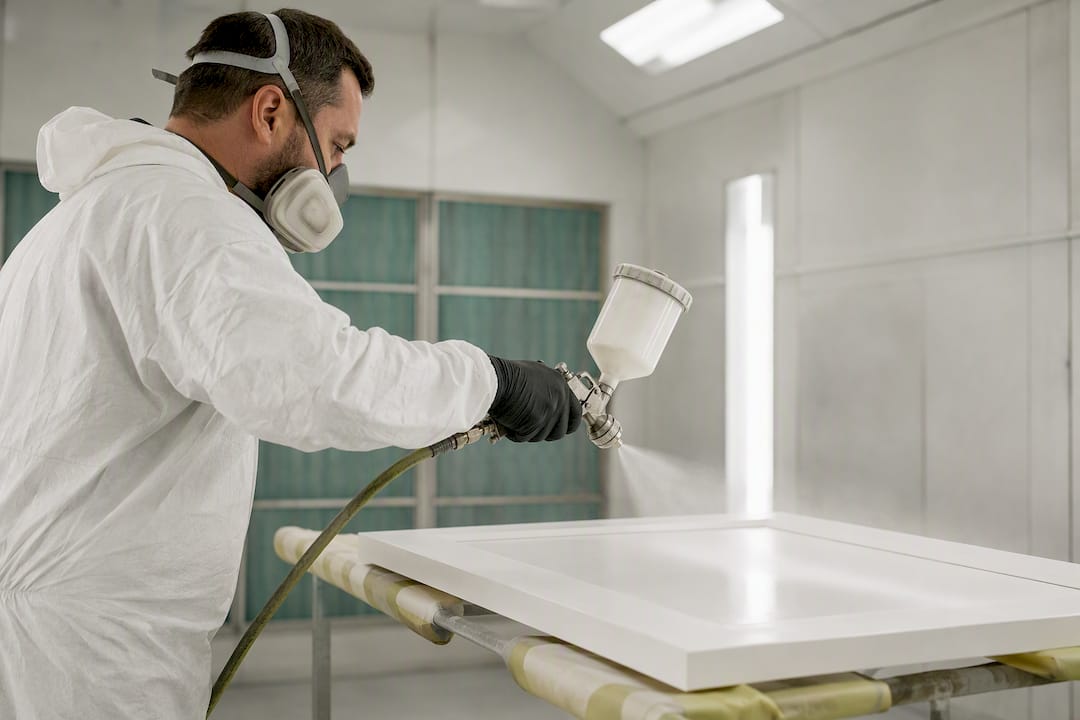
Pro Tip: Brush and roller marks almost always trace back to working paint too long after it starts to set up. Spraying eliminates this risk entirely, which is one reason professional shops default to spray application for cabinet doors.
The Prep and Application Sequence That Determines Longevity
Paint quality only gets you halfway there. The steps before the first coat goes on are what actually decide whether the finish lasts.
Clean and degrease every surface, since kitchen cabinets accumulate a thin film of cooking oil that will stop paint from bonding properly.
Repair dents, dings, and gouges with wood filler, then let it cure fully before sanding.
Sand or deglaze to knock down the old sheen and give the new coating something to grip.
Prime with a bonding or stain-blocking primer suited to the substrate, especially over stained wood or laminate.
Apply thin coats, letting each one hit its full recommended dry time before the next, rather than rushing thick coats that trap solvent and never fully harden.
Spraying produces the smoothest, most factory-like result and is the standard for detached cabinet doors; brushing and rolling can work for face frames but requires more skill to avoid buildup at the edges. Handled correctly, a professional-grade cabinet finish should hold its color and hardness for years of daily use with only routine cleaning.
What a Professional Ottawa Cabinet Process Looks Like
Watching a can of the right paint show up at your door doesn’t guarantee a factory-grade result. Application technique and prep discipline account for most of the difference between a DIY repaint and a professional one.
A professional cabinet painting company builds every project around a meticulous process rather than a rushed weekend job:
Thorough prep work, including cleaning, repair, and deglossing, before any primer or paint touches a cabinet door.
Premium paint application using controlled spray techniques for a smooth, factory-finished look.
A typical project timeline structured to minimize disruption to your kitchen instead of leaving it unusable for weeks.
A warranty backing the workmanship, so the finish is expected to perform, not just look good on installation day.
DIY makes sense for a single scuffed door or a small touch-up. A full kitchen aiming for a lasting, even, factory-grade result is where hiring a specialist consistently pays off, since durability comes down to controlled spray equipment and cured coatings that are difficult to replicate with a brush at home.
Keeping White Cabinets Looking New Years Later
White shows everything, grease fingerprints, coffee splashes, the faint haze that builds up near the stove, so maintenance matters more here than with a darker color. The good news is that a properly cured, pro-grade finish is genuinely easy to keep clean if you follow a few habits.
Wipe cabinets down weekly with a soft microfiber cloth and a mild dish soap solution. Avoid anything abrasive: no scouring pads, no melamine sponges, and no cleaners containing bleach or ammonia, since these can dull the sheen and, over years, cause slight yellowing or discoloration around handles.
Grease buildup near the stove and range hood needs more frequent attention than the rest of the kitchen. Left too long, cooking oil residue bonds to the paint film and becomes much harder to remove without scrubbing aggressively, which risks burnishing the sheen unevenly. A degreasing spray formulated for painted surfaces, applied and wiped promptly, keeps this from becoming a problem.
Watch high-contact points closely: handle areas, the edge of the door where fingers grip it, and the bottom corners kids tend to kick. These wear faster than flat panel surfaces. Touch-up paint kept on hand from your original project (ask your painter to leave you a labeled sample can) lets you address small chips before they spread or attract more grime.
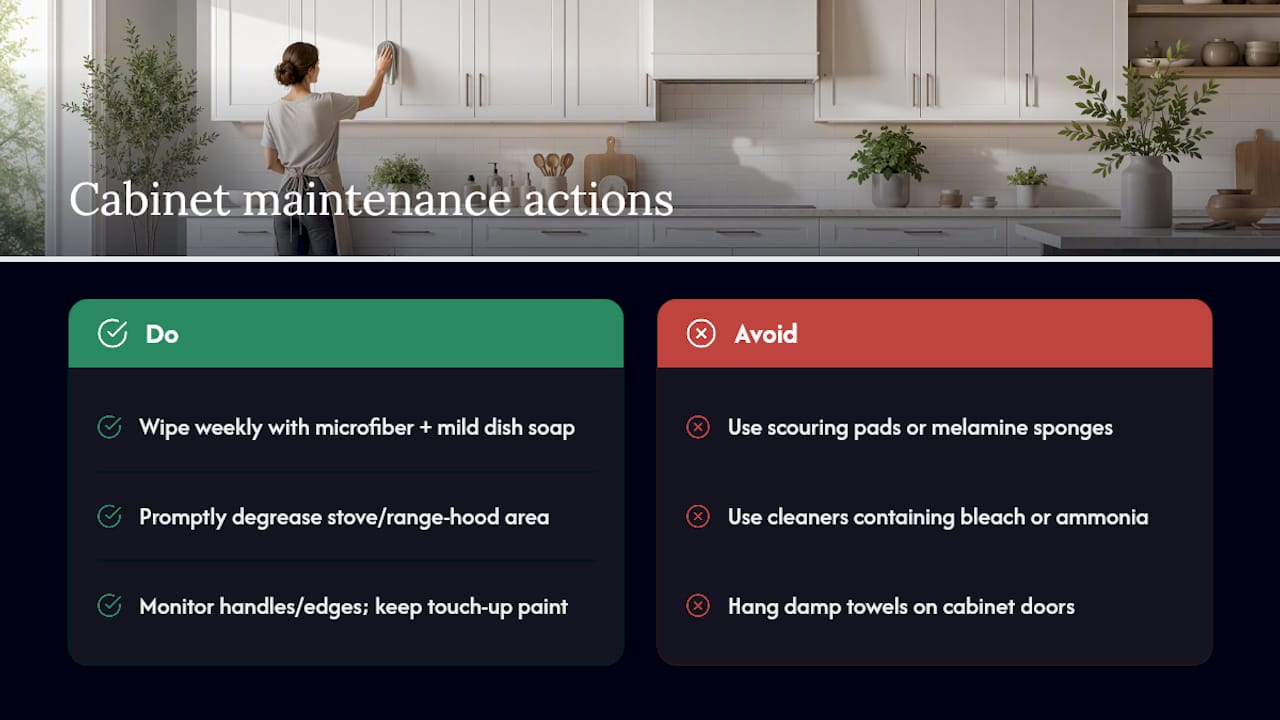
Avoid hanging damp dish towels directly on cabinet doors for extended periods. Trapped moisture against a painted surface, especially near a sink or dishwasher, is one of the more common causes of premature softening or peeling at edges.
Why Most Cabinet Color Advice Skips the Part That Actually Matters
Most cabinet color guides spend their entire word count on which white looks best and almost none on why it stops looking best after eighteen months. That’s backwards. The research is fairly consistent: retail wall paint lacks the cross-linking hardness of professional coatings, and that gap shows up as chipped edges and yellowed handles long before anyone reconsiders the color choice.
The color decision genuinely matters, and testing samples against your actual counters under your actual lighting is worth the extra week it takes. But readers should prioritize paint chemistry and application method first, then treat color as the layer built on top of that foundation. A gorgeous shade of White Dove applied in a soft 1K wall paint will look tired within a year regardless of how well it matched your quartz.
If there’s one habit worth adopting from this whole guide, it’s refusing to separate the color question from the durability question. They were never two different decisions.
— Ottawa
Ready for a White Cabinet Finish That Actually Lasts
Picking the right white is only step one. The coating underneath it, and who applies it, determines whether your kitchen still looks sharp in year five. This service is built around that second half of the equation: dedicated cabinet specialists working out of a controlled spray shop, not a general painting crew juggling multiple jobs.
Every project follows a meticulous prep and premium application process, backed by a warranty and a timeline designed to keep your kitchen usable throughout. If you’ve settled on a shade from this list, or you’re still weighing White Dove against Alabaster against your own countertops, the next step is simple: request a quote through Ottawacabinetpainting’s Ottawa Kitchen Cabinet Refinishing page and get a color consult built around your actual lighting and layout, not a showroom guess.
Where to Check the Technical Specs
For exact LRV numbers, undertone charts, and product data sheets before you buy, go straight to the source rather than a secondhand summary:
Benjamin Moore’s white cabinet color pages for LRV and pairing guidance
Pro Coat Property Services’ painter recommendations for product-level comparisons
Paint2Decor’s coating durability breakdown for 2K and epoxy system specifics
Sources
FAQ
What Paint Do Professionals Use on Kitchen Cabinets?
Most professional painters reach for waterborne alkyd or urethane-reinforced trim enamels, such as Sherwin-Williams Emerald Urethane Trim Enamel or Benjamin Moore Advance, rather than standard wall paint. For the highest-durability jobs, some shops use 2K polyurethane or catalyzed lacquer systems, which require spray equipment and are typically applied in a controlled shop setting.
Should White Cabinets Be Semi-Gloss or Satin?
Satin is the more common recommendation because it hides small surface imperfections while still cleaning up easily, and professional guides consistently point to it as the practical default for everyday kitchens. Semi-gloss offers slightly more durability and wipeability but shows prep flaws more readily under kitchen lighting.
Which White Paint Color Works Best for Most Kitchens?
Benjamin Moore White Dove is one of the safest choices because its warm undertone flatters most wood tones and warm countertops without looking dated. If your kitchen leans cooler, with gray or white quartz, Sherwin-Williams Pure White or Snowbound tends to look cleaner in the same light.
How Long Does a Professionally Painted White Cabinet Finish Last?
A properly prepped and sprayed professional finish should hold its color and hardness for years of daily use with routine cleaning. This company backs its cabinet painting work with a warranty on workmanship.
Is It Worth Hiring a Pro Instead of Painting Cabinets Myself?
For a single scuffed door, DIY touch-up paint is usually enough. For a full kitchen where you want an even, factory-grade result that holds up over years, professional spray application and controlled prep consistently outperform a brushed or rolled DIY job, which is where Ottawacabinetpainting’s process tends to pay for itself.
Recommended
Comments