12 Ottawa Kitchen Drawer Ideas: Fast DIY Wins and When to Call a Pro

For most Ottawa homeowners, converting key lower cabinets to deep drawers, adding tailored dividers, and installing one or two narrow pullouts delivers the biggest daily improvement in a kitchen. Organize each drawer around a real routine, whether that’s the morning coffee ritual or the evening prep rush, not around what looks good in a photo. This article, from the team at Ottawa Cabinet Painting, breaks down exactly where to start.
TL;DR:
Focusing on deep drawers, narrow pullouts, and customized dividers improves daily kitchen organization more than superficial upgrades.
Match drawer contents to their depth, with shallow drawers for utensils, mid-depth for plates, and deep drawers for pots or pans to prevent clutter.
Proper measurement of cabinet openings and choosing the right slides are critical to ensure new organizers fit and function well.
DIY upgrades like dividers, liners, and pegboard inserts are cost-effective but cannot fix structural or finish damage, which may require refinishing.
Professional cabinet refinishing can refresh kitchen appearance and reconfigure drawers within ten days, complementing organizational improvements.
Table of Contents
Kitchen Drawers Ideas That Make the Biggest Difference
Some upgrades take twenty minutes. Others take a weekend. Here’s how they rank by effort versus payoff, starting with the fastest wins.
Add a cutlery divider tray. Bamboo or plastic trays fit most shallow drawers for under $30 and solve the single messiest drawer in any kitchen.
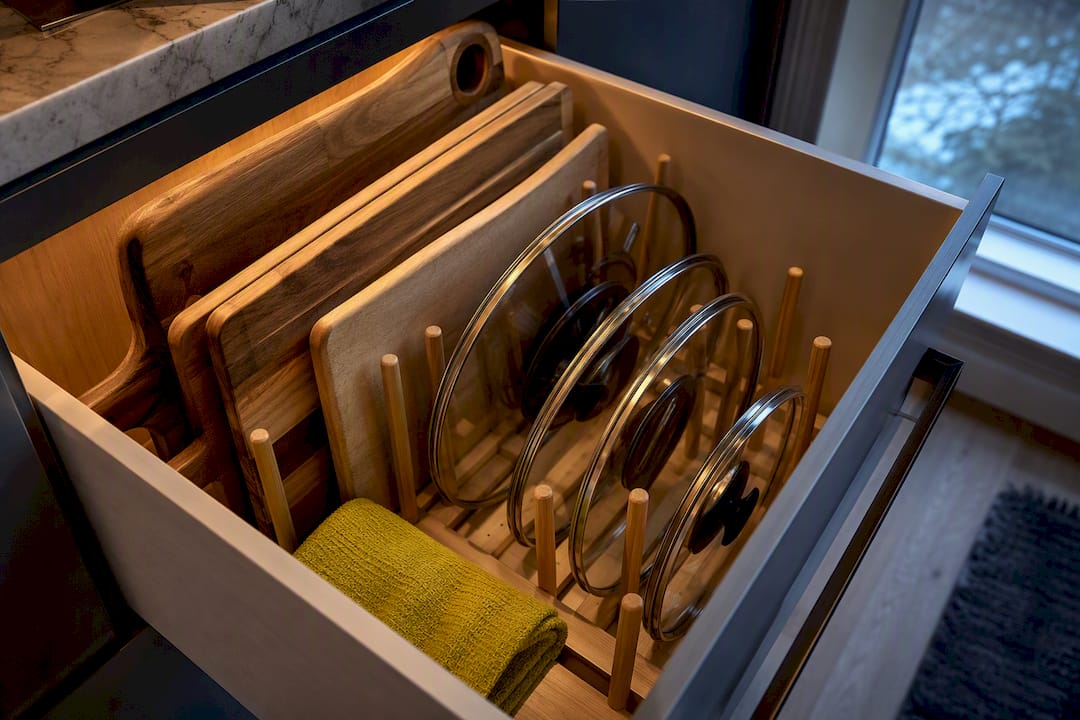
Install a peg-and-slot system for pots and lids. Adjustable pegs stop pans from sliding around in deep drawers.
Use vertical dividers for baking sheets and cutting boards. Standing items upright beats stacking them flat every time.
Add a narrow pullout for spices near the stove. Full-extension slides bring every jar within reach without digging.
Fit a drawer liner with grip texture. It keeps glassware and utensils from shifting when the drawer opens fast.
Reassign one shallow drawer to a “junk drawer with rules.” Give it four zones: tape, batteries, pens, tools. Nothing else goes in.
Convert a wide drawer to plate storage with felt-lined risers. This protects finishes and frees upper cabinet space.
Add a tip-out tray under the sink. It turns dead false-front space into sponge and scrub-brush storage.
Upgrade to soft-close slides on high-traffic drawers. This cuts down on slamming, which matters if you have kids or pets.
Plan a dedicated coffee-station drawer. Keep filters, pods, and a scoop in one place near the machine, not scattered across three cabinets.
Reserve one deep drawer near the oven for bakeware only. This keeps sheet pans from cluttering the pots drawer.
Map out a full drawer bank during your next renovation. Replacing two lower cabinets with three stacked drawers usually beats the old cabinet-and-shelf layout for daily use.
How to Organize Drawers by Depth
Drawer height dictates what belongs inside it. Fighting that logic is why so many drawers end up disorganized within a month. Match the contents to the box, and the mess mostly solves itself.
Shallow drawers (4 to 6 inches): Best for cutlery, foil, plastic wrap, and small tools. Use a fitted divider tray rather than loose compartments, since shallow depth means anything unsecured shifts constantly.
Mid-depth drawers (7 to 10 inches): Ideal for plates, food storage containers, and lids. Vertical plate racks and stackable lid organizers use the height without wasting it, following standard drawer dimension guidance.
Deep drawers (10 to 12 inches): Built for pots, pans, and heavy small appliances. Peg rails let you customize compartments, but check the slide’s weight rating before loading a drawer with cast iron.
Narrow pullouts: Perfect for spices, oils, and cutting boards stored on edge. Full-extension slides matter more here than anywhere else in the kitchen, since a partial-extension pullout hides its back half no matter how narrow it is, a point BHG’s pullout storage coverage backs up repeatedly.
Sizing and Hardware: Avoiding the Most Common Mistakes
Measure the cabinet opening itself, never the old drawer box, before ordering anything. The box has to be narrower than the opening to leave room for the slide, and that clearance amount changes by slide type.
Side-mount slides are the cheapest option but eat the most width.
Undermount slides look cleaner and often include soft-close, but cost more.
Heavy-duty full-extension slides, the kind rated in the hundreds of pounds, are worth the upgrade for any drawer holding cast iron or a stand mixer.
Standard drawer widths run from 12 to 36 inches in 3-inch increments, and usable box depth typically lands around 20 to 21 inches even when the cabinet reads 24 inches deep, according to drawer sizing standards from CKFCO. Skipping that clearance math is the single most common reason a new organizer doesn’t fit.
Storage Hiding in Plain Sight
Ottawa kitchens, especially in older homes with tighter footprints, often waste square footage that’s already framed and ready to use. The 2026 kitchen design conversation has caught up to this. NKBA’s 2026 trends report, based on feedback from 634 industry professionals, names hidden and integrated storage as one of the year’s defining themes.
Toe-kick drawers fit under the cabinet base and work well for baking sheets, platters, or step stools.
False-front sink drawers, often dismissed as fake, exist because plumbing takes up the space, but converting them to tip-out trays adds real storage for sponges and gloves, as Livingetc’s storage trend coverage points out.
Island compartments and behind-door racks create a second working zone for cutting boards or spices without adding a single new cabinet.
Pro Tip: Before you renovate, walk your kitchen and note every space that’s currently “dead,” like the gap under the sink cabinet or beside the fridge. Those spots are usually cheaper to convert than adding new cabinetry.
DIY Organizer Upgrades That Don’t Cost Much
You don’t need a full renovation to feel the difference. A few inexpensive materials handle most drawer problems on their own.
Bamboo trays for cutlery and utensils
Foam-core or cork dividers, cut to size for odd-shaped drawers
Pegboard inserts for pots, pans, and lids
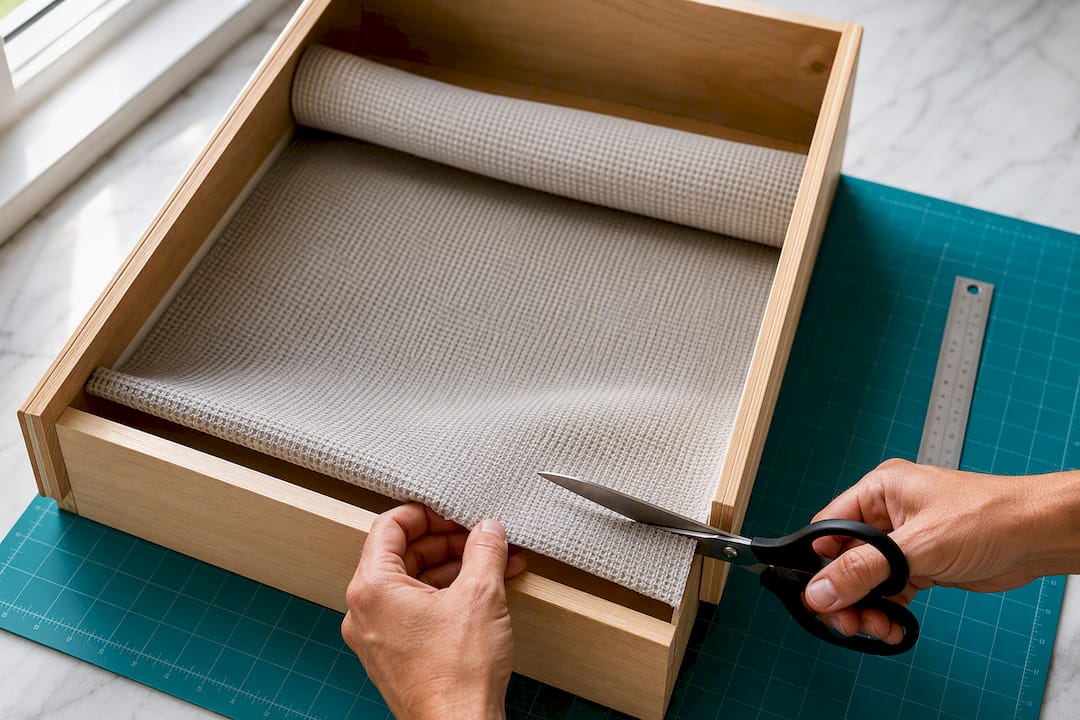
Non-slip liners for glassware and stacked dishes
Start with one drawer at a time. Measure it, pick a divider system that matches the depth, test the fit before committing, and label zones if more than one person cooks in the house. Wipe liners down monthly and check that pegs haven’t loosened from daily use.
Pro Tip: Test a $15 drawer liner in your worst drawer before buying organizers for the whole kitchen. If it doesn’t hold up after a week of real use, better to know now.
When DIY Isn’t Enough: An Ottawa Perspective
Dividers and liners fix organization. They don’t fix a drawer front that’s chipped, a finish that no longer matches the rest of the kitchen, or a box that’s warped and sticking. When those signs show up, refinishing solves the problem at its source instead of working around it.
A full kitchen refinishing project typically takes about ten days, with a process designed to keep the kitchen usable through most of that window, and some companies back their work with a warranty. A refinishing project is also the natural moment to reconfigure drawer interiors and swap hardware at the same time, so the inside matches the new finish on the outside.
Why Most Kitchen Drawer Advice Misses the Point
Most drawer articles chase Pinterest symmetry: perfectly folded towels, color-coded spice jars, everything facing the same direction. That’s not organization. That’s staging. The homeowners who actually keep their drawers tidy six months later are the ones who built around a routine, not a photograph. If your mornings start with coffee, that drawer earns prime real estate near the machine. If dinner prep means three cutting boards and a chaos of lids, that’s where the deep drawer with peg rails belongs.
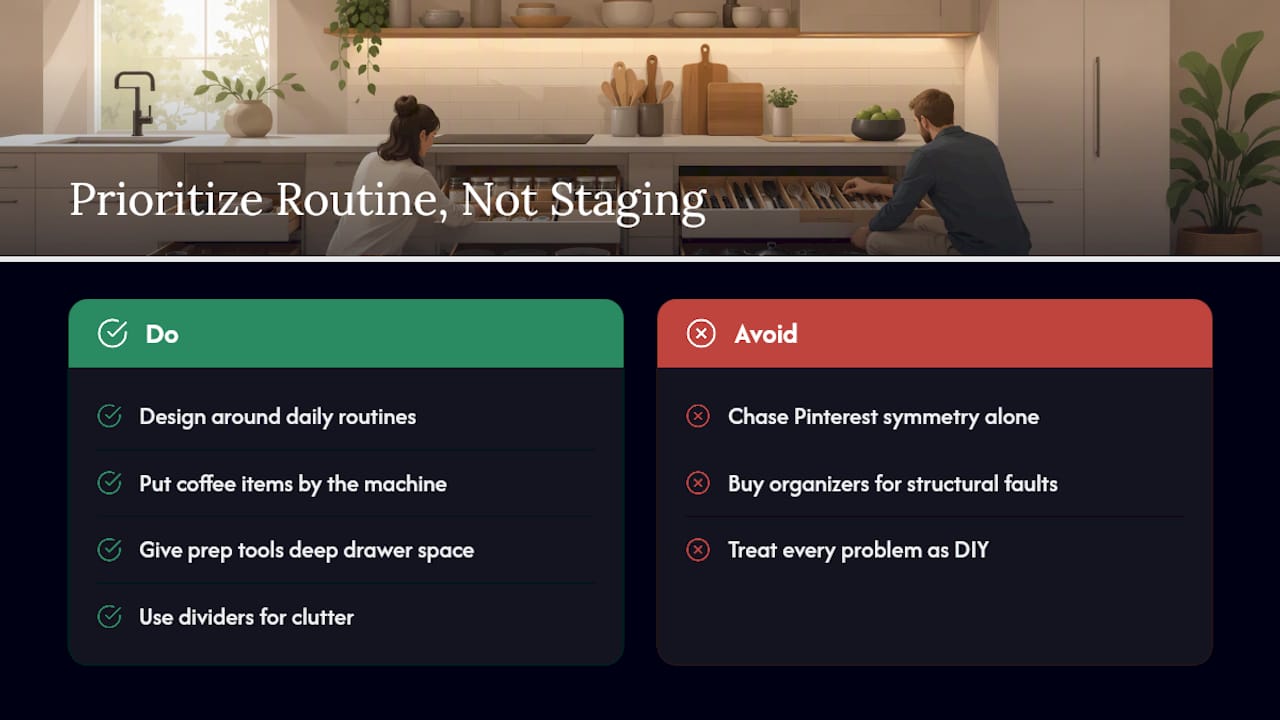
The conventional wisdom also oversells DIY as a universal fix. Dividers and liners genuinely solve clutter. They cannot solve a swollen drawer box, a broken slide, or a finish that dates the whole kitchen. Knowing that line, between an organizing problem and a refinishing problem, saves homeowners from throwing $200 in bins at an issue that needed a different kind of fix.
Prioritize the drawers you touch every day. Everything else can wait.
— Ottawa
A Faster Way to a Kitchen That Works Better
DIY dividers and pullouts fix clutter, but they can’t fix a drawer front that’s peeling or a finish that no longer matches your countertops. There are professional cabinet painting services that offer a dedicated spray shop for a factory-grade finish, a process designed to keep your kitchen usable during the project, and workmanship warranties. Custom finishes and color updates can be paired with hardware and drawer reconfiguration in the same visit, so the inside of your cabinets matches the outside. If your drawers are functionally fine but visually tired, request a quote for cabinet painting or refinishing and see what a ten-day timeline could look like for your kitchen.
Sources
FAQ
What should I put in my kitchen drawers?
Match contents to depth: cutlery and small tools in shallow drawers, plates and containers in mid-depth drawers, and pots or pans in deep drawers near the stove.
Which type of kitchen drawer is best?
Deep drawers with peg rails are generally the most useful for daily cooking, since they hold heavy cookware and adapt to different pot sizes better than fixed shelving.
Are kitchen drawers cheaper than cabinets?
No. Drawers usually cost more per unit than cabinets because of heavier-duty hardware and construction, though many homeowners find the daily usability worth the added cost.
Why do some kitchens have fake drawers?
The false front above the sink isn’t a real drawer because plumbing takes up that space, but it can be converted into a tip-out tray for sponges and small cleaning supplies.
Does Ottawa Cabinet Painting help with drawer reconfiguration?
Yes. Refinishing and refacing projects with Ottawa Cabinet Painting can include hardware upgrades and interior drawer changes alongside the finish work, typically within a ten-day project window.
Recommended
Comments