What Is Low VOC Paint? A Guide for Ottawa Homeowners

TL;DR:
Low VOC paint contains fewer harmful chemicals and reduces indoor air pollution during and after application.
However, tinting and ventilation practices significantly influence its safety, making third-party certifications important.
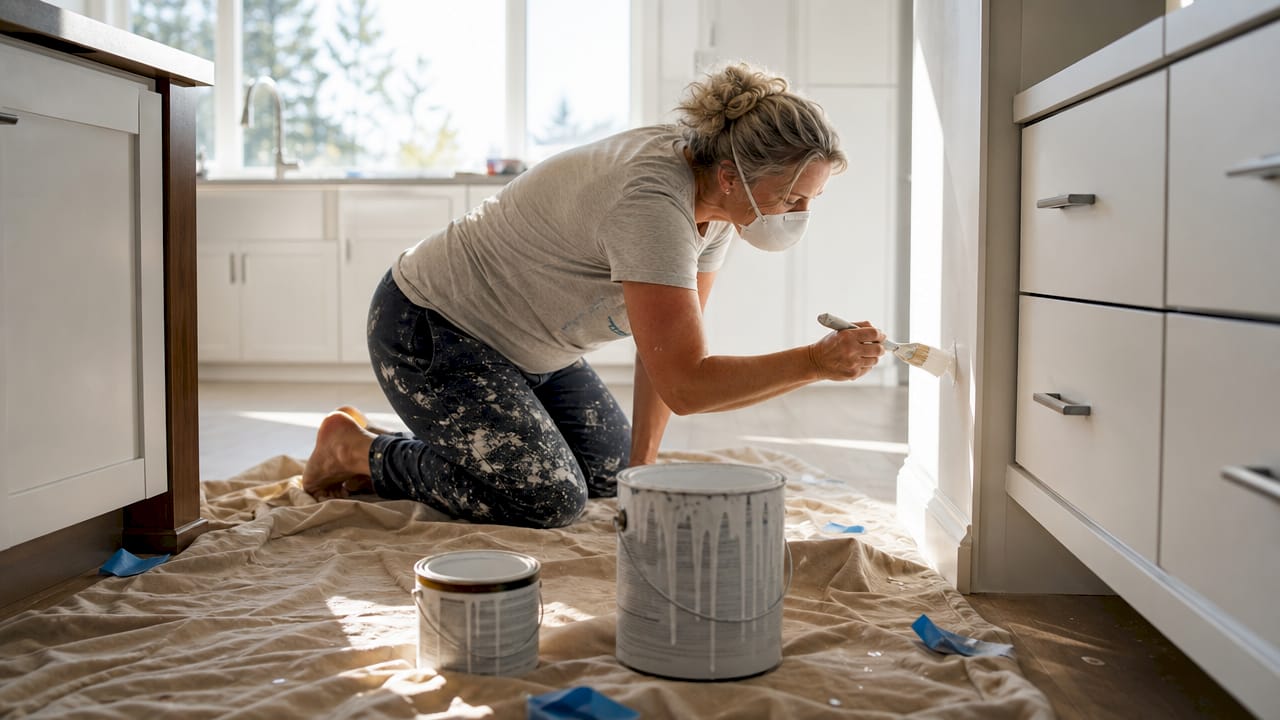
Low VOC paint is an architectural coating formulated to contain significantly fewer volatile organic compounds than conventional paint, reducing the amount of harmful chemicals released into your home’s air during and after application. The EPA defines greener paints as those that reduce or eliminate toxics including VOCs, ammonia, odor masking agents, and fungicides. For Ottawa homeowners painting kitchens, cabinets, or living spaces, choosing low VOC paint is one of the most direct ways to protect indoor air quality without sacrificing finish quality.
What are VOCs in paint and how are they regulated in Ottawa homes?
Volatile organic compounds are carbon-based chemicals that evaporate at room temperature. In paint, they serve as solvents that keep the product liquid in the can and help it spread smoothly. Once the paint hits your wall, those solvents evaporate into the air you breathe. That sharp chemical smell after a fresh coat? That is VOC off-gassing.

The health effects are real. Short-term exposure causes headaches, dizziness, and eye irritation. Long-term exposure to high VOC environments is linked to more serious respiratory and neurological concerns. This is why regulatory bodies in both the U.S. and Canada have established VOC content limits for architectural coatings.
In U.S. regulatory practice, low VOC thresholds are commonly set at 50 grams per liter (g/L) for flat products and 100 g/L for non-flat products under frameworks like SCAQMD Rule 1113. Canadian standards follow similar principles. These limits give homeowners a clear benchmark when reading paint labels.
Paint type | Conventional VOC level | Low VOC ceiling | Zero VOC ceiling |
Flat / matte | 250+ g/L | 50 g/L | 5 g/L or less |
Non-flat (eggshell, satin) | 380+ g/L | 100 g/L | 5 g/L or less |
Semi-gloss / gloss | 400+ g/L | 150 g/L | 5 g/L or less |
These numbers matter because the lower the VOC content, the less chemical load your indoor air carries. For a kitchen renovation or cabinet refresh in an Ottawa home, that difference is felt within hours of painting.
How does low VOC paint differ from zero VOC paint?
Low VOC is not zero VOC. This distinction trips up a lot of homeowners, and the confusion is understandable given how paint is marketed. Low VOC paints still emit small amounts of volatile compounds into the air, which means ventilation remains necessary even with the healthier product.
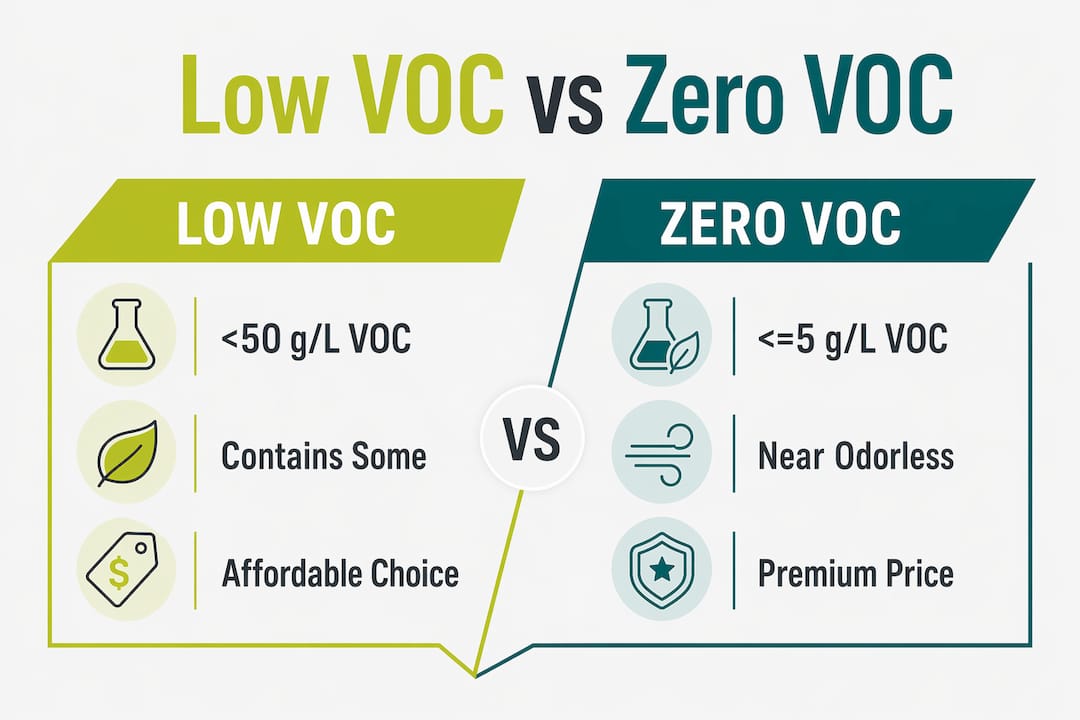
Zero VOC paints contain 5 g/L or less of volatile compounds in the base formula. That sounds reassuring. The problem is what happens when you add color.
The tinting trap most homeowners miss
Universal colorants added during tinting introduce additional VOCs into the final product. A zero VOC base can become a low VOC or even a moderate VOC paint once your chosen color is mixed in. VOC claims on paint cans measure the base before tinting, not the tinted product you actually take home. This is one of the most overlooked facts in paint shopping.
Here is what that means practically:
A white or off-white paint in a zero VOC base stays close to zero after tinting because little colorant is needed.
A deep navy, forest green, or charcoal requires heavy tinting, which can push VOC levels significantly higher.
The label on the can does not tell you the final VOC level after your color is mixed.
Pro Tip: Ask your paint retailer for the VOC content of the tinted product specifically, not just the base. Reputable retailers can provide this information or point you to the product’s test data.
Off-gassing also continues after the paint dries to the touch. Film thickness and ventilation both influence how long VOCs linger in a room. A thick second coat in a small, closed kitchen will off-gas longer than a thin coat in a well-ventilated space, even with the same low VOC product.
What are the real benefits and limitations of low VOC paint?
Low VOC paint delivers genuine health and environmental benefits. The reduction in toxic emissions means less irritation for your family during and after painting. Children, elderly residents, and anyone with asthma or chemical sensitivities benefit most from the lower chemical load. For Ottawa families spending time in freshly painted kitchens, this matters every day.
The environmental case is equally solid. EPA criteria for greener paints include durability and recycled content alongside VOC reduction. A paint that lasts longer means fewer repaints, which means fewer total VOC emissions over the life of your home. Choosing a durable low VOC product is better for air quality than choosing a cheap low VOC product that needs recoating every two years.
Factor | Low VOC paint | Conventional paint |
VOC emissions during application | Significantly lower | High |
Odor during and after painting | Mild to minimal | Strong, lingering |
Health risk for sensitive occupants | Reduced | Elevated |
Environmental impact over time | Lower with durable formulas | Higher |
Performance and coverage | Comparable in quality products | Comparable |
The limitations are worth knowing too. Low VOC paint still contains some chemicals, including formaldehyde in trace amounts and biocides that prevent mold growth in the can. These are present at low levels but are not zero. For nurseries or spaces for immunocompromised individuals, third-party certifications like GREENGUARD Gold provide more reliable indoor air quality guarantees than a VOC label alone.
Pro Tip: For eco-friendly cabinet painting projects, pair a low VOC paint with a low VOC primer. Many homeowners choose a low VOC topcoat but forget the primer, which can be a significant source of indoor emissions on its own.
Modern low VOC formulas have closed the performance gap with conventional paints. Adhesion, washability, and sheen retention are all comparable in quality products. The days of sacrificing finish quality for a healthier product are largely behind us.
How to choose and use low VOC paint effectively in Ottawa
Choosing the right low VOC paint for an Ottawa home takes more than grabbing a can with a green label. Follow these steps to make a confident, informed decision.
Check for third-party certifications. Look for Green Seal GS-11 or GREENGUARD Gold on the label. These certifications require emission testing that goes beyond VOC content alone, covering compounds that VOC limits do not address. For LEED-compliant projects, CDPH Standard Method v1.2 testing is the benchmark.
Ask about post-tinting VOC levels. Before you commit to a color, ask your retailer for the VOC content of the tinted product. Tinted paint VOC levels can differ significantly from the base formula, especially for deep or saturated colors.
Plan your application for ventilation. Open windows and run fans during painting and for at least 24–48 hours after the final coat. Even low VOC products off-gas during the drying process. Smaller rooms like bathrooms or pantries need more aggressive ventilation than open-plan spaces.
Apply thin, even coats. Thicker coats take longer to cure and off-gas for a longer period. Two thin coats give better coverage and a faster return to safe occupancy than one thick coat. This is especially relevant for cabinet painting safety in enclosed kitchen spaces.
Allow proper clearance time before reoccupying. Low VOC paint dries faster than conventional paint, but curing takes longer. For sensitive occupants, wait at least 24 hours before sleeping in a freshly painted bedroom and 48–72 hours before using a freshly painted kitchen heavily.
Review paint brand options specific to Ottawa. Local retailers stock products suited to Ottawa’s climate, including humidity levels that affect drying times. Reviewing cabinet paint brands in Ottawa helps you match product performance to local conditions.
The EPA recommends viewing low VOC paint selection as part of a broader approach that balances VOC reduction with durability and other toxics reduction. A paint that checks every box on paper but chips within a year forces a repaint, which doubles your exposure.
Key Takeaways
Low VOC paint reduces harmful indoor emissions significantly, but its real-world safety depends on tinting choices, ventilation practices, and third-party certifications beyond the label.
Point | Details |
VOC thresholds are defined | Flat paints must stay under 50 g/L and non-flat under 100 g/L to qualify as low VOC. |
Tinting raises VOC levels | Always ask for post-tinting VOC data, especially for deep or saturated colors. |
Certifications add reliability | GREENGUARD Gold and Green Seal GS-11 test emissions beyond what VOC labels cover. |
Ventilation is non-negotiable | Even low VOC products off-gas during and after application, requiring 24–48 hours of airflow. |
Durability reduces total exposure | A longer-lasting paint means fewer repaints and lower lifetime VOC emissions in your home. |
What we have learned from painting Ottawa kitchens with low VOC products
After working on cabinet and interior painting projects across Ottawa, one pattern stands out. Homeowners focus almost entirely on the VOC number on the can and overlook everything else. They buy a zero VOC base, choose a deep charcoal color, and never ask what the tinting does to that number. We have seen this create exactly the situation the homeowner was trying to avoid.
The other misconception we run into regularly is treating low VOC paint as a substitute for ventilation. It is not. We always tell clients: open the windows, run a fan, and give the space time to breathe. That advice applies whether the paint is conventional or low VOC. The product reduces your risk. Ventilation manages it.
What actually works is treating low VOC paint as one part of a larger approach. Choose a certified product, confirm post-tinting VOC levels, apply thin coats, ventilate aggressively, and give the space adequate clearance time. Do all of those things together and you will have genuinely better indoor air quality. Do only one of them and you are mostly just paying more for peace of mind.
The Ottawa climate adds one more variable worth noting. High humidity in summer slows drying and extends off-gassing time. Plan your painting projects for drier days when possible, and run a dehumidifier alongside your ventilation if you are painting during a humid stretch.
— Ottawa
Professional low VOC interior painting in Ottawa
Ottawacabinetpainting uses low VOC products on every interior and cabinet painting project we take on in Ottawa. We select paints that meet recognized emission standards, confirm VOC levels after tinting for your chosen color, and apply them in thin, controlled coats that cure properly. Our process is designed to give you a factory-quality finish that is also genuinely safer for your family. If you want to see what that looks like in practice, our interior painting services page covers our full approach. Ready to get started? Request a free quote for your Ottawa cabinet painting project and we will walk you through the right product for your space.
FAQ
What is low VOC paint in simple terms?
Low VOC paint is paint formulated to release fewer harmful chemicals into the air than conventional paint. It contains 50 g/L or less of volatile organic compounds for flat finishes and 100 g/L or less for non-flat finishes.
Is low VOC paint safe for families and children?
Low VOC paint is significantly safer than conventional paint for indoor use, but it is not completely free of chemicals. For nurseries or spaces used by sensitive individuals, look for GREENGUARD Gold certification, which tests emissions beyond VOC content alone.
Does low VOC paint still smell?
Yes, low VOC paint has a noticeably milder odor than conventional paint, but it still off-gasses during and after application. Ventilating the space for at least 24–48 hours after painting reduces odor and improves air quality.
Does tinting change the VOC level of low VOC paint?
Yes. Universal colorants added during tinting introduce additional VOCs into the final product. A zero VOC base can become a low VOC paint after deep color tinting. Always ask your retailer for the VOC level of the tinted product, not just the base.
What certifications should I look for when buying low VOC paint in Ottawa?
Look for Green Seal GS-11 or GREENGUARD Gold on the label. These certifications require third-party emission testing that covers compounds beyond what VOC content limits address, giving you a more reliable indoor air quality guarantee.
Recommended
Comments