Dust Control in Cabinet Work: A Guide for Ottawa Pros

TL;DR:
Dust control in Ottawa cabinet-making involves managing airborne and settled wood particles to protect health and ensure finish quality. Implementing source capture, HEPA filtration, and organized shop layout prevents health hazards, contamination, and fire risks, while maintaining compliance with safety standards. Proper hygiene routines and active system testing are essential for achieving a dust-free, high-quality cabinet finish.
Dust control in cabinet making is defined as the systematic management of airborne and settled wood particles to protect worker health, preserve finish quality, and meet occupational safety standards. For cabinet makers and woodworking professionals in Ottawa, the importance of dust control in cabinet work goes far beyond keeping a tidy shop. Wood dust is a Group 1 carcinogen linked directly to nasal cavity cancers, and even a single poorly managed sanding session can deposit enough fine particulate to compromise a flawless cabinet finish. Local exhaust ventilation (LEV), HEPA filtration, and disciplined housekeeping routines are the three pillars every serious cabinet shop must have in place.
Why dust control in cabinet work protects health and safety in Ottawa
Wood dust is not a nuisance. It is a documented occupational hazard with life-altering consequences. Lifelong exposure at 2.9 mg/m³ of inhalable wood dust is estimated to cause four additional nasal cancer cases per 1,000 workers. That number puts the risk in concrete terms: a crew of ten working in a poorly ventilated Ottawa cabinet shop for a career faces a measurable, preventable cancer risk.
The respiratory system bears the first and heaviest burden. Fine particles from routing, sanding, and sawing penetrate deep into the lungs, causing chronic inflammation, occupational asthma, and reduced lung capacity over years of exposure. Cancer risk remains high even at exposure levels near current occupational limits, which means staying just inside the legal threshold is not the same as staying safe.
Beyond health, the impact of dust in woodworking reaches into product quality and shop safety:
Finish contamination. Airborne particles settle on freshly applied coatings within minutes, creating a rough, pitted surface that requires sanding back and recoating. This is the most common cause of rework in cabinet finishing.
Fire and explosion risk. Accumulated wood dust is combustible. A spark from a router or sander near a dust-laden surface or collection bag can ignite a flash fire or, in enclosed spaces, trigger an explosion.
Reduced visibility and equipment wear. Heavy airborne dust obscures sight lines, accelerates bearing wear in power tools, and clogs finishing equipment like spray guns faster than most professionals expect.
“Housekeeping is integral to dust control, not just clean-up after production. Improper methods can aerosolize dust and increase hazards rather than reduce them.” — Wood dust monitoring and control
The combination of health damage, finish failures, and fire risk makes dust management in carpentry a non-negotiable operational priority, not an optional upgrade.
What are the most effective dust control methods for Ottawa cabinet makers?
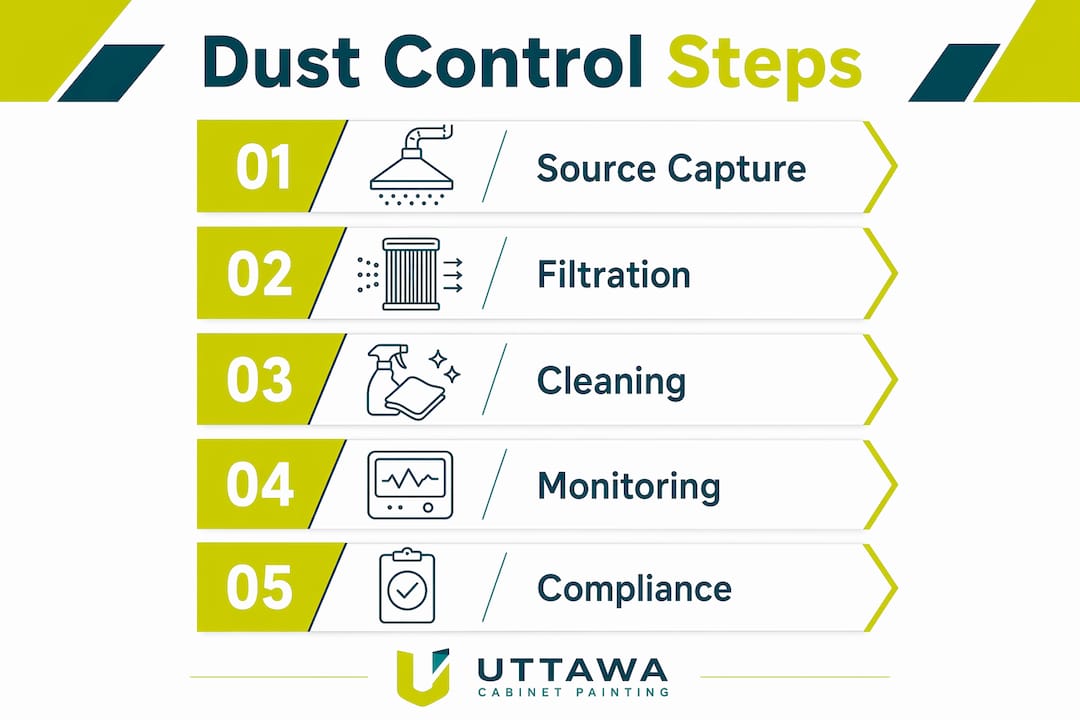
The best dust control techniques in cabinetry combine source capture, filtration, and disciplined cleaning into one coordinated system. No single tool solves the problem on its own.
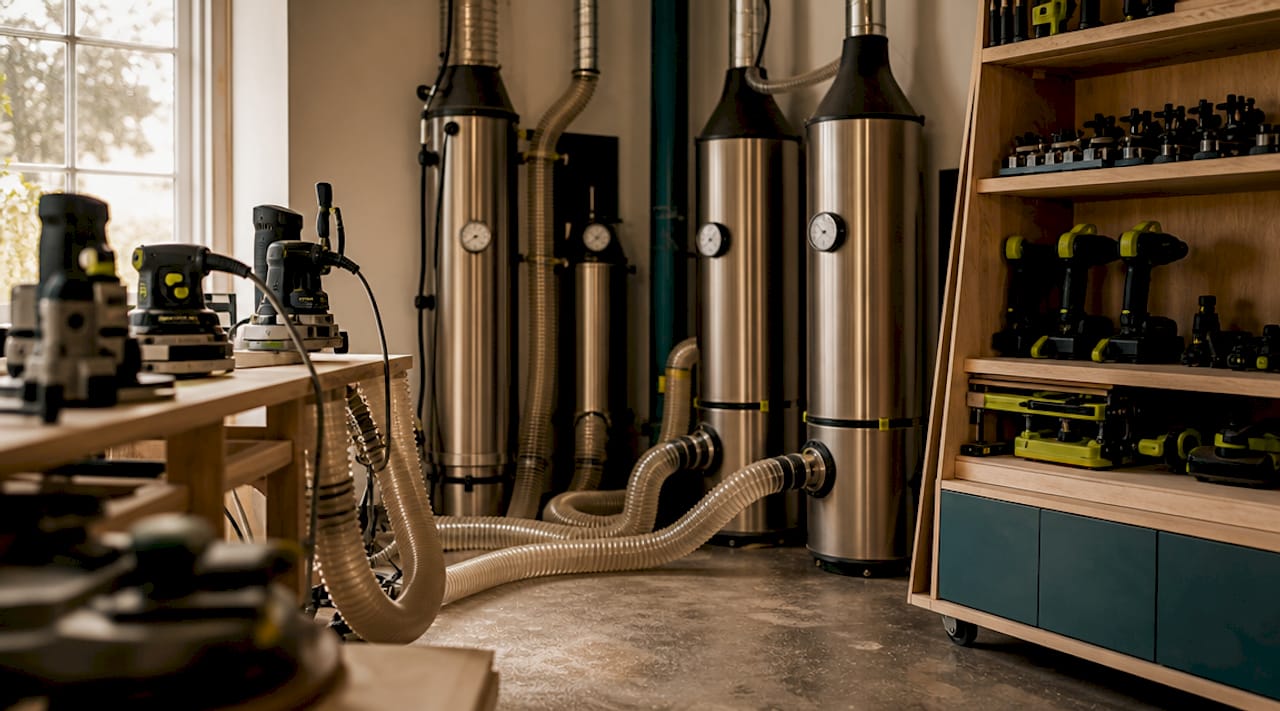
Source capture with LEV systems is the foundation. Local exhaust ventilation pulls dust away at the point of generation before it becomes airborne. The design of the hood, its proximity to the cutting edge, and the capture velocity all determine how effective the system actually is. Emission source design and hood geometry are critical variables. A hood positioned three inches too far from a router table can cut capture efficiency by more than half.
Here is a practical sequence for implementing dust control techniques in cabinetry:
Attach LEV hoods directly to each stationary tool. Table saws, routers, planers, and sanders each need a dedicated extraction point sized to the volume of dust that tool generates.
Connect portable tools to a vacuum at the source. Random orbital sanders and jigsaws used on cabinet doors should run with a direct-connect dust bag or shop vacuum at all times.
Install an industrial vacuum with HEPA filtration for settled dust. HEPA-filter industrial vacuums capture fine particles that LEV systems miss, preventing them from being reintroduced into the air during cleanup.
Ban dry sweeping and compressed air entirely. Both methods launch settled dust back into the breathing zone. Wet cleaning or HEPA vacuuming are the only acceptable alternatives.
Schedule filter changes and duct inspections monthly. Routine maintenance including filter changes and duct cleaning keeps HEPA efficiency high and prevents pressure drops that reduce capture velocity.
Pro Tip: Connect your dust collection bags to a manometer or simple pressure gauge. A drop in static pressure is the earliest warning that a filter is loading up or a duct has developed a leak, both of which kill capture performance before you notice any visible change.
Proper dust collection also pays off in finish quality. Dust collection prevents contamination of product surfaces and reduces rework rates in joinery and cabinetry tasks. For Ottawa cabinet makers who take pride in a factory-smooth finish, that alone justifies the investment.
How to stay compliant with dust control regulations in Ottawa woodworking shops
Regulatory compliance for wood dust is not a paperwork exercise. It is a structured system of measurement, testing, and documentation that keeps workers safe and keeps your shop operating legally.
The Swedish occupational exposure limit for wood dust sits at 2 mg/m³ inhalable dust, and new scientific evaluations confirm that cancer risk remains significant even at that threshold. Many jurisdictions are moving toward stricter limits, which means building systems that perform well below current ceilings is the only future-proof approach.
Compliance requirement | What it means in practice |
LEV examination schedule | LEV systems require testing every 6 to 14 months depending on dust risk level |
Under-load performance testing | Systems must be tested while tools are running, not in free-air conditions |
COSHH documentation | Written records of exposure assessments, test results, and maintenance logs |
Filter and duct maintenance | Scheduled replacement and inspection to maintain HEPA efficiency |
The most common compliance failure in Ottawa cabinet shops is testing LEV systems in free-air conditions rather than under actual operational load. Airflow performance degrades after filter loading or duct leakage, so a system that passes a free-air check can still fail to capture dust when a router is cutting at full depth. Testing under load is the only way to verify real-world performance.
Pro Tip: Schedule your LEV performance test on a day when you are running your heaviest production tasks. Routing MDF or sanding large cabinet panels generates the highest dust loads, and those are exactly the conditions your system needs to handle reliably.
Documentation matters as much as the testing itself. Regulators and insurers both want to see dated records of inspections, filter changes, and any corrective actions taken. A simple maintenance log kept near each extraction unit takes five minutes to update and provides complete traceability.
How to optimize your Ottawa workshop layout for better dust management
Workshop layout is one of the most underused dust control techniques in cabinetry. The physical separation of high-dust operations from finishing and assembly areas is a structural solution that reduces contamination without adding equipment costs.
Grouping high-dust tasks separately from clean finishing zones is a proven measure for improving dust control performance across the entire shop. In practice, this means routing, sawing, and sanding happen in one dedicated zone with its own extraction system, while spraying, coating, and assembly take place in a physically separated area with positive air pressure to keep dust out.
Effective housekeeping routines reinforce the layout strategy:
Vacuum all horizontal surfaces with a HEPA vacuum at the end of every production shift. Benchtops, tool tables, and ledges accumulate fine dust that becomes airborne again with the slightest air movement.
Wet-wipe finishing areas before any coating work begins. A damp cloth picks up residual particles that a vacuum might miss, and it does so without launching them back into the air.
Never use compressed air to clean tools or surfaces inside the shop. This is the single fastest way to turn a manageable dust level into a hazardous cloud. Take tools outside or use a HEPA vacuum attachment instead.
Clean extraction ducts and collection bags before they reach capacity. A collection bag at 75% capacity restricts airflow and reduces capture velocity at the hood. Emptying it at 50% keeps the system performing at its rated specification.
Document every cleaning cycle. A dated log of housekeeping activities supports compliance records and helps identify patterns, such as which tools or tasks generate the most settled dust between shifts.
The benefits of dust management in carpentry become most visible in the finishing stage. When you walk into a clean, well-organized Ottawa cabinet shop where dust is captured at the source and surfaces are wiped before coating, the finish quality reflects that discipline directly. Runs, fish-eyes, and grit marks in a topcoat are almost always traceable to a dust management failure somewhere earlier in the process. You can also explore cabinet painting safety tips for additional guidance on protecting both your workspace and your clients’ homes during finishing work.
Key takeaways
Effective dust control in cabinet work requires source capture with LEV, HEPA filtration for settled dust, under-load system testing, and physical separation of dusty operations from finishing zones.
Point | Details |
Wood dust is a carcinogen | Exposure at 2.9 mg/m³ causes four additional nasal cancer cases per 1,000 workers over a career. |
LEV testing must be under load | Free-air velocity checks overestimate performance; test systems while tools are running at full production. |
HEPA vacuums replace dry sweeping | Dry sweeping and compressed air reintroduce settled dust into the breathing zone and create fire risk. |
Layout separation protects finish quality | Isolating dusty tasks from finishing areas prevents contamination and reduces rework on cabinet coatings. |
Documentation supports compliance | Dated maintenance logs for LEV tests, filter changes, and cleaning cycles are required for regulatory traceability. |
What we have learned from Ottawa cabinet shops about dust control
After working in and around Ottawa cabinet finishing environments for years, the pattern we see most often is this: shops invest in good extraction equipment and then stop there. The LEV unit gets installed, the collection bag gets attached, and everyone assumes the problem is solved. It rarely is.
The gap between having a dust control system and having one that actually works is almost always found during under-load testing. A system that looks clean and sounds powerful in an empty shop can fail to capture dust the moment a router starts cutting a full-depth profile in MDF. Good-looking cleanliness does not guarantee dust capture. Performance must be verified with the tool running and dust being generated.
We also see cabinet makers treat housekeeping as an afterthought rather than part of the production process. Sweeping at the end of the day with a push broom is not dust control. It is dust redistribution. The shops that consistently produce the best finishes are the ones where HEPA vacuuming and wet cleaning are built into the workflow between operations, not just at closing time.
Worker training is the third piece that gets skipped. Every person in the shop needs to understand why dry sweeping is prohibited, how to check that a collection bag is not over-filled, and what a pressure drop on the extraction system actually means. Equipment alone does not create a safe, clean workshop. The people using it do.
— Ottawa
How Ottawacabinetpainting delivers dust-free cabinet refinishing in Ottawa
At Ottawacabinetpainting, the importance of a clean work environment in woodworking and finishing is built into every project we take on. Our dustless cabinet spraying process controls airborne particles at every stage, from prep and sanding through to the final topcoat, so you get a factory-smooth finish without the contamination problems that plague rushed or poorly managed jobs. We work in Ottawa homes with the same discipline we would apply in a professional cabinet shop. If you want to see what meticulous dust management looks like in a finished product, explore our interior cabinet refinishing services or request a free quote to discuss your project.
FAQ
What makes wood dust dangerous in cabinet work?
Wood dust is classified as a Group 1 carcinogen linked to nasal cavity and respiratory cancers. Lifelong occupational exposure at levels near current limits is estimated to cause four additional nasal cancer cases per 1,000 workers.
How often should LEV systems be tested in a woodworking shop?
LEV systems require thorough examination and testing every 6 to 14 months depending on the dust risk level, with more frequent checks required under COSHH regulations for wood dust environments.
Why is dry sweeping banned in cabinet shops?
Dry sweeping launches settled dust back into the breathing zone and creates a combustible dust cloud near ignition sources. HEPA vacuuming and wet cleaning are the only methods that remove dust without reintroducing it into the air.
How does workshop layout affect dust control in Ottawa cabinet shops?
Physically separating high-dust operations like routing and sanding from finishing and assembly areas prevents cross-contamination, protects coating quality, and reduces the load on extraction systems in clean zones.
Does dust control actually improve cabinet finish quality?
Yes. Proper dust collection prevents airborne particles from settling on wet coatings, which is the leading cause of surface defects like grit marks and fish-eyes that require sanding back and recoating.
Recommended

Comments