Why sealing kitchen cabinets matters for lasting results

TL;DR:
Proper sealing protects cabinets from moisture, grease, and wear, extending their lifespan.
Key areas to seal include interiors, edges, joints, and high-touch surfaces, especially in Ottawa’s climate.
Professional sealing with high-quality products offers more durability and long-term value than DIY application.
A fresh coat of paint can completely change the look of your kitchen, but paint alone cannot protect your cabinets from the daily punishment they take. Spills, steam, cleaning products, and Ottawa’s dramatic seasonal humidity all attack cabinet surfaces in ways that paint simply isn’t designed to resist on its own. Proper sealing is what stands between your refinished cabinets and early, costly deterioration. In this article, we walk you through exactly why sealing matters, which areas of your cabinets need the most attention, how to choose the right sealant, and whether to tackle it yourself or call in a professional.
Table of Contents
Key Takeaways
Point | Details |
Sealing stops hidden damage | A quality seal prevents moisture, swelling, and early failure that even the best paint won’t block. |
Target high-risk cabinet zones | Edges, joints, under-sink areas, and high-touch surfaces demand special sealing attention. |
Choose sealants suited for Ottawa | Select products and solutions that can handle local humidity, spills, and temperature swings. |
DIY is possible—but pros deliver lasting results | While some homeowners can seal themselves, expert finishing ensures maximum cabinet life and lower maintenance. |
The real risks: What happens when cabinets aren’t sealed
Paint changes how your cabinets look. Sealing determines how long that look actually lasts. Without a proper sealant applied over paint or bare wood, your cabinet surfaces are essentially porous. They absorb moisture, grease, and cleaning chemicals every single day. Over time, that absorption adds up to real structural damage.
The most vulnerable spots are the ones most homeowners never think about. Gaps at joints, exposed edges along cabinet frames, and the interiors of under-sink cabinets are constantly exposed to humidity and the occasional drip or leak. As Imperial Cabinets notes, sealing is critical on interiors and edges because those are precisely the areas where hidden leaks and humidity accumulate unnoticed.
Here is what unsealed cabinets actually face in an Ottawa kitchen:
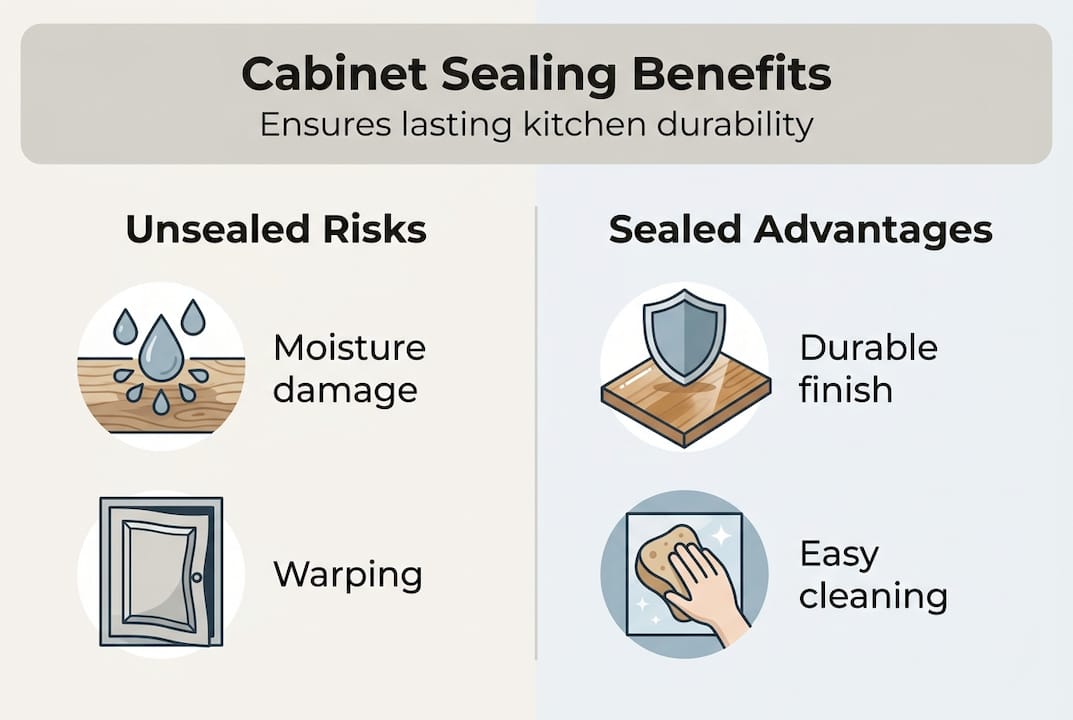
Swelling and warping: Wood naturally expands and contracts with changes in moisture. Without a seal, this process accelerates, causing cabinet doors to stick, warp, and eventually fail to close properly.
Delamination: On cabinets with a veneer or laminate surface, moisture gets underneath the top layer and causes it to bubble, peel, or separate from the substrate.
Paint failure: Unsealed paint is softer and more vulnerable. It scratches, chips, and peels far sooner than sealed paint, often within the first year or two of normal use.
Mold and mildew: Moisture trapped inside cabinet interiors without a barrier creates ideal conditions for mold growth, which is both a health concern and a structural problem.
Surface staining: Grease and food residue soak into unsealed surfaces and leave permanent stains that no amount of cleaning will fully remove.
Ottawa’s climate makes every one of these risks worse. Summers bring genuine humidity, while winters create dry indoor air from constant heating. This back-and-forth cycle of expansion and contraction puts enormous stress on cabinet materials throughout the year. Cabinets that might hold up reasonably well in a more stable climate often deteriorate quickly in Ottawa without a proper protective seal.
High-touch areas are another major concern. Door fronts, drawer pulls, and the edges around handles get cleaned repeatedly with damp cloths and spray cleaners. Using good kitchen cleaning hacks helps, but even the gentlest cleaning routine degrades unsealed paint over time. The same is true for appliances and cabinet surfaces near them. Following solid appliance cleaning tips minimizes residue, but a sealed cabinet surface is far more forgiving.
Sealing is not an optional finishing touch. It is the step that determines whether your cabinet refinishing lasts three years or more than a decade.
How sealing protects your kitchen cabinets (and where it matters most)
Recognizing the risks, it’s important to see exactly how sealing acts as a safeguarding layer and where it is most urgently needed. A sealant works by filling the microscopic pores in paint, wood, or MDF (medium-density fiberboard) surfaces. Once those pores are sealed, water and grease can no longer penetrate the surface. They bead up and wipe away instead of soaking in.
According to Fix It In The Home, cabinet sealing creates a protective barrier over porous substrates, with the most critical areas being those exposed to wetting events, such as under-sink interiors and edges, along with surfaces that endure repeated cleaning and abrasion, like door fronts and high-touch zones.
Here is a clear comparison of how sealed versus unsealed cabinets hold up across common kitchen conditions:
Area | Unsealed cabinets | Sealed cabinets |
Under-sink interior | Absorbs moisture, prone to warping and mold | Moisture beads off, structure remains stable |
Door fronts | Paint softens and chips from cleaning | Hard surface resists abrasion and cleaners |
Edges and joints | Expand and contract, causing gaps | Stabilized, reducing movement and separation |
High-touch zones | Wear through quickly, showing bare wood | Durable finish maintains appearance for years |
Near stovetop | Grease soaks in, stains permanently | Grease wipes away cleanly without staining |
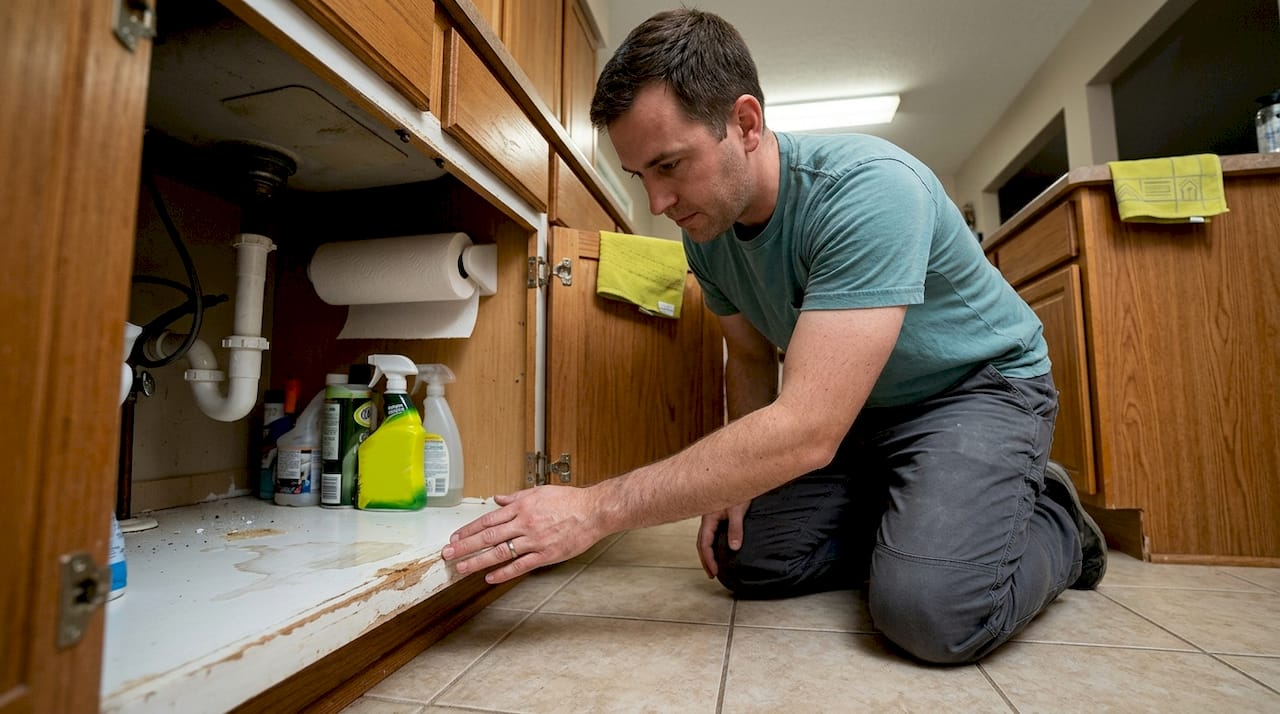
The under-sink interior deserves special attention because it is the one area homeowners almost never see until something goes wrong. A small plumbing drip, a cleaning product that tips over, or even just the daily humidity from the sink can wreak havoc on an unsealed cabinet interior. Sealing this area is one of the highest-value steps you can take.
Door fronts need extra attention because of how often they are touched and cleaned. A quality sealant applied over a painted door front dramatically increases resistance to the repeated friction and moisture from hands and cleaning cloths. The paint sheen durability you choose for your painted finish also plays a role here, since higher-sheen finishes tend to pair better with topcoat sealants and are easier to clean.
Pro Tip: Pay close attention to sealing the top edges of upper cabinet doors. These surfaces are rarely painted carefully and almost never sealed, but they collect grease vapors rising from the stove and are especially prone to paint failure.
For Ottawa homeowners considering professional cabinet painting, this is exactly the kind of detail that separates a quality job from one that will look tired within a few years.
Choosing the right sealant: Options for Ottawa homes
With key areas to seal in mind, you’ll want to select the right product. The choice can make or break your long-term cabinet finish, and Ottawa’s climate narrows your best options considerably.
There are four main sealant categories used on refinished kitchen cabinets. Each has strengths and tradeoffs that matter depending on your cabinet material, how hard your kitchen works, and how much maintenance you want to deal with.
Sealant type | Best for | Dry time | Durability | Ottawa suitability |
Water-based polyurethane | Painted wood, MDF | 2 to 4 hours | High | Excellent |
Oil-based polyurethane | Raw wood, stained cabinets | 8 to 24 hours | Very high | Good, slower to cure in cold |
Lacquer | Factory-style finishes, sprayed applications | 30 to 60 min | Moderate to high | Good with climate control |
Specialty cabinet topcoats | Professionally refinished surfaces | Varies | Very high | Excellent when professionally applied |
Water-based polyurethane is the most practical choice for most Ottawa homeowners refinishing painted cabinets. It dries quickly, has low odor, and offers excellent moisture resistance. It also stays clear without yellowing over time, which matters if you have white or light-colored cabinets.
Oil-based polyurethane is harder and more durable once fully cured, but it can yellow slightly and takes much longer to dry, which creates problems in Ottawa winters when homes are kept closed and ventilation is limited.
Lacquer is the finish used to achieve that smooth, factory-finished look on high-end cabinets. It sprays on beautifully and dries fast, but it requires proper equipment and good ventilation. Our cabinet lacquer guide explains the differences in detail for homeowners weighing this option.
When reviewing your kitchen paint finish options, keep in mind that the sealant you choose should complement your paint finish. A matte paint with a high-gloss sealant, for example, will look inconsistent.
Here is what to prioritize when selecting a sealant:
Moisture resistance rating: Look for products specifically rated for kitchen or bathroom use.
Flexibility: Ottawa’s temperature swings mean the sealant must be able to flex slightly with the wood without cracking.
Adhesion: The sealant must bond well to the painted surface beneath it, not just sit on top.
Low VOC content: Especially important in winter when windows stay closed. Lower VOC (volatile organic compound) products are safer for your household.
As Imperial Cabinets confirms, proper edge sealing prevents swelling, warping, and delamination, which are exactly the failure modes that show up most in Ottawa’s variable climate. If you are also exploring environmentally conscious options, our guide to sustainable kitchen materials covers low-impact sealants worth considering.
DIY versus professional sealing: Cost, results, and peace of mind
Once you know which sealant to use, it’s time to decide if you should do it yourself or hire a professional. This choice directly impacts quality and longevity, and the real cost difference might surprise you.
On the surface, DIY sealing looks like the budget-friendly option. A quality water-based polyurethane product costs between $40 and $80 per liter, and a standard kitchen cabinet set requires roughly two to three liters for full coverage. Add in brushes, rollers, painter’s tape, sandpaper, and any prep supplies, and most Ottawa homeowners spend $150 to $300 on a full DIY sealing project.
Professional sealing costs more upfront, but it comes with significant advantages that affect long-term value. Here is how the two approaches compare across the factors that matter most:
Surface preparation: Professionals sand between coats using proper grits, ensuring adhesion at every layer. DIY applicators often skip or rush this step, which is the single most common cause of peeling and bubbling within the first year.
Application technique: A spray-applied sealant by a professional leaves a far smoother, more even film than a brush or foam roller. Brush marks and roller texture trap dirt and are harder to clean effectively.
Coverage of critical areas: Professionals know to prioritize edges, joint lines, and interior surfaces. Most DIY efforts focus on the visible door fronts and miss the areas where moisture damage begins.
Product quality: Professional refinishers use commercial-grade topcoats that are not available at retail stores. These products cure harder, bond more strongly, and last significantly longer than consumer products.
Warranty protection: A professional job backed by a warranty gives you recourse if something goes wrong. DIY has no fallback if the sealant fails early.
Cabinet care tips for maintaining a professionally sealed finish are straightforward because the surface is built to handle daily use. DIY sealed cabinets often require more careful handling to avoid premature wear.
Pro Tip: If you do go the DIY route, always apply at least two thin coats rather than one thick coat. Thick single coats dry unevenly, trap air bubbles, and are far more likely to peel.
Proper sealing is especially important on interiors and edges because those are the areas DIY applicators most frequently miss. When those spots fail, the repair cost often equals or exceeds what professional sealing would have cost initially. For homeowners exploring local cabinet refinishing options in Ottawa, professional sealing is almost always included in a quality refinishing package rather than treated as an add-on.
The truth most people miss: It’s not ‘just paint’—sealing is the upgrade
We have been doing this work long enough to see what homeowners regret, and it is almost never the color they chose or the style of door. What people regret is cutting corners on protection.
The sealing step gets skipped or rushed more than any other part of the refinishing process. It does not produce dramatic visual results the way paint color does, so it feels less important. But sealing is where durability is actually built. A beautifully painted cabinet without a proper sealant is fragile. An average-looking cabinet with excellent sealing is tough, easy to maintain, and will hold up through years of real kitchen use.
We also see homeowners who invest in professional kitchen refinishing and then try to save money by skipping the topcoat. That is a recipe for early failure. The truth is that proper sealing costs far less than premature cabinet replacement. Durability, not color, is the real upgrade you are paying for when you refinish your cabinets. Get that right, and everything else holds up.
Protect your investment: Ottawa cabinet sealing solutions
Now that you understand why sealing is the step that makes the real difference, you can see why we build it into every cabinet refinishing project we do. At Ottawa Cabinet Painting, we use top-of-the-line sealants applied with professional spray equipment, covering every critical area including interiors, edges, and high-touch door fronts. Our work is backed by a 6-year warranty, which tells you exactly how confident we are in the results.
If your kitchen cabinets deserve a finish that holds up through Ottawa winters, busy family life, and years of daily use, we are ready to show you what that looks like. Browse our interior cabinet painting services, request a cabinet painting quote, or see the results for yourself in our cabinet makeover transformations.
Frequently asked questions
What areas of my kitchen cabinets must be sealed for best results?
Focus on under-sink interiors, edges, joints, and high-touch door surfaces first, since these are the areas where moisture and wear accumulate fastest and cause the most damage.
How does Ottawa’s climate affect cabinet sealing needs?
Ottawa’s seasonal humidity swings and cold winters accelerate wood expansion and contraction, making cabinets far more vulnerable to swelling, warping, and paint failure if a proper moisture barrier is not in place.
What is the main benefit of professional sealing versus DIY?
Professionals apply commercial-grade sealants with spray equipment, cover all critical areas including edges and interiors, and back their work with warranties, delivering results that prevent swelling and delamination far more reliably than most DIY applications.
Can sealing improve the look of my cabinets?
Yes. A quality sealant adds a consistent sheen, protects the color from fading, and maintains the smooth finish of the paint, so your cabinets keep their factory-finish appearance much longer than they would without a topcoat.
Recommended

Comments