What Is a Satin Cabinet Finish? Ottawa Homeowner's Guide

TL;DR:
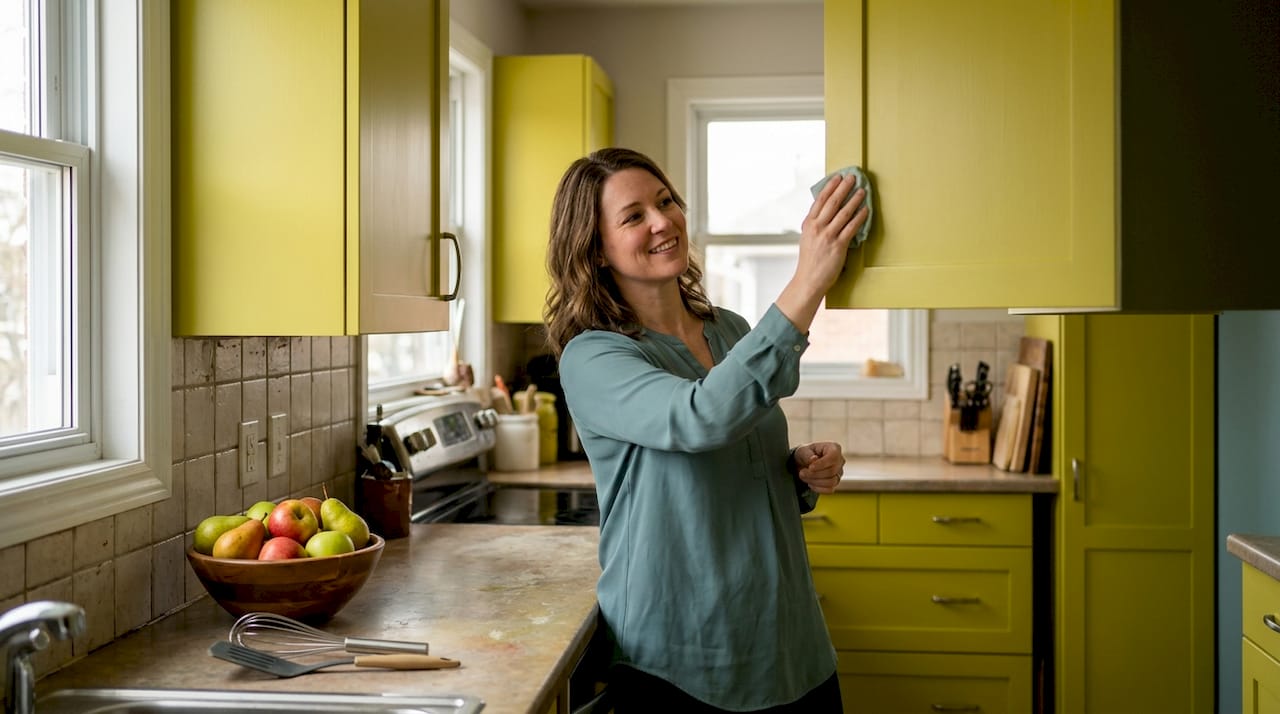
Satin cabinet finishes provide a soft, velvety glow that balances sheen and flaw concealment, making them ideal for kitchens. They are durable, easy to clean, and conceal fingerprints better than gloss while handling moisture effectively. Proper application and prep are essential for achieving a polished, long-lasting result.
If you’ve been researching cabinet finishes, you’ve probably run into the term “satin” and wondered exactly where it falls on the sheen spectrum. What is a satin cabinet finish, really? It’s not matte, it’s not glossy, and it’s definitely not the flat, chalky look some people picture when they hear “low sheen.” Satin is its own category, and understanding what makes it distinct can completely change how you approach your next kitchen update or cabinet refinishing project.
Table of Contents
Key takeaways
Point | Details |
Satin is a mid-sheen finish | It reflects light softly, sitting between flat/matte and semi-gloss on the sheen scale. |
It hides everyday wear well | Satin conceals fingerprints and minor scratches better than glossier finishes, making it ideal for busy kitchens. |
Mixing matters during application | Flattening agents in satin paint settle quickly, so thorough stirring before and during use prevents uneven sheen. |
It works across kitchen styles | Satin suits farmhouse, transitional, and traditional designs, offering real versatility for Ottawa homes. |
Professional application gets the best results | Brush strokes and lap marks show less with satin than with gloss, but prep and technique still determine the final quality. |
What is a satin cabinet finish, exactly?
Think of satin as the “Goldilocks” of cabinet finishes. Not too shiny, not too flat. It sits comfortably in the middle of the sheen spectrum, producing a soft, velvety glow that catches light without bouncing it aggressively around the room.
Technically, satin paint contains flattening agents mixed into the formula. These agents reduce the number of light-reflecting particles in the dried film, which is what creates that muted, low-luster look. The result is a finish that has visible depth and a gentle warmth when light hits it. On your kitchen cabinets, this translates to a polished appearance that feels intentional without looking like a showroom floor.
Here’s what satin finish cabinets actually look like in practice:
A soft sheen that’s clearly present but never overwhelming
Colors look richer and more saturated than they do under matte paint
Surface imperfections, light scratches, and minor dents are less visible than they’d be under gloss
The finish looks clean and deliberate, whether you’re painting white shaker cabinets or deep navy lowers
According to Highland Cabinetry, satin is the “sweet spot” between matte and gloss. It hides minor flaws better than gloss while still reflecting a soft, pleasing sheen that elevates the overall look of the space.
Pro Tip: Hold a paint chip or satin-finished sample board at a 45-degree angle under your kitchen lighting before committing. Satin can read quite differently under warm incandescent bulbs versus cool LED strips, and checking both will save you from a finish that surprises you after application.
Satin vs. other cabinet finish types
Understanding satin gets easier when you compare it side by side with the other cabinet finish types you’ll encounter. Here’s how the four main sheens stack up across appearance, durability, maintenance, and best use.
Finish | Sheen level | Durability | Ease of cleaning | Best for |
Matte/Flat | Very low | Low | Difficult | Low-traffic areas, accent pieces |
Satin | Low to medium | Moderate to good | Easy | Kitchen cabinets, high-traffic areas |
Semi-gloss | Medium to high | Good | Very easy | Trim, bathroom cabinets |
Gloss | Very high | Excellent | Very easy | Furniture, feature pieces |
Matte finishes do a great job hiding surface flaws because they absorb light rather than reflect it. The problem is that absorbed light also means absorbed grease, moisture, and grime. Matte is notoriously difficult to wipe clean without dulling or streaking the surface. In a kitchen environment, that’s a real problem.
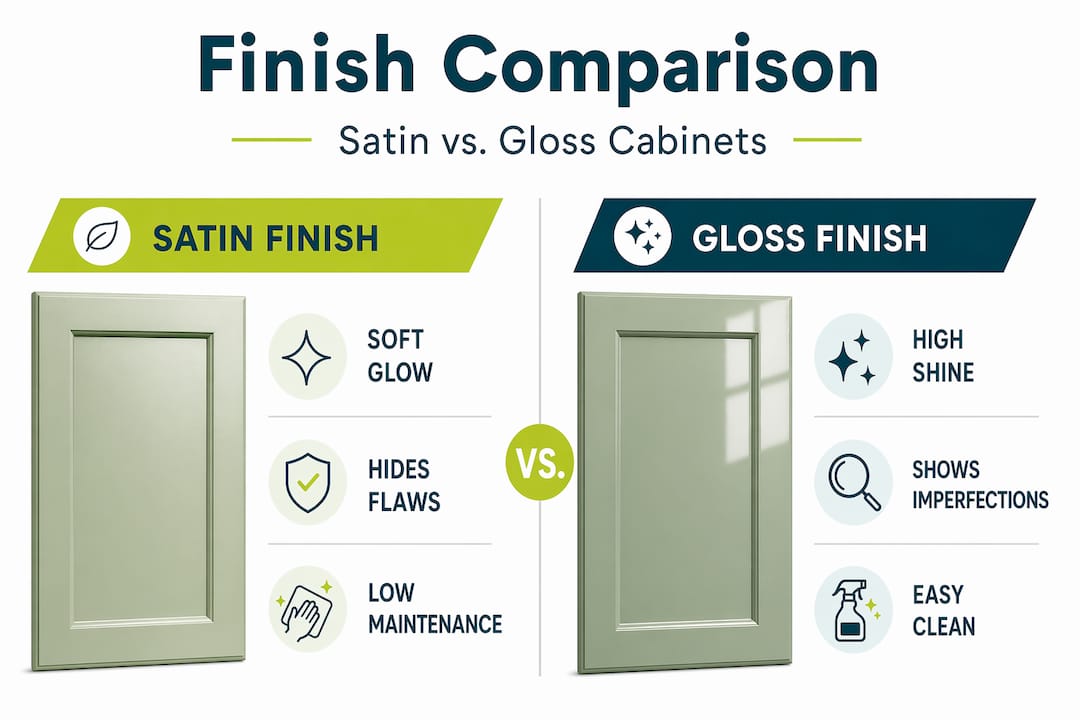
Semi-gloss steps up the shine considerably. It’s easy to wipe down, and it handles humidity well. The trade-off is that semi-gloss reflects more light, which means it highlights every surface imperfection. Dents, filler lines, and brush marks become much more visible. If your cabinet boxes aren’t perfectly smooth, semi-gloss will tell on them.
Gloss finishes look stunning in photos and in very controlled, well-lit spaces. They are also the hardest finish to apply well. Every drip, lap mark, and brush stroke shows. Gloss demands near-perfect prep and technique.
Satin sits right between all of these. Satin’s softer glow balances brightness with practical flaw concealment, which is exactly why so many Ottawa homeowners land on it during a cabinet update.
Pro Tip: If your cabinets have older filler repairs or small dings you couldn’t fully sand out, satin finish is far more forgiving than semi-gloss. Semi-gloss over imperfect prep is a recipe for a finish that looks worse than what you started with.
Choosing between these sheens also comes down to how sheen affects durability. Satin’s moderate sheen level means the paint film is harder than a matte coat but not quite as rock-hard as a full gloss. For most kitchen environments, that’s more than adequate.
Benefits of satin finish cabinets in Ottawa kitchens
Ottawa kitchens get real use. Cold winters mean more time spent cooking at home. That translates to grease splatter near the stove, steam near the dishwasher, and small hands touching cabinet fronts all day. Here’s why the benefits of satin finish make it a strong choice for that environment.
Moisture resistance. Satin resists moisture and stains better than matte finishes, which matters in a kitchen where steam is a daily reality. The semi-hard film doesn’t absorb water the way flat paint does.
Easy to clean. A damp cloth handles most grease and food splatter on satin cabinets without any scrubbing. Matte finishes often require more effort and can look worn after repeated wiping.
Fingerprint and smudge concealment. Satin’s moderate sheen reduces the appearance of fingerprints and common kitchen wear. Gloss finishes make every fingerprint look like evidence.
Versatile design fit. Satin works across farmhouse, transitional, and traditional kitchen styles popular in Ottawa neighborhoods. It doesn’t pull too contemporary or too rustic, which gives you flexibility if your style evolves.
Forgiving on imperfections. Minor surface defects are far less visible under satin than under semi-gloss or gloss, which is helpful if you’re working with older cabinet boxes that have seen some wear.
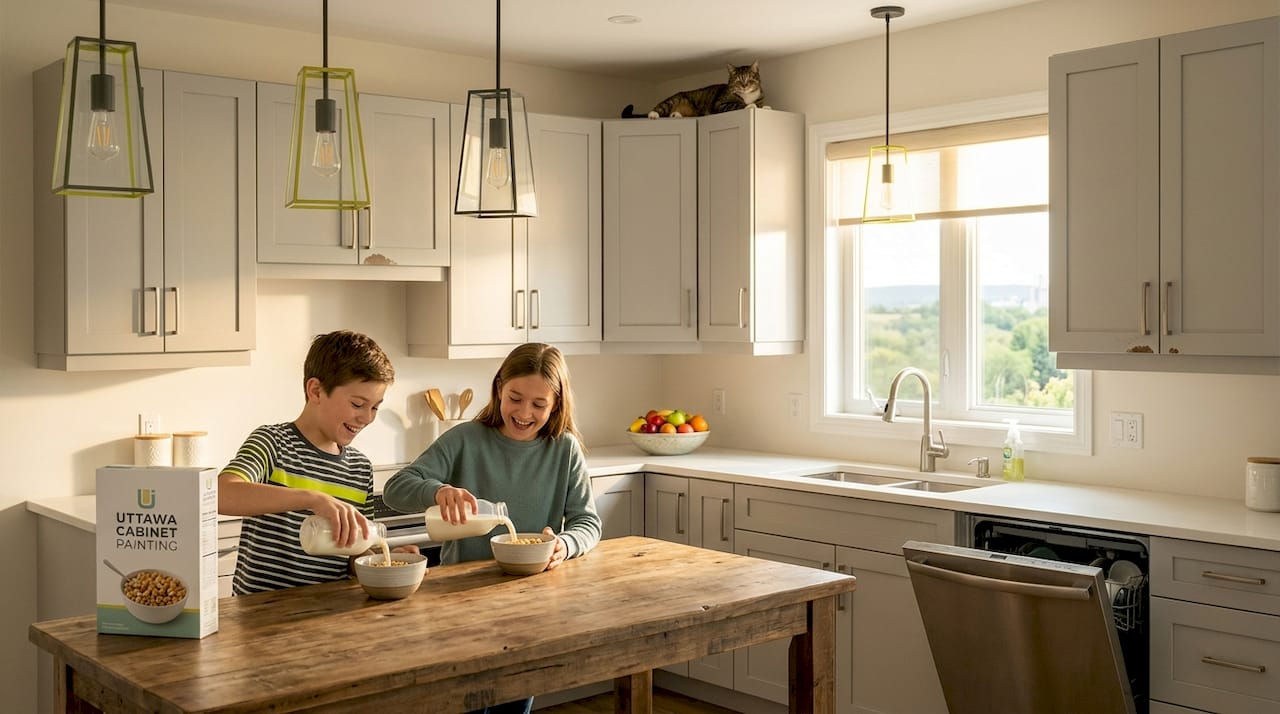
For family homes with kids, pets, and daily cooking, satin is genuinely the most practical choice on the sheen scale. It’s durable enough to handle the workload and forgiving enough to keep looking good between deep cleans. You don’t need to wipe down your cabinets every other day just to keep them looking presentable.
The Ottawa climate adds one more reason to favor satin. Seasonal temperature swings and fluctuating indoor humidity mean cabinet surfaces expand and contract slightly throughout the year. A moderately flexible satin film handles those small movements better than a very hard gloss coat, which can crack or peel at stress points over time.
Pro Tip: When comparing satin finish cabinets to other options, look at the right gloss level for your specific cabinet style, door profile, and kitchen lighting before making a final call. The same sheen can read very differently across different colors and door styles.
Satin cabinet paint options and how to apply them well
Knowing what satin finish is matters. Knowing how to apply it well is what separates a beautiful result from a frustrating one. Here are the key steps and decisions you’ll face.
Choose the right product type. Waterborne alkyd paints are the go-to for satin finish cabinets because they level beautifully, dry hard, and clean up with water. Benjamin Moore’s Satin Impervo is a well-known low-luster alkyd satin formula recommended specifically for cabinets and trim, prized for its smooth self-leveling and washability. Straight acrylic latex satin paints are a more budget-friendly option, though they typically don’t level as smoothly.
Mix thoroughly before every use. This is critical. Flattening agents in satin paint settle toward the bottom of the can between uses. If you skip stirring or only mix for a few seconds, you’ll get higher-gloss patches on your finished cabinets. Stir for at least two full minutes, and stir again if you take a long break mid-project.
Prep the surface before you touch a brush. Satin finish is forgiving, but it’s not magic. Sand cabinet surfaces with 220-grit paper, clean off all dust and grease with a degreaser, and apply a shellac-based or bonding primer before your topcoat. Skipping primer is one of the most common mistakes homeowners make, and the finish will show it within a year.
Use the right tools. A foam roller produces the smoothest surface on flat cabinet doors. Follow up with a high-quality synthetic brush for edges and inside corners. A satin’s lower sheen hides painting imperfections better than gloss, but visible brush strokes still happen if you’re using a cheap brush with too much paint loaded.
Apply thin coats and let each one dry fully. Two thin coats outperform one thick coat every time. A thick coat of satin paint will sag, trap brush marks, and dry with an uneven sheen. Thin coats level flat, cure properly, and build a harder film overall.
For a deeper look at how Ottawa kitchen finishes compare, the best cabinet finishes guide covers how satin stacks up against other popular options in modern kitchen design.
My honest take on satin finishes after years of Ottawa kitchens
I’ve seen a lot of homeowners agonize over sheen levels only to pick gloss because it “looks more expensive” in the store. Then, six months later, they’re calling us because every fingerprint and prep imperfection is on full display. That’s a predictable outcome.
In my experience, satin is the finish that holds up to real life the best. It’s not the flashiest choice, but it’s the one that keeps looking good two, three, four years after application. The kitchens we’ve finished in satin still look intentional and clean long after the ones done in semi-gloss have started showing wear patterns around the handles.
What I’ve learned is that homeowners often underestimate how much sheen amplifies prep quality. A satin finish on a well-prepped cabinet looks polished and professional. The same satin finish over rushed prep still shows every flaw you thought it would hide. The finish doesn’t do the work. The prep does.
My honest advice to anyone considering this for the first time: don’t choose your sheen in isolation. Consider your cabinet condition, your lighting, and how much maintenance you’re willing to do. Satin hits the right balance for most Ottawa kitchens, but only if it’s applied over proper prep with quality product. Cut corners on either one, and the sheen level becomes irrelevant.
— Ottawa
Get professional satin cabinet finishing in Ottawa
At Ottawacabinetpainting, we’ve helped hundreds of Ottawa homeowners get that clean, polished kitchen look without tearing out their existing cabinets. Our process covers every step, from degreasing and sanding through primed coats and a final satin topcoat that looks and feels like a factory finish.
If you want results that hold up for years, not months, professional application makes the difference. We use top-of-the-line waterborne alkyd products and take the time to prep every surface properly before a drop of paint is applied. That’s what our 6-year warranty is built on.
Ready to see what’s possible? Browse our cabinet transformations to see real Ottawa kitchens finished in satin, and explore our interior cabinet services to get started with a free quote.
FAQ
What is a satin cabinet finish in simple terms?
A satin cabinet finish is a low-to-medium sheen paint finish that produces a soft, velvety glow on cabinet surfaces. It reflects more light than matte but far less than gloss, making it a practical and good-looking choice for kitchen cabinets.
Is satin finish durable enough for kitchen cabinets?
Yes. Satin is more durable than matte and resists moisture and stains well in kitchen environments. It handles regular wiping and daily use without wearing through quickly, making it one of the best cabinet finish types for high-traffic homes.
How does satin vs. gloss finish compare for cabinets?
Satin hides surface imperfections and fingerprints much better than gloss. Gloss is harder and easier to clean but amplifies every prep flaw and brush mark. Most Ottawa homeowners find satin the better everyday choice unless their cabinets are in near-perfect condition.
What are the best satin cabinet paint options?
Waterborne alkyd satin paints, such as Benjamin Moore Satin Impervo, are widely recommended for kitchen cabinets due to their smooth self-leveling, hard dry film, and washability. High-quality acrylic latex satin paints are a more affordable alternative, though they typically level with slightly less smoothness.
Can I apply satin cabinet paint myself as a DIY project?
You can. Satin’s lower sheen hides painting imperfections better than gloss, which makes it more forgiving for first-time painters. The key is thorough prep, proper priming, and thin coats. Rushing the prep is the most common reason DIY satin finishes don’t last.
Recommended
Comments