Transform your kitchen into a family hub affordably
- Axcell Painting

- 20 hours ago
- 10 min read
TL;DR:
Modern kitchens have evolved into central social spaces where families gather, communicate, and bond daily. Strategic, affordable upgrades like cabinet painting, better lighting, and smart storage enhance functionality, appeal, and safety for multigenerational households without costly renovations. Layout choices such as flexible zoning support natural family interaction, making the kitchen more inclusive and adaptable to real-life needs.
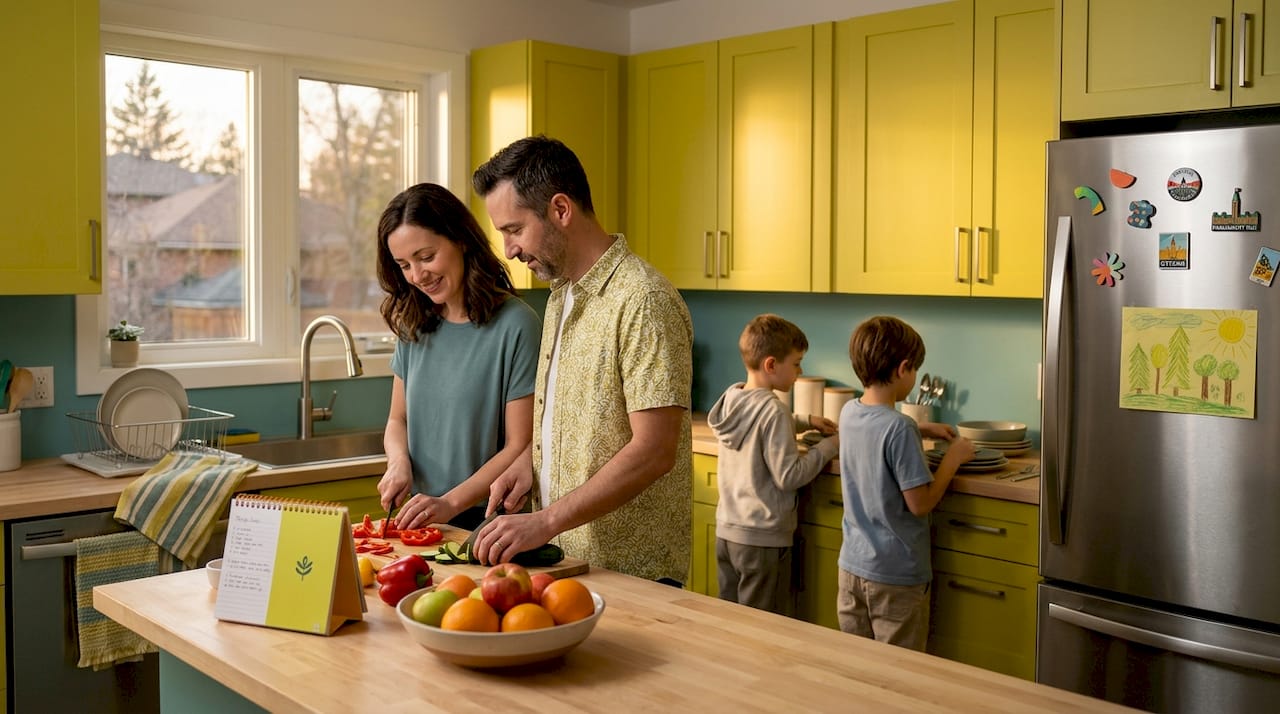
Your kitchen is more than a room where meals get prepared. It’s where your kids do homework at the island while you cook, where your family debriefs after a long day, and where the real conversations happen. Research confirms that the kitchen has evolved from a purely functional cooking space into the central social hub of the modern home. For Ottawa homeowners, that means your kitchen deserves real investment in how it looks and feels, and the good news is you don’t need a full gut renovation to get there.
Table of Contents
Key Takeaways
Point | Details |
Kitchen as family hub | Modern kitchens support family connection, not just meal prep. |
Small upgrades, big value | Affordable changes like painting cabinets can vastly improve both look and ROI. |
Design for all ages | Features like slip-resistant floors and flexible zones help every family member. |
Flexible layout wins | Zoning (open or broken-plan) creates comfort and togetherness in busy homes. |
Habits matter most | How your family uses the kitchen shapes its role more than expensive renovations. |
How the kitchen became Ottawa’s family gathering place
Not long ago, the kitchen was a back-of-the-house utility zone. Closed off from the living room, it was purely a workspace for whoever was cooking. Guests stayed in the living room. Kids were kept out of the way. The kitchen wasn’t a place to linger.
That has changed completely. Today, as the kitchen’s social role has shifted, families gather there almost instinctively. The act of cooking together, helping with homework at the counter, sharing morning coffee before school, or catching up after work, all of these happen in the kitchen more than anywhere else in the house.
“The kitchen has evolved from a functional cooking space to the central social hub of the modern home, serving as a place for family encounters, rituals, and bonding.”
Understanding this shift matters when you’re planning upgrades. If you treat your kitchen as a purely functional room, you’ll invest in the wrong things. But when you see it as the heart of your home, your upgrade decisions become much more purposeful.
Here are the real benefits a family-centered kitchen delivers every day:
Stronger daily connection. Families who share kitchen time, whether cooking, eating, or just talking, report stronger bonds and better communication.
More consistent routines. When the kitchen is comfortable and welcoming, morning and evening routines become smoother and more predictable for everyone.
A space for all ages. A well-designed kitchen accommodates toddlers, teenagers, and grandparents, making it genuinely multi-generational.
Increased home value. A kitchen that functions beautifully and looks modern appeals to buyers, giving you a strong return when you eventually sell.
Reduced household stress. A cluttered, dated, or dysfunctional kitchen creates friction. A clean, organized, attractive kitchen does the opposite.
The shift in how we use kitchens is real, and it should directly inform how you invest in yours.
Must-have features for a family-first kitchen
With the kitchen’s emotional role clear, let’s look at which specific features actually make a kitchen work for families. Not every upgrade is created equal. Some changes look great in photos but don’t improve your daily experience at all. Others are less glamorous but genuinely transform how your family uses the space.
The most effective kitchen renovation features for families balance durability, flexibility, and visual appeal. When you’re thinking through your upgrade priorities, start by setting family goals for your kitchen before spending a single dollar.
Here’s how the main layout options compare for family use:
Layout type | Best for | Key benefit | Main drawback |
Traditional enclosed | Smaller homes | Defined cooking zone | Isolates the cook |
Open-plan | Larger families | Maximum visibility | Noise and smell spread |
Broken-plan | Multi-generational | Balance of connection and privacy | Requires planning |
Flexible zone | Active families | Adaptable to daily needs | Needs smart storage |
For families sharing a kitchen across generations, the considerations go even further. Broken-plan designs use partitions for privacy while maintaining family connection, and in multi-generational homes, lower counters, slip-resistant floors, and voice technology make the space accessible and safe for everyone.
Key features worth prioritizing in any family kitchen include:
Durable surfaces. Painted cabinets with a hard, factory-style finish hold up to daily contact, cleaning, and the occasional bump far better than older stained wood or laminate.
Slip-resistant flooring. This is non-negotiable if you have young children or elderly family members. Porcelain tile, textured vinyl, or matte-finish hardwood all work well.
A conversation zone. An island, peninsula, or even a small seating nook lets family members gather without getting in the cook’s way.
Smart storage. Deep drawers, pull-out shelves, and a well-organized pantry reduce chaos and make the kitchen easier for everyone to navigate.
Good lighting layers. Task lighting under cabinets, ambient overhead lighting, and accent lighting over an island each serve a different function and collectively make the kitchen more livable at all hours.
Pro Tip: If a full island isn’t in your budget, a freestanding butcher block cart creates a flexible prep and gathering zone for a fraction of the cost, and you can move it when needed.
Affordable upgrades that make a big impact
After covering the must-have family kitchen features, we want to talk honestly about cost. Because the biggest obstacle Ottawa homeowners face isn’t knowing what they want. It’s figuring out how to get there without spending a fortune.
Full kitchen remodels are expensive. Median remodel costs in the US range from $22,000 to $60,000, and Canadian figures are comparable or higher when you factor in labor and material costs in Ottawa. That’s a significant investment that most families simply can’t or don’t want to make right now.
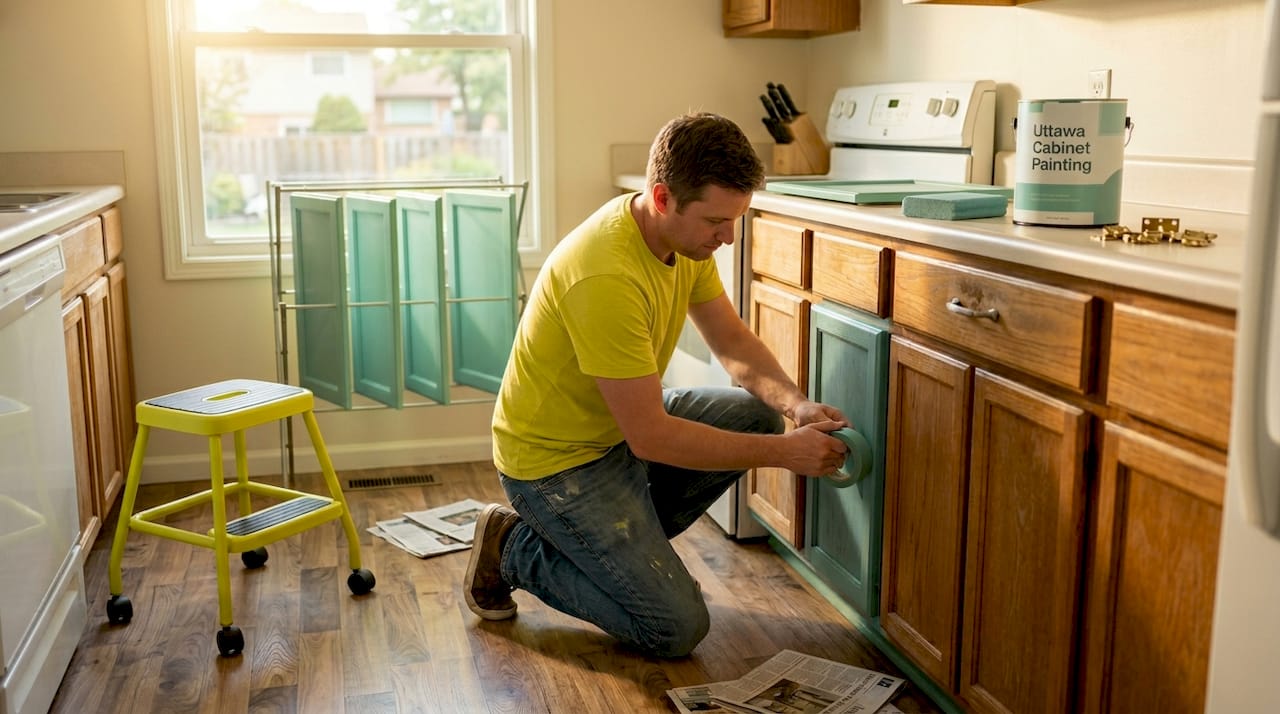
The good news is that minor upgrades, done strategically, yield a surprisingly high return. Painting or refacing cabinets for under $6,000 can transform the look of your kitchen completely without touching a single wall or appliance. That’s the kind of smart investment that makes real sense.
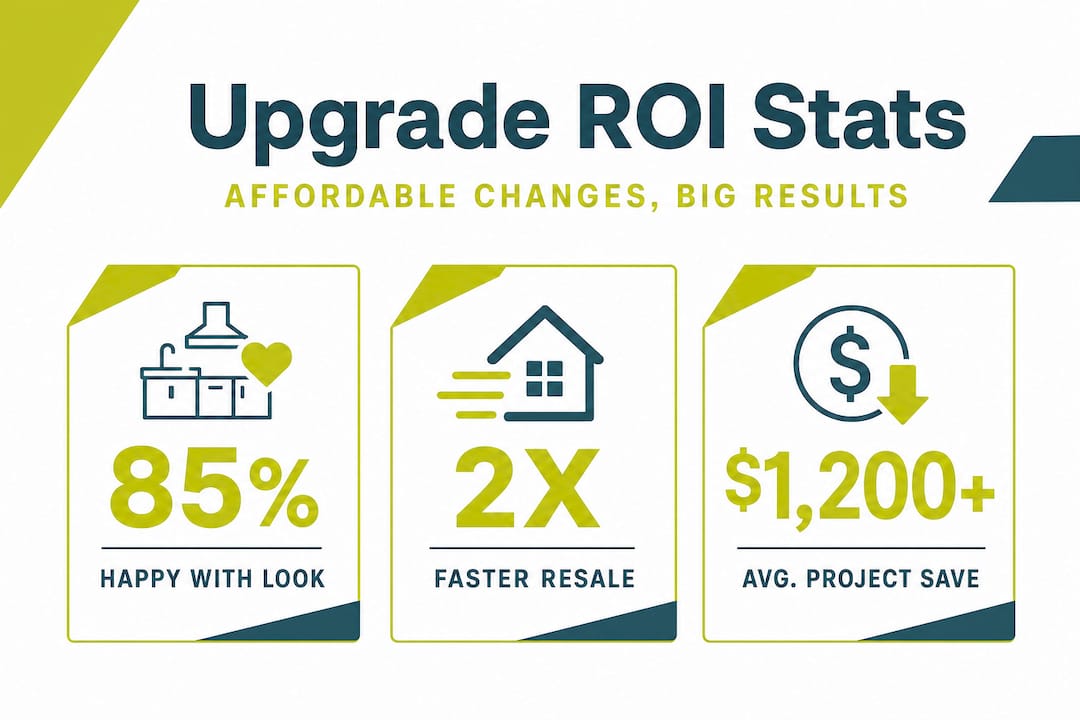
Here’s how the numbers break down in practical terms:
Upgrade | Estimated cost (Ottawa) | Impact on look | Family functionality boost |
Cabinet painting | $2,500 to $5,500 | Very high | High (cleaner, brighter) |
New hardware | $150 to $600 | Medium-high | Medium |
Under-cabinet lighting | $200 to $800 | High | High (task lighting) |
Open shelving addition | $300 to $1,200 | Medium | Medium-high |
Cabinet refacing | $4,000 to $8,000 | High | Medium |
Full cabinet replacement | $12,000 to $25,000+ | Very high | High |
The case for cabinet painting is especially strong. When you look at the cost of updating kitchen cabinets in Ottawa versus replacing them entirely, the savings are dramatic, often 70% or more, while the visual result can be just as striking.
Here’s a straightforward order of priority for getting the most out of a limited budget:
Start with cabinets. They cover the most visual surface area in your kitchen. Painting them a fresh, modern color instantly modernizes the entire room.
Update hardware next. New pulls and knobs are inexpensive and take as little as an afternoon to swap out. They make freshly painted cabinets look complete and intentional.
Improve your lighting. Add under-cabinet LED strips for task lighting and consider a statement pendant over the island or dining area.
Address flooring if needed. If your floor is visibly dated or poses a safety concern, this moves up the priority list. Otherwise, it can wait.
Add open shelving or a small island. These add both storage and a social dimension to the kitchen without major construction.
If you’re weighing your options more carefully, it’s worth understanding the difference between painting vs refacing cabinets, since each serves a different situation and budget.
Pro Tip: Focus your upgrade dollars on the surfaces you and your family see and touch every single day. Cabinets, counters, and lighting have a far greater impact on your daily experience than upgraded appliances that mostly work behind the scenes.
For more ideas sized to real family budgets, our budget-friendly kitchen ideas guide covers a wide range of options that Ottawa homeowners have used effectively.
Design strategies: open, broken-plan, and flexible zones
Knowing which upgrades are most effective, it’s worth understanding how different kitchen layouts amplify or hinder family togetherness. Because the layout of your kitchen shapes how your family actually behaves in it every single day.
Open-plan kitchens, the ones with no wall between the kitchen and living or dining area, became enormously popular in Ottawa homes over the past two decades. They work well for visibility and flow. You can cook while keeping an eye on the kids, and guests feel included rather than separated. But they come with real trade-offs: cooking smells travel everywhere, noise from the kitchen interrupts movie nights, and there’s nowhere to hide a messy prep area from company.
Research on how families actually use shared kitchen spaces suggests that flexible zoning outperforms rigid layout triangles for the chaotic reality of family life. The traditional “kitchen work triangle” (sink, stove, fridge) was designed for a single cook working alone. Real family kitchens often have two or three people moving through the space at once.
“Experts favor flexible zoning over rigid triangles for the realities of shared, multi-person cooking. Ethnographic studies of family kitchens confirm that adaptable layouts support more natural interaction and less conflict.”
Here’s how to build more flexibility into your existing layout without moving a wall:
Use an island or peninsula to create a natural buffer between the cooking zone and the family seating area.
Add a dedicated homework or activity corner near the kitchen so kids can be present without being underfoot.
Use open shelving on one wall to break up the visual weight of upper cabinets while keeping the space feeling open.
Consider cabinet color to define zones. Painting your island a contrasting color, such as a deep navy against white perimeter cabinets, visually separates cooking and gathering zones without any construction.
Place seating at a counter height that allows conversation with whoever is cooking. This small adjustment changes the entire social dynamic of the space.
For Ottawa families thinking about how their kitchen connects to adjacent living areas, our guide on kitchen family room design offers practical ideas. And if you’re not sure which direction to take your layout visually, our article on kitchen layout and cabinet color walks through how color choices reinforce or contradict your layout goals.
Why “family kitchen” is more about habits than hardware
Here’s an honest perspective we think is worth sharing. After working in Ottawa kitchens of every size and style, we’ve noticed something that design magazines rarely say out loud: the families with the warmest, most connected kitchens aren’t always the ones with the most expensive upgrades.
The kitchens that truly become family hubs are the ones that get used deliberately. Families who cook together even one or two nights a week, who eat at the kitchen island instead of scattering to separate rooms, who treat the kitchen as a place to be rather than just a place to pass through, those are the kitchens that matter. The hardware helps, but the habits are what create the warmth.
That said, we’re not saying your kitchen’s appearance doesn’t matter. It absolutely does. A dated, dingy kitchen with peeling cabinet paint and bad lighting sends a subconscious signal that the space isn’t worth spending time in. A fresh, clean, modern kitchen invites people to linger. The physical environment shapes behavior.
The practical point is this: you don’t need to spend $40,000 to create that inviting environment. A thoughtful cabinet repaint, some updated lighting, and a few intentional changes to how you use the space will do more for your family’s kitchen experience than a full renovation that leaves the habits unchanged. We’ve seen homeowners go through complete kitchen overhauls and still eat every meal in front of the TV. We’ve also seen a freshly painted kitchen with an island become the genuine center of family life.
If a full renovation feels out of reach right now, explore kitchen renovation alternatives in Ottawa that deliver real results without the disruption or the price tag.
The kitchen you have can become the kitchen your family deserves. It just takes the right priorities.
Ready to transform your kitchen? Ottawa experts can help
With a clearer sense of what makes a kitchen genuinely family-friendly and which upgrades deliver the most value, the next step is finding the right team to bring it to life. At Ottawa Cabinet Painting, we specialize in exactly the kind of focused, high-impact work that transforms how your kitchen looks and feels without tearing it apart.
Our cabinet painting specialists use a meticulous process that includes thorough prep, shellac-based primer, and top-of-the-line paint application to achieve a seamless, factory-finished result that holds up to real family life. We back every project with a 6-year warranty because we stand behind the quality of our work. You can also explore our interior painting options to freshen up adjacent spaces at the same time. Browse our before-and-after results to see exactly what a professional cabinet transformation looks like in real Ottawa homes, and get in touch for a quote when you’re ready.
Frequently asked questions
What are the most affordable kitchen upgrades for families?
Painting cabinets, updating hardware, and improving lighting are the three most cost-effective ways to refresh your kitchen for family use. Minor updates like painting or refacing cabinets for under $6,000 deliver a high return compared to a full remodel costing $22,000 or more.
What is a broken-plan kitchen and why is it family-friendly?
A broken-plan kitchen uses partitions, half-walls, or level changes to create semi-private zones within an open layout. According to broken-plan kitchen design principles, this approach lets family members stay connected while still having some separation from cooking noise and activity.
Do minor kitchen upgrades add value to my Ottawa home?
Yes, and the return on investment for cabinet painting and refacing is consistently strong. Minor kitchen updates cost a fraction of full remodels while significantly improving buyer appeal and daily livability, making them smart investments for Ottawa homeowners.
How can I make my kitchen safer for kids and older family members?
Slip-resistant flooring, lower counter sections, and voice-activated technology are the most impactful safety upgrades. Multi-generational kitchen design recommendations consistently highlight these three features as priorities for households with young children or elderly relatives.
What’s the main difference between open-plan and flexible zone kitchens?
Open-plan removes physical barriers entirely for one continuous space, while flexible zone kitchens use furniture, islands, or partitions to create distinct areas within an open footprint. Research on family kitchen use shows that flexible zones handle the reality of multiple people cooking and gathering simultaneously far better than a fully open layout.
Recommended
Comments