How quality control ensures perfect cabinet refinishing

TL;DR:
Quality control in cabinet refinishing involves applying consistent standards at every stage, from surface prep to final inspection, ensuring durable and flawless results. Without strict quality oversight, the finish may peel, chip, or fade quickly, reducing the kitchen’s aesthetic appeal and longevity. Implementing a documented, step-by-step process guarantees value, long-term durability, and a polished appearance that homeowners can rely on for years.
Refinishing your kitchen cabinets sounds straightforward until you see someone else’s results: blotchy color, paint that peels within a year, or a texture that looks nothing like the smooth, factory-finished look you imagined. Many Ottawa homeowners assume these outcomes are just part of the process. They are not. The real difference between a kitchen that looks stunning for years and one that disappoints within months comes down to quality control at every stage of the refinishing process. When quality control is built into the job from day one, the results are consistent, durable, and genuinely worth the investment.
Table of Contents
Key Takeaways
Point | Details |
Quality drives results | Strict quality control ensures cabinets look better and last longer. |
Affordable excellence | Ottawa homeowners can get high-quality refinishing without overspending. |
Process transparency | Knowing the refinishing steps and checks helps you avoid common pitfalls. |
Value over shortcuts | Cutting corners on quality control often leads to higher costs and more disruption later. |
What is quality control in cabinet refinishing?
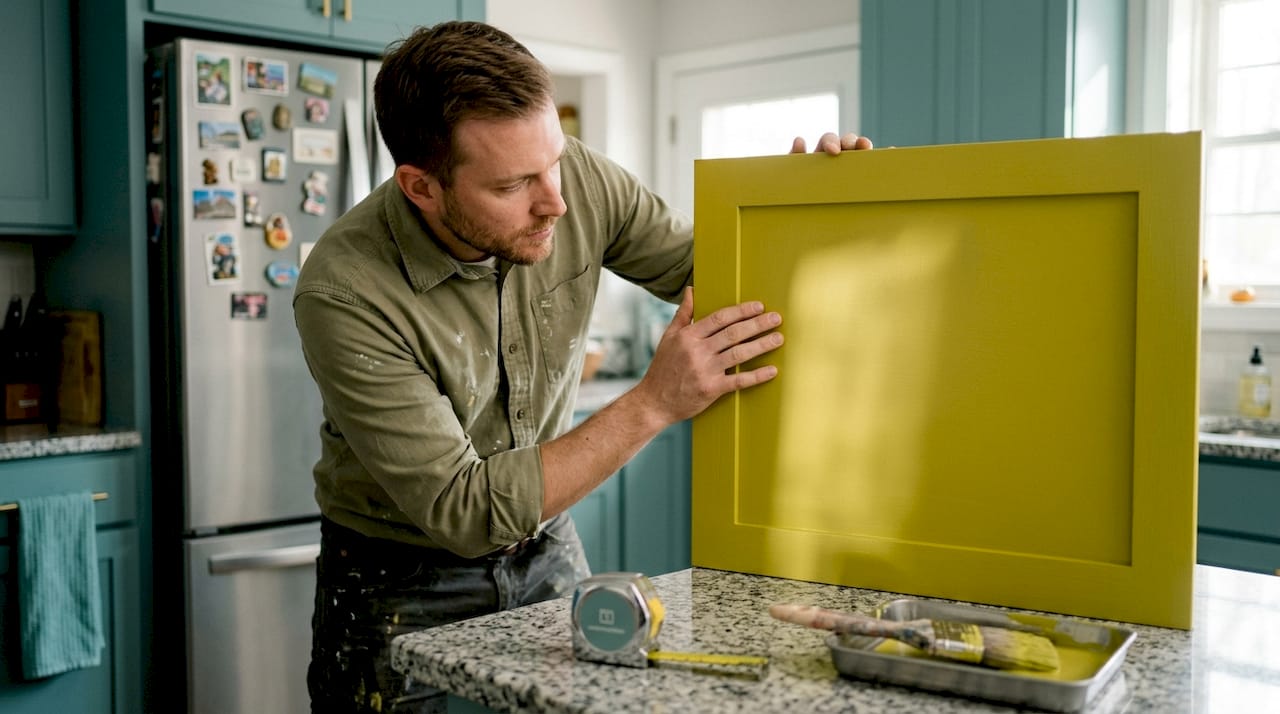
Having challenged common worries about poor results, it’s essential to understand what quality control actually means for cabinet refinishing. It is not simply a final glance at the finished product before the crew packs up. In professional refinishing, quality control means applying a documented, repeatable set of standards at every single step, from the moment the first cabinet door is removed to the moment you sign off on the final walkthrough.
Quality control involves inspecting surface prep, paint application, and finish for lasting results. Each phase of the job has specific criteria that must be met before moving to the next. Think of it as a gating system: nothing proceeds until the previous step passes inspection. This is the foundation of understanding professional refinishing and why it produces results that amateur or rushed jobs simply cannot match.
Here is what a thorough quality control program evaluates during a refinishing project:
Surface preparation: Are all grease, grime, and old coatings fully removed? Are there any cracks, dents, or rough patches that need filling before priming?
Masking and protection: Are countertops, appliances, and adjacent surfaces adequately covered to prevent overspray or drips?
Primer application: Is the shellac-based or recommended primer applied evenly, and has it fully cured before paint goes on?
Paint coat inspection: Is each coat applied at the correct thickness? Are there runs, sags, or dry-spray areas that need attention?
Drying and curing time: Has each coat had sufficient time to dry before sanding or recoating?
Final finish review: Is the surface smooth, consistent in color, and free of any imperfections?
Pro Tip: Before you hire any refinishing contractor, ask them directly: “Can you walk me through your quality assurance checklist?” A contractor who cannot answer that question in specific, confident terms is likely skipping steps that will cost you later.
Why quality control matters: Durability, aesthetics, and value
Now that you know what quality control is, let’s explore exactly why it matters for your kitchen’s lasting beauty and value. Ottawa kitchens take a beating. Cooking steam, grease, heavy daily use, and temperature changes throughout our seasons all put cabinets to the test. Without a disciplined quality control process, a refinishing job can look acceptable on day one and begin chipping, peeling, or discoloring within six months.
Poor quality control shows up in predictable, frustrating ways:
Paint that bubbles or peels because the surface was not properly cleaned or the primer was skipped
Uneven color because coats were applied too quickly without proper drying intervals
A rough, textured surface because sanding between coats was skipped to save time
Drips and runs that harden into permanent imperfections
Premature wear at cabinet edges and corners because those high-contact areas were not given extra attention
Strong quality control delivers the opposite: a finish that holds up, looks flawless, and adds real value to your home. Ottawa homeowners can expect a 96% ROI from professionally refinished cabinets when the work follows a quality-focused process. That is a significant return, especially compared to the disruption and expense of a full kitchen renovation.
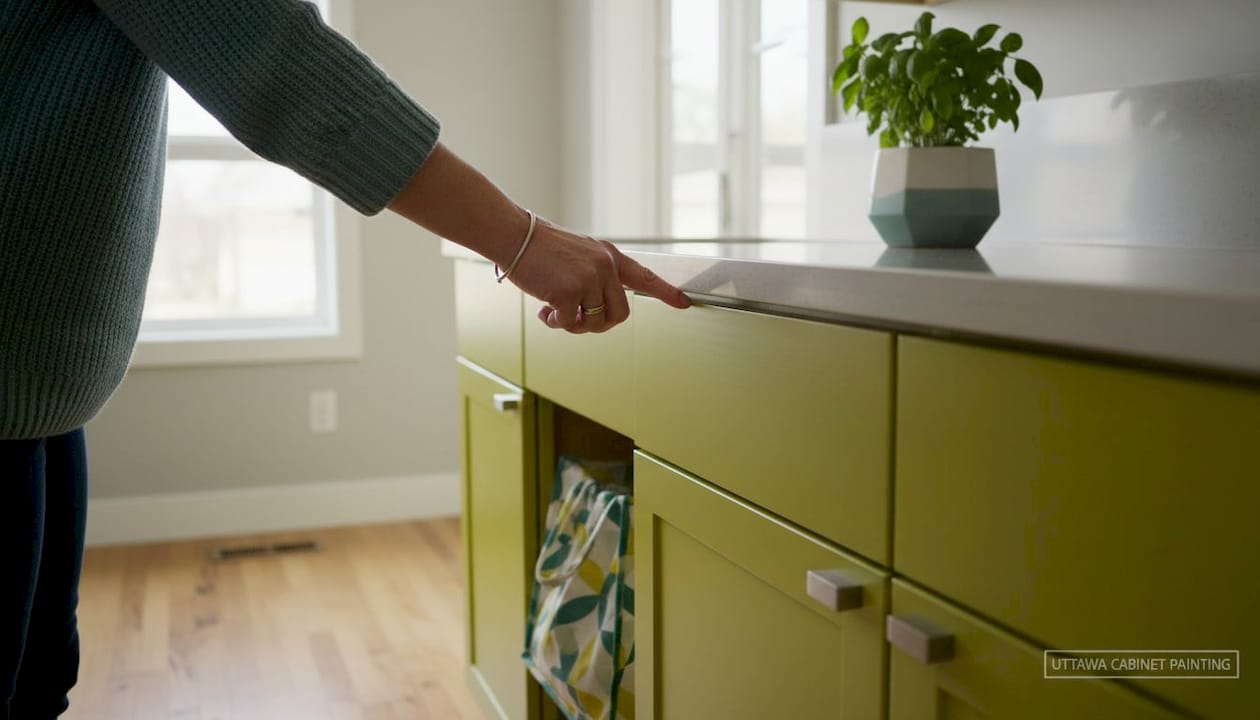
Visually, the difference is obvious. Even color, a seamless surface free of brush marks, and edges that look clean and crisp are the hallmarks of quality-controlled work. Your kitchen looks polished and intentional, not patchy or rushed.
Here is a clear comparison to put the stakes in perspective:
Factor | With robust quality control | Without quality control |
Surface prep | Fully cleaned, filled, sanded | Spot-cleaned or skipped |
Primer | Even coat, full cure time | Thin, rushed, or skipped |
Paint application | Multiple coats, proper drying | One or two coats, fast-tracked |
Final finish | Smooth, even, showroom-quality | Rough, uneven, visible flaws |
Durability | 6+ years with minimal touch-ups | Peeling or chipping within 1-2 years |
Cost over time | Low, long-term value | High due to repairs or redoing |
“Investing in quality control from the start is not a luxury. For Ottawa homeowners, it is the single most effective way to protect your refinishing budget and avoid the costly cycle of rework.”
An affordable kitchen renovation done right the first time always costs less than one that needs redoing. The math is simple, even if the execution is not.
How quality control is implemented during refinishing
If quality control is so crucial, what does it look like in action? Here’s how the best refinishing teams keep cabinet upgrades on track. The process is methodical and each checkpoint serves a specific purpose.
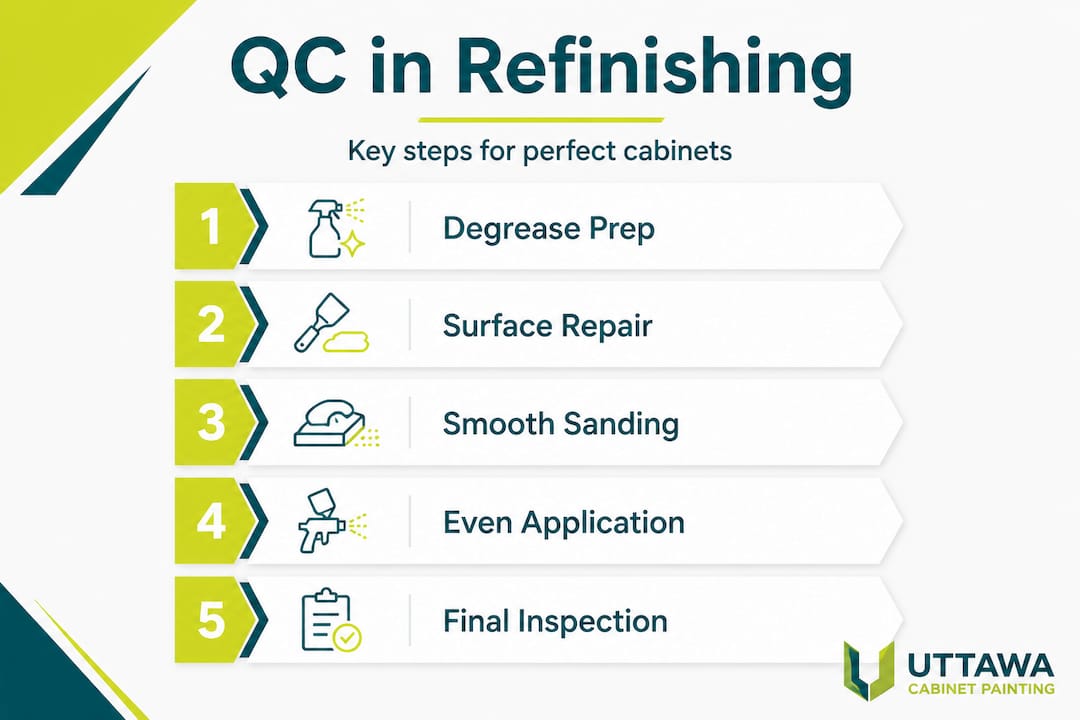
A professional refinishing process includes surface evaluation, dust control, layer checks, and final inspection as core quality assurance steps. Here is how that unfolds in practice:
Initial surface evaluation: The team inspects every cabinet door and frame for damage, existing coatings, and any areas that need repair. Nothing is assumed to be ready without a physical check.
Thorough cleaning and degreasing: Kitchen cabinets accumulate years of grease and residue. A proper degreasing protocol, often using TSP (trisodium phosphate) or a professional-grade cleaner, removes contamination that would prevent paint adhesion.
Sanding and surface leveling: All surfaces are sanded to create a profile that primer and paint can grip. High spots, old drips, and rough patches are leveled at this stage.
Masking and dust control: Countertops, floors, and adjacent walls are masked. A controlled environment minimizes dust contamination during painting, which is a common source of rough texture in rushed jobs.
Primer coat inspection: After priming, the team checks for even coverage, pinholes, or areas where the primer lifted old material. Any issues are corrected before paint is applied.
First paint coat and drying check: Each coat is inspected for coverage and uniformity. Drying time is measured, not guessed. Rushing this step is one of the most common shortcuts that cheap contractors take.
Inter-coat sanding: Between coats, light sanding smooths the surface and removes any dust nibs or minor imperfections. This is what creates that super smooth factory finish.
Final coat and full inspection: The last coat is applied and allowed to fully cure. A detailed walkthrough follows, checking edges, corners, and flat surfaces under proper lighting.
Homeowner signoff: The project is not complete until you walk through the kitchen with the crew and confirm every surface meets the agreed standard.
QC step done right | Shortcut to watch out for |
Full degreasing with professional cleaner | Wiping with a damp cloth and moving on |
Sanding between every coat | Skipping inter-coat sanding entirely |
Allowing proper cure time before recoating | Recoating within hours of the previous layer |
Priming with shellac-based or adhesion primer | Using standard wall primer or no primer at all |
Final walkthrough with homeowner | Job declared done without any review |
When choosing refinishing professionals, ask whether they follow a documented cabinet refinishing workflow. Reputable teams are not defensive about this question. They welcome it.
Pro Tip: Request a copy of the quality control checklist before work begins. Any professional refinisher who follows a real process will have one and will be happy to share it. If they hesitate or seem confused by the request, take that as a serious red flag.
Quality control and affordable refinishing: Striking the right balance
Balancing quality with affordability is the question for most Ottawa homeowners. Here’s how the best services make both possible. The good news is that rigorous quality control and affordable pricing are not opposites. The key is knowing what drives cost up unnecessarily and what drives quality down dangerously.
Professionally managed refinishing saves up to 60% compared to installing new cabinets, without sacrificing quality. That is a meaningful saving on a project that can otherwise run tens of thousands of dollars. The catch is that not all refinishing services deliver that value equally.
Common places where budget contractors cut corners include:
Skipping proper surface preparation because it is time-consuming and not visible to the untrained eye
Using low-quality paint that does not hold up to kitchen use, even if it looks fine initially
Applying fewer coats than the job requires to save on materials and labor time
Rushing drying and curing stages to finish the job faster and move to the next client
Skipping the final inspection or homeowner walkthrough entirely
These shortcuts are a recipe for disaster, and the homeowner pays the real price later through peeling paint, early wear, or the cost of hiring someone else to redo the entire job.
Smart strategies for getting both quality and affordable refinishing options include:
Get detailed, itemized quotes: A thorough quote that lists prep steps, materials, coats, and inspection procedures is a strong indicator of a contractor who takes QC seriously.
Ask about the paint product being used: Top-of-the-line cabinet paints, such as Benjamin Moore Advance or Sherwin-Williams Emerald Urethane, cost more but perform dramatically better over time.
Check for a warranty: A contractor who backs their work with a multi-year warranty, like the 6-year warranty we offer at Ottawa Cabinet Painting, is putting their reputation on the line. That is only possible when the process is consistently quality-controlled.
Request references or before-and-after photos: Visual evidence from similar Ottawa kitchens tells you more than any sales pitch.
Avoid choosing based on price alone: The lowest quote almost always reflects cut corners somewhere. Evaluate value based on what the process includes, not just the final number.
Explore cabinet refinishing cost savings in detail to understand exactly where your money goes and how to make it work harder.
Pro Tip: Invest in a thorough, clearly written contract that specifies every stage of the quality control process. If a contractor is unwilling to put their process in writing, that tells you everything you need to know about how they work.
Our perspective: Why many Ottawa kitchen renovations fail without robust quality control
Having covered the facts, here’s our hard-won perspective from years serving Ottawa kitchens. We have seen a consistent pattern: homeowners who went with a faster or cheaper option come back to us after the fact, frustrated and facing a worse situation than when they started. The rework costs more. The disruption is longer. And the kitchen they dreamed of is still out of reach.
The biggest myth we encounter is that a quick job with decent-looking paint will hold up just fine. It rarely does. The finish might look acceptable for the first few weeks. Then the edges start chipping. Then a door or two peels. By month six, the homeowner is back to square one, and this time they have already spent money once.
What makes on-site supervision and documented checks so critical is accountability. When there is a written process and a real inspection at each stage, there is nowhere to hide a shortcut. The crew knows that each step will be reviewed before the next begins. That changes behavior in a concrete, measurable way.
We also know from experience that Ottawa’s climate matters more than most homeowners realize. The freeze-thaw cycle, dry winters, and humid summers all stress cabinet surfaces. A refinishing job without proper curing time and quality primer will show those stresses within one or two seasons. Understanding what a cabinet refinisher does and demands of their craft is the foundation of knowing whether the contractor you’re hiring is the real deal.
The hidden cost of poor quality control is not just financial. It is the disruption of your home during rework, the disappointment of not getting the kitchen you envisioned, and the loss of confidence in the process altogether. We believe Ottawa homeowners deserve better than that, which is why quality control is not optional for us. It is the entire job.
Get flawless cabinet refinishing with proven quality control
If quality control is your top concern and it should be, here is where you can see it in action and book your project with confidence. At Ottawa Cabinet Painting, every project follows the same disciplined, documented process that we have outlined in this article. We do not skip steps, and we do not rush drying times. Browse our interior refinishing services to understand exactly what a quality-controlled project looks like from start to finish. View real before and after transformations from Ottawa kitchens just like yours. When you are ready to get a number on your project, request free cabinet refinishing quotes and see what a transparent, quality-focused process actually includes.
Frequently asked questions
What are the first signs of poor quality control in cabinet refinishing?
The earliest signs are uneven paint, peeling, and visible surface imperfections that appear within just a few months. As quality standards confirm, chipping and uneven surfaces point directly to poor preparation and missed inspections during the refinishing process.
How can I make sure my cabinet refinishing contractor uses proper quality control?
Ask for a written quality checklist before work begins and insist on a final walkthrough before making any payment. Final checklist and homeowner signoff are recognized components of professional quality assurance in cabinet refinishing.
Does robust quality control always cost more?
Not necessarily. Many Ottawa refinishing companies maintain high quality control standards while still saving you significant money. Professional cabinet refinishing delivers up to 60% cost savings compared to full cabinet replacement, even with thorough quality checks built into the process.
How does quality control affect the look of my kitchen?
Quality control ensures smooth, even finishes and consistent color that resist wear over years of daily kitchen use. Strong quality standards ensure consistent results that give your kitchen a polished, lasting aesthetic that holds up long after the project is complete.
Recommended
Comments