Transform your small Ottawa kitchen with cabinet painting

TL;DR:
Cabinet painting is a cost-effective way to modernize small Ottawa kitchens and improve light reflection.
Proper surface prep and choosing the right finishes increase durability and lifespan of painted cabinets.
Professional painting delivers longer-lasting results and minimal household disruption compared to DIY projects.
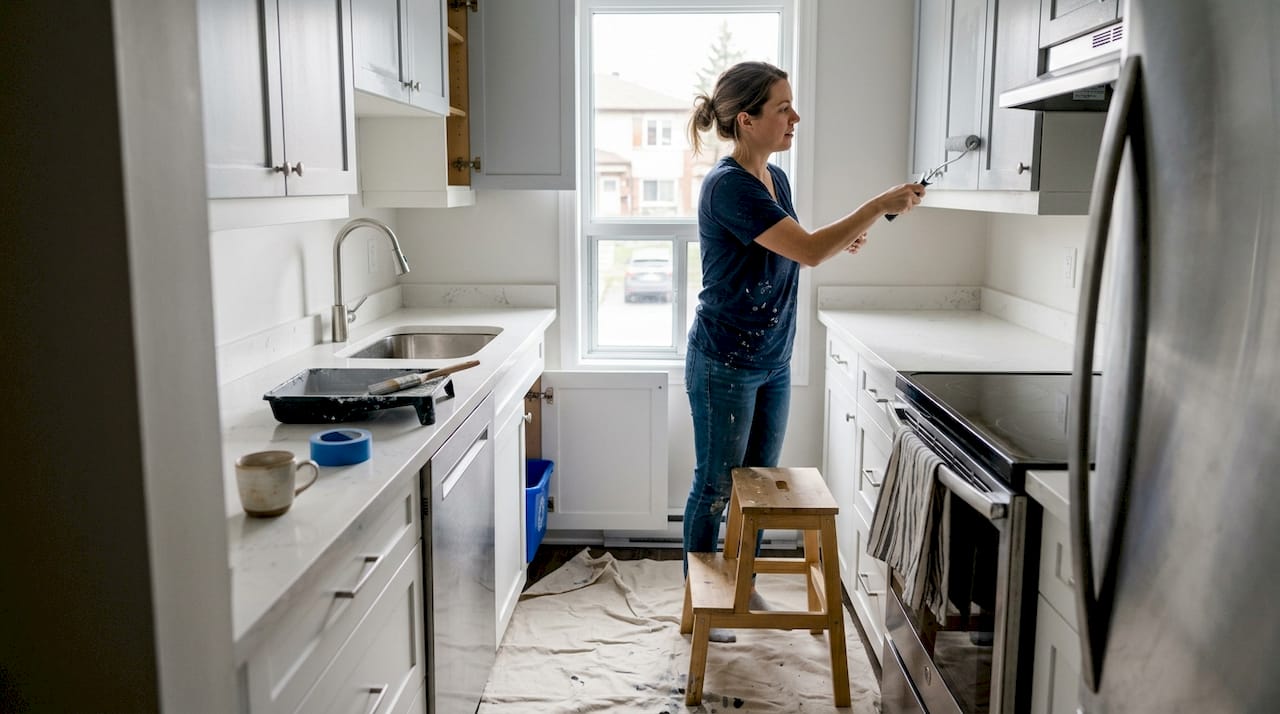
Small kitchens in Ottawa can feel dark, cramped, and outdated fast. Full cabinet replacement costs tens of thousands of dollars and turns your home into a construction zone for weeks. Cabinet painting offers a smarter path: a high-impact refresh that costs a fraction of the price and leaves your kitchen looking modern, bright, and completely renewed. In this guide, we walk you through why cabinet painting works so well in small spaces, what prep work actually looks like, how to choose the right colors and finishes, and how to decide whether to go DIY or hire a professional.
Table of Contents
Key Takeaways
Point | Details |
Prep is crucial | Investing extra time in surface cleaning, sanding, and priming ensures the paint job lasts and looks professional. |
Choose light colors | Light cabinet colors visually enlarge small kitchens and reflect more natural light. |
Know your material | Solid wood and MDF cabinets are best for painting; special prep is needed for laminate and melamine surfaces. |
Pro vs. DIY varies | Professional painting lasts two to three times longer and saves stress but costs more than a DIY approach. |
Consider local expertise | Ottawa-based professionals offer specialized services that minimize disruption and use finishes that withstand local conditions. |
Why cabinet painting is ideal for small Ottawa kitchens
Small kitchens have one major enemy: visual clutter. Dark, worn cabinets make a compact space feel even tighter. A fresh coat of the right paint changes everything. Light-colored cabinets reflect natural and artificial light, which makes walls feel farther apart and ceilings feel higher. That alone can transform how a kitchen feels to use every single day.
Beyond the visual impact, the practical benefits are hard to ignore. Cabinet painting is 60-70% cheaper than replacement, which means Ottawa homeowners can redirect serious money toward appliances, countertops, or other upgrades. You keep your existing layout, your existing hardware placement, and your existing storage configuration. Nothing gets torn out. Nothing needs to be rebuilt.
Here is what makes cabinet painting especially well suited for small Ottawa kitchens:
Light reflection: Pale finishes bounce light around the room, reducing the need for extra lighting fixtures.
Faster turnaround: Professional services complete the job in 3-5 days with minimal disruption to your household routine.
Low-VOC paint options: Eco-friendly, low-VOC (volatile organic compound) formulas are widely available in Ottawa, making the process safer for families and pets.
Durable modern finishes: Today’s cabinet paints are engineered for high-traffic surfaces, resisting chips, moisture, and everyday wear far better than standard wall paint.
The residential painting benefits extend well beyond aesthetics. A well-executed cabinet painting job adds real perceived value to your home without the chaos of a full renovation. For Ottawa homeowners working with compact kitchens, this is one of the most efficient upgrades available.
“Painting your cabinets instead of replacing them saves 60-70% of the cost while delivering a result that looks just as fresh and modern.”
Essential prep work for flawless results
Now that you know the benefits, let’s dive into the crucial preparatory work needed for a professional finish. This is where most DIY projects either succeed or fall apart. Proper surface preparation accounts for 50-70% of project time and prevents roughly 30% of common DIY failures like peeling and bubbling. Skipping even one step is a recipe for a finish that looks great for two months and then starts lifting at the edges.
Here is the sequence that delivers lasting results:
Remove all doors and hardware. Take cabinet doors completely off their hinges and set them flat for painting. Remove knobs, pulls, and hinges.
Degrease every surface. Kitchen cabinets accumulate grease and cooking residue. Use a strong degreaser like TSP (trisodium phosphate) or Krud Kutter to wipe every surface clean. Paint will not bond to grease, period.
Sand thoroughly. Sand with 120-grit paper first, then finish with 220-grit for a smooth surface the primer can grip. This step is non-negotiable.
Apply a bonding primer. Use a shellac-based primer like Zinsser BIN for best adhesion, especially on previously painted or stained surfaces. This is the foundation of a long-lasting finish.
Paint 2-3 thin coats. Thin coats dry faster, level better, and resist brush marks. Rushing this step with one thick coat causes drips and uneven texture.
Allow full cure time. Paint may feel dry to the touch in hours, but it needs 1-2 weeks to fully harden before you reinstall doors and start using the cabinets normally.
Pro Tip: In a small kitchen, label every door and every piece of hardware with masking tape and a marker before you remove anything. Reassembly goes much faster, and you will not end up with a cabinet door that does not quite fit where you put it.
For laminate cabinets, extra attention is required. Non-porous laminate surfaces need a dedicated bonding primer and light sanding or a liquid deglosser to give the paint something to grip. You can see how dramatic the difference looks in real Ottawa kitchens by checking out before and after cabinet painting results.
“The prep work is where the job is actually won or lost. A perfect paint job on a poorly prepped surface will not last.”
Best paint colors and finishes for small spaces
Once your surfaces are prepped, it’s time to choose colors and finishes that will transform your space. Color selection is not just about personal taste. In a small kitchen, the right color actively makes the room feel larger and more functional.
Light colors like white, off-white, pale yellow, and light gray reflect light and create a sense of openness that darker shades simply cannot match. Warm whites are perennially popular because they feel clean without feeling cold. Soft grays add a modern, sophisticated look that pairs well with stainless steel appliances common in Ottawa homes.
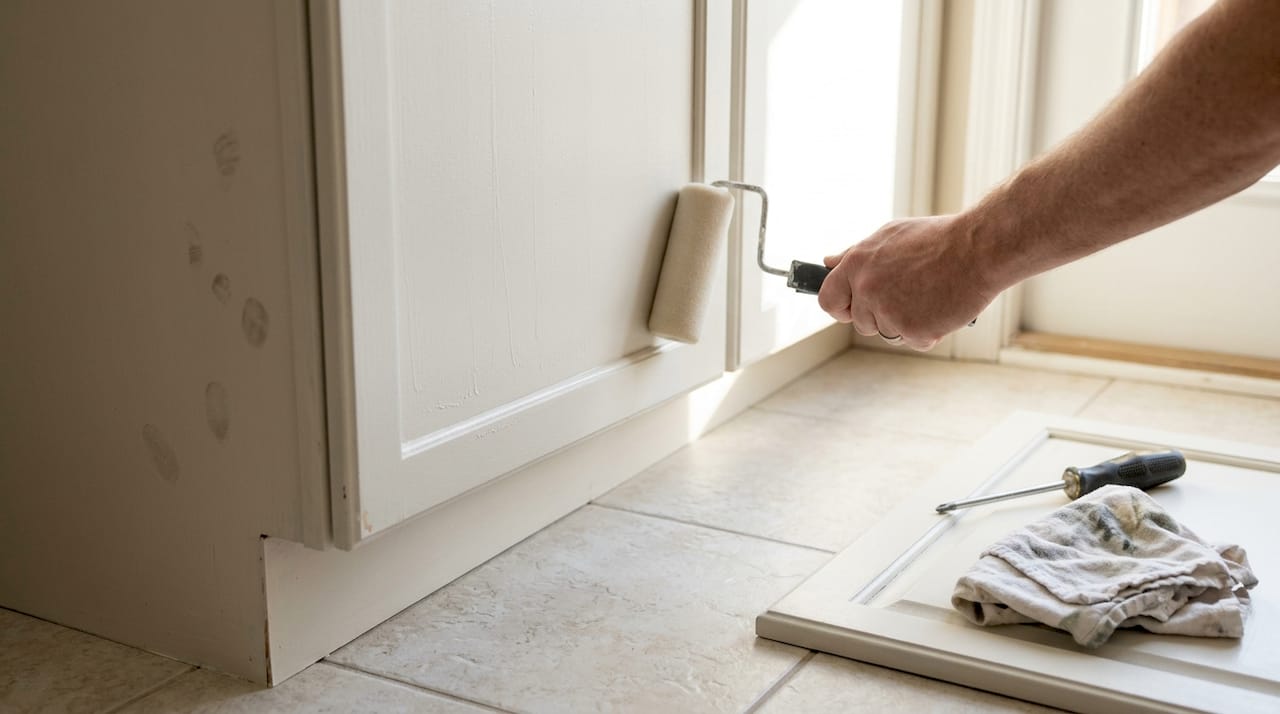
Two-tone cabinet schemes are worth considering. Painting upper cabinets a lighter shade and lower cabinets a slightly deeper tone adds visual depth and makes a small kitchen feel more intentional and designed. It is a simple technique that delivers a high-end result.
Finish type | Appearance | Best for | Maintenance |
Matte | Flat, no sheen | Hiding surface imperfections | Easy to touch up |
Satin | Soft, low sheen | High-traffic kitchens | Wipes clean easily |
Semi-gloss | Noticeable sheen | Modern, bright looks | Very easy to clean |
High-gloss | Mirror-like shine | Bold, dramatic styles | Shows every fingerprint |
Matte and satin finishes hide fingerprints and smudges better than high-gloss options, which is a real advantage in a busy small kitchen. Satin is often the sweet spot: it has just enough sheen to feel polished while staying practical for daily use.
Here are the top color choices we see working best in small Ottawa kitchens:
Warm white (Benjamin Moore White Dove, Sherwin-Williams Alabaster)
Soft gray (Benjamin Moore Revere Pewter, Sherwin-Williams Agreeable Gray)
Pale sage green for a fresh, nature-inspired feel
Light navy on lower cabinets paired with crisp white uppers for a two-tone look
Pro Tip: Always test paint samples on your actual cabinet doors and observe them under your kitchen lighting at different times of day. Ottawa’s natural daylight shifts significantly between seasons, and a color that looks perfect in a paint store can read completely differently in your kitchen.
For more guidance on selecting the right shade, our detailed guide on choosing kitchen cabinet colors walks through the full decision process.
Cabinet materials and when to reconsider painting
Before painting, confirm your cabinets are a good fit for a lasting upgrade. Not every cabinet is a strong candidate, and painting the wrong surface without the right preparation leads to results that look worse than what you started with.
Solid wood and rigid MDF (medium-density fiberboard) are the best candidates. They accept primer and paint well, hold up to sanding, and deliver a smooth, durable finish. These are the materials you want to work with.
Laminate and melamine cabinets can be painted, but they require a dedicated bonding primer like Zinsser BIN or INSL-X Stix. Light sanding or a liquid deglosser is essential because these non-porous surfaces resist adhesion. Skip the bonding primer on laminate and you will be repainting within a year.
Here is a quick reference for cabinet materials:
Material | Paintable? | Special requirements |
Solid wood | Yes | Standard prep and primer |
Rigid MDF | Yes | Seal edges carefully |
Laminate | Yes, with caution | Bonding primer required |
Melamine | Yes, with caution | Bonding primer and deglosser |
Particleboard (swollen) | No | Replace instead |
When should you avoid painting entirely? Avoid painting if there is water damage, peeling laminate, or persistent high humidity in your kitchen. Moisture causes blistering and adhesion failure no matter how good your prep work is. Structurally compromised or swollen cabinets need replacement, not paint.
Common mistakes to avoid:
Painting over peeling or bubbling laminate without stripping it first
Ignoring soft spots or water-stained areas on cabinet frames
Assuming all cabinets in a kitchen are made from the same material
DIY vs. pro: Costs, durability, and timelines compared
Now, let’s help you decide: should you tackle this project yourself or bring in the pros? The honest answer depends on your budget, your timeline, and the standard of finish you want to live with for the next decade.
DIY cabinet painting costs between $100 and $1,500 in materials and typically takes 2-4 days of active work, or 40-80 hours total when you factor in drying time between coats. The result can look great, but DIY finishes typically last 3-5 years before showing wear. Professional cabinet painting for a small to mid-size Ottawa kitchen runs $2,000 to $6,000 CAD, takes 3-5 days on-site, and delivers a finish that lasts 8-12 years.
Factor | DIY | Professional |
Cost | $100-$1,500 | $2,000-$6,000 CAD |
Time on-site | 2-4 days (40-80 hrs) | 3-5 days |
Finish lifespan | 3-5 years | 8-12 years |
Disruption level | High (you manage it) | Low (pros manage it) |
Warranty | None | Often included |
Professional painters also use commercial-grade spray equipment that produces a seamless, factory-finished look that is nearly impossible to replicate with a brush or roller at home. They bring the right tools, the right primers, and the experience to handle tricky surfaces without guesswork. Our cabinet painting warranty gives Ottawa homeowners added peace of mind that the investment is protected.
Pro Tip: If you go the professional route, budget for a few days of limited kitchen access. Set up a temporary coffee and meal station in another room so the disruption feels manageable rather than stressful.
Our take: What most DIY guides forget about small kitchens
Most guides focus on technique and stop there. What they miss is the daily reality of living in a small Ottawa kitchen after the painting is done.
Finish sheen matters more than most people realize. A high-gloss finish in a tiny kitchen amplifies every smudge, every splash, and every imperfection in your cabinet surface. We have seen homeowners choose gloss because it looks stunning in photos, then spend more time cleaning cabinets than they ever expected. Satin is almost always the smarter choice for compact, busy kitchens.
Ottawa’s seasonal humidity swings are also something most generic guides ignore entirely. Our winters are dry and our summers are humid. That cycle puts real stress on paint adhesion if surfaces were not properly prepped and if coats were not given adequate cure time. Rushing the cure period during a humid Ottawa summer is one of the most common reasons we see early paint failure.
Finally, if you are already having your cabinets painted, use that window to upgrade your hardware. Adding soft-close hinges and new drawer pulls during the Ottawa cabinet painting process costs very little extra but dramatically improves how the kitchen feels to use every day. Small upgrades compound. Investing a bit more upfront can genuinely double both the lifespan and the functionality of the result.
Ready to upgrade your small kitchen? Here’s your next step
Whether you are ready to move forward or still weighing your options, we are here to help you make the right call for your kitchen and your budget. Our team handles everything from tricky laminate surfaces to tight galley layouts, delivering a smooth, durable finish that holds up to real Ottawa life. Get a free painting quote and find out exactly what your kitchen transformation would look like and cost. You can also see Ottawa kitchen transformations from real local projects to get a clear sense of what is possible. If you are curious about the full range of what we offer, explore our interior painting options as well.
Frequently asked questions
What paint finish holds up best in a small, busy kitchen?
Satin and matte finishes are ideal because they hide fingerprints and marks better than high-gloss, and they wipe clean with minimal effort.
How long will freshly painted cabinets last in a small Ottawa kitchen?
Professionally painted cabinets last 8-12 years, while a well-prepped DIY job typically holds up for 3-5 years before showing noticeable wear.
Can I paint over laminate cabinets in a small kitchen?
Yes, but you must use a bonding primer for laminate and properly prep the surface first. Skip painting altogether if the laminate is peeling or the cabinet has water damage.
How much does professional cabinet painting cost for a small Ottawa kitchen?
Most small Ottawa kitchens fall in the $2,000 to $4,000 CAD range, depending on cabinet count, material, and condition.
Should I stay home while my cabinets are being painted?
Yes, most homeowners stay home during the process. Professionals use low-VOC paints and minimize disruption, though you should expect limited kitchen access for 3-5 days.
Recommended
Comments