The Best Small Cupboard for Kitchen Setups in 2026
- Axcell Painting

- 1 day ago
- 9 min read
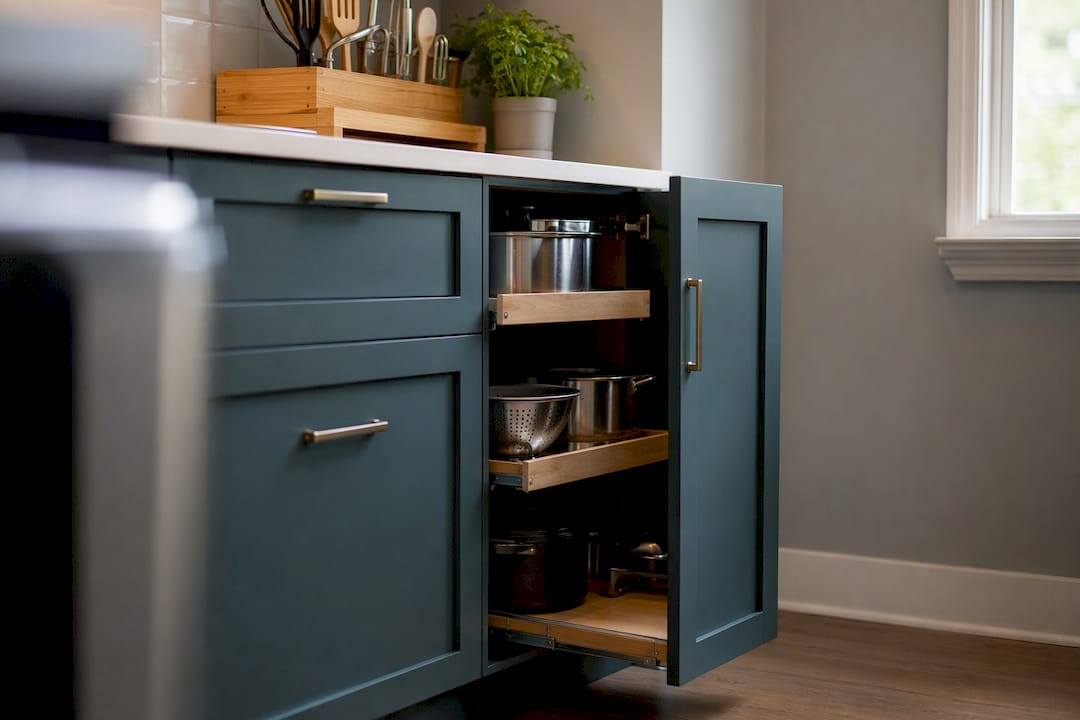
Three types of small cupboard solve most tight-kitchen problems: a slim freestanding pantry for narrow floor space, a tambour roll-front cabinet for hiding countertop appliances, and a kitchenette or mini-cabinet unit for adding prep space where there is none. Each works differently, so the right pick depends on what you’re actually short on: floor width, counter space, or appliance storage. Before you buy any of them, measure your clear floor width, cabinet depth, and door clearance as advised in small kitchen design improvement tips that work. A cupboard that’s an inch too deep will jut into a walkway every single day.
Slim freestanding pantry: fits narrow gaps (often 12 to 18 inches wide) where a built-in cabinet won’t go.
Tambour/roll-front appliance cabinet: hides a mixer or toaster oven with a sliding door that needs zero swing clearance.
Kitchenette or mini-cabinet: adds counter and storage together, ideal for a studio or a secondary prep zone.
Pro Tip: Measure the narrowest point of your intended spot, not the widest. Baseboards, outlets, and trim often eat an inch or two you won’t notice until delivery day.
Key Takeaways
Matching a small cupboard’s internal depth and door clearance to your kitchen’s exact measurements matters more than the style or brand you choose.
Point | Details |
Measure before you shop | Record clear floor width, internal cabinet depth, and door swing clearance first. |
Match doors to your layout | Tambour and roll-front designs like TITTEBO avoid swing clearance problems entirely. |
Depth beats width for organizers | Match any organizer or tray to your cabinet’s internal depth, typically 12 to 14 inches. |
Check warranty and return terms per listing | Marketplace warranties vary by manufacturer, and assembled returns often need original packaging. |
Consider refinishing over replacing | Ottawacabinetpainting refinishes sound cabinets in about ten days with a six-year warranty, an alternative to buying new storage. |
Table of Contents
Comparing Small Kitchen Cabinets for Small Kitchen Layouts
Six options cover almost every small-kitchen scenario, from IKEA’s engineered solutions to the generic slim cabinets sold across major retailers. The differences that matter aren’t cosmetic. They’re about depth, door mechanics, and whether a unit can actually sit where you need it to.
IKEA’s TITTEBO roll front is built specifically to store small appliances behind a tambour door, and that door mechanism is the whole point. Because it slides rather than swings, it works in corners and narrow galleys where a hinged door would hit a wall or a person mid-stride. The ÄSPINGE kitchenette takes a different approach entirely, bundling a counter, open shelving, and storage into one footprint designed for studio apartments or temporary kitchens that need a complete mini-setup rather than a single storage box.
The NÅLBLECKA countertop organizer isn’t a cupboard at all, but it solves a related problem: it stacks spices and bottles in two tiers on the counter itself, which matters when your cabinets are already full and your counter is the only real estate left. Marketplace freestanding slim pantries, sold widely through Amazon, Walmart, and Target listings, fill the gap between those two extremes. They come in narrow widths built for vertical storage, with prices ranging from economy particleboard builds to sturdier mid-range wood models. Retail tambour appliance cabinets, sold under various names outside IKEA, follow the same no-swing logic as the TITTEBO but often run deeper, so check the spec sheet before assuming one will fit your counter. A compact mini-cabinet or kitchen island unit adds a genuinely new resource: workspace. If your kitchen has storage but no room to actually chop a vegetable, this is the category that fixes it.
Cupboard type | Footprint (W×D×H, approx.) | Best for | Key space-saving feature | Materials/finish | Price range |
TITTEBO roll-front | Compact appliance-cabinet size | Appliance storage in narrow kitchens | Tambour door, no swing clearance | Painted wood, black finish | Mid-range |
ÄSPINGE kitchenette | Wide, shallow footprint | Studio apartments, temporary kitchens | Integrated counter and storage | Wood, black ash finish | Mid to upper range |
NÅLBLECKA organizer | Small, two-tier countertop unit | Maximizing counter storage | Tiered compact design | Metal and bamboo | Budget |
Marketplace slim pantry | Narrow, tall (varies by listing) | Pantry storage where built-ins aren’t possible | Vertical storage in narrow widths | Particleboard to solid wood | Budget to mid-range |
Tambour appliance cabinet (retail) | Deeper than TITTEBO in most listings | Hiding mixers, toaster ovens | Roll-front door | Varies by retailer | Mid-range |
Compact mini-cabinet/island | Small footprint, added height for counter | Prep space plus storage | Extra workspace, hidden storage below | Wood or laminate | Mid to upper range |
A few of these need a clearance warning. Retail tambour appliance cabinets often run deeper than the TITTEBO, which means they can crowd a galley kitchen even though the door itself doesn’t swing. Kitchenette units like the ÄSPINGE need real wall length, so measure the full run before assuming it’ll slide into a corner.
What Measurements Should You Check Before Buying?
Getting this wrong is the single most common reason a small cupboard ends up returned. Here’s the exact sequence to follow:
Measure clear floor width at the narrowest point, accounting for baseboards and outlets.
Check cabinet internal depth, not the exterior dimension. Standard base cabinets run roughly 12 to 14 inches deep inside, and any organizer or pull-out tray you add later has to match that number or it wastes space.
Confirm door swing and hinge clearance, especially near a range or fridge. A hinge that projects an inch or two past where you measured can stop a door from opening fully.
Note appliance heights if the cupboard is meant to store them, including lids up and cords coiled.
Match the feature to the job: a pantry needs adjustable shelves, an appliance cabinet needs a tambour door, and a dishware cupboard needs depth control more than height. On materials, painted wood repaints more easily than laminate if you change your mind later, though laminate wipes clean faster. Budget-wise, a countertop organizer runs under $50, a slim freestanding cupboard lands in the low hundreds, and a kitchenette climbs into several hundred dollars or more depending on features.
Pro Tip: Write your four measurements on a sticky note and keep it on your phone. Retailer size charts change by model, and you’ll want your own numbers handy while comparing listings.
How Do You Make a Small Cupboard Hold More Than It Looks Like It Should?
The gap between a cupboard that frustrates you daily and one that disappears into your routine usually comes down to five moves, all backed by organizing editors who cover small-space kitchens regularly.
Choose tambour or roll-front doors wherever appliances are involved. TITTEBO’s design proves the no-swing logic works, and it applies to any cabinet you’re shopping for.
Add pull-out trays or sliding baskets to deep cabinets so you’re not reaching into a black hole at the back.
Match every organizer’s depth to your cabinet’s internal depth. An organizer built for a 14-inch cabinet leaves wasted air in a 12-inch one.
Use the toe-kick and under-cabinet zones. Both sit empty in most kitchens and both can hold trays or shallow bins.
Standardize your containers. Uniform shapes stack tighter than mismatched jars and cut wasted vertical space dramatically.
Placement matters as much as the hardware. Put the cupboard where your workflow actually runs, not where it happens to fit, and if you’re anchoring a freestanding unit to the wall (recommended for anything taller than counter height), do it before you load it with dishes.
What Should You Budget for Delivery and Setup?
Price expectations vary sharply by category, and delivery timelines follow the same pattern. A countertop organizer like NÅLBLECKA typically runs under $50 and ships flat with no real assembly. Freestanding slim cupboards land between roughly $80 and $400, depending on materials, and most arrive flat-packed for home assembly within a few days to a couple of weeks.
Tambour cabinets and kitchenette units cost more, often several hundred dollars into four figures, because they involve more hardware and sometimes a plumbing or electrical hookup for the kitchenette category specifically.
Simple assembly (organizers, slim pantries): plan for 30 minutes to two hours with basic tools.
Tambour or kitchenette units: budget a half-day, longer if electrical or plumbing work is involved.
Hire a professional when anchoring to a wall, connecting a kitchenette’s utilities, or fitting a unit into a built-in space with tight tolerances.
Before final install, recheck your measurements against the actual delivered unit. Box dimensions and assembled dimensions aren’t always identical.
Are Warranty and Return Policies Different for Small Cupboards?
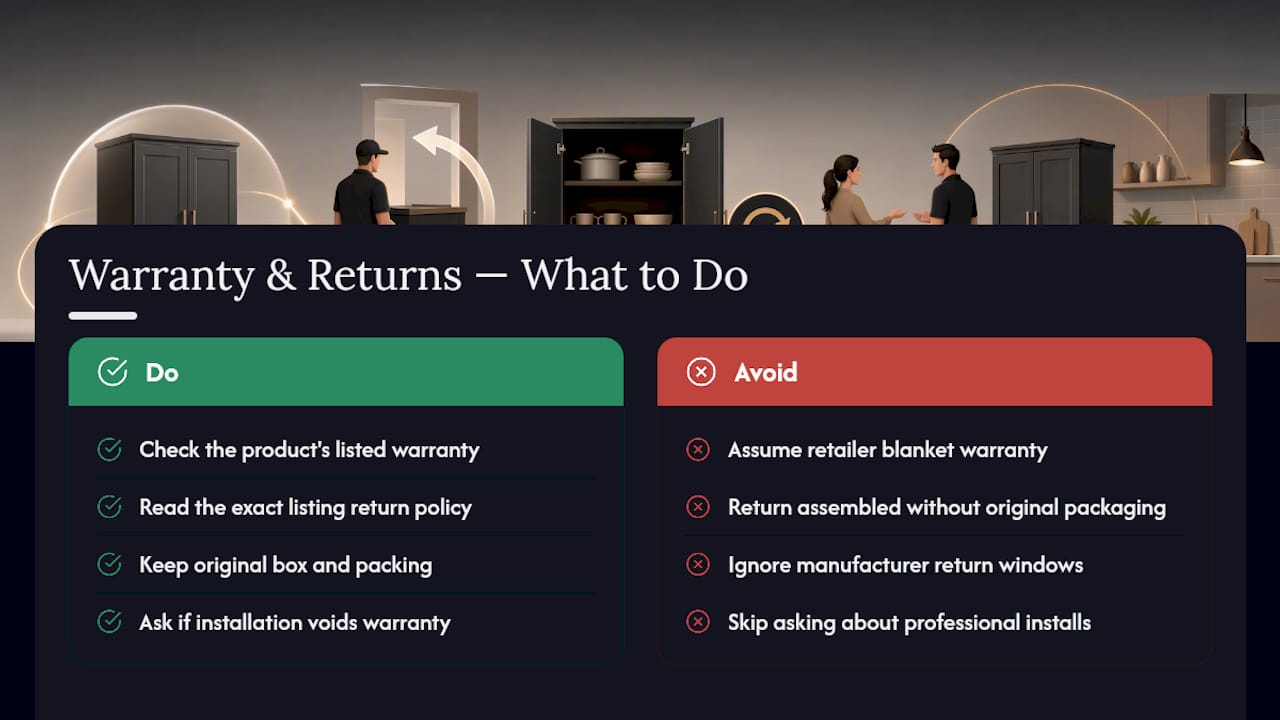
Warranty terms on small cupboards vary more than most shoppers expect, and the difference usually tracks with where you bought it. IKEA covers most furniture, including cabinet lines like TITTEBO and ÄSPINGE, under its standard limited warranty, which addresses manufacturing defects but not damage from assembly errors or misuse. Marketplace listings from Amazon, Walmart, and Target carry whatever warranty the individual manufacturer sets, which can range from 90 days to several years, so check the listing itself rather than assuming a blanket retailer policy applies.
Return windows matter just as much as warranty length, especially for freestanding pantries and kitchenette units that ship flat-packed. Most major retailers allow returns within 30 to 90 days, but assembled furniture often has to go back unassembled or in its original packaging to qualify for a refund. That’s a real problem if you’ve already put together a tambour cabinet and discovered it’s too deep for your galley.
Before you buy, read the specific return policy for that exact listing, not the retailer’s general policy page. Keep your original box and packing materials until you’re certain the piece fits and functions the way you expected. If a unit needs anchoring or hardwiring, ask whether professional installation voids any part of the manufacturer’s warranty, since some brands require self-installation to keep coverage intact.
What Actually Matters More Than the Cupboard Itself
The conventional advice on small-kitchen storage treats the purchase as the whole solution: buy the right cupboard, problem solved. That’s backwards. The measurement step people skip, checking internal depth against what you’re actually storing, causes more returns and regret purchases than picking the “wrong” style of cupboard ever does.
Here’s what gets underweighted: a tambour cabinet only outperforms a standard cupboard if door swing was actually your problem. If your real issue is a kitchen that looks dated and cramped rather than one that’s short on cubic inches, no amount of clever organizing hardware fixes that. Sometimes the smartest move isn’t adding a cupboard at all. It’s making your existing cabinets work better, whether through smarter organizers or, for Ottawa homeowners with structurally sound cabinets, a full refinish that changes how the whole kitchen feels without adding a single new box to navigate around.
Buy the cupboard when you genuinely lack storage. Fix the kitchen when the problem is really about how it looks and flows.
The Ottawa Alternative: Refinish Instead of Replace
If your cabinets are structurally sound and the real issue is how tired they look rather than how little they hold, a new cupboard isn’t always the fix. Ottawacabinetpainting offers a different route for Ottawa homeowners: refinishing your existing cabinets instead of replacing or supplementing them, at a fraction of the cost and without touching your kitchen’s layout.
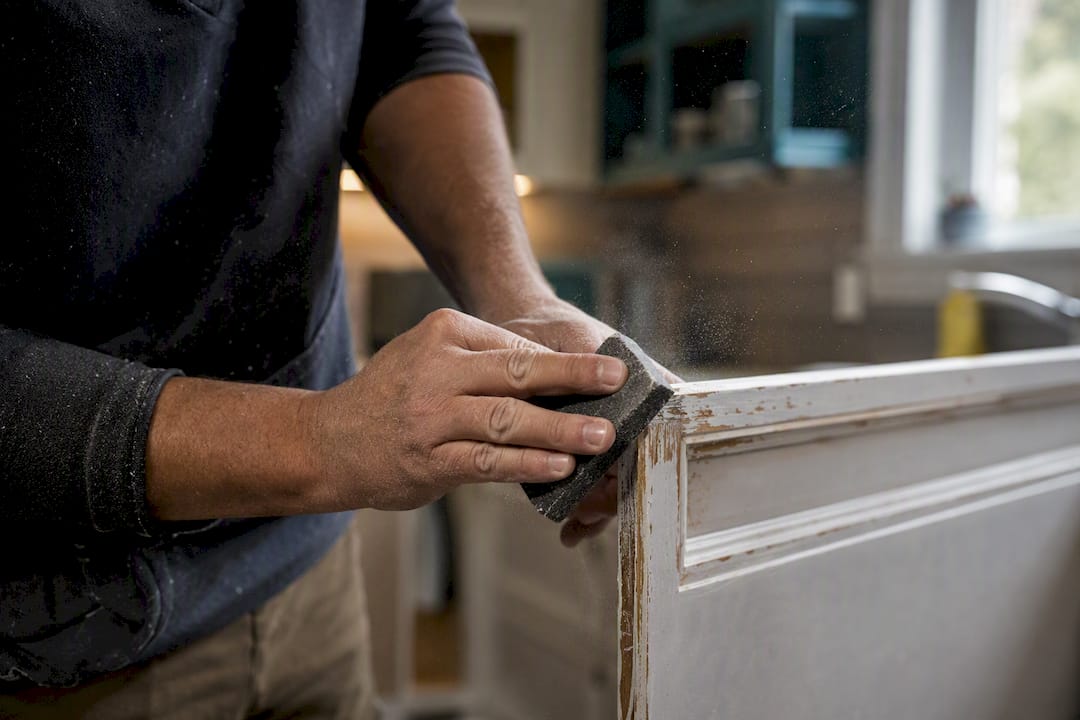
Our process runs on a meticulous prep schedule with a typical timeline of about ten working days, and every project carries a six-year warranty backing the finish. Before you decide between buying new storage or refreshing what you have, ask any provider three questions: what’s the realistic timeline, what warranty backs the work, and can they show real before-and-after photos. You can see our own before-and-after results and get a sense of what a refinish actually changes in a small kitchen.
If your cabinets in Ottawa or the surrounding area are solid but showing their age, request a free quote and find out whether a refinish gets you the showroom look you’re after without adding a single new cupboard to your floor plan.
Frequently Asked Questions
What is the best small cupboard for a kitchen with almost no floor space? A slim freestanding pantry, typically 12 to 18 inches wide, is usually the best fit for narrow gaps where a built-in cabinet won’t go. Measure the tightest point of the space before ordering, since baseboards and trim often shrink the usable width.
Is a tambour or roll-front cabinet better than a standard hinged cabinet? It depends on your layout. A tambour door like the one on TITTEBO eliminates swing clearance, which matters in galleys and corners, but a hinged cabinet can offer more usable interior width for the same footprint.
How deep should a small kitchen cupboard be? Most standard base cabinets measure roughly 12 to 14 inches deep on the inside. Any organizer, tray, or basket you add should match that internal measurement, not the cabinet’s exterior dimension, to avoid wasted space.
Can I return a small cupboard if it doesn’t fit after I assemble it? Often yes, but many retailers require the piece to go back unassembled or in original packaging to qualify for a refund. Check the specific listing’s return policy before you start assembly, not the retailer’s general policy.
Is it cheaper to buy a new cupboard or refinish existing cabinets? For homeowners with structurally sound cabinets, refinishing typically costs substantially less than replacement while preserving your existing layout, making it a strong alternative to adding new storage units in a small kitchen.
Sources
TITTEBO Roll front cab f small appliances — IKEA
Recommended
Comments