Local Cabinet Refacing in Ottawa: Is It Worth Hiring a Pro?


Yes. Professional cabinet refacing, meaning expert-grade painting and refinishing of your existing cabinet doors and boxes, can turn a tired Ottawa kitchen into something that looks factory-built, at a fraction of what full replacement costs. The catch is that “professional” only means something if the crew sprays instead of rolls, uses cabinet-grade primer, and gives your cabinets enough cure time to actually hold up.
Ottawa Cabinet Painting builds its process around exactly that discipline: a roughly 10-day production and cure schedule, backed by a 6-year warranty. That combination of timeline and paper warranty is what separates a specialist from a general painter picking up side work.
Before you book anyone, expect a quote to cover:
A door and drawer count, since pricing scales with volume
A condition check for water damage, MDF edges, or old finish that needs extra prep
A written timeline showing active work days versus cure days
Warranty terms in writing, not a verbal promise
Key Takeaways
Professional cabinet refacing succeeds when a contractor combines cabinet-grade spray finishing with a full 7 to 10 day cure window and backs the work with a written warranty.
Point | Details |
Spraying beats brushing | Cabinet-grade spray finishes eliminate brush marks and produce a factory-style result brushing can’t match. |
Cure time is non-optional | Rehanging hardware before the 7 to 10 day cure window closes is a leading cause of early chipping. |
Substrate changes cost | MDF doors need edge sealing before priming, which adds prep time and cost versus solid wood. |
Vet before you hire | Ask about spray booths, product lines, warranty terms, and cabinet-specific portfolios before signing. |
Ottawa Cabinet Painting sets the benchmark | Its roughly 10-day process and 6-year warranty reflect the timeline and trust signals homeowners should expect from any local pro. |
Table of Contents
What Makes Local Cabinet Refacing Different From a DIY Repaint
A general painter or a determined homeowner with a roller can make cabinets look okay for a few months. A specialist builds a finish meant to survive a decade of hinges slamming and hands grabbing pulls. The difference starts with materials: cabinet refinishing pros typically use 2K primers and 1K or 2K topcoats from professional product lines built specifically for high-touch surfaces, not the all-purpose latex sold for walls.
Application method matters just as much as the product. Spraying lays down an even film with no brush marks or roller stipple, which is why dust-free booth spraying has become a benchmark question homeowners ask contractors. A controlled spray environment also eliminates the tiny dust nibs that settle into wet paint when work happens in a live, occupied home.
There’s a household-logistics benefit too. A specialist typically:
Removes doors and drawer fronts to a shop or contained area, so your kitchen stays walkable
Labels every piece for exact reassembly, avoiding the “wrong door on wrong cabinet” scramble
Times the work so your sink, stove, and counters stay usable during the project
Pro Tip: Ask whether doors are sprayed off-site or in a sealed on-site booth. Either can produce a great finish, but “sprayed in the garage with the door open” is a red flag, not a selling point.
How Does the Cabinet Refinishing Process Work Step by Step?
Cabinet refinishing isn’t one job, it’s a sequence, and skipping a step is exactly how professional finishes fail early. Here’s what actually happens between your initial quote and the day you hang a fresh mug on a fresh handle.
Disassembly and labeling. Doors, drawer fronts, and hardware come off and get tagged so nothing gets mismatched on reinstall.
Degreasing. Kitchen cabinets accumulate cooking grease that regular cleaner won’t touch, and paint won’t bond to it. This step gets skipped by amateurs constantly.
Sanding. Every surface gets scuffed to give the primer something to grip. MDF doors need their exposed edges sealed here, since MDF absorbs paint unevenly without that extra prep.
Spot priming and full priming. Repairs get filled and primed first, then the whole piece gets a uniform primer coat.
Spray finish coats. Multiple thin coats go on, usually two to three, rather than one heavy coat that runs or sags.
Micro-sanding between coats. A light scuff sand between coats keeps sheen consistent and prevents the orange-peel texture you sometimes see in cheaper jobs.
Curing. This is the step homeowners underestimate most.
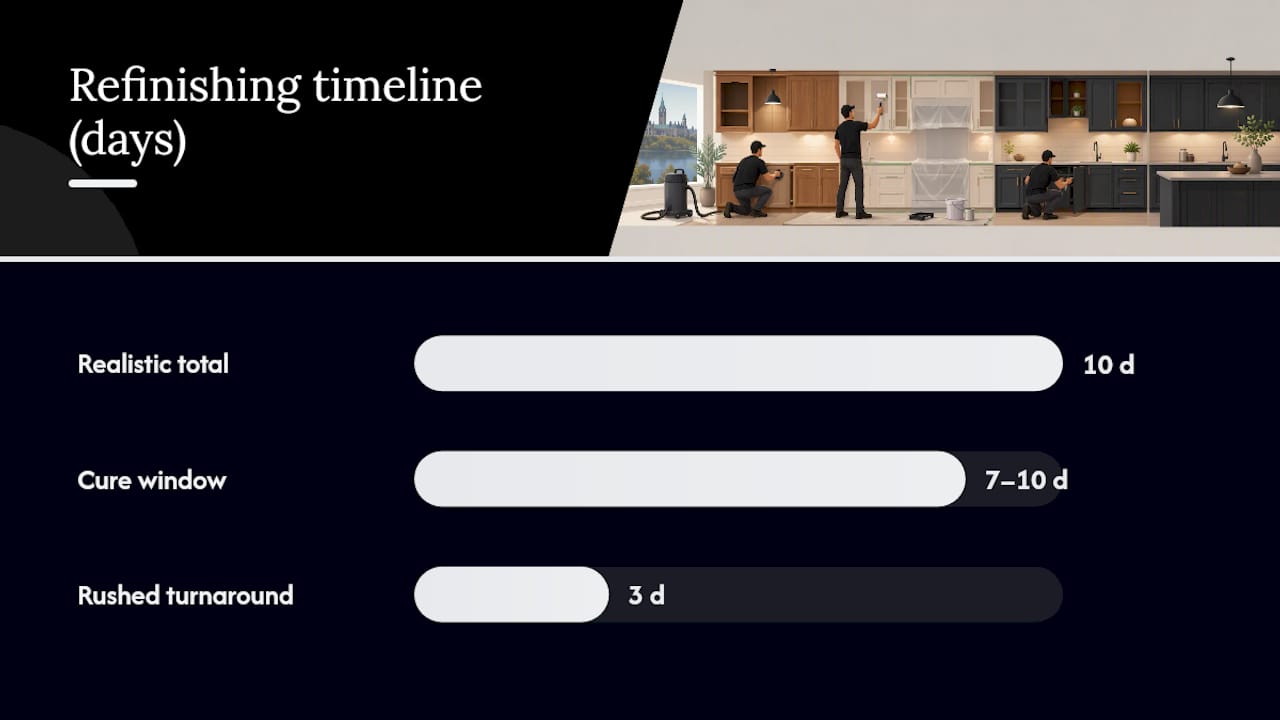
Here’s the number that matters: professional guides consistently point to a 7 to 10 day cure window before hardware gets reinstalled and cabinets return to daily use. Paint can feel dry to the touch within hours, but the finish keeps hardening underneath for days. Rehang a hinge too early and you’ll see chipping at exactly that spot within months.
Total project windows typically split into active production days and a separate cure period layered on top, which is why a realistic Ottawa quote should show something close to Ottawa Cabinet Painting’s 10-day cabinet refinishing timeline rather than a rushed 3-day turnaround. Plan on keeping a temporary kitchen setup, good ventilation in the work area, and patience for the last few cure days. Your cabinets will look finished well before they’re actually ready for hard use.
How Much Does Cabinet Refacing Cost in Ottawa?
Cost swings on a handful of variables, and understanding them helps you read a quote instead of just reacting to the bottom-line number.
Door and drawer count. More pieces mean more spray time and more prep, plain and simple.
Substrate. MDF doors need edge sealing before priming, which adds labor that solid wood often doesn’t require.
Current condition. Water damage, dents, or old peeling paint mean repair work before priming even starts.
Finish system. A 2K finish system generally costs more than a 1K system but tends to hold up better long-term.
Color change. Going from dark to light, or the reverse, often needs an extra coat to fully hide the old color.
Hardware work. New hinges, pulls, or soft-close upgrades add to the line item total.
Spray environment. Off-site booth spraying versus contained in-home spraying can shift pricing depending on the contractor’s setup.
Because these variables stack differently in every kitchen, ask for an itemized written estimate rather than a single flat number. A contractor who won’t break down scope this way is harder to compare against competing bids.
Refacing generally lands well below full cabinet replacement, since you’re keeping your existing boxes, layout, and countertops intact. Replacement can make more sense if your cabinet boxes are structurally damaged or you’re changing the kitchen’s entire layout, but for cosmetically dated cabinets in sound condition, refinishing is usually the more cost-effective route. Our comparison of refinishing versus replacement breaks this down further if you’re on the fence.
How Do You Vet a Cabinet Refinishing Contractor?
Not every painter who says “yes, I do cabinets” has the setup or experience to do it well. Use this checklist during your first call or site visit.
Ask for cabinet-specific portfolio photos, not general house-painting photos. Cabinet work has its own set of challenges, panels, routed details, and color depth, that only show up clearly in real project photos.
Ask directly: “Do you spray in a dust-free booth, or how do you contain overspray on-site?” A confident, specific answer is a good sign. A vague one is not.
Ask which primers and finishes they use. Names like cabinet-specific 2K primers or professional-grade topcoat systems signal a contractor who takes the finish seriously.
Ask how long before hardware gets reinstalled. If the answer is “the next day,” that’s a cure-time red flag.
Ask for the warranty in writing, and ask exactly what it covers: peeling, chipping, and for how long.
Ask for local references you can actually call or check reviews for.
Pro Tip: If a bid comes in dramatically lower than every other quote with no scope breakdown attached, that’s usually a sign of shortcuts, not savings.
Red flags worth walking away from: no written warranty, no cabinet-specific portfolio, promises to rehang hardware before that 7 to 10 day cure window closes, or a quote that’s just a single number with no itemization.
Ottawa Cabinet Painting: What Local Homeowners Can Expect
Ottawa Cabinet Painting was built around the idea that cabinets deserve the same discipline as a factory finish, minus the factory. That shows up in a few concrete ways:
A roughly 10-day process that separates active spray work from full cure time, so cabinets aren’t rehung too soon
A 6-year warranty covering the workmanship behind the finish
Local presence in Ottawa, meaning someone who knows the neighborhood and can be reached after the job wraps
Before-and-after photo documentation and customer testimonials that show real completed kitchens, not stock imagery
Whichever contractor you ultimately choose, ask for the same three things: case studies from real cabinet projects, a warranty in writing, and a clear day-by-day timeline. Anyone confident in their work should hand these over without hesitation.
Aftercare and Maintenance Tips to Protect Your New Finish
A great cabinet refinishing job can last well beyond its warranty period if you treat it right in the first few months and beyond.
For the first two to three weeks, avoid hanging heavy items on freshly painted doors and skip abrasive cleaners entirely. The finish is still fully hardening even after the visible cure window closes, so gentle handling early on pays off for years.

After that initial period, wipe cabinets down with a soft microfiber cloth and a mild dish soap solution. Skip anything containing ammonia, bleach, or abrasive scrub pads, since these break down even durable topcoats over time. Wipe up cooking grease and splatters near the stove promptly rather than letting them sit and bond to the surface.
Watch high-touch areas like handle zones and the edges around the sink cabinet, since these see the most wear. If you notice a small chip or scratch, address it early with a touch-up rather than letting moisture get underneath the finish and spread the damage.
Keep humidity in check where you can. Ottawa’s seasonal swings between dry winter heat and humid summers put real stress on wood and MDF substrates, and consistent kitchen ventilation, especially when cooking or running the dishwasher, helps the finish hold up. Adjust cabinet hinges annually if doors start to sag slightly, since a misaligned door puts uneven pressure on the paint at contact points. None of this is complicated, but it’s the difference between a finish that looks fresh at year five and one that’s already showing wear at year two.
Do You Need a Permit for Cabinet Refinishing in Ottawa?
For most homeowners, no. Cabinet painting and refinishing is cosmetic work performed on existing cabinet boxes and doors, and it doesn’t typically trigger building permit requirements the way structural renovations, electrical changes, or plumbing modifications do under the City of Ottawa’s building code process.
Where things can shift is if your project extends beyond refinishing into structural changes, like altering cabinet layouts, moving plumbing for a sink relocation, or combining your cabinet work with a broader kitchen renovation that touches walls or electrical. In those cases, the added scope, not the cabinet painting itself, is what triggers permit review.
If your home is in a heritage district or condo building with its own bylaws, it’s worth a quick check with your condo board or property manager before scheduling work, since some buildings have rules around contractor access, work hours, or use of common hallways for material transport. A reputable local contractor should be able to tell you plainly whether your specific project needs anything beyond a standard service agreement, and if they’re unsure, that’s worth asking them to confirm before you sign anything.
Why the “Cheapest Quote Wins” Mindset Backfires
Homeowners researching cabinet refacing tend to focus on price first and process second, and that’s backwards. The research is consistent on one point: cure time is the single detail that separates a job that lasts from one that chips within a year. Yet it’s rarely the first question anyone asks a contractor.
The conventional advice, “get three quotes and pick the cheapest,” treats cabinet refinishing like a commodity. It isn’t. A quote that skips spray booth details, skimps on prep days, or promises hardware back on in 48 hours isn’t a bargain, it’s a shorter-lived paint job wearing the same price tag as a durable one.
If you take one thing from this guide, prioritize the timeline conversation before the price conversation. Ask what happens on each day, where the cure window falls, and what’s actually in writing. A contractor who can answer that in detail, the way Ottawa Cabinet Painting’s roughly 10-day process is documented, has almost certainly done the work enough times to get it right. Price matters. It just shouldn’t be the first filter.
Ready to Get a Free Cabinet Refacing Quote in Ottawa?
Compared to a full renovation, or hiring a general contractor unfamiliar with cabinet-specific spray systems, Ottawa Cabinet Painting gives you a specialist’s process at a fraction of replacement cost, with a documented timeline instead of a guess. A free estimate covers your door and drawer count, a condition assessment for repairs or MDF prep, finish and color options, and a written timeline with warranty terms spelled out before you commit to anything.
To get the most accurate quote, have a few things ready: photos of your current cabinets, an approximate door and drawer count, any color or finish preferences, and whether you’re planning hardware changes alongside the paint work. That prep lets us give you real numbers instead of a rough guess over the phone.
Head to the free cabinet painting quote page to start the process, or browse the before and after gallery first if you want to see the finish quality up close. If you’re weighing this against a bigger renovation, the partner guide on low-disruption kitchen improvements is worth a look too.
Sources
Recommended
Comments