How to Choose Cabinet Finish for Ottawa Kitchens

TL;DR:
Choosing the right cabinet finish impacts your kitchen’s appearance, durability, and maintenance needs over time.
Satin paint is the most popular for its forgiving sheen, ease of cleaning, and subtle glow, making it ideal for modern kitchens.
A cabinet finish is the protective and decorative coating applied to cabinet surfaces, and choosing the right one determines how your kitchen looks, cleans, and holds up for years. The decision goes well beyond color. Finish type, sheen level, and application method all affect durability, maintenance, and how your kitchen feels day to day. Whether you are refreshing dated oak cabinets or upgrading a rental property, knowing how to choose cabinet finish correctly saves you from costly redos. Products like Sherwin-Williams Emerald Urethane and Benjamin Moore Advance set the standard for quality, and understanding where they fit in the broader world of cabinet finishes is the right place to start.
How to choose cabinet finish: types and key differences
The four main cabinet finish categories are paint, stain, glaze, and specialty coatings like lacquer, thermofoil, and laminate. Each serves a different purpose and suits a different kitchen style.
Painted finishes
Paint is the most flexible option for Ottawa homeowners. You can apply it in satin, semi-gloss, matte, or high-gloss sheens, and each sheen behaves differently in real kitchen conditions. Satin is the most popular sheen for factory-painted cabinets in 2026, used in about 65% of new installations. That number reflects satin’s real advantage: it offers a soft glow, hides minor surface imperfections, and wipes clean without looking like a mirror. Semi-gloss cleans well and holds up to moisture, making it a strong choice for kitchens with heavy cooking. Matte finishes look refined but show oils and scuffs more than satin, which makes them a poor fit for busy family kitchens. High-gloss delivers a dramatic, reflective look but amplifies every fingerprint and brush mark.
Stained and clear-coated finishes
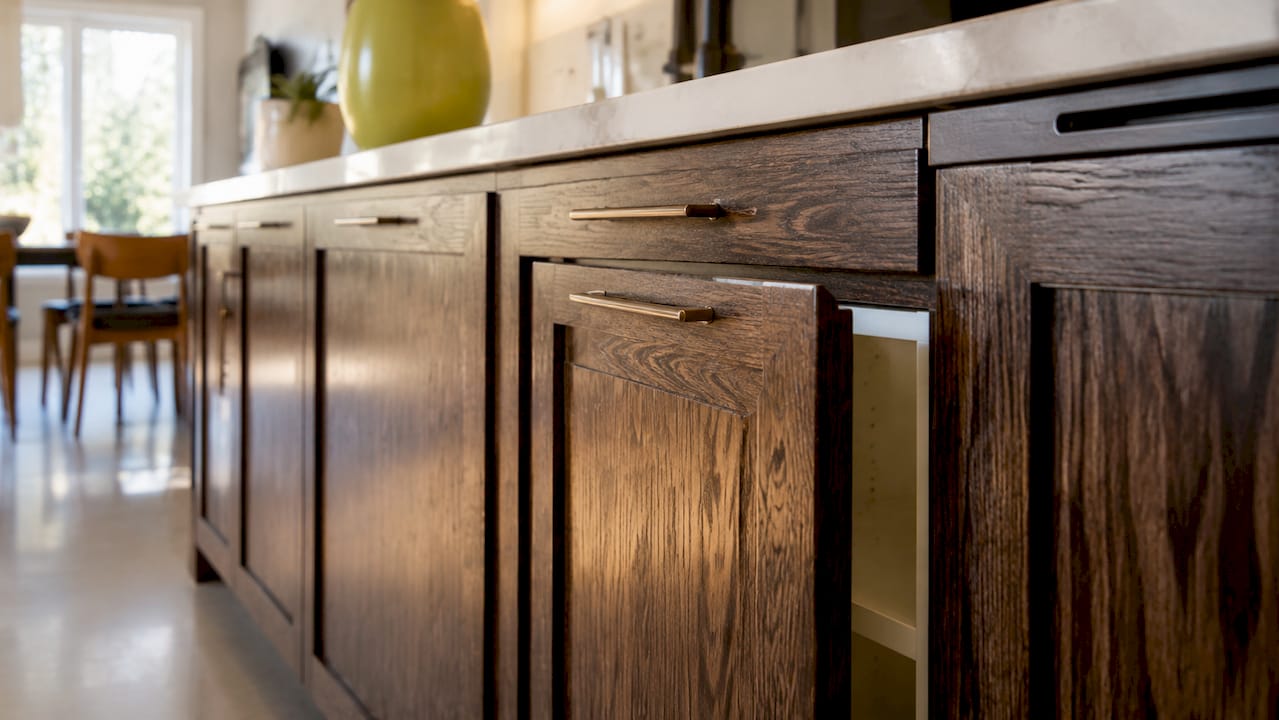
Wood stain enhances the natural grain of the cabinet material rather than covering it. A stain is almost always paired with a clear topcoat, either a standard varnish or a conversion varnish, to protect the surface. Conversion varnish is the professional-grade choice. It cures harder and resists moisture and chemicals far better than standard polyurethane. Stained cabinets work best in traditional, farmhouse, or transitional kitchens where wood character is part of the design intent.
Specialty finishes
Glaze is a translucent coating applied over a base color to add depth and an aged look. Distressed finishes intentionally show wear for a rustic effect. Thermofoil is a vinyl film pressed over MDF, offering a smooth, uniform surface at a lower cost. Laminate provides similar uniformity with better scratch resistance. Wood veneer gives the appearance of solid wood at a fraction of the cost. These specialty options suit specific design goals but generally offer less flexibility for future color changes.
Pro Tip: Before committing to any finish type, order physical samples and hold them against your cabinet doors in your actual kitchen. A finish that looks perfect in a showroom can read completely differently under your kitchen’s lighting.
Finish Type | Durability | Cleanability | Best Kitchen Style |
Satin paint | High | Excellent | Modern, transitional |
Semi-gloss paint | High | Excellent | Traditional, high-traffic |
Matte paint | Moderate | Fair | Low-traffic, accent areas |
Wood stain + varnish | High | Good | Farmhouse, traditional |
Thermofoil | Moderate | Very good | Budget-friendly, contemporary |
Glaze | Moderate | Fair | Rustic, aged, decorative |
How do ottawa lighting and kitchen usage shape your finish choice?
Lighting is one of the most underestimated factors in choosing kitchen cabinet colors. Finish color and sheen shift noticeably under morning, afternoon, and evening light. Ottawa kitchens in older homes often face north or have smaller windows, which means natural light is limited and cool-toned. A warm white paint that looks creamy in a showroom can appear almost yellow under incandescent bulbs and flat gray under LED daylight tubes.
The fix is straightforward. Test your finish samples at three different times of day before making a final decision. Pin them directly to your cabinet doors, not a piece of paper held up in the corner. This one step prevents the most common and expensive finish mistake Ottawa homeowners make.
“Starting with your permanent fixtures’ undertones — countertops, floors, and walls — helps ensure the finish enhances overall kitchen harmony.” — Apartment Therapy
Matching your finish to permanent elements in the kitchen is non-negotiable. Countertops, flooring, and wall color are expensive to change. Your cabinet finish needs to work with them, not compete. Designers use the 60-30-10 color rule as a reliable framework: 60% dominant cabinet color, 30% supporting surfaces, and 10% accent finishes. This structure prevents visual chaos and keeps the kitchen feeling cohesive.
Usage intensity is the other major variable. A kitchen with two adults who cook occasionally has very different demands than one with three kids and daily meal prep.
High-traffic kitchens: Choose catalyzed urethanes or premium enamels. They resist moisture, heat, and impact better than standard decorative coatings.
Low-traffic kitchens: Satin or matte finishes are acceptable, and you have more freedom to prioritize aesthetics.
Rental or investment properties: Semi-gloss paint offers the best balance of durability and ease of touch-up.
Pro Tip: If you cook with steam or fry frequently, avoid matte finishes entirely. Grease and moisture penetrate matte surfaces faster, and no amount of cleaning restores the original look.
Step-by-step guide to selecting and applying a cabinet finish in ottawa
This process works whether you are doing the work yourself or preparing to hire a professional. Following it in order prevents the most common mistakes.
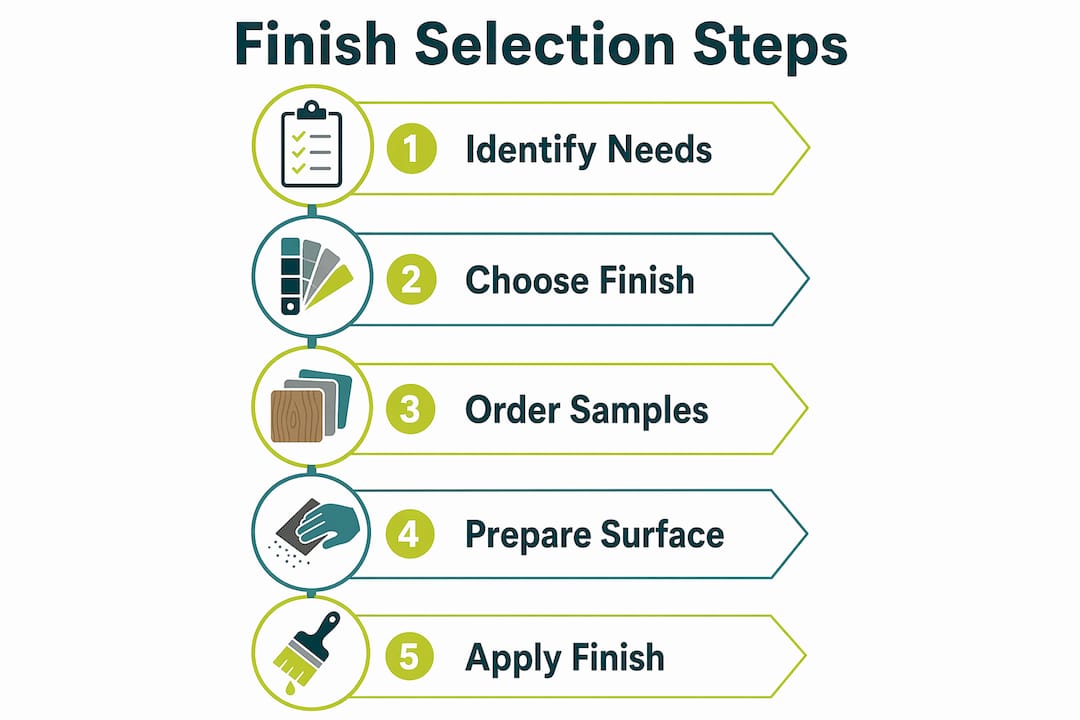
Assess your kitchen’s permanent features. Note your countertop material and undertone, flooring color, and wall paint. These are your fixed reference points for coordinating cabinet colors.
Decide on finish type. Use the comparison table above to narrow your options. If you want a painted look, choose your sheen based on traffic level. If you want wood character, plan for stain plus a conversion varnish topcoat.
Select your product. Benjamin Moore Advance requires a 30-day cure time but levels beautifully with minimal brush marks. Sherwin-Williams Emerald Urethane cures faster, making it better for weekend projects or homes that cannot afford extended downtime. Premium cabinet enamels range from $40 to $95 per gallon, and the price difference reflects real performance differences in hardness and cure speed.
Test samples in your kitchen. Apply at least two finish samples directly to a cabinet door. Observe them in the morning, afternoon, and evening. Check them under artificial light as well.
Prepare the surface. Proper prep is the single biggest factor in finish longevity. Clean all surfaces with a degreaser, sand lightly to create adhesion, and apply a shellac-based primer on any stained or tannin-rich wood. Skipping primer on bare wood is a recipe for bleed-through and peeling.
Choose factory-applied vs. site-applied. Factory-applied conversion varnish finishes outperform site-applied finishes in durability because curing happens in controlled conditions. If you are ordering new cabinet doors, factory finish is worth the investment. For existing cabinets, a professional site-applied finish using premium enamels is the practical alternative.
Plan for cure time. Do not hang doors or load cabinets with dishes until the finish has fully cured. Rushing this step causes dents and marks that are impossible to fix without refinishing.
Pro Tip: Schedule your cabinet painting project in spring or early fall in Ottawa. Humidity levels are more stable than in summer, and temperatures support proper paint curing without the extremes of January or August.
Finish Option | Durability | Maintenance Ease | Relative Cost |
Factory conversion varnish | Excellent | Low | High |
Site-applied urethane enamel | Very good | Low | Moderate |
Site-applied latex paint | Good | Moderate | Low |
Wood stain + polyurethane | Good | Moderate | Low to moderate |
Thermofoil | Moderate | Very low | Low |
What maintenance does your cabinet finish actually need?
The finish you choose determines how much work your cabinets require for the next decade. This is a practical reality that most homeowners overlook when choosing kitchen cabinet colors.
Painted satin and semi-gloss finishes: Wipe with a damp microfiber cloth and mild dish soap. Avoid abrasive scrubbers, which scratch the surface and dull the sheen over time.
Matte finishes: Use a dry or barely damp cloth. Water and cleaning products can leave visible marks on matte surfaces.
Stained and varnished finishes: Clean with a wood-safe cleaner. Avoid standing water near joints, which can cause swelling and finish failure.
Thermofoil: Wipe clean easily, but avoid heat sources. Thermofoil peels away from MDF when exposed to sustained heat near ovens or dishwashers.
Professional refreshes are recommended every 7–10 years to maintain both protection and appearance. That timeline assumes normal household use and proper cleaning habits. Ottawa’s climate adds a specific consideration: winter heating systems dry out interior air significantly, which can cause wood cabinet boxes to contract and create small cracks at joints. Caulking those joints during a refresh prevents moisture from working its way in during humid summers.
Signs that your finish needs professional attention include visible yellowing on white or off-white cabinets, peeling or bubbling near the sink or dishwasher, and a surface that no longer cleans up properly after wiping. Catching these early means a refresh rather than a full replacement.
Key takeaways
The best cabinet finish for your Ottawa kitchen balances sheen level, product quality, and maintenance commitment to match your household’s actual daily demands.
Point | Details |
Satin leads in popularity | Satin sheen is used in 65% of new installations for its balance of cleanability and appearance. |
Test samples under real light | Observe finish samples at morning, afternoon, and evening to avoid costly color mismatches. |
Match finish to usage level | High-traffic kitchens need catalyzed urethane or premium enamel, not matte or standard latex. |
Factory finishes outlast site-applied | Controlled curing conditions give factory-applied conversion varnish superior long-term durability. |
Refresh every 7–10 years | Professional refinishing on that schedule maintains protection and keeps cabinets looking sharp. |
What we’ve learned finishing cabinets in ottawa kitchens
After working on hundreds of Ottawa kitchens, one pattern stands out clearly. Homeowners who spend the most time agonizing over color almost always underestimate sheen. They pick a beautiful warm white and then choose matte because it looks sophisticated in photos. Six months later, they are frustrated because the finish shows every handprint and does not clean up the way they expected. Sheen is not a secondary decision. It is the decision that determines how your cabinets actually perform.
Ottawa kitchens also have a specific challenge that most finish guides ignore: the combination of dry winter air and humid summers puts real stress on cabinet finishes. We consistently recommend satin or semi-gloss urethane enamels for this reason. They flex slightly with seasonal wood movement and clean up reliably year-round.
The other thing we tell every homeowner is to resist the urge to match what they saw on a renovation show or in a design magazine. Those kitchens are photographed under controlled studio lighting. Your kitchen has its own light, its own permanent fixtures, and its own personality. The right finish is the one that works in your space, not someone else’s.
For a deeper look at how finish options compare across professional painting projects, the details matter more than most people expect. And if you are still weighing whether to go DIY or bring in a professional, the expert tips from professional painters we have compiled are worth reading before you commit to either path.
— Ottawa
Transform your ottawa cabinets with professional finishing
Ottawacabinetpainting specializes in professional cabinet painting and refinishing for Ottawa homeowners who want a factory-quality result without replacing their cabinets. We use premium enamels including Sherwin-Williams Emerald Urethane and offer custom color matching to complement your existing countertops, floors, and walls. Our process includes full surface preparation, shellac-based priming where needed, and a meticulous application that produces a smooth, durable finish built to last. We also offer refresh services to extend the life of existing finishes. If you are ready to see what a professional finish looks like in your kitchen, explore our cabinet painting services and request a free quote today.
FAQ
What is the most durable finish for kitchen cabinets?
Catalyzed urethane and factory-applied conversion varnish are the most durable options for kitchen cabinets. They resist moisture, heat, and impact better than standard latex or decorative coatings.
Is satin or semi-gloss better for ottawa kitchen cabinets?
Both work well, but satin is the more popular choice for its softer appearance and good cleanability. Semi-gloss is the better pick for high-traffic kitchens or areas near the sink and stove.
How often should cabinet finishes be professionally refreshed?
Professional refreshes are recommended every 7–10 years under normal household use. Ottawa’s seasonal humidity swings can accelerate wear, so inspect joints and finish surfaces annually.
Can i paint over stained cabinets without stripping them?
Yes, but proper preparation is required. Sand the surface lightly, apply a shellac-based primer to seal the stain and tannins, then apply your chosen paint finish. Skipping the primer causes bleed-through and poor adhesion.
How do i choose between factory-applied and site-applied cabinet finishes?
Factory-applied finishes cure in controlled conditions and outlast site-applied finishes in durability. For new cabinet doors, factory finish is worth the cost. For existing cabinets, a professional site-applied urethane enamel is the practical and cost-effective alternative.
Recommended
Comments