What Is a Painting Booth? Ottawa's Complete Guide
- Axcell Painting

- 2 hours ago
- 9 min read
TL;DR:
A painting booth is a controlled environment designed to manage airflow, filtration, temperature, and humidity for high-quality, safe spray painting. Proper airflow and maintenance are essential to prevent defects, ensure compliance, and achieve factory-grade finishes in automotive, furniture, and industrial applications. Selecting the right type and maintaining it correctly results in better finishes, safer operation, and lower long-term costs.
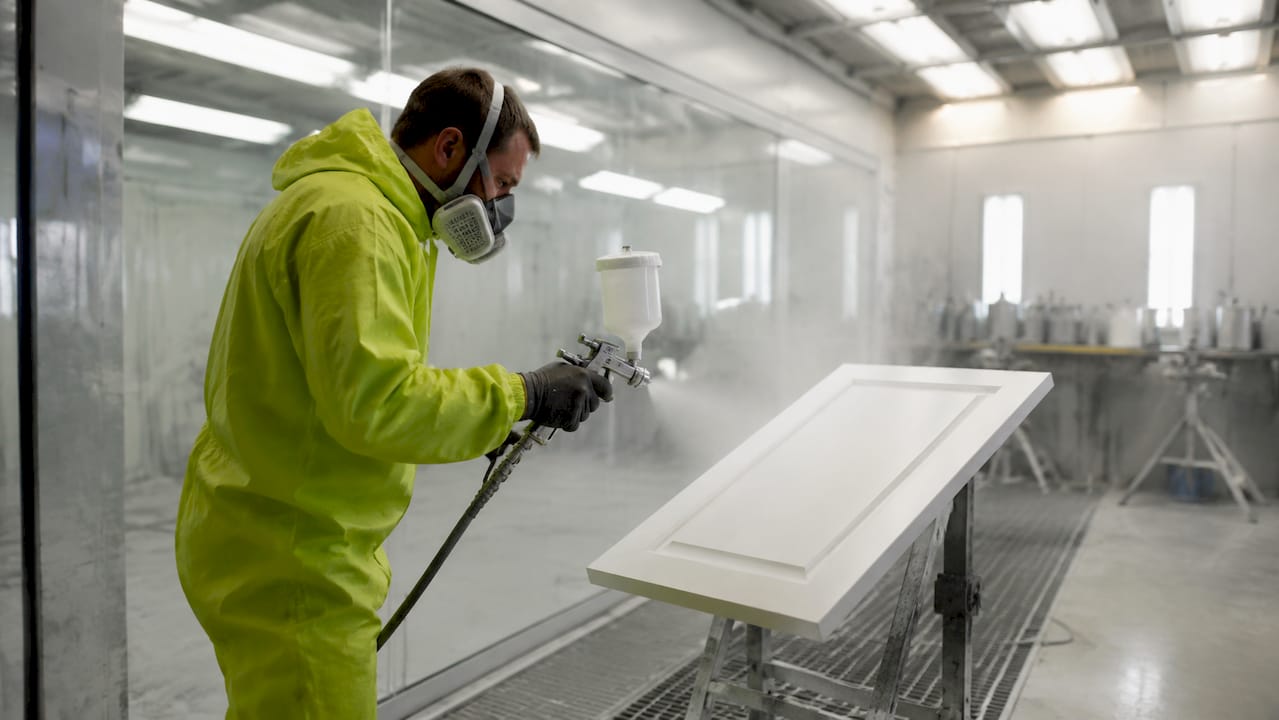
A painting booth is a controlled enclosure designed to manage airflow, filtration, temperature, and humidity during spray paint application. The industry standard term is “spray booth,” though “painting booth” is widely used across automotive, cabinet refinishing, and industrial coating sectors. These systems do far more than contain overspray. They protect workers from volatile organic compounds (VOCs), deliver factory-grade finish quality, and keep businesses compliant with EPA and OSHA regulations. If you are in Ottawa and considering professional painting services, understanding how these booths work explains why quality results are not possible without them.
What is a painting booth and why does it matter?
A painting booth is defined as a specialized controlled environment that manages airflow, temperature, humidity, and filtration to improve finish quality and operator safety. This is not a simple room with a fan. It is an engineered system where every component works together to produce repeatable, professional results.
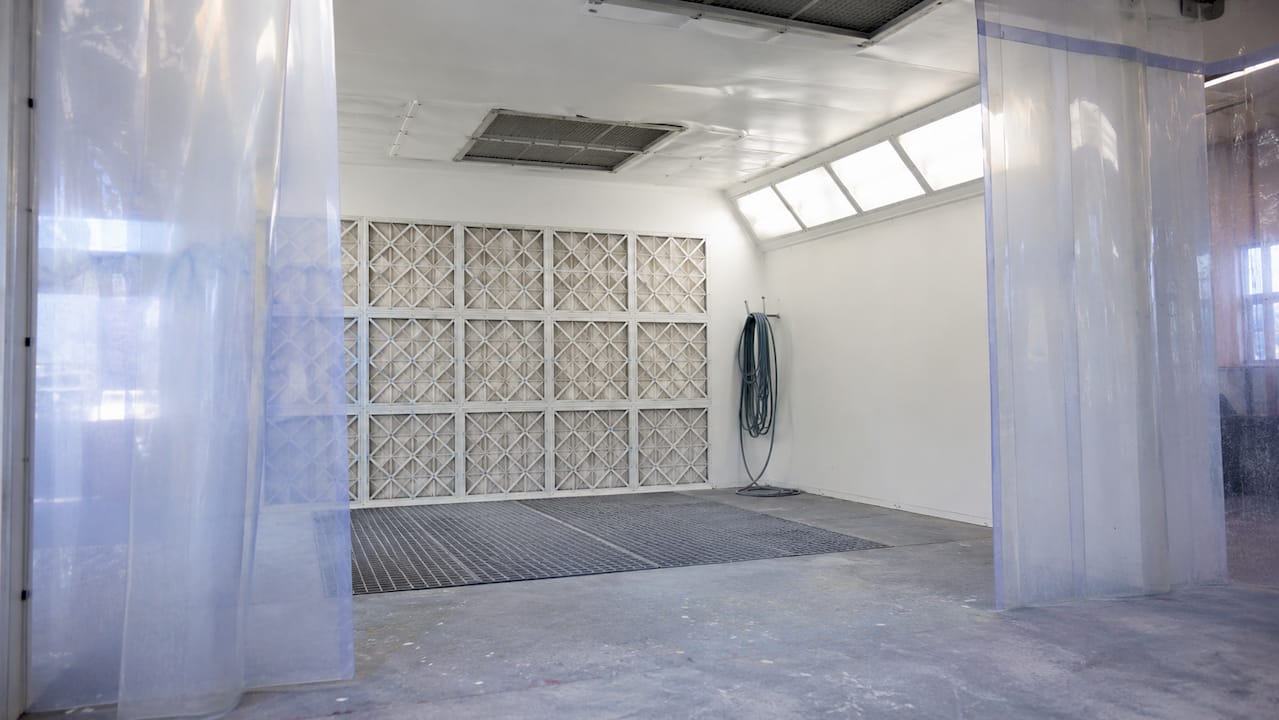
Industries that rely on spray booths include automotive body shops, aerospace manufacturers, furniture producers, and cabinet refinishing services like Ottawacabinetpainting. Each application demands a different level of environmental control, but the core function is the same: remove contaminants, capture overspray, and protect the people doing the work.
Without a proper booth, dust particles settle into wet paint, VOC concentrations rise to dangerous levels, and finish quality becomes inconsistent. A well-designed booth eliminates all three problems at once. That is why regulatory bodies including OSHA and the NFPA require spray booths for commercial painting operations that use solvent-based coatings.
How does a painting booth work in ottawa?
Modern spray booths operate through a five-stage process that moves air in a controlled path from intake to exhaust. Each stage serves a specific function, and skipping any one of them compromises the entire system.
Air Intake: Fresh air enters through intake filters that strip out dust, pollen, and debris before the air reaches the work area. This prevents contamination before the spray gun even fires.
Filtration: The filtered air passes through the booth at a controlled velocity, typically measured in cubic feet per minute (CFM). High-efficiency filters capture up to 98% of overspray particles, protecting both the finish and the exhaust system.
Paint Application: The painter applies coating inside the booth while clean, consistent airflow moves across the work surface. Stable airflow prevents turbulence that would cause uneven coating thickness.
Overspray Removal: Exhaust fans pull contaminated air away from the operator and the workpiece, directing it through exhaust filters before it exits the building. This stage is where VOC capture happens.
Drying and Baking: Many booths include heating systems that accelerate curing. In automotive applications, these systems reach temperatures that produce a factory-grade finish quality faster than ambient air drying.
Pro Tip: Never run a spray booth with a clogged intake filter. Reduced airflow at the intake stage disrupts pressure balance throughout the entire system, which causes dust to migrate back into the spray zone.
The key to all of this is pressure balance between intake and exhaust. When intake and exhaust volumes are synchronized, the booth maintains a slightly positive or neutral pressure that keeps outside contaminants from entering. When that balance breaks, finish defects follow.
What are the main types of painting booths in ottawa?
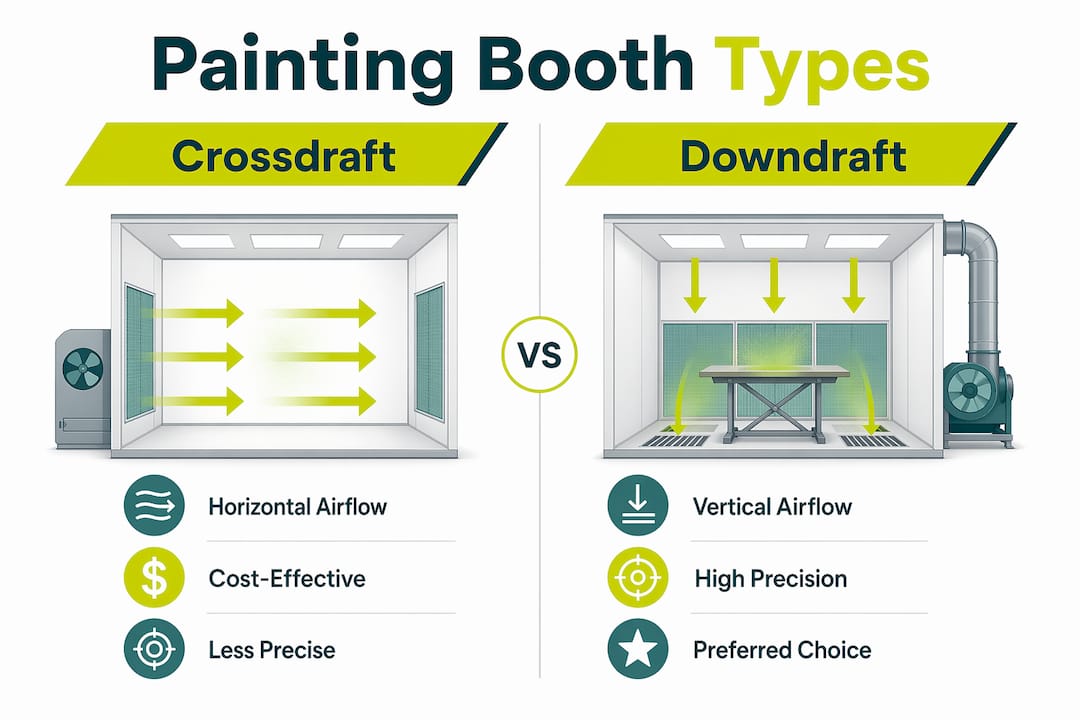
Airflow configuration is the defining characteristic of any spray booth. The direction air travels through the booth determines overspray control, finish quality, and cost. There are four primary configurations used in Ottawa and across North America.
Airflow Type | How It Works | Best For | Key Tradeoff |
Crossdraft | Air flows horizontally from front to back | Budget shops, light industrial use | Overspray passes over the workpiece before exhausting |
Downdraft | Air flows vertically from ceiling to floor | Automotive, high-precision cabinet finishing | Higher cost, requires pit or raised floor |
Semi-Downdraft | Air enters from ceiling front, exhausts from rear floor | Mid-range shops needing balance | Better than crossdraft, less precise than full downdraft |
Side Draft | Air enters from one side wall, exhausts from the opposite | Narrow spaces, long parts | Limited for complex shapes |
Downdraft systems pull overspray vertically away from both the operator and the workpiece. This makes them the preferred choice for high-precision finishes in automotive and cabinet refinishing. The airflow never crosses the painted surface before exhausting, which is why downdraft booths produce the cleanest results.
Crossdraft booths are cost-effective but less efficient for overspray control. The horizontal airflow path means contaminated air travels across the work surface before reaching the exhaust. For high-gloss or fine furniture finishes, this is a real limitation.
Beyond airflow configuration, booths also divide into fixed and mobile categories.
Fixed booths are permanent installations with full utility connections, fire suppression systems, and regulatory permits. They offer the most consistent performance and are required for heavy solvent use.
Mobile spray booths provide controlled environments for onsite painting of large or immovable parts. They offer flexibility but may involve hidden costs in permitting and fire suppression when scaling up. They also face limitations in meeting strict OSHA airflow standards for heavy solvent applications.
Pro Tip: If you are choosing between a semi-downdraft and a full downdraft booth for cabinet finishing in Ottawa, go with the downdraft. The cleaner airflow path pays for itself in reduced rework and fewer finish defects over a full season of production.
What are the advantages of using a painting booth?
The benefits of a spray booth extend well beyond finish quality. They touch worker safety, regulatory standing, and long-term operating costs.
Finish quality: Controlled airflow eliminates the dust and contamination that cause fish-eye defects, orange peel texture, and uneven gloss. Cabinet doors painted in a proper booth look factory finished, not hand applied.
Worker safety: VOC concentrations in an uncontrolled spray environment can reach dangerous levels within minutes. A properly designed booth captures and exhausts these compounds before they accumulate, keeping operators safe throughout the workday.
Regulatory compliance: Paint booths are critical assets for EPA and OSHA compliance concerning VOC emissions and worker safety. Operating without one in a commercial setting is not just a quality risk. It is a legal one.
Cost efficiency: Proactive booth design is 30–50% more cost-effective than retrofitting after an inspection failure. Getting the system right from the start avoids expensive modifications and production downtime.
Operational consistency: Fixed environmental conditions mean every batch of cabinets or panels cures under the same temperature, humidity, and airflow. That consistency is what separates professional results from unpredictable ones.
A spray booth does not just improve the finish. It protects the people doing the work, satisfies regulators, and reduces the cost of getting results right the first time.
For Ottawa homeowners considering cabinet painting services, the booth is the reason a professional service produces a result that lasts years longer than a DIY spray job done in a garage.
How to set up and maintain a painting booth effectively
Setup and maintenance are where most booth problems originate. A booth that was designed correctly but maintained poorly performs no better than a poorly designed one.
The most important principle is this: a paint booth is not just an enclosure. It is an integrated airflow and extraction system. Without precise air supply-to-exhaust ratios, VOC containment and finish quality both suffer. Treating the booth as a simple room with filters is a recipe for compliance failures and poor results.
Key setup and maintenance considerations include:
Filter replacement schedule: Filter loading during use reduces airflow velocity, harms finish quality, and increases operator exposure to overspray. Replace intake and exhaust filters on a fixed schedule, not just when they look dirty.
Pressure differential monitoring: Install a manometer or digital pressure gauge to track the difference between intake and exhaust pressure. When the differential drifts outside the design range, airflow is compromised.
Explosion-proof components: All electrical components inside the spray zone must be rated for explosive atmospheres. Solvent vapors ignite easily, and a standard light fixture or motor is a serious fire hazard.
Fire suppression systems: Fixed booths require automatic fire suppression per NFPA 33 standards. Mobile booths operating with heavy solvents face the same requirement in most Ottawa commercial settings.
Space and utility planning: Downdraft booths require either a floor pit for exhaust or a raised platform. Plan utility connections, including electrical, gas for heating, and compressed air, before construction begins.
Pro Tip: Set a calendar reminder to check your booth’s pressure differential every Monday morning before production starts. Five minutes of monitoring prevents hours of rework from a contaminated finish caused by a loaded filter you did not notice.
For Ottawa cabinet painters working in residential settings, the dustless spraying process mirrors many of these principles. Controlling the spray environment, even outside a full industrial booth, is what separates a clean finish from one that requires sanding and recoating.
Key takeaways
A painting booth’s performance depends entirely on its integrated airflow and filtration system, not the size or appearance of the enclosure itself.
Point | Details |
Booth definition | A spray booth is a controlled environment managing airflow, filtration, temperature, and humidity for safe, quality paint application. |
Airflow type matters | Downdraft configurations deliver the cleanest finish by pulling overspray away from the work surface before exhausting. |
Compliance is non-negotiable | EPA and OSHA require proper booth systems for commercial solvent painting; proactive design costs 30–50% less than retrofitting. |
Filter maintenance is critical | Loading filters reduce airflow and expose operators to VOCs; monitor pressure differential and replace filters on a fixed schedule. |
Mobile vs. fixed tradeoffs | Mobile booths offer flexibility for field jobs but face stricter permitting and fire suppression requirements for heavy solvent use. |
What we have learned about booths in ottawa’s painting sector
We have worked in and around spray environments long enough to know that the biggest misconception about painting booths is that they are primarily about containing mess. They are not. They are about controlling air. Every finish defect we have traced back to a booth problem, whether it was orange peel, fish-eye, or uneven gloss, came down to airflow. Either the intake was restricted, the exhaust was overloaded, or the pressure balance had drifted without anyone noticing.
The second misconception is that a bigger booth automatically means better results. We have seen large, expensive enclosures produce terrible finishes because the airflow design was wrong from day one. And we have seen compact, well-maintained booths produce results that look like they came off a factory line. The engineering matters more than the square footage.
For Ottawa businesses considering mobile booth setups for fieldwork, our honest recommendation is to plan for compliance costs from the start. Mobile booths are genuinely useful for large or fixed installations, but the permitting and fire suppression requirements in Ottawa’s commercial sector add up fast. Budget for them before you commit to the setup.
For homeowners, the takeaway is simpler. When you hire a professional cabinet painter who uses a controlled spray environment, you are paying for the booth as much as the labor. That controlled environment is why the finish lasts, why it looks smooth, and why it does not peel after two winters. If a painter cannot tell you how they control their spray environment, that is a question worth asking before you sign anything.
— Ottawa
Professional cabinet painting in ottawa with booth-quality results
Ottawacabinetpainting applies the same principles that define a high-performance spray booth to every cabinet painting project in Ottawa. That means controlled spray environments, proper filtration, and a meticulous process that produces a smooth, durable finish without disrupting your home for weeks. Our interior painting services are built around the same commitment to airflow control and finish quality that separates professional results from DIY attempts. If your kitchen cabinets need a transformation that lasts, get a free spray painting quote and see what a process-driven approach actually delivers. You can also explore our before and after gallery to see the results firsthand.
FAQ
What is a painting booth used for?
A painting booth is used to apply spray coatings in a controlled environment that manages airflow, filtration, and temperature. Industries including automotive, cabinet refinishing, aerospace, and furniture manufacturing rely on them for consistent, high-quality finishes.
What is the difference between crossdraft and downdraft booths?
Crossdraft booths move air horizontally across the work surface before exhausting, which is cost-effective but less precise. Downdraft booths pull air vertically from ceiling to floor, keeping overspray away from the painted surface and delivering cleaner finishes.
Are painting booths required by law in ottawa?
Commercial painting operations using solvent-based coatings are required to use compliant spray booths under OSHA and EPA regulations. NFPA 33 also sets standards for fire suppression and ventilation in fixed booth installations.
Can liquid and powder coating share the same booth?
No. Liquid and powder coating booths require fundamentally different exhaust and filtration systems. Combining them without re-engineering the system causes cross-contamination and regulatory non-compliance.
How often should painting booth filters be replaced?
Filter replacement depends on production volume, but pressure differential monitoring is the most reliable indicator. When the differential between intake and exhaust pressure rises beyond the design specification, filters need replacement regardless of how they look visually.
Recommended

Comments