Eco-friendly cabinet painting: upgrade your kitchen sustainably


TL;DR:
Eco-friendly cabinet painting significantly reduces toxic emissions and landfill waste.
Modern low-VOC waterborne paints match traditional durability and lifespan.
This process offers a cost-effective, low-disruption upgrade with high home value return.
Full kitchen renovations carry a reputation for chaos, cost, and waste that most Ottawa homeowners would rather avoid. What if you could achieve a showroom-quality kitchen transformation that also cuts toxic emissions by up to 90%, keeps your family comfortable throughout the process, and costs a fraction of a full replacement? Eco-friendly cabinet painting does exactly that. This guide walks you through the sustainable paints, responsible methods, and real performance data that make this approach the smartest kitchen upgrade Ottawa homeowners can choose in 2026.
Table of Contents
Key Takeaways
Point | Details |
Low- or zero-VOC formulas | Eco-friendly cabinet paints dramatically reduce indoor air toxins for a safer kitchen environment. |
Lasting, quality results | Factory-like finishes last 8–12 years, rivaling traditional paints thanks to new technology. |
Less disruption, more value | Off-site spraying and faster cure times minimize home chaos and typically return up to 80% in home value. |
Smart, sustainable upgrade | Eco cabinet painting is an affordable, effective way to upgrade your Ottawa kitchen with confidence. |
What makes cabinet painting eco-friendly?
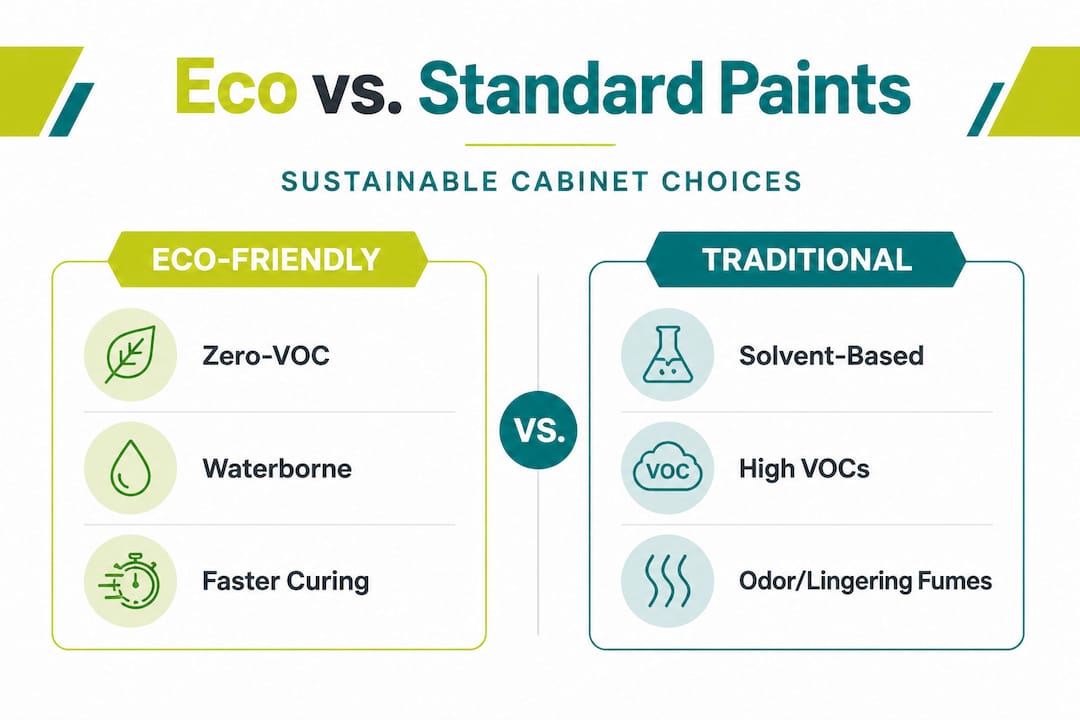
Let’s define the term clearly, because it gets used loosely. Eco-friendly cabinet painting centers on one measurable standard: low- or zero-VOC (volatile organic compound) paints and primers. VOCs are the airborne chemicals released as paint dries, and traditional solvent-based finishes release them in quantities that can linger indoors for days. That’s not just an odor problem. Long-term VOC exposure contributes to headaches, respiratory irritation, and poor indoor air quality, especially in a kitchen where air circulation is limited.
Eco-friendly cabinet painting uses low- or zero-VOC waterborne paints and coatings, reducing toxic emissions by up to 90% compared to traditional solvent-based finishes. That’s not a marginal improvement. It’s a fundamental shift in how your family’s kitchen air quality is protected.
Beyond air quality, eco-friendly cabinet painting supports several related principles:
Waste reduction: Refinishing existing cabinet boxes generates far less landfill waste than ripping out and replacing.
Lower carbon footprint: Manufacturing new cabinetry consumes significant raw materials and energy. Painting what you already own avoids all of that.
Safer chemistry: Waterborne paints use water as the carrier instead of petroleum-based solvents, meaning less hazardous waste disposal at every stage.
Better for sensitive households: Families with young children, elderly members, or chemically sensitive individuals benefit most from the near-zero odor and lower fume exposure.
Pairing these benefits with a thoughtful approach to sustainable kitchen materials creates a kitchen that looks brand new without the environmental burden of a full renovation. And when you compare that to the modern eco-friendly home upgrades gaining popularity in 2026, cabinet painting stands out as one of the most practical and accessible options available.
Pro Tip: When requesting a cabinet painting quote, always ask specifically whether the products used are certified low-VOC or zero-VOC. Not every “eco-friendly” label on a paint can meets the same standard, and a reputable contractor should be able to show you the product specs without hesitation.
Eco-friendly cabinet painting processes explained
Choosing the right paint product matters enormously, but the application process matters just as much. An eco-friendly finish applied carelessly can still introduce unnecessary fumes into your home, while a well-managed process keeps disruption and chemical exposure to an absolute minimum.
Here’s how a responsible, low-disruption eco cabinet painting process looks from start to finish:
Non-toxic surface cleaning. The process begins by removing grease and grime from cabinet surfaces using natural degreasers. Key methodologies include thorough cleaning with natural degreasers like vinegar, light sanding, priming with low-odor sealers, and multiple thin coats of waterborne enamels applied via spray booths for smooth finishes, minimizing disruption by removing doors off-site. This first step sets the foundation. A clean surface ensures adhesion, so skipping harsh chemical cleaners here also means one less toxic exposure in your home.
Careful sanding and dust management. Light sanding creates the mechanical adhesion that paint needs to bond properly. Responsible contractors use dust shrouds and vacuums during this stage to contain particulate matter and keep your kitchen surfaces clean.
Low-odor, water-based priming. Primer is the coat that seals stains and provides a uniform base. Eco-friendly projects use shellac-free, water-based primers with low-odor formulas. These are especially important on previously painted or stained cabinet surfaces where tannins might bleed through.
Off-site door and drawer spraying. This is a step that separates professional eco-friendly work from a quick brush-and-roll job. Cabinet doors and drawer fronts are removed and transported to an off-site spray booth. There, multiple thin coats of waterborne enamel are applied in a controlled environment, yielding the seamless, factory-finished look you simply cannot achieve with a brush inside your kitchen.
On-site box painting. While doors are off-site, cabinet boxes are carefully painted in place using low-odor waterborne products. With proper masking and ventilation, this step produces minimal disruption to your daily routine.
Reassembly and curing. Doors are reinstalled once fully cured. A final inspection ensures alignment, finish quality, and hardware fit meet the standard you’d expect from a professional result.
“Removing cabinet doors and painting them off-site in a controlled spray environment is one of the most underrated steps in eco-friendly cabinet refinishing. It dramatically reduces fume exposure inside the home and delivers a finish quality that on-site brush work simply cannot match.”
You can learn more about why this process connects to sustainable home practices that Ottawa families are increasingly prioritizing. And if you’re wondering what this level of care costs locally, reviewing Ottawa painting costs and services will give you a clear picture of what to expect. Even eco-friendly renovation processes in other home improvement categories are moving toward off-site or contained application methods for the same reason: less mess, less chemical exposure, better results.
Pro Tip: Ask your painting contractor whether they use a dedicated spray booth for cabinet doors or whether they spray inside your kitchen. Spraying indoors, even with good ventilation, introduces far more fume risk and overspray cleanup than off-site application.
Paints and products: what to use and why
With the process clear, let’s look at which specific products deliver on the eco-friendly promise while also standing up to the daily demands of a working kitchen.

The two most important metrics when evaluating any cabinet paint are VOC content (measured in grams per liter, or g/L) and kitchen-specific performance. Here’s a direct comparison of the leading options:
Paint Product | VOC Level | Key Features | Kitchen Performance |
Sherwin-Williams Emerald | Zero-VOC, plant-based | Exceptional flow, self-leveling | Excellent hardness and stain resistance |
Benjamin Moore Natura | Zero-VOC | Virtually odorless, fast-dry | Smooth finish, great adhesion |
Benjamin Moore Advance | Under 50 g/L | Alkyd-waterborne hybrid | Hard cure, door/drawer rated |
General Finishes Milk Paint | Low-VOC | Furniture-grade, water-based | Chip-resistant with topcoat |
Recommended paints include Sherwin-Williams Emerald (zero-VOC, plant-based), Benjamin Moore Natura (zero-VOC), and waterborne alkyds like Benjamin Moore Advance (under 50 g/L VOC), which meet or approach KCMA A161.1 standards. That last point is significant. KCMA A161.1 is the industry testing standard for kitchen cabinet finishes, covering resistance to common kitchen hazards like moisture, heat, household cleaners, and food acids. If a paint meets this standard, it’s built for the environment your cabinets actually live in.
Here’s what else to look for when evaluating products:
Coverage rate: Quality cabinet paints cover 350 to 400 square feet per gallon, which means fewer coats and less product waste.
Finish type: Semi-gloss and satin finishes are easiest to clean in kitchens while still looking polished. Review paint finish types for durability to understand which sheen level suits your lifestyle.
Non-yellowing formula: Waterborne paints, unlike some oil-based alternatives, will not yellow over time, especially important on white or light-colored cabinets.
Certified certifications: Look for Green Seal or GREENGUARD Gold certification for independent verification of low-emission claims.
Exploring cabinet paint finish options in more detail helps you narrow down the exact combination of sheen, color, and product that fits your kitchen’s daily use patterns.
Performance, durability, and ROI: eco painting vs. old-school methods
One of the most persistent myths about waterborne, low-VOC cabinet paints is that they sacrifice durability for the sake of being safer. This was partially true a decade ago. In 2026, it simply isn’t.
Let’s look at the numbers side by side:
Performance Factor | Traditional Solvent-Based | Eco-Friendly Waterborne (2026) |
VOC content | 250 to 600 g/L | Zero to 50 g/L |
Yellowing over time | Yes (oil-based) | No |
Dry time between coats | 6 to 24 hours | 1 to 4 hours |
Kitchen durability | High | High (equal in 2026) |
Finish lifespan | 5 to 10 years | 8 to 12 years |
Odor during application | High | Low to none |
VOC levels for zero-VOC products register under 5 g/L, low-VOC products range from 50 to 150 g/L, and coverage holds at 350 to 400 square feet per gallon, with professional applications yielding factory-like finishes lasting 8 to 12 years. That finish lifespan is critical context. You’re not trading longevity for a cleaner product. You’re getting both.
From a return on investment standpoint, the picture is equally compelling:
Cost savings vs. replacement: Professional cabinet painting typically costs 20 to 30% of what full cabinet replacement runs. The kitchen layout stays the same, the timeline stays around ten days, and your family isn’t living in construction chaos for weeks.
Home value: Understanding how painting boosts home value reveals that kitchen upgrades consistently rank among the highest-return improvements for resale.
Cabinet refinishing durability: When done with professional-grade products and a proper process, a refinished cabinet surface stands up to daily cooking, cleaning, and humidity without peeling or fading.
Transparent pricing: Reviewing cabinet painting costs in Ottawa and understanding what adds value to your home gives you all the information you need to make a confident investment decision.
Pro Tip: When comparing contractors on price, factor in the product specification, not just the quote total. A lower bid using high-VOC, brush-applied conventional paint is not comparable to a professional spray-applied waterborne enamel. The finish quality and lifespan will differ significantly.
Why sustainable cabinet painting is Ottawa’s smartest kitchen upgrade
We’ve seen the data. We’ve walked through the process. Here’s our honest take, based on what we see working for Ottawa homeowners every day.
Most of the conventional thinking about waterborne paints is stuck about ten years in the past. Contractors and homeowners who tried early water-based cabinet paints remember softer finishes, adhesion issues, and products that didn’t hold up around steam or moisture. That experience was real. But 2026 waterborne technology has closed every one of those gaps. The paints are harder, they cure faster, and they bond more reliably than many of the solvent-based products they’ve replaced. There are no meaningful trade-offs left.
What surprises most Ottawa clients is how little their household is disrupted by the process. Cabinet doors are out of the kitchen and in our spray booth. The kitchen remains functional throughout most of the project. The low-odor products mean no burning eyes, no need to evacuate the house, and no lingering paint smell weeks later. That’s a quality-of-life benefit that’s hard to quantify but impossible to overlook once you’ve experienced it.
The ROI conversation is also more nuanced than most articles acknowledge. Eco-painting supports sustainability and recouping 80% ROI in home value is well-documented, but the immediate returns matter too. You’re breathing cleaner air the day after the project wraps. Your children or elderly family members aren’t exposed to weeks of off-gassing. And your kitchen looks like it belongs in a design catalog without the debt load of a full renovation. Those are real, immediate returns on a smart investment.
We also think Ottawa homeowners underestimate how well the off-site spray approach aligns with broader sustainable home choices. When you choose eco-friendly cabinet painting, you’re not just making a cosmetic decision. You’re choosing less landfill waste, lower chemical exposure, a faster process, and a result that lasts over a decade. That’s a smarter position in every direction.
Ready for a healthier, easier kitchen upgrade?
You now have a clear, evidence-based picture of what eco-friendly cabinet painting delivers for Ottawa homeowners. The product technology is there. The process is refined and low-disruption. The performance data backs a finish that lasts 8 to 12 years. And the cost savings versus full replacement are substantial.
If you’re ready to take the next step, we make it simple. Request your Ottawa Cabinet Painting quotes online and find out exactly what your kitchen transformation would cost and look like. You can also explore our Ottawa interior painting services for a complete picture of what we offer. And if you want to see what a professional eco-friendly cabinet finish looks like in real Ottawa kitchens, our before and after eco-friendly projects gallery shows finished results from local homes just like yours.
Frequently asked questions
What is the difference between eco-friendly and standard cabinet painting?
Eco-friendly cabinet painting uses low- or zero-VOC waterborne paints and sustainable processes, which emit up to 90% fewer toxins than traditional solvent-based methods, making the process far safer for indoor air quality.
How long does an eco-friendly cabinet finish last?
Professionally applied eco-friendly cabinet finishes last 8 to 12 years under normal kitchen conditions, which matches or exceeds what most solvent-based products deliver.
Are zero-VOC cabinet paints as durable as regular ones?
Modern zero-VOC cabinet paints meet KCMA A161.1 standards for chemical and heat resistance in kitchens, matching the performance of older solvent-based options without any of the health trade-offs.
Does eco cabinet painting add value to my home?
Eco cabinet painting recoupes up to 80% ROI in home value, making it one of the highest-return kitchen upgrades available to Ottawa homeowners.
Recommended
Comments