What Makes a Professional Refinishing Process in Ottawa

TL;DR:
Professional cabinet refinishing in Ottawa involves meticulous surface preparation, substrate-specific primers, and HVLP spray application to ensure a durable, factory-quality finish that lasts over a decade. Skipping steps or using improper materials leads to early failure, peeling, and damage, making professional standards essential for long-term results. Proper process and environment adjustments are especially crucial in Ottawa’s climate to achieve optimal adhesion, curing, and lasting beauty.
Professional cabinet refinishing is defined as a specialized surface restoration process that cleans, repairs, primes, and recoats existing cabinets or fixtures to factory-quality standards without replacing them. For Ottawa homeowners weighing a kitchen upgrade, understanding what makes a professional refinishing process different from a weekend DIY project is the difference between a finish that lasts a decade and one that peels by spring. Professional refinishing uses commercial-grade tools like HVLP spray systems, substrate-specific primers, and precisely mixed coatings to deliver results that look and perform like new cabinetry. This article breaks down the techniques, preparation steps, and quality standards that separate expert refinishing from everything else.
What makes a professional refinishing process different from DIY?
The gap between professional and DIY refinishing is not just about skill. It comes down to materials, equipment, and the willingness to follow every step without cutting corners.
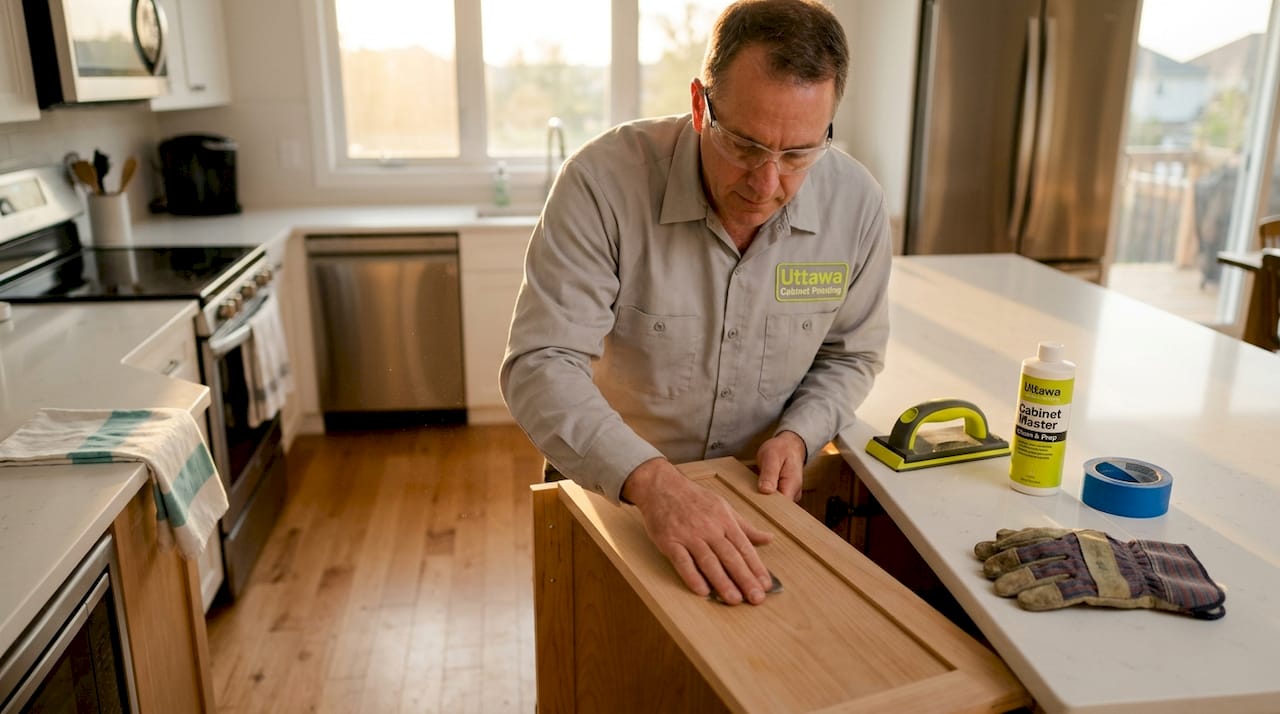
Surface preparation is where most DIY projects fail before a single drop of paint is applied. Professionals spend the majority of their time cleaning, degreasing, sanding, and etching surfaces to create a profile that coatings can grip. Failure to remove grease and previous coatings results in peeling and chipping within a year. That is not a warning. That is a near-certainty.
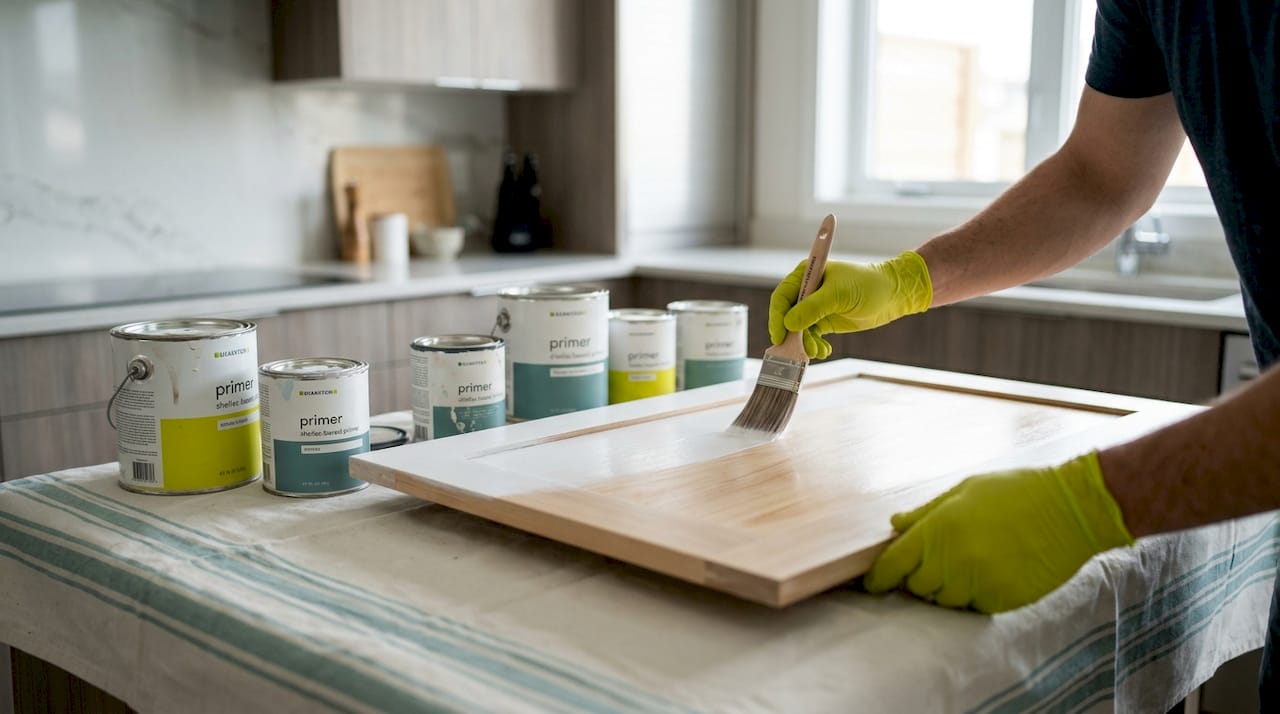
Primer selection is another area where professionals and DIYers diverge sharply. Wrong primer selection is a frequent root cause of refinishing failure. A shellac-based primer behaves completely differently on laminate than on raw wood or MDF. Professionals match the primer to the substrate every time. DIYers typically grab whatever is available at the hardware store.
The equipment difference is just as significant. Professionals use HVLP (High Volume Low Pressure) spray systems that apply thin, even coats with minimal overspray. Brushes and rollers, the default for most DIY projects, leave texture, lap marks, and uneven film thickness. The result with HVLP is a smooth, factory-finished surface. The result with a brush is visible brushstrokes.
Here is a direct cost comparison to put the investment in perspective:
Approach | Typical Cost | Expected Durability |
DIY refinishing | $150–$400 in materials | Months to 1 year before failure |
Professional refinishing | $1,000–$3,500 | 10–15 years with proper care |
Full cabinet replacement | $5,000+ | Long-term, but costly and disruptive |
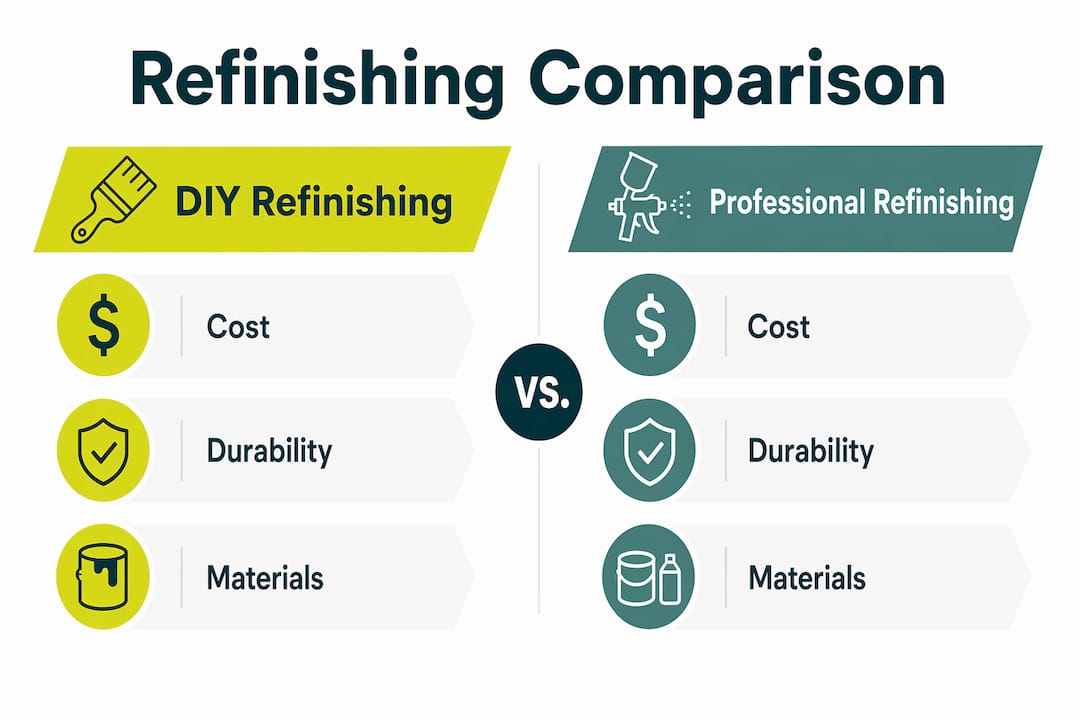
Professional refinishing costs between $1,000 and $3,500 and delivers results that last over a decade. Full replacement starts at $5,000 and tears your kitchen apart for weeks. The math is straightforward.
Pro Tip: Ask any refinisher whether they use a shellac-based or bonding primer for your specific cabinet material. If they cannot answer immediately, that tells you everything you need to know about their process.
Step-by-step: the professional refinishing process for Ottawa cabinets
A professional refinishing job follows a defined sequence. Skipping or rushing any step compromises the entire finish. Here is how it works from start to finish.
Thorough cleaning and degreasing. Every surface is cleaned with a commercial degreaser to remove cooking oils, grease buildup, and residue. Kitchen cabinets accumulate years of contamination that is invisible to the eye but fatal to adhesion. This step cannot be rushed.
Chemical etching and mechanical sanding. After cleaning, surfaces are etched chemically or sanded to create a profile for the primer to bond to. This is called creating an adhesion profile. Without it, even the best primer will eventually lift. Professionals use specific grits and techniques depending on whether the substrate is wood, laminate, or thermofoil.
Surface repair. Chips, scratches, dents, and veneer damage are filled and feathered before any coating goes on. Skipping this step means every imperfection telegraphs through the final finish. Professionals use wood filler, two-part epoxy filler, or caulking depending on the type and depth of the damage.
Substrate-specific primer application. The right primer is applied to the prepared surface. On laminate, a bonding primer is required. On bare wood, a shellac-based primer seals the grain and prevents tannin bleed-through. Substrate-specific primer selection is what separates professional refinishing from generic painting.
HVLP spray application. The topcoat is applied using an HVLP spray system in multiple thin passes. HVLP spray systems create smooth, thin, even coatings that brushes and rollers simply cannot replicate. Each coat is allowed to flash off before the next is applied.
Precise mixing ratios. Two-component coatings require exact resin-to-catalyst ratios. Incorrect resin-to-catalyst ratios cause sticky surfaces, premature cracking, or complete finish failure. Professionals measure and mix according to manufacturer specifications every single time.
Curing time. After the final coat, the finish must cure fully before reinstallation or use. Proper curing requires 7 to 14 days for the coating to reach full hardness. Rushing this step by reinstalling doors too early is a recipe for dents, scratches, and surface damage that cannot be undone.
Pro Tip: Never close cabinet doors or stack finished panels during the cure period. Even light contact during curing can leave permanent impressions in the soft coating.
What happens when Ottawa homeowners skip professional refinishing standards?
The consequences of skipping professional standards are predictable and expensive. Here is what goes wrong, and why.
Adhesion failure. Without proper degreasing and surface profiling, coatings sit on top of the substrate rather than bonding to it. The result is peeling and bubbling, often starting at edges and corners within months of application.
Sticky or rough textures. Incorrect mixing ratios or applying coatings in the wrong temperature and humidity conditions leaves finishes that never fully harden. Ottawa winters and humid summers create conditions that demand professional knowledge of how coatings behave in local environments.
Premature cracking. A finish applied too thick, or over an incompatible primer, develops stress cracks as it cures. This is especially common with DIY kits that use single-component coatings not designed for high-use surfaces like cabinet doors.
Health and safety risks. Many professional-grade coatings contain isocyanates and other compounds that require respirators, proper ventilation, and chemical handling knowledge. DIY application without the right protective equipment creates genuine health risks.
Ottawa’s climate as a hidden factor. Ottawa’s local climate affects curing and adhesion. Cold temperatures slow curing dramatically. High humidity in summer prevents proper film formation. Professionals adjust their process, products, and timing to account for these conditions. A DIYer painting cabinet doors in a cold garage in February is setting up for failure regardless of product quality.
Professionally refinished surfaces last 10 to 15 years with normal care. DIY finishes frequently fail within months. That durability gap is not about luck. It is the direct result of following professional refinishing standards at every stage.
How to get a high-quality refinishing job in Ottawa
Knowing what a professional process looks like gives you the ability to evaluate any contractor before you hire them. Here is what to look for and ask.
Ask about their prep process specifically. Any professional worth hiring will describe degreasing, sanding, and priming without hesitation. Vague answers like “we clean and paint” are a warning sign.
Verify primer selection. Ask what primer they use on your specific cabinet material. The answer should reference the substrate. A contractor who uses the same primer on every job is not following professional refinishing standards.
Confirm they use HVLP spray equipment. Brush and roller application on cabinets is not professional refinishing. It is house painting. The two are not the same.
Check their curing protocol. Ask how long before you can use the cabinets after the final coat. A professional answer is 7 to 14 days for full cure. Anyone who says you can use them the next day is not giving you a durable finish.
Ask about their warranty. A contractor confident in their process backs it up. Ottawacabinetpainting offers a 6-year warranty, which reflects the durability of a properly executed professional process.
Request references or photos of completed Ottawa projects. Local experience matters. A contractor who has worked in Ottawa homes understands the climate conditions that affect curing and adhesion in this region.
For a deeper look at choosing the right refinisher in your area, it helps to know the seven questions that separate skilled professionals from quick-turnaround operators.
Post-refinishing, the maintenance is simple. Wipe cabinets with a damp cloth and mild soap. Avoid abrasive cleaners, which scratch the topcoat. Do not hang wet towels on cabinet doors during the first 30 days. These small habits protect a finish that, done correctly, should outlast most kitchen renovations.
Key takeaways
A professional refinishing process delivers lasting results because it combines precise surface preparation, substrate-matched primers, HVLP spray application, and controlled curing. No single step can be skipped without compromising the whole finish.
Point | Details |
Surface prep is non-negotiable | Degreasing, etching, and sanding create the adhesion profile that holds coatings for years. |
Primer must match the substrate | Shellac-based primers for wood, bonding primers for laminate. Wrong primer means early failure. |
HVLP spray delivers factory results | Brush and roller application cannot match the smooth, even film thickness of professional spray equipment. |
Curing time protects your investment | Allow 7 to 14 days before full use. Rushing this step causes dents, scratches, and peeling. |
Ottawa’s climate requires local expertise | Temperature and humidity affect curing. Professionals adjust their process to regional conditions. |
Why we take the long road on every Ottawa refinishing job
After years of working in Ottawa kitchens, we have seen what happens when the process gets shortened. A contractor who skips the degreasing step saves 45 minutes. The homeowner pays for it 8 months later when the finish starts lifting at the cabinet edges. We have been called in to redo work that was done quickly and cheaply, and the repair cost often exceeds what a proper job would have cost the first time.
The part that surprises most homeowners is how much of our time is spent before any coating goes on. Prep work is not glamorous. It does not look impressive in a before-and-after photo. But it is the entire reason a finish holds for 10 years instead of 10 months.
Ottawa’s winters also change the equation in ways that out-of-town contractors do not always account for. Cold temperatures in unheated spaces slow curing to a crawl. We schedule and control our environment accordingly. That is not extra caution. That is basic professional practice.
We also believe homeowners deserve to understand the full refinishing process before they commit to anything. An informed homeowner asks better questions, sets realistic expectations, and ends up with a result they are genuinely satisfied with. That is the kind of relationship we want with every client.
— Ottawa
Get a professional refinishing quote for your Ottawa home
If your kitchen cabinets look worn, dated, or damaged, replacement is not your only option. Ottawacabinetpainting specializes in professional cabinet refinishing for Ottawa homeowners, using the exact process described in this article. That means thorough prep, substrate-matched primers, HVLP spray application, and a 6-year warranty on every job. You get a showroom-quality finish without the cost or disruption of full cabinet replacement. Contact us for a free quote and find out what your kitchen could look like with a properly executed refinishing process. You can also explore our full range of interior refinishing services to see what is possible for your home.
FAQ
What does a professional refinishing process include?
A professional refinishing process includes thorough degreasing, chemical etching or sanding, surface repair, substrate-specific primer application, HVLP spray coating, and a full curing period of 7 to 14 days. Each step is required for the finish to bond correctly and last.
How long does professional cabinet refinishing last in Ottawa?
Professionally refinished cabinets last 10 to 15 years with normal care, compared to DIY finishes that frequently fail within months. Ottawa’s climate makes professional expertise especially important, since temperature and humidity directly affect how coatings cure and adhere.
Is professional refinishing worth it compared to replacement?
Professional refinishing costs between $1,000 and $3,500, while full cabinet replacement starts at $5,000 or more. Refinishing preserves your existing layout, avoids renovation disruption, and delivers a durable finish. For most Ottawa homeowners, it is the more practical and cost-effective choice.
Why do DIY refinishing kits fail so quickly?
DIY kits typically use single-component coatings that are less durable than professional two-part systems. Combined with inadequate surface preparation and brush or roller application, the result is a finish that peels, chips, or goes sticky within the first year.
How do I know if a refinisher in Ottawa is truly professional?
Ask them to describe their prep process, specify which primer they use for your cabinet material, confirm they use HVLP spray equipment, and explain their curing protocol. A professional will answer all four questions clearly and confidently without hesitation.
Recommended
Comments