Kitchen Cabinet Repair and Refinishing: Ottawa's 2026 Guide
- Axcell Painting
- 5 hours ago
- 8 min read
TL;DR:
Kitchen cabinet repair and refinishing restore surfaces to look new at a cost significantly lower than full replacement, saving homeowners money. Proper preparation, correct materials, and professional techniques ensure a durable, factory-quality finish that lasts 10–15 years with proper maintenance. DIY efforts are feasible for small projects, but large or complex cabinets require professional refinishing to achieve optimal results.
Kitchen cabinet repair and refinishing is the process of restoring worn or damaged cabinet surfaces to look and function like new, without tearing out your entire kitchen. Professional refinishing costs between $2,500 and $8,500, which is 50–70% less than full replacement. That gap represents real money for Ottawa homeowners. When your cabinet boxes are structurally sound, refinishing delivers a factory-quality finish and adds years of life to your kitchen. Ottawacabinetpainting has guided hundreds of Ottawa homeowners through this process, and the results speak for themselves.
What tools and materials do you need for kitchen cabinet repair and refinishing in Ottawa?
The right materials make or break a cabinet refinishing project. Skipping even one step in the prep phase creates problems that show up weeks later, not during the job.
Essential tools and materials:
Degreaser (Krud Kutter Gloss-Off is the industry standard for cutting invisible kitchen grease)
120 and 220 grit sandpaper or a deglossing liquid
Shellac-based primer such as Zinsser BIN
Cabinet-grade enamel or lacquer paint
Angled brush and short-nap foam roller for brush-and-roller application
Painter’s tape and numbered labels for doors
Screwdrivers and a drill for hardware removal
Tack cloths for dust removal between coats
Degreasing with Krud Kutter Gloss-Off removes invisible grease that blocks paint adhesion. Grease is the number one reason paint peels within months of a DIY job.
Pro Tip: Label every door with painter’s tape and a number before you remove it. Write the matching number inside the cabinet opening. This saves hours during reinstallation and prevents mismatched doors.
The material your cabinets are made from also determines which primer you need. The table below shows the most common cabinet materials and the right primer for each.
Cabinet material | Recommended primer | Notes |
Solid wood | Shellac-based (Zinsser BIN) | Seals knots and tannins |
MDF | Oil-based or shellac-based | Prevents swelling from water-based products |
Laminate | Bonding primer (adhesion-specific) | Requires light scuffing first |
Thermofoil | Adhesion-promoting primer | Delamination risk if overheated |
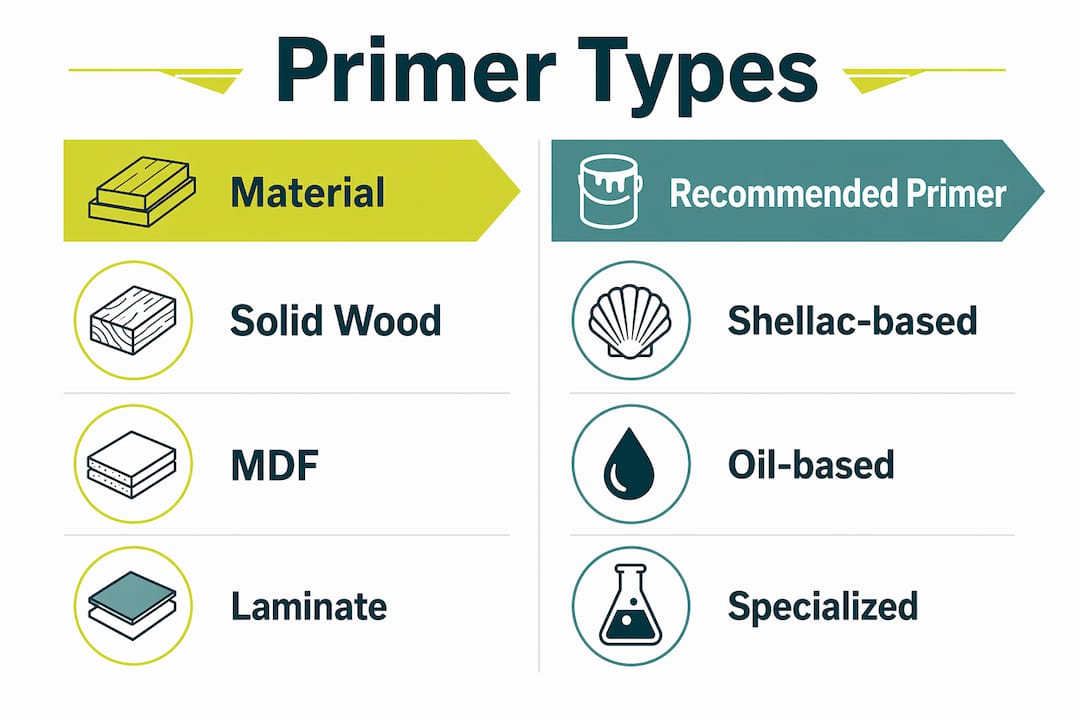
Solid wood is easier to refinish than MDF or laminate, which need specialized primers and more labor. Knowing your material upfront saves you from buying the wrong products.
How do you repair common kitchen cabinet damage before refinishing?
Surface repairs come before any primer or paint. Painting over unrepaired damage locks the problem in permanently.
Assess the damage. Inspect every door and cabinet box. Minor chips, scratches, dents, and small cracks are repairable. Delamination, warping, or swollen frames signal that a door needs replacement, not repair.
Fill dents and chips. Use a two-part epoxy wood filler for deep gouges. For shallow chips, a lightweight spackling compound works well. Press the filler slightly proud of the surface so you have material to sand back.
Sand the repair flush. Once the filler cures fully (check the product label for cure time), sand with 120 grit to level it, then follow with 220 grit to smooth the surface.
Spot prime the repair. Apply a thin coat of shellac-based primer over the repaired area only. This seals the filler and prevents it from absorbing topcoat paint differently than the surrounding wood.
Feather the edges. Lightly sand the edges of the spot prime into the surrounding surface. This blends the repair so it disappears under the final coat.
Cabinet boxes with water damage or swollen frames need replacement, not refinishing. Refinishing only works when the underlying structure is sound.
Pro Tip: Match the texture of the surrounding surface before priming. If your cabinets have a slight grain texture, lightly drag a dry brush over wet filler to mimic it. A perfectly smooth patch on a textured surface will show under paint.
What is the step-by-step process to refinish Ottawa kitchen cabinets?
This is where quality is won or lost. Rushing any of these steps is a recipe for disaster.
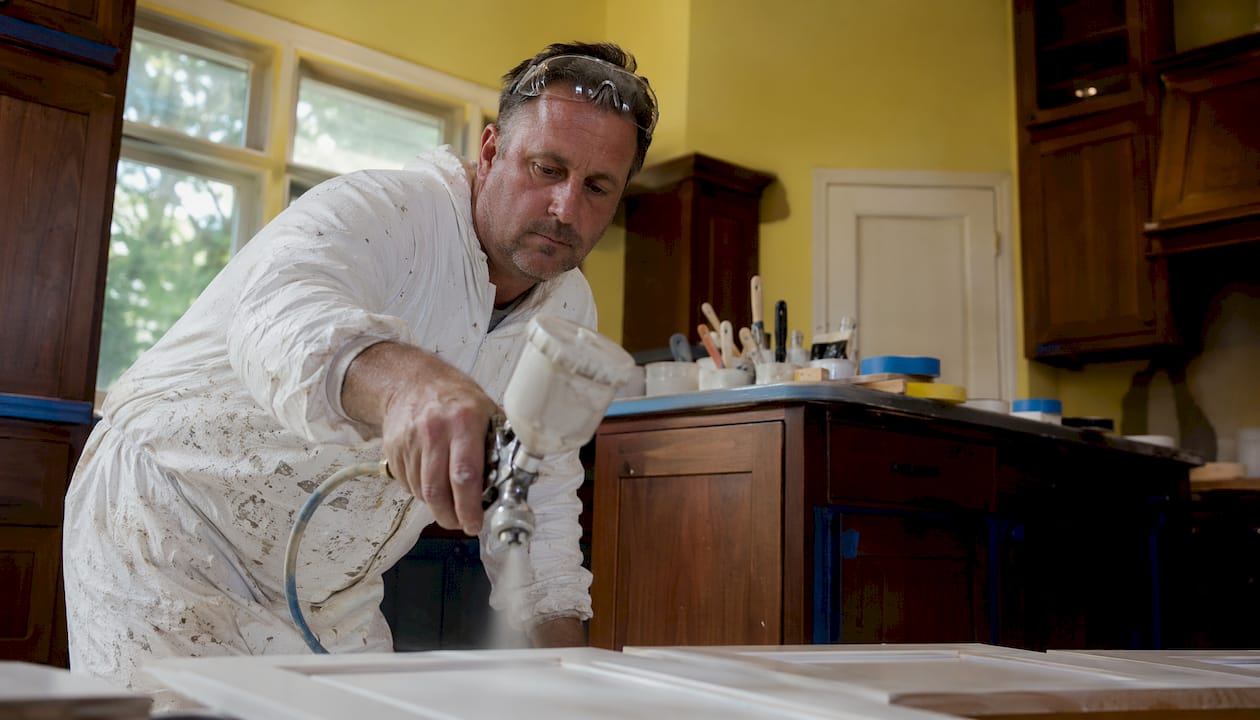
Remove all doors, drawers, and hardware. Removing doors and painting them flat is the single biggest step toward a professional finish. Painting doors in place causes drips, uneven coverage, and brush marks that are impossible to fix later.
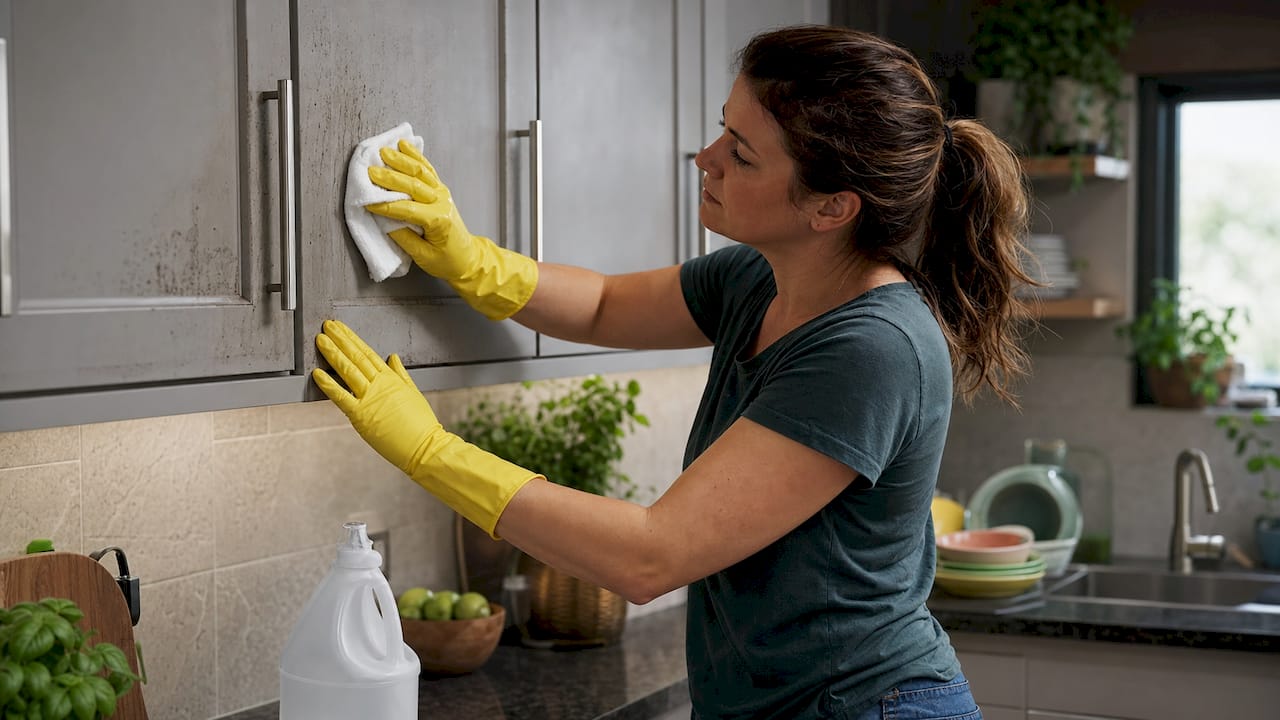
Degrease every surface. Wipe down all cabinet boxes, doors, and drawer fronts with your degreaser. Do not skip this step. Invisible grease from cooking creates a barrier that prevents primer from bonding.
Sand or degloss. Lightly sand with 120 grit to scuff the existing finish. This gives the primer something to grip. Wipe away all dust with a tack cloth before moving forward.
Apply shellac-based primer. Zinsser BIN shellac primer bonds to virtually any surface, seals stains, and blocks grease bleed-through better than water-based primers. Apply one full coat and let it dry completely.
Sand between coats. Once the primer dries, sand lightly with 220 grit. This knocks down any raised grain or brush texture and creates the ultra-smooth base that separates a professional finish from a DIY one.
Apply cabinet-grade paint. Use a cabinet-grade enamel or lacquer. Apply two thin coats rather than one thick coat. Thin coats level better and cure harder.
Allow full cure time. Paint may feel dry to the touch in hours, but full hardness takes days. Hang doors only after the paint has cured per the manufacturer’s schedule.
The table below compares the most common paint types for cabinet refinishing.
Paint type | Dry time | Cure time | Best finish |
Water-based enamel | 1–2 hours | 7–14 days | Smooth, low sheen |
Oil-based enamel | 6–8 hours | 30 days | Hard, durable gloss |
Lacquer | 30–60 minutes | 3–5 days | Factory-smooth, fast |
Alkyd hybrid | 2–4 hours | 14–21 days | Hard, self-leveling |
Pro Tip: Never paint cabinet doors vertically while they hang on the cabinet. Lay them flat on sawhorses. Gravity pulls wet paint into drips the moment you load a brush. Flat doors give you a smooth, even coat every time.
Common DIY mistakes that ruin the finish include skipping degreasing, using the wrong primer, and painting doors while they are still mounted. Professionals remove doors and spray them in controlled environments to avoid every one of these problems.
When should Ottawa homeowners hire a professional refinisher?
DIY cabinet refinishing is achievable, but it is not for every homeowner or every kitchen. Knowing when to call in a professional saves you time, money, and frustration.
Signs that professional refinishing is the right call:
Your cabinets have extensive grease buildup, old paint layers, or previous failed refinishing attempts
You do not have access to spray equipment, which produces a far smoother finish than brush and roller
Your kitchen has more than 20 doors and drawer fronts, making the project scope significant
You want a warranty on the work. Ottawacabinetpainting backs its work with a 6-year warranty, which no DIY project can match
You need the kitchen functional quickly. Professionals work in phases to minimize disruption
Professional refinishing in Ottawa typically costs between $2,500 and $8,500 for a full kitchen. Compare that to full replacement, which often runs $15,000 to $30,000 or more. The cost savings from refinishing are substantial for most Ottawa households.
Professionals also bring shop spray booths, controlled curing environments, and the ability to assess cabinet condition before committing to a refinishing plan. That assessment matters. Refinishing over hidden structural damage wastes money.
Pro Tip: Ask any refinisher you consider hiring whether they remove doors and spray off-site or paint in place. Painting in place is faster for the contractor but produces an inferior finish. The answer tells you everything about their standards.
How do you maintain refinished cabinets to extend their lifespan?
Refinished cabinets last 10–15 years when properly maintained. The finish is durable, but daily habits determine how long it stays looking great.
Maintenance habits that protect your investment:
Clean with a damp microfiber cloth and a mild dish soap solution. Avoid abrasive cleaners, bleach-based sprays, or anything with ammonia. These strip the topcoat over time.
Dry surfaces immediately after cleaning. Standing moisture softens paint films, especially near the sink and dishwasher.
Inspect hinges and drawer slides every six months. Lubricate with a silicone-based spray to prevent hardware from dragging and chipping the finish around hinge points.
Address chips and scratches early. A small touch-up with leftover paint takes five minutes. Leaving a chip exposed allows moisture to get under the finish and spread the damage.
Control kitchen humidity. Prolonged high humidity causes wood to expand and contract, which stresses the paint film at joints and edges. A range hood used consistently during cooking makes a real difference.
The goal is simple: treat the finish gently, fix small problems before they grow, and the cabinets will look sharp for well over a decade.
Key Takeaways
Successful kitchen cabinet refinishing depends on thorough prep, the right primer, and proper cure time. Skipping any one of these steps produces a finish that fails within months.
Point | Details |
Assess before you start | Check cabinet boxes for water damage or warping before committing to refinishing. |
Degrease first, always | Invisible kitchen grease blocks primer adhesion and is the top cause of paint failure. |
Use shellac-based primer | Zinsser BIN bonds to wood, MDF, and laminate while sealing stains and grease bleed-through. |
Remove doors before painting | Flat-painted doors produce a smoother, drip-free finish that in-place painting cannot match. |
Professional work adds warranty | Ottawa professional refinishing costs 50–70% less than replacement and includes long-term coverage. |
What we have learned after years of Ottawa cabinet refinishing
The homeowners who get the best results are the ones who resist the urge to rush. We have seen beautiful kitchens ruined by one impatient afternoon. Someone skips the degreasing because the cabinets “look clean.” They prime the next morning, paint by the weekend, and call us three months later when the finish is peeling in sheets. Grease is invisible. That is what makes it dangerous.
The other mistake we see constantly is painting doors in place. It feels logical. Why remove 20 doors when you can just paint them hanging? Because gravity does not care about your timeline. Every loaded brush stroke on a vertical surface is a drip waiting to happen. Professionals remove doors because the result is genuinely better, not because it is easier.
We also want to be honest about when refinishing is not the answer. If your cabinet boxes are soft from water damage, or your doors are warping and will not close flat, no amount of beautiful paint fixes that. The right call is to replace those specific components and refinish the rest. Spending money on refinishing structurally compromised cabinets is a waste. A good refinisher tells you this upfront. If a contractor is willing to paint over obvious structural problems, that is a red flag.
The return on investment for Ottawa homeowners who refinish is real and measurable. A kitchen that looks dated and worn signals neglect to buyers. A kitchen with fresh, factory-smooth cabinets signals care and quality. That perception has direct value.
— Ottawa
Professional cabinet refinishing for Ottawa homeowners
Ottawacabinetpainting specializes in professional cabinet refinishing for Ottawa kitchens, handling everything from the initial condition assessment to the final coat of cabinet-grade enamel. We remove every door, spray in a controlled environment, and return your kitchen to full function within a predictable timeline. Our process includes thorough degreasing, shellac-based priming, and multiple sanded coats for a finish that holds up to daily kitchen life. Every project is backed by a 6-year warranty. If you want to see what the process delivers before committing, our before and after gallery shows real Ottawa kitchens at every stage. Request a free quote and find out what your kitchen could look like.
FAQ
How much does cabinet refinishing cost in Ottawa?
Professional kitchen cabinet refinishing in Ottawa typically costs between $2,500 and $8,500, which is 50–70% less than full cabinet replacement. The exact price depends on kitchen size, cabinet material, and the condition of existing surfaces.
Can I refinish cabinets myself, or do I need a professional?
DIY refinishing is possible for smaller kitchens with sound cabinet boxes, but it requires proper degreasing, shellac-based primer, and painting doors flat off the cabinet. Larger kitchens or those with previous finish failures benefit significantly from professional spray application and controlled curing.
How long do refinished kitchen cabinets last?
Refinished cabinets last 10–15 years when professional-grade coatings and proper prep are used. Regular cleaning with mild soap and prompt touch-ups on chips extend that lifespan further.
What damages cannot be fixed by refinishing?
Delamination, warping, and water-swollen cabinet frames cannot be corrected by refinishing. These conditions require door or box replacement before any surface treatment makes sense.
What primer works best for kitchen cabinet refinishing?
Shellac-based primers like Zinsser BIN are the top choice for kitchen cabinets. They bond to wood, MDF, and laminate, seal stains, and block grease bleed-through better than water-based alternatives.
Recommended