Importance of Prep Work for Cabinets: Lasting Results
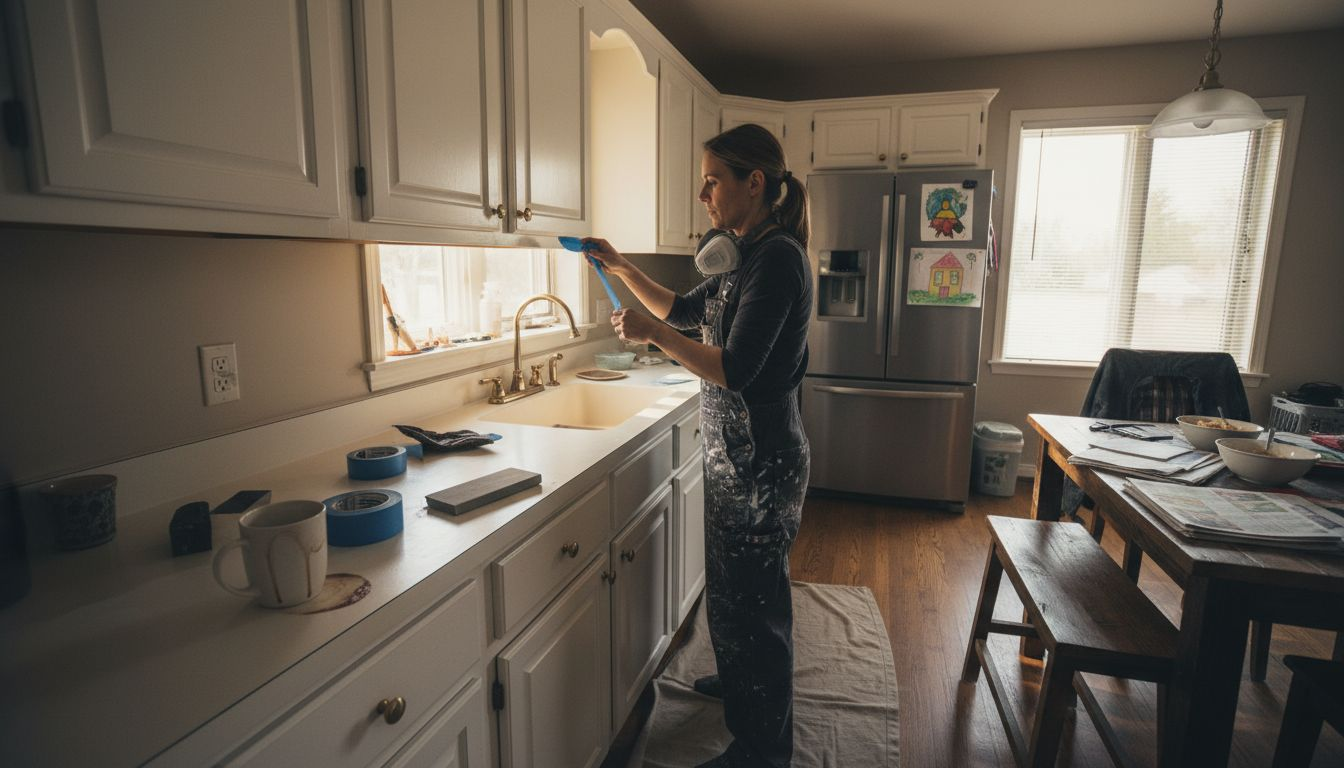
Every Ottawa homeowner who wants cabinets that stay beautiful for years knows the secret lies in what happens before any paint is opened. The quality of prep work transforms kitchen cabinet updates from a quick fix into a real investment in your home’s value and comfort. Meticulous steps like thorough surface preparation and tailored strategies for each material type protect against peeling, scratches, and failure, so your kitchen looks refreshed without constant repairs or full-scale renovations.
Table of Contents
Key Takeaways
Point | Details |
Importance of Prep Work | Proper preparation is essential for achieving a durable and beautiful cabinet finish that lasts for years. Skipping this step can lead to quick deterioration and costly repairs. |
Material-Specific Strategies | Different cabinet materials require tailored preparation strategies to ensure paint adhesion and longevity. Understanding these needs is crucial for quality results. |
Sequential Steps Matter | Each prep step builds on the previous one; thorough cleaning, sanding, and priming are vital to ensure paint properly adheres and avoids future issues. |
Quality vs. Quick Fix | Investing time in quality prep work may cost more upfront but prevents long-term failures and rework, ultimately protecting your investment in cabinetry. |
Prep Work for Cabinets: Core Principles
Proper prep work isn’t just a step in the cabinet painting process—it’s the foundation that determines whether your kitchen cabinets will look beautiful for years or show wear and damage within months. The difference between a finish that lasts and one that fails often comes down to preparation. When cabinets in Ottawa homes skip this stage, homeowners frequently discover peeling paint, scratches, or a dull finish within a year or two. That outcome is entirely preventable with the right approach.
Industry standards like KCMA Quality Certification establish core principles for cabinet durability and lasting functional performance through rigorous testing of structural integrity, drawer operation, door durability, and finish endurance. These standards inform professional practices across the cabinet refinishing industry. The Architectural Woodwork Institute outlines standardized preparation processes that emphasize detailed planning, material selection, fabrication precision, and finishing consistency. These foundational principles guarantee that cabinets maintain quality and functionality over time. In other words, the professionals who achieve the best results follow a deliberate, methodical approach rather than cutting corners. They understand that surface preparation directly impacts how paint adheres, how smoothly it applies, and how long it protects the wood underneath.
At its core, cabinet prep work rests on three essential principles. First, cleanliness removes contaminants like grease, dust, and cooking residue that prevent paint from bonding properly to the surface. Second, smoothness creates a uniform base through sanding and filling, eliminating imperfections that would telegraph through the final coat. Third, protection involves properly sealing edges, hardware removal points, and areas where moisture might penetrate. When all three principles work together, you get cabinets that not only look showroom-quality but also resist the daily wear your kitchen demands. That’s why we spend several days on prep work alone before any paint ever touches your cabinets.
Pro tip: Ask your cabinet painter specifically what prep steps they perform and how many days they allocate to preparation—this one question often separates quality results from disappointing finishes.
Types of Cabinet Surfaces and Prep Needs
Not all kitchen cabinets are created equal, and that’s why prep work can’t be one-size-fits-all. Your Ottawa home’s cabinets might be solid wood, veneered, laminate, or even metal—and each surface demands a different preparation strategy. The material underneath determines how the surface absorbs moisture, how it responds to sanding, and how paint will ultimately adhere to it. Skipping this analysis and treating every cabinet the same way is a recipe for disaster. A prep approach that works beautifully on solid wood might cause laminate to chip or bubble. That’s why professionals start by identifying exactly what they’re working with.
Cabinets made from various materials including solid wood, wood veneers, coated steel, laminates, and synthetic materials each require specific preparation approaches. Solid wood cabinets typically need sanding to remove old finishes and create a surface for paint to grip. Veneered cabinets require gentler handling since aggressive sanding can damage the thin veneer layer—here you focus on cleaning and light surface preparation rather than heavy sanding. Laminate surfaces present their own challenge because they’re slick and non-porous, meaning paint won’t bond without special treatment like primer or light sanding to break the gloss. Steel or metal cabinet components follow distinct cleaning and treatment requirements to ensure coatings adhere properly and corrosion protection remains intact. Each material type has a porosity level, hardness rating, and surface texture that directly affects how you prepare it.
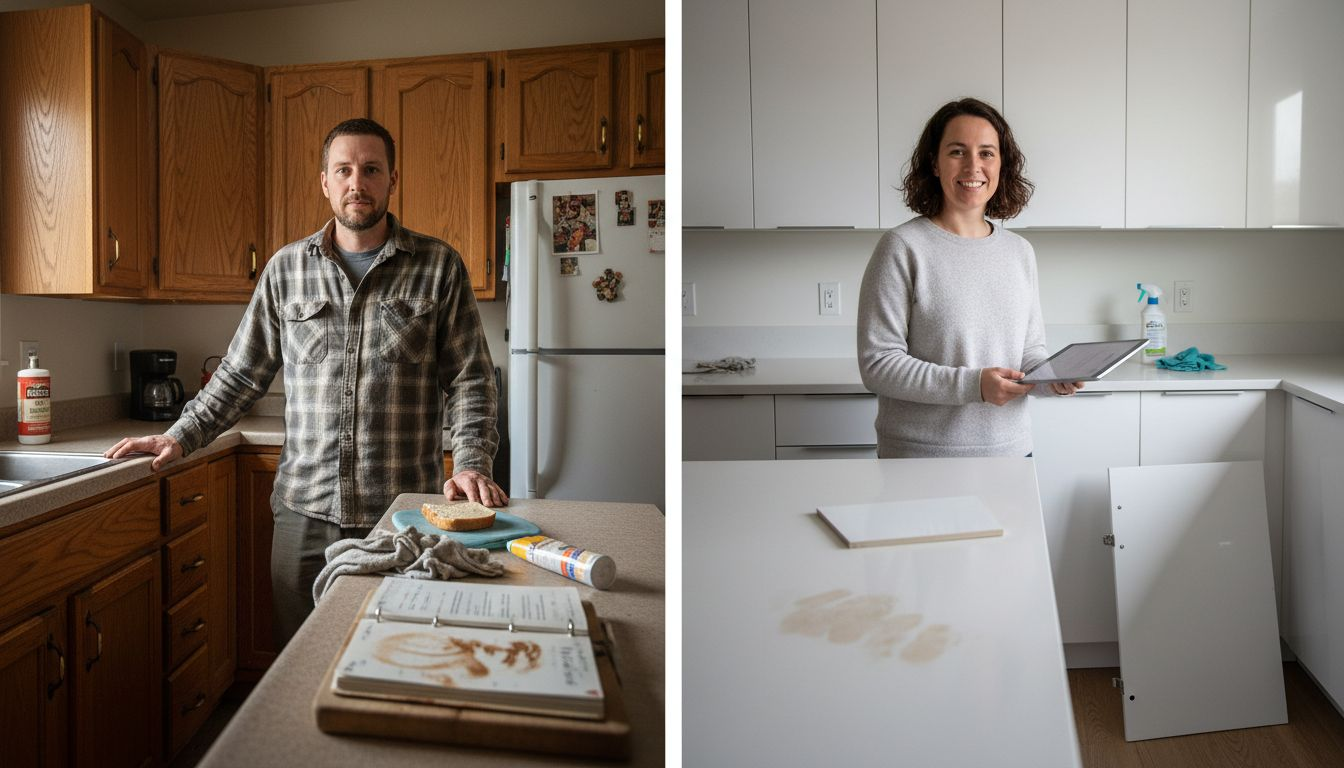
Here’s the practical breakdown for Ottawa homeowners. If your cabinets are solid wood, expect sanding to be the main focus, along with filling gaps or imperfections. For veneered cabinets, preparation centers on cleaning away grease and dust without damaging the veneer—chemical strippers and gentle sanding work better than aggressive scrubbing. Laminate cabinets need deglossing to help primer and paint stick, plus careful attention to edges where water can seep in. Metal or steel components require degreasing and possibly rust treatment if any corrosion is visible. The beauty of professional prep work is that we assess your specific cabinet materials on day one and adjust our entire approach accordingly. That customized strategy is what keeps cabinets looking fresh for years rather than showing wear within months.
Pro tip: Before hiring a cabinet painter, ask them to identify your cabinet materials and explain how their prep process differs for each type—their answer reveals whether they truly understand what they’re painting.
Here’s a comparison of how different cabinet materials impact prep work requirements:
Cabinet Material | Main Prep Focus | Unique Challenge | Professional Tip |
Solid Wood | Sanding, filling imperfections | Absorbs moisture easily | Use wood filler for cracks |
Wood Veneer | Gentle cleaning, light sanding | Damages easily with pressure | Use chemical strippers carefully |
Laminate | Deglossing, priming | Slick non-porous surface | Always use bonding primer |
Metal/Steel | Degreasing, rust treatment | Corrosion risk | Use rust-inhibiting primer |
Essential Steps for High-Quality Results
Achieving a cabinet finish that looks showroom-ready and lasts for years requires following a specific sequence of prep steps. There’s no shortcuts here, and skipping even one phase creates problems down the road. The steps build on each other—cleaning first removes contaminants that would interfere with sanding, sanding creates the surface that primer needs to grip, and priming ensures the paint applies smoothly and durably. Ottawa homeowners often wonder why professional cabinet painting takes around ten days when it seems like it should be faster. The answer is that roughly half of that time goes to prep work, and that investment in preparation is exactly what guarantees results that last.
The first critical step is thorough cleaning. Your cabinets accumulate years of grease, dust, cooking oils, and grime that sit on the surface. No amount of sanding or painting fixes this foundation problem. We use degreasing cleaners to break down built-up residue, then rinse and dry completely. Moisture sitting on the wood will cause paint to bubble or peel, so drying is non-negotiable. Next comes sanding, which serves multiple purposes. It removes old finishes, levels out imperfections, and creates a slightly rough surface that paint can grab onto. Professional cabinet finishing requires careful surface preparation including removing old coatings evenly and managing dust to achieve smooth finishes. We use appropriate tools like random orbital sanders to avoid swirl marks and maintain consistency across all surfaces. This step demands patience and attention to detail.
After sanding comes filling and caulking to address gaps, cracks, or areas where hardware was removed. These imperfections would show through paint and look unprofessional. Then we apply primer, which bonds to the cleaned and sanded surface while providing the ideal foundation for paint adhesion. Primer fills small imperfections and blocks stains or tannins from bleeding through. Finally, we clean again to remove any dust created during sanding before applying topcoat paint. Each step genuinely matters. Skipping cleaning means sanding dust mixes with grease and creates a muddy slurry. Skipping primer means paint sits on a surface it doesn’t grip well. Rushing drying times means moisture trapped under paint, leading to failure. The timeline exists because these steps need time to work properly and cure completely.
Pro tip: Pay close attention to how a painter handles the sanding phase—this is where corners get cut most often, but it’s the most critical prep step that directly determines how long your finish will last.
Risks of Skipping Proper Prep Work
When cabinet painters rush through or skip prep work, homeowners inevitably face consequences that far outweigh any time saved. The problems don’t appear immediately, which is why some people think they got away with it. Paint that wasn’t applied to a properly prepared surface starts showing damage within weeks or months. What begins as a small crack or peel quickly spreads as moisture penetrates the paint layer. Within a year, you’re looking at cabinets that look worse than when you started, and now you’ve wasted money on a failed paint job that needs to be redone. That’s the reality of cutting corners.
Specific failures emerge from skipping different prep steps. If cleaning is rushed, grease under the paint prevents adhesion, and the paint literally flakes off when you touch it. If sanding is incomplete, the paint has nothing to grip, so it peels in sheets rather than bonding to the wood. If primer is skipped to save time, stains and tannins from the wood bleed through the paint, creating discoloration and dark spots that look like the wood is stained even under fresh paint. Skipping proper preparation risks structural failure and compromised durability, leading to premature wear, visible defects such as cracking and peeling, and potentially costly repairs or replacements. If drying time is cut short, moisture trapped under the paint expands and contracts with temperature changes, causing bubbling and separation. Each shortcut creates a specific failure mode that homeowners eventually pay to fix.
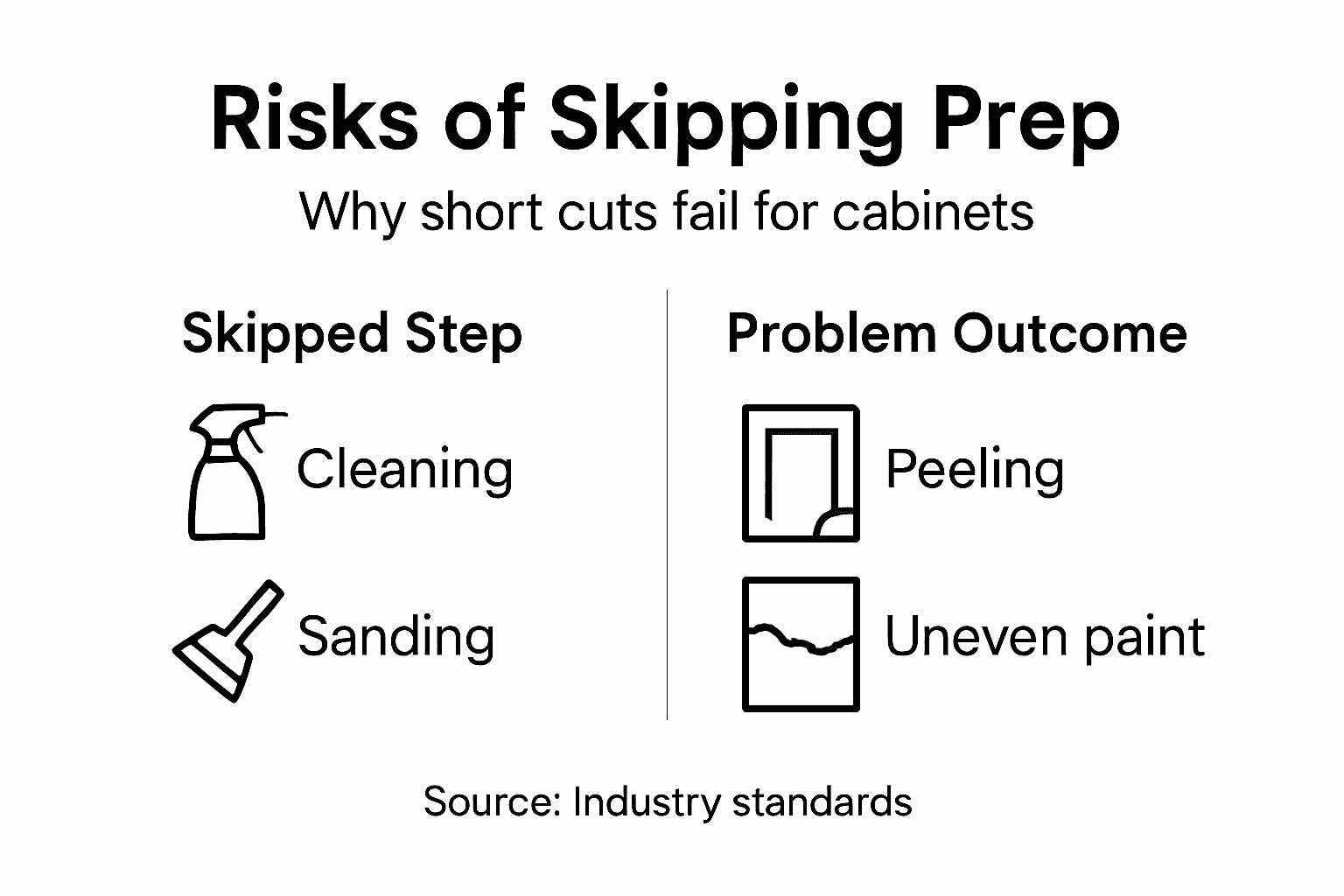
Beyond finish failure, improper prep introduces other risks. Rushing prep work increases exposure to dust and chemical residues that can create indoor air quality issues in your home. When corners are cut on dust containment or ventilation, particles settle throughout your kitchen and living spaces. Some cabinet painters use quick stripping methods that release volatile fumes without proper ventilation. The real cost of skipped prep isn’t just the visual failure you see on your cabinets. It’s the health impact on your family, the frustration of watching your investment deteriorate, and the expense of hiring someone else to fix it properly. Ottawa homeowners who choose quality painters upfront invest in peace of mind, knowing their cabinets will look beautiful and last for years without regret.
The table below summarizes the risks of skipping critical prep steps:
Skipped Step | Immediate Impact | Long-Term Consequence |
Cleaning | Poor paint adhesion | Flaking or peeling paint |
Sanding | Uneven finish | Paint peels in large sections |
Priming | Visible stains | Wood tannins bleed through |
Drying | Moisture under paint | Bubbling, cracking, separation |
Pro tip: Ask your cabinet painter specifically about their cleaning, sanding, and drying timelines, then verify they stick to them once work begins, because this is where most painters cut corners despite claiming quality work.
Comparing Prep Work Approaches: Quality vs. Quick Fix
Two fundamentally different approaches exist in cabinet painting, and the difference comes down to whether someone prioritizes lasting results or fast completion. The quick fix approach sounds appealing on the surface: minimal prep work, fewer days on site, lower upfront cost. But this strategy treats symptoms rather than causes. Quality-focused prep work takes longer and costs more initially because it addresses the foundation properly. Understanding the real differences between these approaches helps Ottawa homeowners make informed decisions rather than choosing based on price alone.
Quality prep work follows a deliberate, methodical process with specific timelines for each step. Cleaning happens thoroughly, drying is never rushed, sanding is done systematically with the right tools, and inspection happens between each phase to catch problems before they become expensive failures. Quality strategies emphasize detailed planning, standardized processes, and thorough inspection to prevent defects and ensure consistency. This approach takes time because each step builds on the previous one. A quality painter might spend three to four days on preparation alone, knowing that a solid foundation prevents 90 percent of problems that occur later. The quick fix approach compresses this timeline drastically. A painter using quick methods might spend one day on preparation, skipping detailed cleaning, using aggressive sanders that create swirl marks, and skipping primer or adequate drying time. The cabinet looks decent for a few weeks, but the foundation was never solid.
The consequences emerge over months and years. Quality prep work follows rigorous standardized testing and long-term durability validation, while quick fixes prioritize speed over comprehensive surface preparation, risking short service life and frequent repairs. A quality finish resists daily wear, moisture, and temperature changes without peeling or cracking. A quick fix finish might fail within a year, requiring expensive repairs or complete refinishing. For homeowners in Ottawa who plan to stay in their homes for years, quality prep work is the only economical choice. Yes, you pay more upfront, but you avoid paying twice when the quick fix fails. Consider your kitchen cabinets as an investment that should last a decade or more, not a temporary solution you replace annually. That mindset shift reveals why quality prep work isn’t an expense, it’s insurance.
Pro tip: When comparing quotes from cabinet painters, ignore the total price and instead compare the number of prep days each one allocates, because the painter spending the most time on prep is the one protecting your investment.
Protect Your Cabinets with Expert Prep Work for Lasting Beauty
The article highlights a critical challenge homeowners face: rushed or improper cabinet prep work leads to peeling paint, bubbling, and premature wear. You want cabinets that not only look stunning but also withstand daily kitchen life for years without costly repairs. The key pain points include avoiding quick fixes that fail, ensuring thorough cleaning and sanding, and using the right primer to prevent paint from peeling or discoloring. Understanding these concepts, you can see why a meticulous prep process is non-negotiable to safeguard your investment.
At Ottawa Cabinet Painting, we bring those core prep principles to every project. Our skilled team dedicates ample time to detailed cleaning, precision sanding, and expert priming so your cabinets achieve a silky smooth and durable finish. We respect your home and schedule, minimizing disruption with a proven timeline that honors proper drying and curing phases. Our service comes with a 6-year warranty reflecting the long-term confidence we have in our prep work and paint quality. If you are ready to transform your kitchen with high-end results that last without the chaos of a full renovation, explore how our approach can protect and beautify your cabinets.
Ready to invest in lasting cabinet beauty that avoids disappointment? Visit Ottawa Cabinet Painting today for a personalized quote and learn more about our thorough prep work and premium refinishing process.
Frequently Asked Questions
What are the core principles of cabinet prep work?
Proper cabinet prep work is built on three essential principles: cleanliness, smoothness, and protection. Cleanliness removes contaminants, smoothness ensures a uniform base, and protection involves sealing areas prone to moisture.
How does the type of cabinet material affect the prep work needed?
Different cabinet materials, such as solid wood, veneered, laminate, and metal, require distinct prep strategies. For example, solid wood may need extensive sanding, while laminate requires deglossing to allow paint adhesion.
What steps are involved in the cabinet prep process?
The cabinet prep process includes thorough cleaning, sanding to create a rough surface, filling and caulking imperfections, applying primer, and then cleaning again before painting. Each step builds on the previous one to ensure a quality finish.
What are the risks of skipping prep work when painting cabinets?
Skipping any prep work can lead to issues like poor paint adhesion, visible stains, peeling, and an overall short lifespan of the paint job. Without proper preparation, cabinets may show deterioration within months instead of lasting for years.
Recommended
Comments