Finish Cabinets in 10 Days: Ottawa Cabinet Painting Weekday vs Weekend

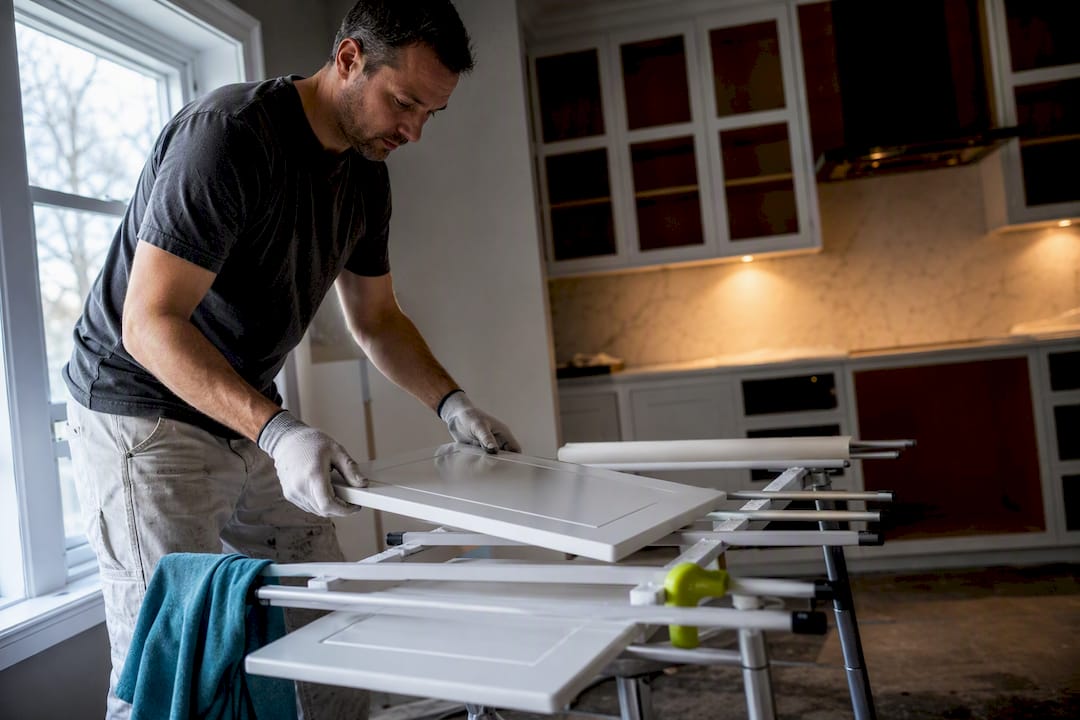
If you want the fastest, most durable result with the least disruption, book professional cabinet painting on consecutive weekday workdays. If you can only access weekends or you’re doing this yourself, expect the project to stretch across three or four weekends instead of one tight week, with more risk to the finish. A professional weekday job typically runs 3 to 7 active days on site with 7 to 14 days of total curing time, while a weekend approach often pushes the whole calendar out past two weeks.
TL;DR:
A professional cabinet painting schedule on weekdays typically takes 3 to 7 active days with full curing between 7 and 14 days, whereas weekend jobs can extend over a month with disrupted curing conditions.
The project’s length depends on factors like paint type, prep scope, temperature, humidity, and cabinet size, with off-site painting reducing on-site time but increasing coordination.
DIY weekend painting requires significantly more hours and may compromise finish durability and quality, especially for larger, long-lasting projects.
Living through an active cabinet painting project limits kitchen access, requiring planning for meal prep, ventilation, and protection for kids and pets during spray and dry times.
For urgent moves or listings within two weeks, a weekday professional schedule is recommended; for longer timelines or cosmetic touch-ups, weekend DIY or scattered visits can suffice.
Table of Contents
Cabinet Painting Weekend vs Weekday: What Happens During Cabinet Painting Week
The gap between these two schedules isn’t really about which days of the week you choose. It’s about whether the work happens in one continuous stretch or gets broken into pieces separated by five idle days at a time. A professional crew working Monday through Friday can keep coats curing on a predictable clock. A weekend-only approach forces the paint to sit exposed to dust, temperature swings, and kitchen traffic between sessions, which is exactly the kind of interruption that leads to a tacky or uneven finish.
Here’s what a typical professional weekday schedule looks like for a mid-size Ottawa kitchen:
Day 1: Remove doors, drawers, and hardware; degrease and sand every surface.
Day 2: Apply primer and let it set up under controlled conditions.
Day 3: Spray the first topcoats.
Day 4: Apply final coats and begin reinstalling hardware and doors.
Days 5 through 10: Cabinets cure to full hardness while you resume light kitchen use.
That final stretch matters more than most homeowners expect. Professional cabinet refinishing typically wraps active work in 3 to 5 days, but full curing takes another 7 to 14 days after the last topcoat.
Now compare that to a weekend-stretched version of the same project. Weekend 1 covers prep. Weekend 2 covers priming. Weekend 3 covers topcoats. Weekend 4 covers reinstallation. You’re looking at a month of on-and-off kitchen disruption instead of ten days, even though the actual hands-on labor isn’t that different.
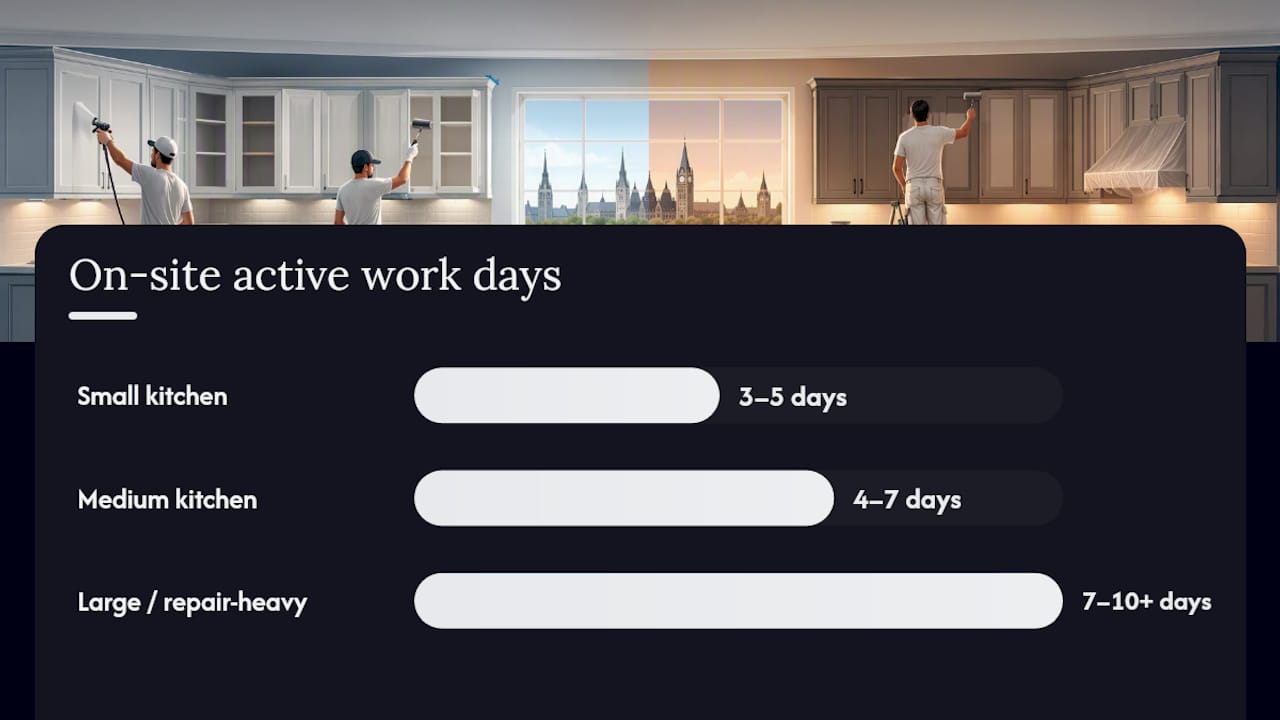
Kitchen size shifts the numbers, too. Smaller kitchens with fewer doors often wrap active professional work in 3 to 5 days, medium kitchens run 4 to 7 days, and larger or repair-heavy kitchens can take 7 to 10 days or more. One detail that shortens almost any schedule: having doors and drawer fronts painted off-site in a controlled shop environment while cabinet boxes stay in place. It adds a transport step, but it can cut your on-site disruption significantly.
What Affects Your Cabinet Painting Timeline?
Several variables decide whether your project lands on the short end of that range or the long end, and most of them are worth discussing with a contractor before you commit to a schedule.
Coating choice. Water-based paints generally dry faster between coats, while oil-based products and certain spray topcoats need longer dry windows before the next layer goes on.
Prep scope. Heavy degreasing, sanding out old finish, or filling dents and gouges adds real time before a single coat of primer ever touches the wood.
Temperature and humidity. Cold or damp conditions slow both drying and curing, which is why a job scheduled during a humid Ottawa summer week can run longer than the same job in drier weather.
Door and drawer count. A kitchen with 40 doors and drawers takes meaningfully longer to remove, prep, and reinstall than one with 20.
Off-site painting logistics. Removing doors for shop finishing shortens on-site days but adds coordination time for transport and rehanging.
Statistic to know: a multi-stage process that removes, preps, primes, sprays, and reinstalls cabinets spends most of its calendar time waiting for coats to dry and cure, not actively painting. That’s why rushing any single stage tends to cause the adhesion problems homeowners notice months later.
Is Weekend DIY Cabinet Painting Worth It?
Doing this yourself on weekends is a real option, but the time commitment surprises most people who try it. DIY cabinet painting often requires 40 to 80 total homeowner hours spread across several weekends, compared with a professional crew logging most of that labor in a handful of consecutive days.
Count your real hours. Sanding, degreasing, and two or three coats of primer and paint add up fast once you factor in drying time between sessions.
Weigh the hidden costs. Sanding equipment, respirators, painter’s tape, and wasted product from trial-and-error application all add expense that a flat professional quote already accounts for.
Consider the durability gap. Spray application in a controlled environment produces a smoother, more even bond than brush work squeezed into Saturday afternoons.
Match the job to the method. A small cosmetic touch-up on a few doors is reasonable weekend DIY. A full kitchen repaint intended to last for years usually calls for professional spraying.
Shouldn’t a full kitchen renovation-level project get more than a couple of rushed Saturdays? Most people who’ve lived through a botched weekend paint job would say yes.
How Much Kitchen Access Will You Lose?
Living around an active cabinet painting project means adjusting daily routines, not just tolerating a little noise.
Limited-access days. Expect counters, sink use, and some appliances to be off-limits during spraying and drying windows, even if the rest of your kitchen stays walkable.
Meal planning. A temporary pantry setup near the coffee maker, a cooler for perishables, and simple one-pot meals go a long way during the active work days.
Dust and odor. Spraying produces overspray and fumes that call for real ventilation, so plan to keep the space closed off from the rest of the home for a few hours at a time.
Households with kids or pets. Keep them clear of the work zone entirely until surfaces are dry to the touch, and check with your contractor before letting anyone lean on freshly cured cabinets.
Pro Tip: Set up your temporary kitchen station before day one, not the morning work starts. Scrambling for a can opener on Day 2 is a distraction you don’t need.
Should You Book a Pro Weekday Schedule or a Multi-Weekend Plan?
Use this checklist before you book anything:
Check your move date. If you’re relocating or listing the home in under two weeks, prioritize a professional weekday schedule.
Rate your disruption tolerance. Low tolerance for a closed-off kitchen points toward a condensed weekday job over a month of weekend interruptions.
Set your budget. Professional scheduling costs more upfront but usually costs less in wasted materials and redo work than a rough DIY attempt.
Decide how long you want this to last. If you want a finish that holds up for years, weigh that against the extra risk of stretched-out weekend sessions.
Confirm contractor availability. Ask directly whether a weekday slot is open before assuming you’re locked into weekends.
When booking, ask three questions every time: how many active days the job needs, whether doors get painted off-site, and what warranty backs the work.
Your situation | Recommended schedule |
Moving or listing in under 2 weeks | Professional weekday schedule |
High tolerance for a month-long project | Multi-weekend DIY or scattered visits |
Want the most durable, even finish | Professional weekday schedule |
Small cosmetic touch-up only | Weekend DIY is reasonable |
Why a 10-Day Professional Timeline Matters in Ottawa
Ottawacabinetpainting runs cabinet painting projects on a roughly 10-day professional timeline, covering prep, priming, spraying, and reinstallation across consecutive workdays rather than scattered weekend visits.
Some cabinet painting services offer warranties backing the finish to signal confidence in how the coating holds up over time.
A typical technician sequence on jobs can include removing, prepping, priming, spraying, and reinstalling cabinets.
A typical kitchen with 30 to 40 doors and drawers can fit comfortably inside a 10-day window, including full cure time.
An Ottawa Contractor’s View on Scheduling
Continuous weekday work lets a crew stay on one job without splitting attention across five other Saturday appointments, which cuts down on callbacks from rushed coats. When you get an estimate, ask about crew size, curing windows, and warranty terms up front. Some local contractors can walk you through a realistic timeline before you commit to a date.
— Ottawa
Get a Free Ottawa Cabinet Painting Timeline Estimate
Hiring a professional cabinet painting service can be an alternative to piecing together weekend sessions yourself or juggling a contractor’s scattered availability. Scheduling cabinet painting on consecutive weekdays rather than scattered weekend visits allows prep, priming, spraying, and reinstallation on a continuous timeline, which can help the kitchen come back into full use faster and with a more even finish.
A free estimate from a professional cabinet painting service may include:
A realistic day-by-day timeline for the kitchen size
Whether off-site door painting makes sense for the project
Information about any warranty backing the work
If a fast, consistent, weekday-scheduled repaint sounds like the right fit for your kitchen, request your free quote and get a timeline built around your actual move date or renovation deadline.
Sources
FAQ
How many days should it take to paint kitchen cabinets?
A professional crew typically needs 3 to 7 active workdays on site, with full curing taking another 7 to 14 days after the final topcoat, for a total calendar span around 7 to 14 days.
What kitchen cabinet colors will look outdated in 2026?
Heavy warm honey-oak tones and stark cool grays from the past decade are fading in popularity, while soft, versatile whites and neutrals like those in Benjamin Moore’s current color catalog tend to hold up better over time.
How often should kitchen cabinets be repainted?
Most professionally painted cabinets hold their finish well for many years before needing attention, though high-traffic touch points like handles and edges may need spot refreshing sooner depending on daily wear.
What time of day is best to paint cabinets?
Painting earlier in the day gives coats more daylight hours to dry before nightfall humidity or temperature drops slow the process, which matters more for DIY brush work than for professional spray jobs done in controlled conditions.
Can I paint my cabinets in just one weekend?
Treating cabinet painting as a single weekend project usually skips necessary prep and cure time; most careful jobs, DIY or professional, take 5 to 10 calendar days at minimum to avoid a rushed, uneven finish.
Recommended
Comments