Best Time to Paint Cabinets in Ottawa: A Timing Guide
- Axcell Painting

- Jun 1
- 9 min read
TL;DR:
The optimal time to paint cabinets in Ottawa is during spring or fall when indoor temperatures and humidity levels are moderate for proper curing. Proper sequencing involves installing countertops first, then painting cabinets, and allowing full cure time before heavy use to prevent peeling. Adhering to timing guidelines, such as the 24/24/24 rule and painting in suitable seasons, ensures durable, long-lasting finishes.
The best time to paint cabinets is during periods of moderate temperature and low humidity, when paint can dry evenly and cure to a hard, durable finish. Cabinet refinishing, the industry term for this process, depends heavily on environmental conditions that most homeowners overlook until something goes wrong. Paints like Benjamin Moore Advance and Sherwin-Williams Emerald Urethane are engineered for kitchen durability, but even the best product fails when applied in the wrong conditions. Getting the timing right protects your investment and determines whether your finish lasts two years or twenty.
How do temperature and humidity affect cabinet paint drying in Ottawa?
Temperature and humidity are the two variables that control how well cabinet paint cures. Most cabinet-grade paints require indoor temperatures between 50 and 80 degrees Fahrenheit for proper film formation. Below 50°F, the paint film hardens too slowly and can become brittle. Above 80°F, it dries too fast on the surface while the layers underneath remain soft.
Humidity is equally critical. High indoor humidity slows the evaporation of water and solvents from the paint film, which extends cure times and increases the risk of surface defects like blushing or soft spots. Ottawa’s winters bring dry indoor air from forced-air heating, which actually helps. Summers, however, can push indoor humidity higher, especially in kitchens without strong ventilation.
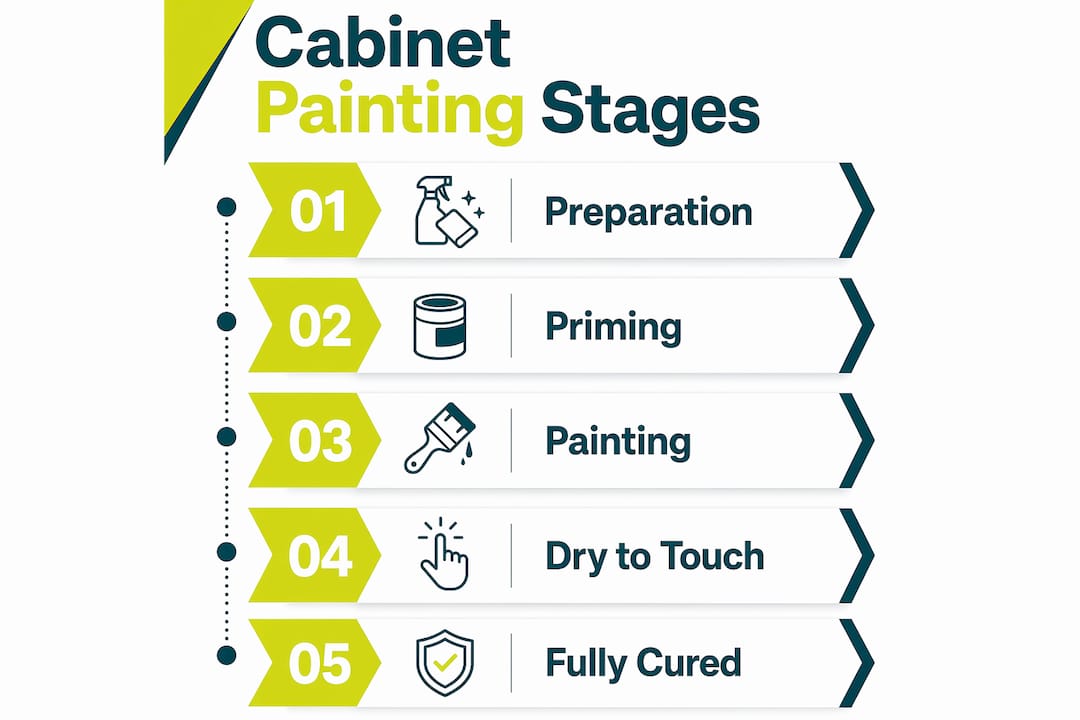
Understanding the difference between drying stages matters here. Cabinet paint cure time breaks down into four distinct phases: dry to touch (4 to 12 hours), light handling (3 to 7 days), normal use (2 to 4 weeks), and full cure (3 to 6 weeks). Each stage has different handling requirements, and skipping ahead is a recipe for peeling.
Cure Stage | Timeframe | What It Means |
Dry to touch | 4 to 12 hours | Surface feels dry but film is still soft |
Light handling | 3 to 7 days | Gentle contact only, no pressure |
Normal use | 2 to 4 weeks | Everyday cabinet use can begin |
Full cure | 3 to 6 weeks | Paint reaches maximum hardness and durability |
Pro Tip: Run a dehumidifier in your kitchen during the painting and curing period if indoor humidity climbs above 50%. This single step can shave days off your cure timeline and prevent soft spots in the finish.
What are the best seasons to paint kitchen cabinets in Ottawa?
Ottawa’s four-season climate creates real differences in how cabinet painting projects perform throughout the year. Fall and spring offer the most stable indoor conditions for cabinet refinishing, with moderate temperatures and manageable humidity levels. These seasons also align well with homeowner schedules, since kitchens are less heavily used than during summer entertaining or holiday cooking.
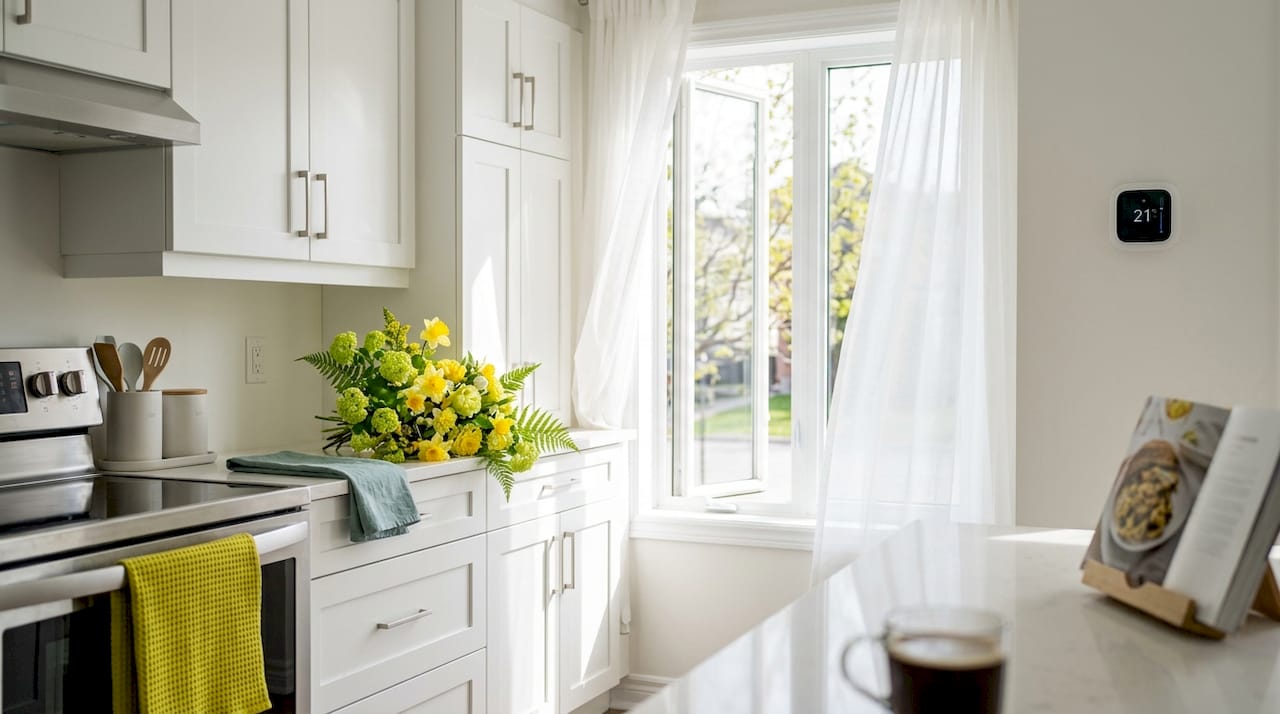
Spring is a particularly strong window. Heating systems are winding down, windows can be opened for ventilation without extreme temperature swings, and the air is neither too dry nor too humid. Many Ottawa homeowners schedule their cabinet projects in April or May for exactly this reason.
Fall offers a similar advantage. September and October bring cooler, drier air before Ottawa’s heating season kicks in fully. Ventilation is still practical, and the kitchen is typically back to normal well before the holiday season demands it.
Here is how each season stacks up for cabinet painting in Ottawa:
Spring (April to May): Moderate temperatures, manageable humidity, good ventilation options. The best overall window for most homeowners.
Fall (September to October): Dry, cool air with stable indoor conditions. Ideal for finishing before the holiday rush.
Summer (June to August): Warm temperatures help paint dry quickly, but air conditioning can raise indoor humidity and slow curing. Ventilation management is key.
Winter (November to March): Indoor heating keeps temperatures stable, but painting cabinets in winter in unheated or partially heated spaces like garages requires supplemental heaters and significantly increases energy costs.
Pro Tip: If you are painting cabinets in spring, check Ottawa’s forecast for a stretch of at least five dry days. Rain raises outdoor humidity, which seeps indoors and can affect your cure even with windows closed.
For more on seasonal kitchen renovation timing, spring is consistently recommended as the optimal window for cabinet and kitchen door projects across North American climates.
How should cabinet painting fit into your Ottawa kitchen renovation?
Sequencing cabinet painting within a larger kitchen renovation is one of the most overlooked parts of project planning. The professional standard is clear: paint cabinets after countertop installation to reduce the risk of scratches and damage during the renovation process. Countertop installation involves heavy stone slabs, tools, and significant physical activity near your cabinet faces. Painting before that work is done means your fresh finish will almost certainly need touch-ups.
The recommended renovation sequence looks like this:
Select and order your countertop material (quartz, granite, or laminate).
Complete countertop installation, including any plumbing reconnections.
Begin cabinet painting or refinishing once countertops are set and the kitchen is stable.
Allow full cure time before reinstalling doors, drawer fronts, and hardware.
Complete final trim work and touch-ups as the last step.
There is one exception worth noting. If your cabinets are being removed and refinished off-site, the sequence can shift. Painting in a controlled shop environment removes the countertop damage risk entirely, and doors can be finished flat for a smoother result.
Scenario | Recommended sequence | Reason |
Cabinets stay in place | Countertops first, then paint | Prevents scratches from installation work |
Cabinets removed for refinishing | Paint off-site, then reinstall | Controlled environment, better finish quality |
Countertops already installed | Paint immediately after counters are set | Cleanest workflow with no rework |
Pro Tip: If your countertop installer needs to caulk around the edges after installation, wait for that caulk to fully cure before painting adjacent cabinet faces. Fresh caulk off-gasses and can affect paint adhesion on nearby surfaces.
For a broader look at kitchen refurbishment sequencing, the countertops-first approach consistently produces cleaner results and fewer callbacks.
What cure time rules should Ottawa homeowners follow after painting cabinets?
The 24/24/24 rule is the single most practical guideline for homeowners after cabinet painting: wait 24 hours between coats, wait 24 hours before any light handling, and wait 7 days before heavy use. This rule addresses the most common homeowner mistake, which is treating paint that feels dry as paint that is ready for normal use.
Paint chemistry explains why this matters. When a cabinet-grade paint like Benjamin Moore Advance or Sherwin-Williams Emerald Urethane feels dry to the touch, the surface has hardened but the film underneath is still cross-linking and building strength. Reinstalling doors or hardware before this process completes causes the film to flex and crack, which leads to peeling at stress points.
Here is what the cure timeline means in practical terms for your Ottawa kitchen:
Day 1 to 2: No touching, no leaning objects against cabinet faces. The surface is fragile.
Day 3 to 7: Light handling only. You can gently open and close doors if they were left on, but avoid pressure or friction.
Day 7: Hardware and doors can be reinstalled. Use care and avoid slamming.
Week 2 to 4: Normal everyday use. Wipe spills promptly but avoid abrasive cleaners.
Week 4 to 6: Full cure reached. The finish is now at maximum hardness.
Using wall paint instead of cabinet-grade paint results in finish failure within 12 to 18 months, regardless of how carefully you manage cure time. Product selection and timing work together.
Pro Tip: Keep a soft cloth near your cabinets during the first two weeks. If something splashes on a freshly painted surface, blot it gently rather than wiping. Wiping drags across the soft film and leaves marks.
For a deeper look at paint curing timelines, the distinction between dry and cured is the most important concept any homeowner can understand before starting a cabinet project.
What timing mistakes cause cabinet paint to fail?
Most cabinet paint failures trace back to timing errors, not product quality. Knowing what to avoid is as useful as knowing what to do.
Treating dry-to-touch as fully cured. Premature handling is the leading cause of peeling on painted cabinets. The surface feels ready long before the film has built its full strength.
Painting in high humidity without control. If indoor humidity exceeds 60% during application or curing, the finish can remain soft for weeks and may never fully harden.
Reinstalling doors and hardware too soon. Flexing a partially cured film creates micro-fractures that become visible peeling within months.
Using wall paint on cabinet surfaces. Wall paints lack the hardeners and cross-linking agents that cabinet-grade formulas contain. They fail under the repeated opening, closing, and cleaning that kitchen cabinets endure.
Painting cabinets in winter in unheated spaces. One homeowner reported needing several electric heaters to maintain spray painting temperatures in a winter garage, with a substantial increase in electricity costs. That added complexity and expense often leads to shortcuts that compromise the finish.
If peeling does occur, the fix requires more than a quick touch-up. The affected area needs to be sanded back to bare wood or primer, cleaned thoroughly, and repainted with proper cure time allowed before use. Painting over peeling paint without addressing the underlying cause produces the same result within months.
Pro Tip: If you notice soft or tacky spots on your cabinet finish two weeks after painting, run a dehumidifier and increase room temperature slightly. In many cases, the finish will continue to harden once conditions improve.
Key takeaways
The best time to paint cabinets in Ottawa is spring or fall, when moderate indoor temperatures and manageable humidity support proper curing, and when the project fits logically after countertop installation.
Point | Details |
Optimal seasons in Ottawa | Spring and fall offer the most stable conditions for cabinet refinishing indoors. |
Cure time vs. dry time | Paint feels dry in hours but requires up to 6 weeks for full cure before heavy use. |
Renovation sequence | Install countertops before painting cabinets to prevent scratches and reduce rework. |
The 24/24/24 rule | Wait 24 hours between coats, 24 hours before light handling, 7 days before heavy use. |
Paint product selection | Use cabinet-grade paints like Benjamin Moore Advance or Sherwin-Williams Emerald Urethane for durability. |
What we have learned from years of Ottawa cabinet projects
After working on hundreds of cabinet refinishing projects across Ottawa, the timing question comes up in almost every consultation. Homeowners almost always underestimate how long proper curing takes, and they overestimate how ready their cabinets are once the paint looks dry.
The most common scenario we see is a homeowner who rushes to reinstall doors and hardware because the kitchen needs to be functional for a dinner party or family gathering. The paint looks perfect on day three. By week six, the door edges are peeling where the hinges flex. That is not a product failure. That is a timing failure, and it is entirely preventable.
We also see homeowners attempt cabinet painting in winter garages or basements without adequate climate control. The results are inconsistent at best. Ottawa winters push temperatures in unheated spaces well below the 50°F minimum, and no amount of patience compensates for a film that never formed correctly in the first place. If you are committed to a winter project, keep the space heated to at least 65°F throughout the painting and curing period, not just during application.
Our honest advice is to plan your cabinet project for April, May, September, or October in Ottawa. Book your countertop installation first if that is part of your renovation. Then give the paint the full cure time it needs before you put the kitchen back into heavy use. The expert tips from professional cabinet painters we follow are built around patience, and that patience is what separates a finish that lasts two years from one that lasts twenty.
— Ottawa
Get professional cabinet painting results in Ottawa
Timing a cabinet painting project correctly takes more than good intentions. It requires climate awareness, product knowledge, and a disciplined process that most homeowners only learn after a costly mistake. At Ottawacabinetpainting, we handle every variable for you, from scheduling around Ottawa’s seasonal conditions to selecting the right cabinet-grade products and managing cure time before reinstalling your doors and hardware. Our interior cabinet painting service is built around a meticulous process that delivers a factory-smooth finish backed by a 6-year warranty. See what that looks like in practice on our before and after gallery, then contact us for a free estimate.
FAQ
What is the best season to paint kitchen cabinets in Ottawa?
Spring (April to May) and fall (September to October) are the best seasons for cabinet painting in Ottawa. Both offer moderate indoor temperatures and manageable humidity levels that support proper paint curing.
How long should I wait before using my cabinets after painting?
Wait at least 7 days before reinstalling hardware and doors, and allow 2 to 4 weeks before returning to normal heavy use. Full cure takes 3 to 6 weeks depending on temperature and humidity conditions.
Can I paint cabinets in winter in Ottawa?
Yes, but only if the space is consistently heated to at least 50 to 65°F throughout painting and curing. Painting cabinets in winter in unheated or partially heated spaces significantly increases energy costs and risks finish failure.
Does it matter whether I paint cabinets before or after countertop installation?
Professionals recommend painting after countertop installation to avoid scratches and damage from the installation process. Painting before counters are set almost always requires touch-ups that add time and cost.
Why do painted cabinets peel, and how does timing relate?
Peeling is most often caused by reinstalling doors or hardware before the paint film has fully cured. Flexing a partially cured film creates fractures that become visible peeling within weeks or months of use.
Recommended

header.all-comments