Spray Booths in Ottawa Cabinet Finishing: A Shop Guide

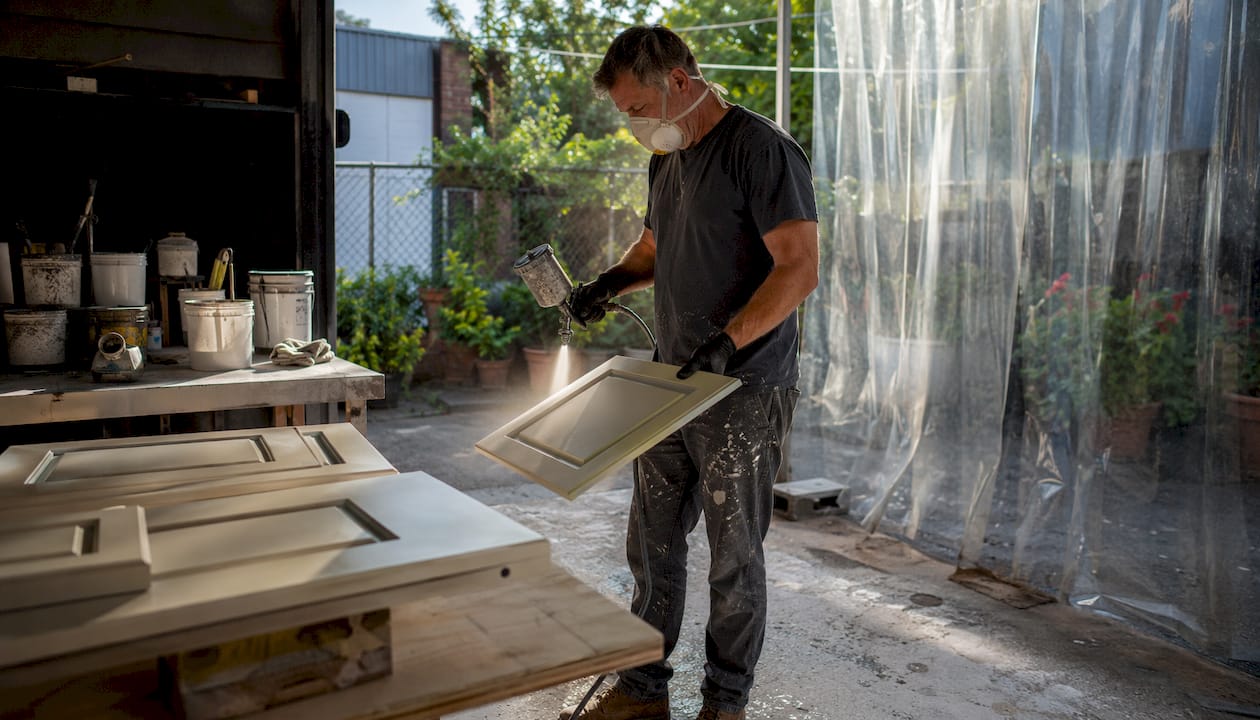
A spray booth gives cabinet finishers one thing that open-shop spraying never can: a controlled, contained environment where airflow, filtration, and separation work together to produce a consistent, factory-quality finish every time. For Ottawa cabinet makers and finishing techs, that means fewer dust nibs, better transfer efficiency, predictable cure conditions, and a safer workspace that meets Canadian occupational health requirements.
Here is what a properly specified booth delivers in practice:
Containment: isolates overspray and fumes so they cannot migrate into prep or cure zones
Controlled airflow: moves atomized particles away from the work surface and into filtration before they can settle
Filtration: multi-stage systems capture particulates and reduce solvent vapor concentrations
Compliance footing: WorkSafeBC Part 12 requires a ventilated enclosure whenever spraying paint or resin is practicable, making a booth the regulatory baseline rather than a luxury
Pro Tip: Before you spec a booth, read Ottawacabinetpainting’s painting booth guide — it explains the practical difference between a spray booth, spray room, and spray area, which affects your permit path.
Table of Contents
How a dedicated spray booth changes finish quality in Ottawa shops
Ventilation, filtration, and environmental controls for Ottawa cabinet finishers
Recommended spray equipment and consumables for Ottawa cabinet finishing
Shop layout and workflow changes that unlock efficiency in Ottawa
How Ottawacabinetpainting applies booth techniques in Ottawa
What to budget and how to calculate ROI for a booth in Ottawa
Quick checklist and vendor questions for specifying a booth in Ottawa
What actually changes when you commit to booth-grade finishing
Ottawacabinetpainting delivers booth-quality finishes for Ottawa cabinets
Authoritative Canadian sources to consult when planning a booth in Ottawa
How a dedicated spray booth changes finish quality in Ottawa shops
The single biggest quality gain from a dedicated booth is eliminating the variables that cause rework: airborne dust, temperature swings, and overspray cross-contamination. Without containment, a sanding station 10 feet away can seed a fresh topcoat with fine particulate. With a booth, that risk disappears.
Controlled airflow patterns are equally important. A quality cabinet-shop spray booth reduces rework and improves shop health and efficiency by providing a clean, ventilated enclosure, which converts the same labor hours into higher first-pass yield and fewer customer callbacks. Practically, that means less orange peel from turbulent air, fewer fisheye defects from contamination, and dust nibs that drop from a regular occurrence to a rare one.
Cross-contamination control: dedicated spray zones prevent sanding dust from landing on wet finish
Stable cure conditions: enclosed booths hold temperature and humidity within coating manufacturer specs
Overspray capture: directed airflow pulls atomized particles into filters rather than letting them settle on adjacent surfaces
Consistent color: repeatable environmental conditions mean batch-to-batch color matching stays tight
Which booth type is right for your cabinet work?
NFPA 33-based safety guidance distinguishes between a spray booth, spray room, and spray area. That distinction matters because each carries different construction and permitting requirements. For cabinet-scale work, the practical choices are:
Downdraft booth: air enters through the ceiling and exhausts through the floor grating. Best dust control for flat panels and door faces; the airflow pattern pulls particles away from the work surface rather than across it.
Crossdraft booth: air enters at one end and exhausts at the other. Lower installation cost, adequate for smaller shops, but more prone to overspray settling on the part mid-travel.
Side-draft booth: a middle ground — air enters through side wall filters and exhausts through the opposite wall. Common in mid-size cabinet shops.
Batch/combo booth: a larger enclosure that handles multiple assembled doors or carcass sections in one spray cycle. Reduces handling time significantly for production runs.
Portable/tent enclosures: acceptable for low-volume touch-up or field refinishing where a certified booth is not available, but they do not meet code for regular production spraying.
Pro Tip: For Ottawa shops spraying assembled cabinet boxes, a side-draft or downdraft booth with at least 10 feet of interior depth handles most residential door and carcass sizes without repositioning.
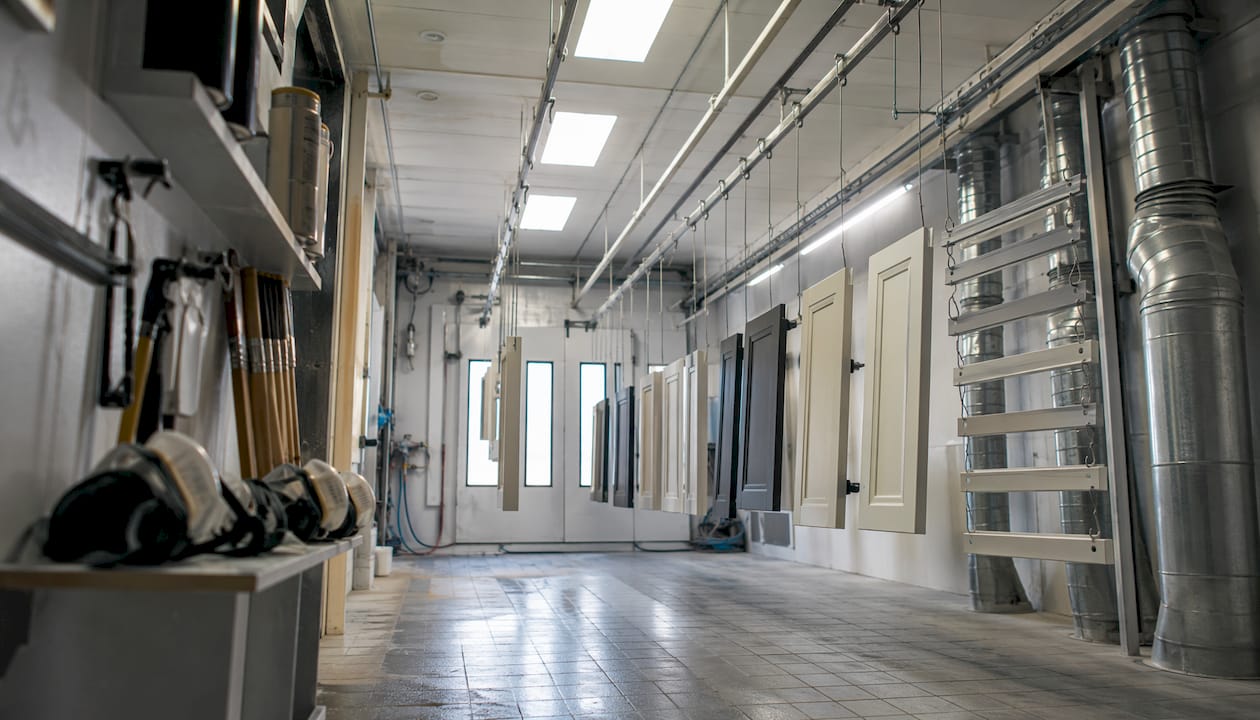
Ventilation, filtration, and environmental controls for Ottawa cabinet finishers
WorkSafeBC specifies minimum air velocity requirements for horizontal-flow, vertical-flow, and downdraft booths. Rather than guessing values, follow your local authority having jurisdiction (AHJ) and the BC OHS Regulation as a baseline, then confirm Ontario-specific requirements with your municipal building department.
Control Parameter | Why It Matters | Practical Guidance |
Air velocity | Moves overspray into filters; prevents particle settling on wet finish | Follow WorkSafeBC / AHJ minimums for your booth type |
Filtration stages | Primary (coarse capture), secondary (fine particulate), exhaust | Replace on schedule, not just when visibly clogged |
Makeup air | Balances exhaust so booth stays at neutral or slight positive pressure | Negative pressure pulls unfiltered shop air in through gaps |
Temperature | Affects coating viscosity, flow, and cure time | Most waterborne coatings specify 65–77°F (18–25°C) |
Humidity | High humidity causes blushing in lacquers; low humidity accelerates flash-off | Monitor with a hygrometer; target relative humidity within coating manufacturer specifications |
Makeup air is the most commonly under-specified element in small-shop booth installations. If your exhaust fan pulls more air out than the makeup air unit supplies, the booth draws unfiltered air from the shop, defeating the filtration investment entirely.
Canadian code considerations for spray booths in Ottawa
Canadian cabinet shops must satisfy overlapping requirements from the National Building Code, provincial fire codes, and occupational health regulations. The key touchpoints:
Separation and fire resistance:
Spray operations in mercantile, business, or storage occupancies must be separated by construction with a minimum fire-resistance rating and protected by an NFPA-approved sprinkler system
A spray booth installed within a building must provide a minimum clearance to any interior combustible wall or the assembly must carry a 1-hour fire-resistance rating; spray rooms require rated separation assemblies
Depending on building classification, two-hour or greater separation or additional fire-resistance measures may apply
Certification and documentation:
Pre-manufactured booths must be designed to meet NFPA 33 and carry certification from an accredited body such as CCMC, Intertek (ETL), or ULC
Site-constructed units require stamped engineering plans from a licensed engineer
Mixing rooms and paint storage areas must be separated from spray areas or be sprinklered per NFPA 30 when larger volumes of flammable liquids are present
Pull a permit before construction; retroactive permitting is significantly more expensive and may require demolition
Ontario shops should also reference Ontario Regulation 851 (Industrial Establishments), which defines spray booth requirements under the provincial Fire Code.
Recommended spray equipment and consumables for Ottawa cabinet finishing
Matching your spray equipment to your booth’s airflow is as important as the booth itself. The wrong gun in a well-designed booth still produces poor results.
HVLP (High-Volume, Low-Pressure): the standard choice for cabinet doors and drawer fronts. High transfer efficiency reduces overspray load on filters and lowers coating costs. Works well with waterborne acrylics and conversion varnishes. See Ottawacabinetpainting’s sprayer selection guide for model-level comparisons.
LVLP (Low-Volume, Low-Pressure): similar transfer efficiency to HVLP with lower air consumption. A good fit for smaller compressors common in Ottawa cabinet shops.
Air-assisted airless: higher output for production runs on carcasses and large flat panels; requires more careful pressure calibration to avoid overspray spikes.
Turbine systems: self-contained and portable, useful for field refinishing or shops without a large compressor, but airflow output is lower than compressed-air guns.
Consumables to stock:
Intake and exhaust filters matched to your booth manufacturer’s spec (never substitute generic media)
Masking film and paper for protecting hardware and glass on assembled units
Low-VOC waterborne coatings, which reduce solvent vapor load in the booth and improve long-term shop air quality
Pro Tip: Pairing low-emission coatings with proper makeup air reduces operator eye and respiratory irritation even when PPE is worn correctly. The sheen and finish selection you specify also affects how forgiving the coating is to minor airflow variation.
Shop layout and workflow changes that unlock efficiency in Ottawa
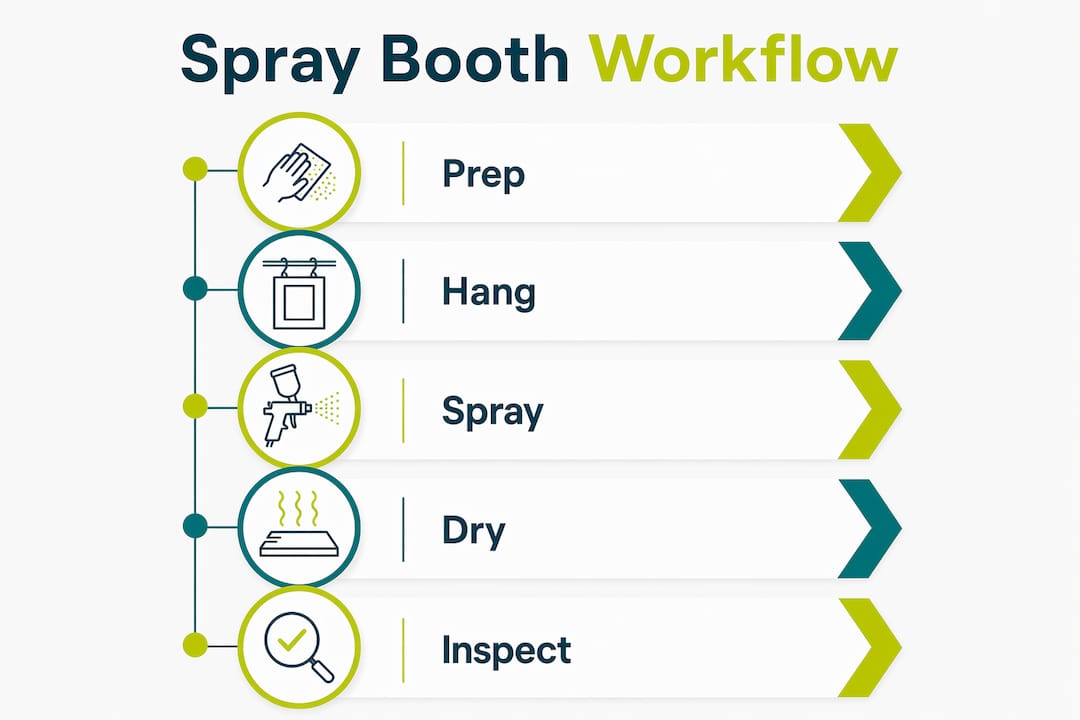
A booth does not improve throughput by itself. The gains come from reorganizing the shop around three dedicated zones: prep, spray, and cure/stage.
Prep zone: sanding, filling, and priming happen here, away from the spray zone. Dust generated in prep never reaches wet finish.
Spray zone: the booth itself. Parts move in clean, get coated, and move out without doubling back through prep.
Cure/stage zone: a clean, low-traffic area where coated parts hang or rest until fully cured before handling or delivery.
Batching parts is where the real cycle-time gains appear. Hanging 20 door faces in a single spray pass, rather than coating them individually on sawhorses, cuts spray time and reduces the number of times a part is handled before it reaches the customer. Dustless spraying techniques used by Ottawacabinetpainting follow exactly this logic: organized staging and controlled environments reduce handling-related damage and contamination.
Routine maintenance, PPE, and safe operating practices
A booth that is not maintained degrades quickly. Clogged filters reduce airflow velocity below the regulatory minimum, which means overspray is no longer captured effectively and worker exposure climbs.
Daily: inspect intake and exhaust filters for loading; check that exhaust fan is running at rated speed
Weekly: verify makeup air unit operation; check for solvent spills near electrical components
Scheduled: replace filters per manufacturer intervals, not just when airflow drops noticeably; inspect fan blades and motor mounts
PPE: a properly operating booth reduces, but does not eliminate, the need for respiratory protection. CCOHS guidance on spray painting specifies appropriate respirators and chemical-resistant gloves for spray operations
Solvent handling: keep mixing and storage separated from the spray area; used filters are a fire hazard and must be disposed of per local hazardous waste rules
Pro Tip: Post a laminated filter-change log inside the booth door. When an inspector or insurer asks for maintenance records, a visible log is faster than hunting through a binder.
How Ottawacabinetpainting applies booth techniques in Ottawa
Ottawacabinetpainting’s finishing process is built around the same principles that make a spray booth effective: containment, controlled application, and organized staging. Their kitchen cabinet spraying workflow separates prep from application, uses dustless spraying techniques to eliminate airborne contamination, and allows proper cure time before parts are handled or reinstalled.
Prep first: surfaces are cleaned, sanded, and primed before any topcoat is applied, so the spray environment stays clean
Controlled application: spray equipment is matched to the coating and the part geometry, reducing rework from runs or uneven coverage
Cure before handling: coated parts are staged in a clean area until fully cured, which prevents fingerprints, dents, and adhesion failures at install
The result for Ottawa homeowners is cabinets that arrive install-ready, with consistent color and a smooth surface that does not require touch-up after hanging.
What to budget and how to calculate ROI for a booth in Ottawa
Booth investment varies widely by size, type, and whether the space requires fire-protection upgrades. Typical cost components for an Ottawa cabinet shop:
Booth hardware: pre-manufactured units range from entry-level crossdraft models to production downdraft systems; site-built units add engineering and labor costs
Ventilation and makeup air: often the largest single line item for shops in older buildings
Fire protection upgrades: sprinkler system installation or extension if the occupancy requires it
Permits and certification: municipal building permit, engineering stamps for site-built units, and NFPA 33 certification for pre-manufactured units
Ongoing costs: filter replacement, energy (makeup air heating in Ottawa winters), and annual inspection
A simple ROI framework: (hours saved per week × shop labor rate) + (rework reduction in dollars per month) + (insurance or safety compliance savings) minus monthly operating costs = payback timeline. For most Ottawa shops running five or more cabinet jobs per month, the rework reduction alone tends to justify the investment within the first year of operation. Consulting a local finishing specialist before committing to a booth size helps avoid over-specifying for your actual throughput.
Quick checklist and vendor questions for specifying a booth in Ottawa
Specification checklist:
Confirm required clearances: minimum 1 m to combustible walls or 1-hour rated assembly
Verify NFPA 33 certification for pre-manufactured units (CCMC, ETL, or ULC mark)
Specify makeup air capacity to match exhaust volume
Confirm exhaust capacity meets WorkSafeBC minimum air velocity for your booth type
Obtain stamped engineering plans if site-building
Pull municipal building permit before construction begins
Vendor questions to ask:
What filter media is specified, and what is the replacement interval at your production volume?
Does the unit carry NFPA 33 certification, and can you provide the certification documentation?
How is makeup air integrated, and what is the heating load for Ottawa winter conditions?
What is the warranty on the fan motor and filtration housing?
Pro Tip: For small Ottawa shops not ready for a permanent booth, a staged approach works: start with a portable enclosure for low-volume work, document your throughput and rework rates for six months, then use that data to size and justify a permanent installation.
Key Takeaways
Spray booths deliver repeatable, high-quality cabinet finishes by combining containment, controlled airflow, and multi-stage filtration in a code-compliant enclosure that reduces rework and protects workers.
Point | Details |
Containment is the core function | Isolating the spray zone prevents cross-contamination between prep, paint, and cure areas. |
Canadian code compliance is mandatory | NFPA 33 certification, 1 m clearances, and sprinkler requirements apply to most Ottawa shop installations. |
Ventilation must be balanced | Makeup air must match exhaust volume; negative pressure pulls unfiltered shop air into the booth. |
ROI comes from rework reduction | Fewer dust nibs and contamination defects mean less labor spent on callbacks and touch-ups. |
Ottawacabinetpainting applies booth-grade discipline | Their dustless, staged workflow delivers install-ready cabinet finishes with consistent color and cure. |
What actually changes when you commit to booth-grade finishing
Most shops that resist investing in a proper booth are not skeptical about quality. They are skeptical about disruption: the permit process, the layout change, the upfront cost. That hesitation is understandable, but it tends to underestimate how much the current approach is already costing in rework, callbacks, and inconsistent results.
The shops that see the fastest return are not the largest ones. They are the ones that pair a booth with a disciplined three-zone workflow and stop treating the spray environment as an afterthought. A booth does not fix a bad process. But a good process inside a booth produces results that are genuinely difficult to replicate any other way.
If you are weighing a retrofit versus outsourcing finishing to a specialist, the honest question is whether your current volume justifies the capital and compliance overhead. For many Ottawa cabinet makers, partnering with a finishing specialist for the spray phase, while keeping prep and assembly in-house, delivers booth-quality results without the installation investment.
Ottawacabinetpainting delivers booth-quality finishes for Ottawa cabinets
Skipping the booth investment does not have to mean skipping booth-quality results. Ottawacabinetpainting brings controlled, dustless spraying and a staged finishing workflow directly to Ottawa homeowners and trade clients, producing factory-smooth cabinet finishes without the overhead of a full in-shop setup. Their process covers prep, application, and cure with the same discipline a certified booth demands. Ready to see what that looks like on your project? Request a free quote or browse the before and after results to see the finish quality firsthand.
Authoritative Canadian sources to consult when planning a booth in Ottawa
When designing or installing a spray booth in Ontario or British Columbia, these are the primary sources to reference:
WorkSafeBC OHS Regulation, Part 12: covers enclosure requirements, minimum air velocity by booth type, and worker exposure controls for spray operations
BC OHS Regulation (Reg. 296/97): the full statutory text for sections 12.131 and 12.132 on spray booth enclosures and airflow
CCOHS Spray Painting guidance: practical PPE, ventilation, and regulatory compliance overview for Canadian shops
Ontario Regulation 851 (Industrial Establishments): Ontario’s definition of spray booth and installation standards under the provincial Fire Code
NFPA 33 (Standard for Spray Application Using Flammable or Combustible Materials): the baseline standard for booth design, certification, and construction; referenced in Canadian municipal safety checklists
NFPA 13 and NFPA 30: referenced for sprinkler system design and flammable liquid storage separation requirements
Always confirm requirements with your local authority having jurisdiction (AHJ) before finalizing booth design or construction.
Engage a licensed engineer for site-built units; stamped plans are required for permit approval in most Canadian municipalities.
Contact your municipal building department early; permit timelines in Ottawa can affect project scheduling by several weeks.
Recommended
Comments