Cut Kitchen Aging in Ottawa: Science Backed Fixes in 10 Days

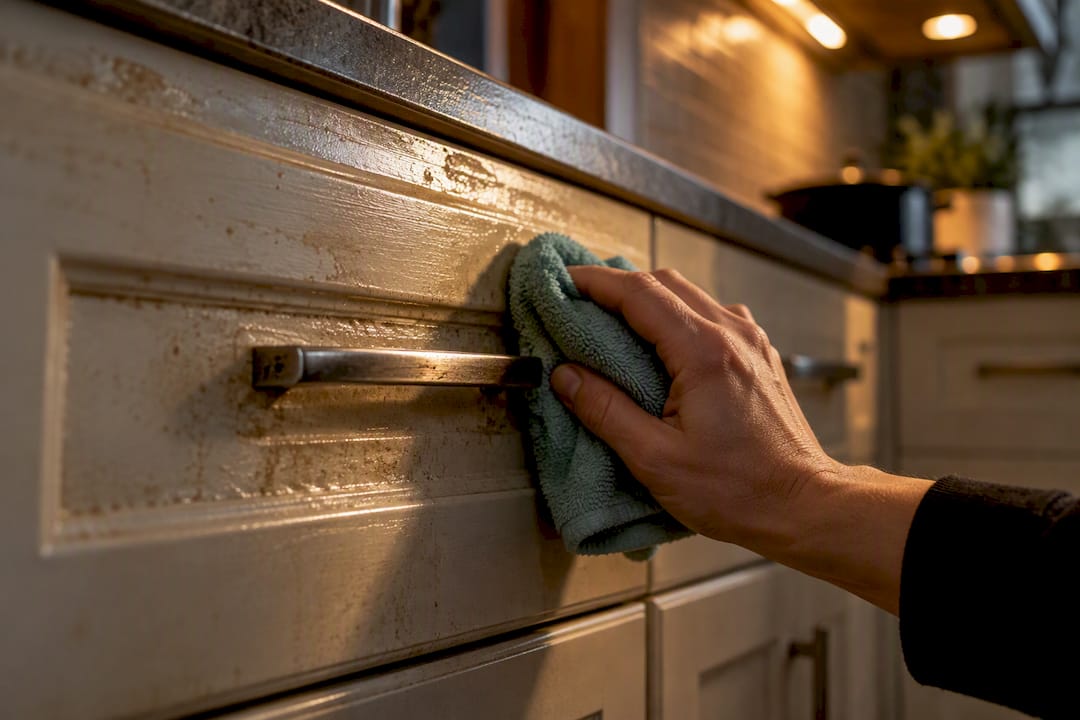
Kitchens age faster than any other room mainly because cooking releases grease and airborne particles that settle on every surface, while steam and dishwasher humidity add a moisture load no bedroom or living room ever sees. The fix homeowners in Ottawa can start today is simple: capture pollutants at the source with a range hood that actually vents outdoors, run it on high, and clean before grease has a chance to bond to your cabinet finish.
TL;DR:
Venting your range hood outdoors on high can cut over 80% of cooking pollutant exposure, significantly slowing surface deterioration.
Proper duct sizing, correct installation, and regular filter cleaning are essential to ensure your hood effectively reduces grease and moisture buildup.
Routine cleaning of grease films, checking humidity levels, and inspecting for moisture damage can extend cabinet lifespan and prevent major repairs.
Kitchens with high foot traffic and proximity to heat sources experience faster finish wear, peeling, and structural issues compared to other rooms.
When cabinets show soft panels, persistent mold, or seam failures, a professional assessment is necessary to evaluate substrate damage and proper repair options.
Table of Contents
Why Kitchens Age Faster Than Other Rooms: The Physical Factors
What Proper Ventilation Actually Does for Your Kitchen’s Lifespan
When to Call a Professional Instead of Grabbing a Paintbrush
How Heat Cycling From Cooking Appliances Breaks Down Materials
Comparing Wear on Kitchen Fixtures Versus the Rest of the House
Why Regular Upgrades Keep Kitchens Looking and Functioning Better Longer
How Ottawa Cabinet Painting Helps Homeowners Get Ahead of Kitchen Wear
Why Kitchens Age Faster Than Other Rooms: The Physical Factors
Cooking is a manufacturing process happening in your home every single day, and it leaves residue behind. Frying, roasting, sautéing, and broiling can spike particulate matter to about 65 times background levels, according to Health Canada. That particulate matter doesn’t just float away. It settles on cabinet fronts, backsplashes, and countertops, mixing with airborne grease to form a sticky film that grabs dust like a magnet.
Here’s the part most homeowners miss: that film isn’t cosmetic. It’s chemically sticky, which means every time you wipe it off with a rougher pad or a stronger degreaser than you’d use elsewhere, you’re sanding down the finish a little more. Grease buildup happens whether you cook on gas or electric, and it accelerates finish wear simply because cleaning it requires more abrasive effort than dusting a shelf in the living room.
Moisture compounds the problem. Boiling pots, running dishwashers, and steam from the stove push humidity levels in kitchens higher than almost anywhere else in the house. Wood swells when it absorbs moisture repeatedly, veneers delaminate at the seams, and if that dampness lingers, mould finds a foothold in places you can’t see, like behind a toe kick or under a sink cabinet.
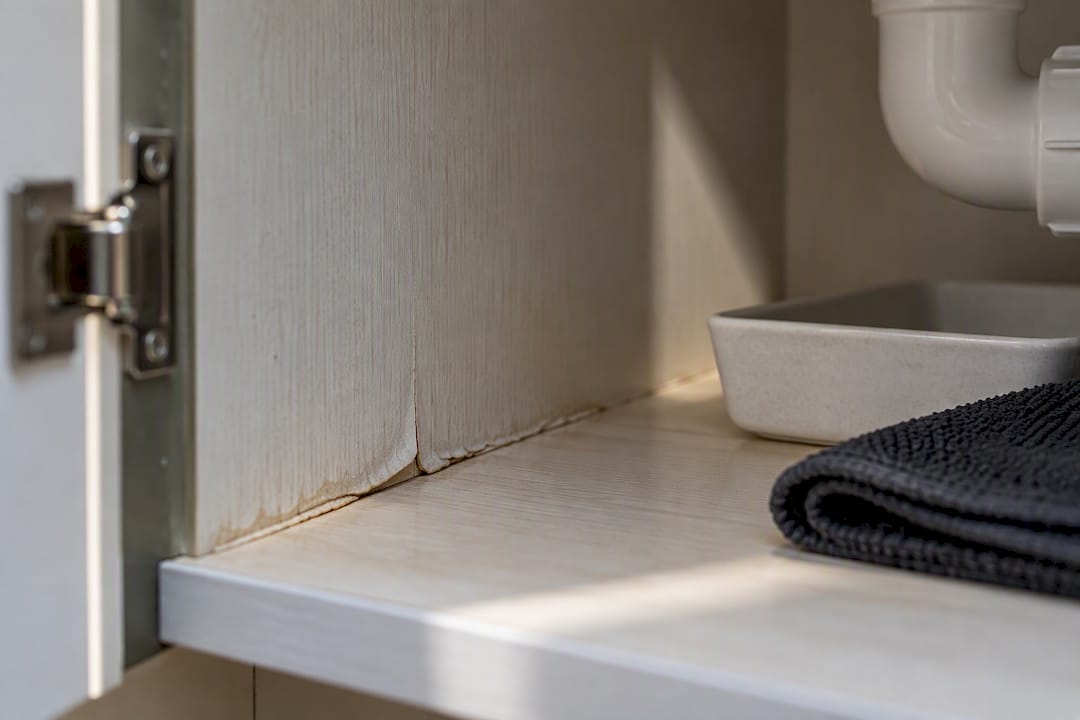
Add heat cycling and constant hand contact, and you get a room that’s mechanically abused in ways no other space experiences. Hot pans set down near cabinet edges, steam rolling up from a pasta pot, hands opening the same drawer twenty times a day. Lower-grade materials like thermofoil and budget laminates handle this poorly. Thermofoil, in particular, is a vinyl layer glued to particleboard, and once heat or moisture gets under that bond, it peels and never reattaches cleanly.
Common failure modes homeowners report include:
Grease film that dulls paint sheen and attracts dust within weeks of cleaning
Swollen or soft panels near the sink, dishwasher, or stove
Thermofoil peeling at corners and seams
Hairline cracks in paint where cabinet doors flex from heat
Musty odors signaling hidden moisture behind cabinetry
Pro Tip: If a cabinet surface feels tacky rather than smooth after a normal wipe down, that’s grease building a base layer. Clean it now with a finish-appropriate degreaser before it hardens into something that needs sanding to remove.
What Proper Ventilation Actually Does for Your Kitchen’s Lifespan
Running your range hood on high, at roughly 300 cubic feet per minute, can cut your exposure to cooking pollutants by more than 80% compared with slower fan speeds, per Health Canada. That’s not a minor improvement. It’s the difference between grease and particulates landing in your lungs and on your cabinets, or getting pulled outside before they settle anywhere.
Not every hood delivers on that promise, though. A vented hood that exhausts outdoors removes pollutants entirely. A recirculating hood filters air and blows it right back into the kitchen, catching some grease but doing far less for moisture and fine particulates. If your home has been tightened up with recent energy-efficiency upgrades, that recirculating setup struggles even more, because there’s less natural air exchange to help dilute what the hood misses.
For whole-house support, a balanced ventilation system like an HRV or ERV can reduce certain VOCs and improve air-change uniformity compared with exhaust-only setups, according to NRC testing. It won’t replace a range hood for capturing cooking pollutants at the source, but it helps distribute and filter air more evenly across the home.
Before you assume your hood is doing its job, check these:
Does it vent outside, or does it recirculate back into the room?
Is the duct sized correctly and routed as directly as possible?
What’s the actual fan power, and are you running it on high while cooking?
Is the filter clean, or clogged with months of grease?
Pro Tip: Cook on the back burners when you can and run the hood on high during cooking, then leave it on for five to ten minutes afterward. That extra window clears lingering steam and fine particulates before they settle on your cabinets.
You can dig deeper into airflow setup in our guide on improving kitchen ventilation.
A Simple Maintenance Calendar to Slow the Damage
Consistent, low-effort habits do more for kitchen longevity than any single deep clean. Break it into three rhythms.
Daily: Wipe and dry splashes around the sink and stove right away. Don’t let greasy film sit on cabinet faces and hardware overnight; it hardens fast.
Weekly or monthly: Clean your hood filter, degrease cabinet faces with a product suited to your finish, and check under the sink for slow drips that go unnoticed for weeks.
Seasonal or annual: Check your indoor humidity, aiming for the 30% to 50% range Health Canada recommends, clean accessible ductwork, and inspect cabinet joints for swelling or separation.
Repainting solves a cosmetic problem: faded color, minor scuffs, a finish that’s lost its shine. It does not solve a structural one. If the wood underneath is soft, if there’s a musty smell coming from inside the cabinet box, or if paint keeps failing in the same spot no matter how many times you touch it up, the substrate itself is compromised. Painting over that is a short-term patch, not a fix.
Pro Tip: Fix leaks and dry wet cabinet interiors within 48 hours whenever possible. That window is what Health Canada points to as the threshold before mould risk climbs. Our kitchen cleaning guide for busy homes has faster routines if your schedule is tight.
When to Call a Professional Instead of Grabbing a Paintbrush
Some damage is beyond what a fresh coat of paint can hide. If you’re seeing soft or swollen panels, mould that keeps coming back, paint that’s lifting at the seams, adhesive joints failing, or drawer boxes that no longer sit square, you’re past cosmetic territory.
A professional assessment typically covers:
Moisture mapping behind cabinet panels to find hidden damage
Substrate integrity checks, especially around sinks and dishwashers
Hinge and drawer function testing
An honest read on whether refinishing is realistic or repair and refacing make more sense
Painting over a substrate that’s already absorbed moisture is cosmetic and short-lived, since the surface will fail again once movement resumes underneath. If you’re unsure which category your cabinets fall into, our guide on whether cabinets can be painted twice walks through the distinction in more detail.
Why Foot Traffic Hits Kitchens Harder Than Any Other Room
No other room in your house gets the same volume of repeated physical contact. A living room sofa gets sat on. A bedroom door gets opened and closed. A kitchen gets hands, hips, elbows, and hot cookware brushing against cabinet surfaces dozens of times a day, every single day, for years.
Think about how many times a drawer gets pulled open while someone’s cooking dinner, or how often a cabinet door gets bumped shut with a hip because both hands are full. That’s mechanical stress concentrated on hinges, drawer glides, and the paint or finish right at hand height, which is exactly where wear shows up first.
Compare that to a bathroom, which sees moisture but far less contact, or a hallway closet that might get opened twice a day. Kitchens function as the busiest intersection in most homes, and busy intersections wear out their pavement faster than quiet side streets. Cabinet hardware loosens sooner. Finishes rub thin at pull points. Corners take small impacts that add up.
This is one reason cabinet refinishing projects so often focus on high-contact zones first, the areas around handles, the bottom edges of upper cabinets, and drawer fronts near the stove. Those spots simply absorb more physical wear than anywhere else in the home, and no amount of gentle cleaning changes the math of daily contact.
How Heat Cycling From Cooking Appliances Breaks Down Materials
Materials expand when heated and contract when they cool, and kitchens put cabinets through that cycle constantly. A pot roast in the oven for three hours raises the temperature of nearby cabinet faces. Steam from a stovetop pot condenses on cool surfaces just inches away. Then everything cools back down once the stove shuts off.
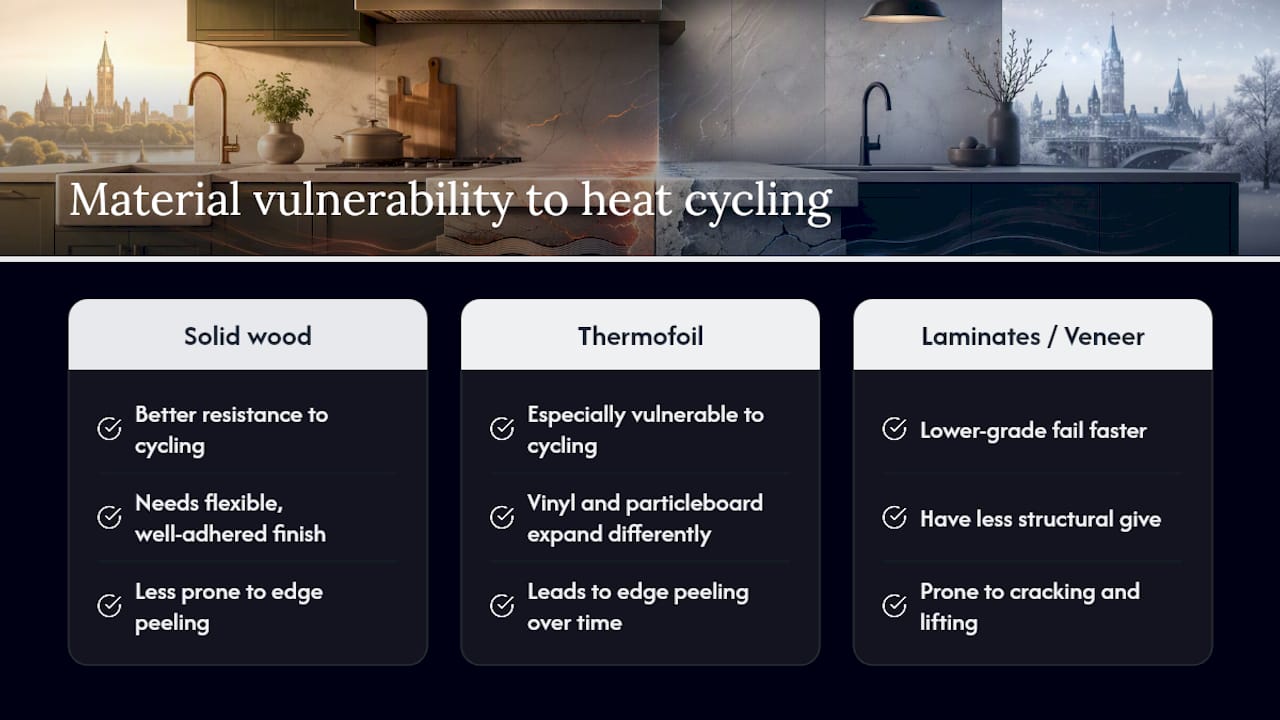
That repeated expansion and contraction is hard on paint film, adhesive bonds, and engineered wood products. Paint that looked flawless when applied can develop hairline cracks over time as the substrate beneath it moves with heat and humidity swings. Thermofoil is especially vulnerable here, since the vinyl layer and the particleboard core underneath don’t expand and contract at exactly the same rate, and that mismatch is what eventually causes peeling at the edges.
Solid wood handles this cycling better than most engineered products, though even solid wood needs a flexible, well-adhered finish to move with it rather than crack against it. Lower-grade laminates and thin veneers tend to fail faster because they have less structural give.
This is also why cabinets closest to the stove and oven age visibly faster than cabinets on the far side of the kitchen. If you’ve noticed one section of your kitchen looking rougher than the rest, proximity to your cooking appliances is very likely the reason.
How Design and Material Choices Change the Aging Timeline
Not every kitchen ages at the same rate, and a lot of that comes down to decisions made before the first meal was ever cooked in the room. Layout matters: a kitchen where the stove sits close to a walkway or a doorway takes more incidental contact than one where cooking happens in a more contained zone.
Material choice matters even more. Solid wood cabinet boxes with a properly applied, durable finish tend to outlast particleboard cores with thin veneer or thermofoil wraps, particularly in the heat and moisture zones near the stove and sink. Higher quality doesn’t always mean higher price, either. It often means better prep work and a finish system suited to how the kitchen actually gets used, since material selection and finish quality directly affect how well a surface resists the moisture and airborne contaminants a kitchen generates.
Countertop and backsplash choices play a role too. A backsplash that’s easy to wipe clean protects the wall and the cabinets nearby from the worst of the grease and steam splatter. Skimping there just shifts the wear onto the cabinet faces instead.
If you’re planning a kitchen from scratch or weighing an upgrade, thinking about material durability at the design stage saves a lot of frustration ten years down the line.
Comparing Wear on Kitchen Fixtures Versus the Rest of the House
Hardware, hinges, and appliances in kitchens simply work harder than their counterparts anywhere else in the home. A bathroom faucet gets turned on a handful of times a day. A kitchen faucet gets used for cooking, cleaning, filling pots, and rinsing dishes, often dozens of times before dinner is even served.
Cabinet hinges in a kitchen open and close far more often than a closet door hinge ever will, and that repetition wears out the mechanism faster. Drawer glides carry heavier loads too, pots, pans, and utensils, compared to the lighter contents of a dresser drawer in a bedroom.
Appliances follow the same pattern. A dishwasher runs almost daily in most households, exposed to heat and moisture with every cycle. A stove sees direct flame or high heat multiple times a day. Compare that to a washing machine tucked in a laundry room, which typically runs a few times a week, and the difference in cumulative stress becomes obvious.
This uneven wear is exactly why kitchen fixtures and cabinet hardware tend to need attention, tightening, replacing, or refinishing, years before anything else in the house shows similar age.
Why Regular Upgrades Keep Kitchens Looking and Functioning Better Longer
Kitchens that get periodic attention age more gracefully than kitchens left untouched for fifteen or twenty years. Regular upgrades don’t have to mean full renovations. Refreshing a finish, tightening or replacing worn hardware, and addressing small moisture issues before they spread all reset the aging clock in meaningful ways.
The homeowners who avoid a rushed, expensive renovation later are usually the ones who caught small problems early. A cabinet door that’s started to show wear at the handle, a seal that’s gone soft near the sink, a finish that’s lost its sheen. Addressing those individually is far less disruptive than waiting until the whole kitchen needs to be gutted.
Refinishing, in particular, extends the useful life of cabinet boxes that are structurally sound but cosmetically tired, which sidesteps the cost and mess of full replacement. It’s a maintenance strategy as much as an aesthetic one, and it works best when it happens before substrate damage sets in, not after.
An Ottawa Homeowner’s Reality Check on Kitchen Aging
Careful prep work, not the paint itself, is what determines whether a cabinet finish holds up. A spray-shop finish applied over properly sanded, primed, and sealed surfaces resists grease and moisture better than a rushed brush job, which is why the process matters as much as the product. A realistic timeline, typically around ten days for a full kitchen, and a six-year warranty on workmanship both give homeowners a way to judge whether a quote reflects real quality or a shortcut.
Ottawa’s swing between humid summers and dry, freezing winters puts extra strain on cabinet seals and hood ductwork through every freeze-thaw cycle. Checking those seals each season is a small habit that pays off in avoided repairs.
— Ottawa
How Ottawa Cabinet Painting Helps Homeowners Get Ahead of Kitchen Wear
If your cabinets are showing grease buildup, minor peeling, or a finish that’s lost its shine, but the boxes themselves are structurally sound, Ottawa Cabinet Painting offers a way to restore that showroom look without the cost or chaos of a full renovation. For thermofoil peeling, door damage, or targeted fixes, Single Cabinet Door Repair and Full Kitchen Repair services are available with pricing details provided on the company’s website. For a full refresh, Ottawa Kitchen Cabinet Refinishing and Custom Cabinet Refacing are both built around a meticulous prep process and a dedicated spray shop, with a typical timeline around ten days and a six-year warranty on workmanship.
Before requesting a quote, take photos of any problem areas, note recent leaks or moisture issues, and be ready to describe how each section of your kitchen gets used. From there, you can request a virtual or on-site assessment and get a scoped plan for restoring your kitchen without tearing it apart.
Sources
FAQ
Why do kitchens age faster than other rooms in a house?
Kitchens age faster mainly because cooking generates grease and particulate matter that settles on surfaces, combined with steam and dishwasher moisture that no other room produces at the same volume. Heavy foot traffic and constant heat cycling from appliances add further mechanical stress that bedrooms and living rooms simply don’t experience.
How much can a range hood actually reduce kitchen damage?
Running a range hood on high, around 300 CFM, can reduce exposure to cooking pollutants by more than 80% compared with slower speeds, according to Health Canada. That reduction applies to the same grease and particulates that settle on cabinet surfaces, so consistent hood use meaningfully slows finish wear.
What humidity level should a kitchen stay under to prevent damage?
Health Canada recommends keeping indoor relative humidity between 30% and 50% to limit mould growth and material damage. Kitchens tend to spike above that range during cooking and dishwashing, which is why ventilation and prompt drying matter so much.
How do I know if my cabinets need repair instead of just a repaint?
Soft or swollen panels, recurring mould, peeling paint at the same spots, and drawer boxes that no longer sit square are signs the substrate itself is damaged, not just the surface finish. A professional assessment can map moisture behind the panels and determine whether refinishing or repair makes more sense.
Does Ottawa Cabinet Painting offer a warranty on cabinet refinishing?
Yes, Ottawa Cabinet Painting backs its workmanship with a six-year warranty, and most full kitchen projects run on a timeline of about ten days. Pricing for refinishing and refacing is provided after a quote, while smaller fixes like single door repairs start from $50 per door.
Recommended

Comments