Keep Ottawa Cabinets White: Oil vs Water Based Finishes Compared
- Axcell Painting

- 1 day ago
- 7 min read
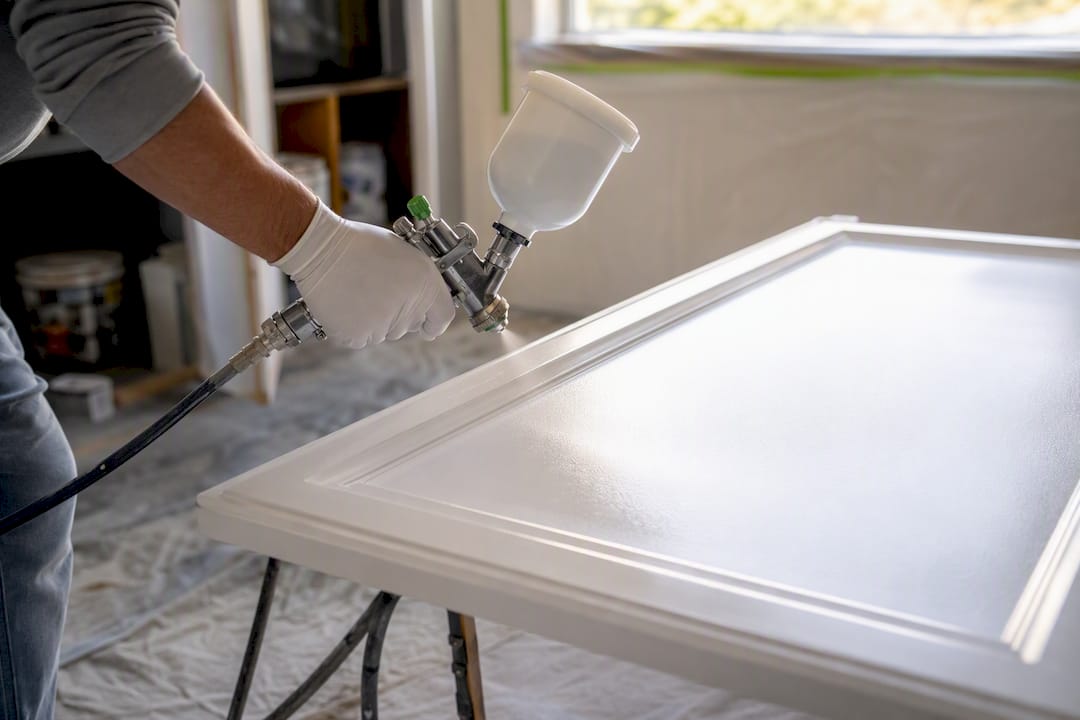
For most Ottawa kitchens today, the answer is a waterborne alkyd or urethane-modified enamel, not a traditional oil-based paint. It matches oil’s hardness on cabinet doors without the yellowing, the days-long fumes, or the slow recoat waits. That said, the finish is only half the equation. Prep work and spray application decide whether that finish lasts eight years or two.
TL;DR:
Waterborne alkyds and urethane-modified enamels now match oil paint in durability and hardness while drying faster and requiring less cleanup.
Proper prep work, including degreasing, scuff-sanding, and applying a suitable primer, is critical to ensure an eight- to fifteen-year cabinet finish lifespan.
Using a spray gun and professional technique produces a factory-like finish that remains crisp white and resists yellowing over time.
Satin finish is recommended for busy households as it hides fingerprints and dings, especially in family kitchens with frequent contact around handles.
The typical professional cabinet painting process takes about ten days and includes a six-year warranty, emphasizing the importance of prep and proper environment control.
Table of Contents
What Is Oil-Based Versus Water-Based Finish for Kitchen Cabinets?
The two categories work on completely different chemistry, and that difference shows up on your cabinets within the first year, not just over a decade.
True oil-based, or alkyd, enamels cure through oxidation. The solvents evaporate, the oils harden as they react with oxygen, and you get a dense, glassy film that resists scuffs well. Water-based finishes used to mean thin, plasticly acrylics that dented under a fingernail. That is not what professionals use anymore. Modern waterborne alkyds and urethane-modified enamels borrow the resin chemistry from oil paint and suspend it in a water carrier, so the film cures with nearly the same hardness and leveling as traditional oil-based enamels while drying faster and cleaning up with soap and water instead of mineral spirits.
The trade-offs break down into a few areas that actually matter on a cabinet job:
Durability: Oil is hard but brittle over time; cabinet-grade waterborne enamels flex slightly, which resists chipping around handles and hinges.
Yellowing: Oil-based paints amber as they age, especially on whites and pale grays; water-based enamels hold their original tone.
Odor and VOCs: Oil off-gasses strongly for days; waterborne products clear in hours and are far more livable in an occupied home.
Recoat time: Oil often needs 24 hours between coats; many waterborne enamels recoat in 2 to 4 hours, tightening the whole schedule.
Benjamin Moore recommends Advance, a waterborne alkyd, specifically for a durable, furniture-like cabinet finish, and it is one of several specialty cabinet enamels professionals reach for by default now. Cleanup is the quiet advantage too: no solvent disposal, no soaked rags drying out in the garage, just water and a sink.
How the Right Finish Changes What Your Cabinets Look Like in Five Years
Chemistry on a spec sheet is one thing. What you actually notice is whether your white kitchen still looks white when you sell the house.
Spraying a cabinet-grade waterborne enamel produces a finish that looks factory-built rather than hand-painted, because spray guns lay down a thin, even film with none of the brush drag that shows every stroke under kitchen lighting. That is the single biggest quality gap between a rushed weekend repaint and a professional respray, and it has more to do with equipment than paint brand.
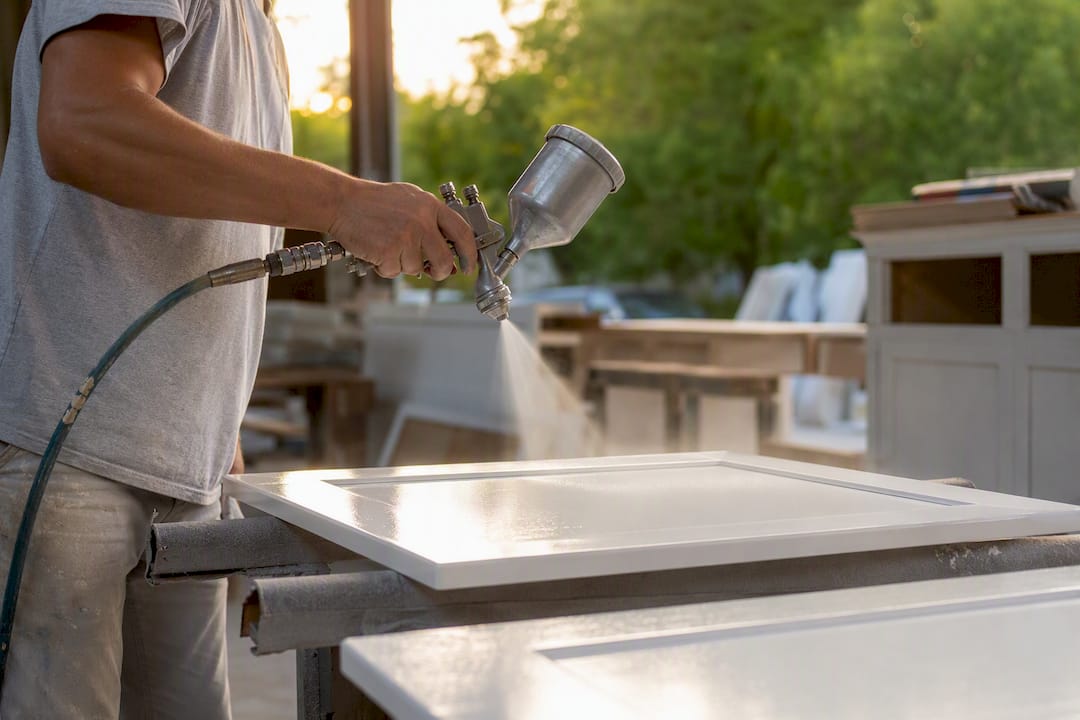
Color stability is where the two finish families diverge hardest. Oil ambers as it cures and keeps drifting warmer for years afterward, which is why homeowners overwhelmingly choose waterborne finishes for white and light-neutral cabinets once they see a five-year-old oil-painted white kitchen next to a fresh one. Waterborne alkyds do not carry that amber cast, so a crisp white stays crisp.
Sheen choice matters just as much for daily living:
Satin hides minor imperfections and handles daily wiping well, a common pick for family kitchens.
Semi-gloss wipes clean fastest and resists grease near the stove but shows every dent and roller mark, so it demands the smoothest possible prep.
Matte looks elegant but shows fingerprints and scuffs quickly around handles.
Sheen and finish family work together, not separately. A deeper breakdown lives in this guide to kitchen paint finish choices if you want to weigh sheen against your household’s habits.
Pro Tip: If you have young kids or frequent guests, choose satin over semi-gloss. It hides the small dents and fingerprints that show up fast around handles, without sacrificing much cleanability.
What a Professional Cabinet Painter Actually Does, Step by Step
A quality respray follows a sequence, and skipping any step is where DIY jobs and shortcut contractors fail.
Degrease everything first. Kitchen cabinets carry an invisible layer of cooking oil that repels paint no matter how well you sand. Skipping this step is the number one cause of peeling within a year.
Scuff-sand and repair. A fine grit knocks down the sheen so primer bonds, while any dings, veneer lifts, or gouges get filled and leveled before a single coat goes on.
Apply a bonding primer. Slick surfaces, thermofoil, or previously varnished wood need a shellac-based or modern adhesion primer, and dark-to-light color changes get a tinted primer coat to block old color from bleeding through.
Spray doors and drawers off-site. Doors and drawer fronts travel to a controlled shop booth for spraying, while cabinet frames get finished on-site with careful brushing or micro-rolling since they cannot be removed.
Build the film in thin coats. Two to three light coats beat one heavy one, with flash time between each so the film does not trap solvent and stay soft underneath.
Control the cure environment. Humidity and temperature swings affect final hardness, which is exactly why shops use climate-controlled booths instead of letting doors harden in a garage during an Ottawa cold snap or a humid August.
Professional refinishing workflows typically run 3 to 7 working days on-site, with full cure taking another 7 to 14 days before you should stack dishes back into cabinets. Spraying technique matters here too: an HVLP gun held roughly 8 inches from the surface produces the even coverage that separates a factory look from a streaky one. Expect a mid-range professional job to land between roughly $2,000 and $6,500 depending on kitchen size and scope, with cabinets lasting 8 to 15 years when prep is done right. For primer specifics on tricky surfaces, this guide to primer paint and application covers the basics worth asking your contractor about.
Which Finish Fits Your Ottawa Kitchen or Bathroom
Not every kitchen needs the same answer, and matching the finish to how you actually live in the space matters more than chasing the “best” product on paper.
White or light-neutral kitchens: go with a waterborne alkyd or urethane-modified enamel. Oil’s ambering is the one flaw that ruins a bright kitchen over time, and it is entirely avoidable.
Busy family kitchens: a premium waterborne alkyd in satin or semi-gloss handles daily traffic, spilled juice, and constant hand contact around handles.
Bathrooms and humid zones: prioritize proper primer and cure management as much as the finish itself, since moisture is harder on a soft cure than on a fully hardened one.
When oil still makes sense: rarely, and mostly for very deep, saturated colors where a homeowner values oil’s classic leveling over faster drying. Even then, the yellowing and odor trade-offs apply.
For a fuller walkthrough of matching finish to household needs, see this guide to choosing paint finish for kitchen upgrades.
The Ottawa Cabinet Painting Process, Timeline, and Warranty
Ottawacabinetpainting builds every cabinet job around the same sequence outlined above: degrease, sand, prime with a bonding product suited to your surface, spray doors and drawers off-site for a factory-smooth film, and finish frames carefully on location.
The full project typically runs around ten days from start to finish, which accounts for spraying, flash time, and the cure window that soft, rushed jobs skip entirely. That patience is backed by a 6-year warranty, because a finish that yellows, peels, or stays soft under a coffee mug is a prep failure, not bad luck. Careful degreasing and the right primer are what actually stop those problems before they start, more than any single paint brand.
Get a Free Cabinet Painting Estimate in Ottawa
If your kitchen or bathroom cabinets are ready for a change, Ottawacabinetpainting offers a free estimate that covers an in-home inspection, a finish and sheen recommendation suited to your cabinets, and an itemized quote with a realistic timeline. Unlike a quick online price guess, this walks your actual space before anyone commits to a color or a schedule.
Before your appointment, have three things ready: current photos and rough measurements of your cabinets, a target color or two you are drawn to, and any changes you want to hardware or layout while the doors are already off. That short prep list speeds up the quote and helps avoid surprises once work begins.
Every project carries the same 6-year warranty and the same local crew that knows how Ottawa’s seasonal humidity swings affect cure times. Start with a free spray painting quote or browse real before-and-after results from recent kitchens to see what a properly cured waterborne finish actually looks like a year or two in.
Why the “Just Use Oil, It’s Stronger” Advice Is Outdated
Ottawa homeowners still hear this from well-meaning neighbors or older painting crews: oil is the “real” finish, and water-based paint is a compromise you settle for. That advice was accurate fifteen years ago. It is not anymore, and repeating it does readers a disservice.
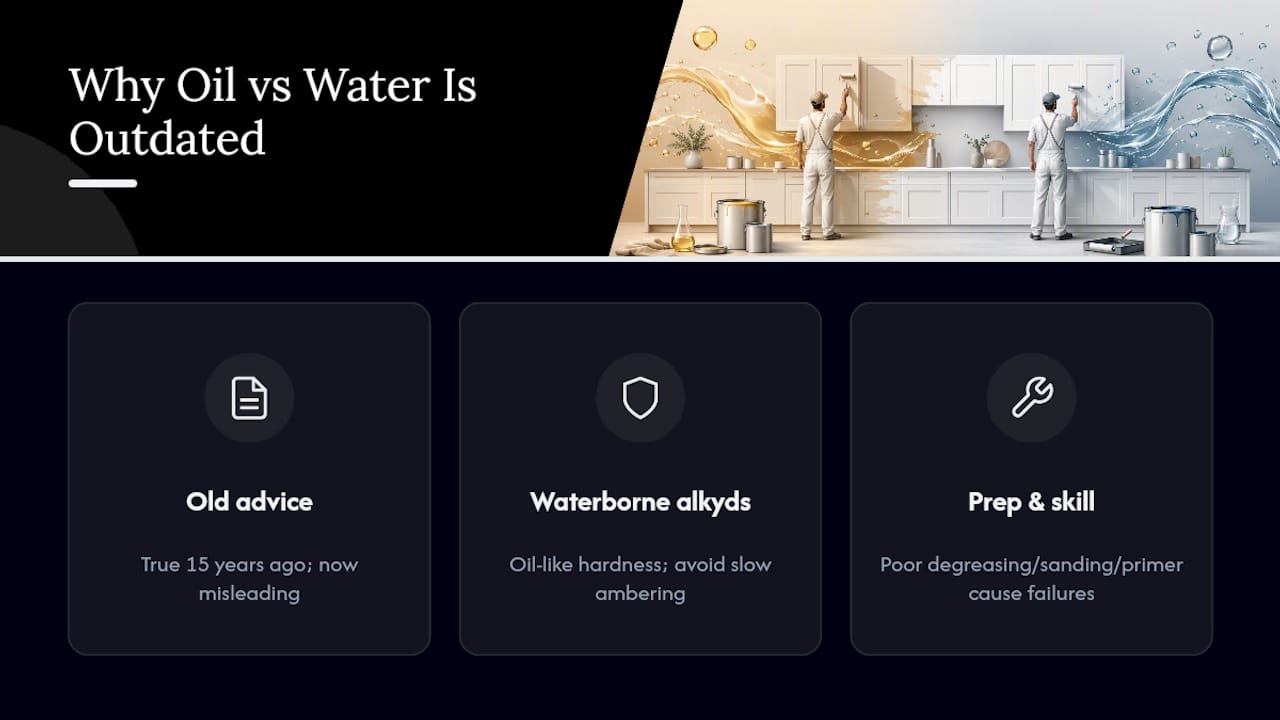
The chemistry behind waterborne alkyds changed the calculation. These are not the thin, brittle acrylics that gave water-based paint its bad reputation in the first place. They borrow oil’s resin structure and deliver comparable hardness, and they do it without the slow amber creep that makes a “clean white” kitchen look dated by year five. The overlooked point most articles skip is that the paint itself is rarely the reason a cabinet job fails. Poor degreasing, rushed sanding, and skipping bonding primer cause far more peeling and chipping than any water-based versus oil-based debate ever will.
If there is a real nuance worth defending, it is this: a mediocre painter using premium oil paint will still underperform a meticulous painter using a mid-grade waterborne enamel. Skill and patience in prep beat brand loyalty every time. Homeowners chasing the “best” paint name while ignoring who is holding the sprayer are solving the wrong problem.
— Ottawa
Sources
Recommended
Comments