Understanding Paint Warranties for Ottawa Homeowners


TL;DR:
A paint warranty is a contractual promise by contractors or manufacturers to address defects in workmanship or materials within specified conditions and timeframes. Understanding these warranties, including their types, coverage, exclusions, and proper documentation, is essential to protect your investment in Ottawa’s climate. Proper maintenance, prompt defect reporting, and clear communication with responsible parties ensure you maximize warranty benefits and avoid disputes.
A paint warranty is a contractual promise by a contractor or manufacturer to correct defects in workmanship or materials under defined conditions for a set period of time. Understanding paint warranties before you hire a painter in Ottawa is not optional. It is the difference between a protected investment and an expensive surprise two years down the road. Most homeowners sign off on a project without reading the warranty terms carefully, and that single oversight is the most common reason claims get denied. Warranties are conditional promises, not unconditional guarantees, and knowing that distinction upfront changes how you evaluate every contractor you speak with.
What are the main types of paint warranties Ottawa homeowners should know?
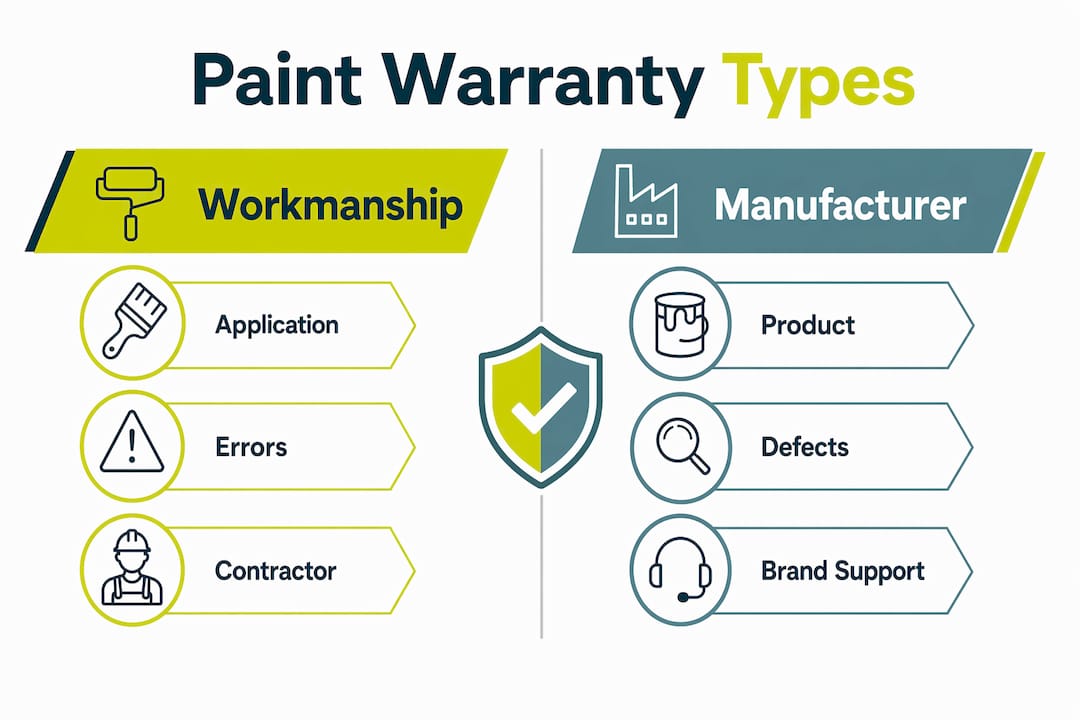
Paint warranties split into two distinct categories: workmanship warranties and manufacturer warranties. Each covers a different cause of failure, and confusing the two is a recipe for a denied claim.
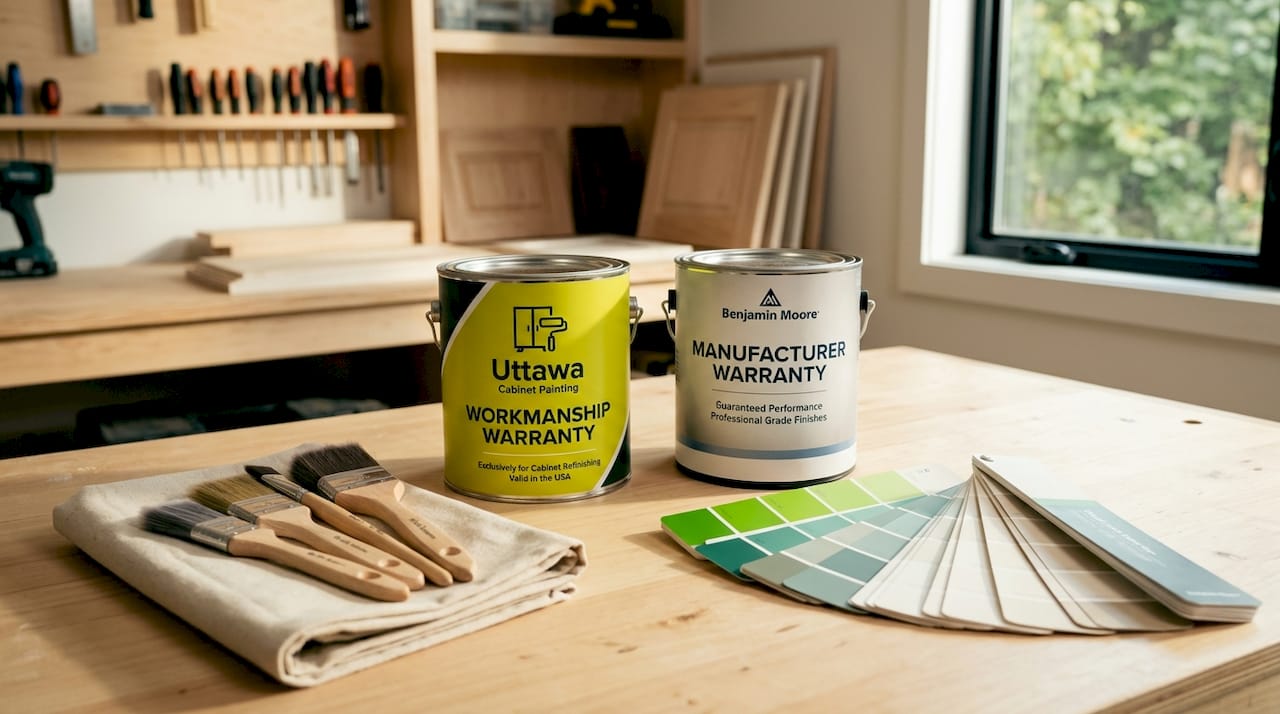
A workmanship warranty is issued by your contractor. It covers defects that result from how the paint was applied. Poor surface preparation, skipping primer coats, applying paint in the wrong temperature range, or using incorrect technique all fall under this category. If your paint peels within two years because the surface was not properly cleaned before application, that is a workmanship failure. The contractor is responsible, and their warranty should cover the repair.
A manufacturer warranty is issued by the paint brand, such as Benjamin Moore or Sherwin-Williams. It covers product defects like premature fading, chalking, or adhesion failure when the product was applied correctly and under normal exposure conditions. If the paint itself was defective from the factory, the manufacturer carries that liability. Manufacturer coverage applies only when installation conditions were met, meaning the contractor followed the product’s application specifications precisely.
Here is a quick comparison of how these two warranty types differ in practice:
Feature | Workmanship warranty | Manufacturer warranty |
Issued by | Contractor | Paint brand (e.g., Benjamin Moore) |
Covers | Application errors, prep failures | Product defects, premature fading |
Typical duration | 1 to 6 years | 10 to 25 years (product-dependent) |
Claim filed with | Your painting contractor | Paint manufacturer directly |
Key condition | Proper technique required | Correct application required |
The AIA Document A201-2017 sets a default one-year correction period for defective work on projects involving architects, though many residential contractors offer longer terms. Ottawacabinetpainting, for example, backs its work with a 6-year warranty, which is well above the industry baseline and reflects the confidence that comes from using premium products and trained crews.
Pro Tip: Ask every contractor you interview to show you both their workmanship warranty document and the manufacturer warranty card for the specific product they plan to use. If they cannot produce both, that is a red flag.
What does a paint warranty cover and what does it exclude?
Paint warranty coverage typically includes defects like peeling, cracking, blistering, and premature color fading under normal exposure conditions. These are failures the paint or the application should not produce within the warranty period if everything was done correctly. Coverage is designed to protect you from defects that originate in the product or the process, not from the natural aging of the surface over decades.
Exclusions are where most homeowners get caught off guard. Warranties commonly exclude the following:
Normal aging and weathering. Paint fades gradually over time. That is expected behavior, not a defect.
Physical damage. Hail, impact, scratches, and abrasion are not covered. If a tree branch scrapes your siding, that is not a warranty issue.
Substrate problems. If the surface underneath the paint moves, cracks, or deteriorates due to structural issues, the paint failure that follows is not the contractor’s or manufacturer’s responsibility.
Deferred maintenance. Failing to clean surfaces, allowing mold or mildew to build up, or ignoring minor damage until it spreads can void your coverage entirely.
Improper cleaning methods. Using abrasive cleaners or pressure washing at excessive force can damage the paint film and void manufacturer coverage.
Environmental factors like sun intensity, moisture levels, and Ottawa’s freeze-thaw cycles affect coating behavior over time. Color stability and adhesion are standard coverage points, but only when the surface was not subjected to conditions outside normal exposure. Ottawa winters are hard on exterior paint, which is exactly why understanding what “normal exposure” means in your specific warranty document matters before you sign anything.
“Many homeowners underestimate warranty value because they do not carefully read terms or follow maintenance obligations, which reduces their real coverage to almost nothing.” — Moorhouse Coating Blog
This is not a minor issue. A warranty that looks strong on paper can be effectively worthless if you do not follow the maintenance guidelines attached to it.
How do you document and claim a paint warranty issue in Ottawa?
When paint fails, the first instinct is to call the contractor and describe the problem. That is a reasonable start, but it is not enough. Warranty claims require documentation of defects, causation analysis, applicability review, and then remedy execution. Walking through this process with solid evidence on your side makes the difference between a fast resolution and a prolonged dispute.
Here is a practical step-by-step approach:
Photograph the defect immediately. Take clear, close-up photos showing the affected area, the extent of the failure, and the surrounding surface condition. Date-stamp every image.
Record the onset timeline. Note when you first noticed the problem and whether it appeared gradually or suddenly. Sudden failures often point to workmanship issues. Gradual failures may indicate a product defect.
Gather your project records. Keep the original contract, the product data sheets for the paint used, and any inspection notes from the job. Film thickness measurements and application records are particularly useful in proving compliance with product specifications.
Identify whether the failure is workmanship or product-based. This is the most critical step. Mistaking a workmanship issue for a manufacturer defect leads directly to claim denial. If the surface was not properly prepped, that is on the contractor. If the paint itself delaminated despite correct application, that points to the manufacturer.
Submit the claim to the correct party. Contact your contractor for workmanship issues and the paint manufacturer for product defects. Some situations require both parties to be involved simultaneously.
Request an independent inspection if needed. A third-party inspector can classify the cause of failure objectively. AMPP-standard inspections provide the kind of documented, professional assessment that holds up in dispute resolution.
Pro Tip: Keep a dedicated folder, physical or digital, for every painting project in your home. Store the contract, product labels, photos taken at project completion, and warranty documents together. You will be glad you did if a problem surfaces three years later.
Practical tips to maximize paint warranty benefits in Ottawa
Getting the most out of your paint warranty starts before the first brush stroke. These guidelines apply whether you are painting your kitchen cabinets, your living room walls, or your home’s exterior.
Verify warranty terms before hiring. Ask contractors to spell out exactly what their workmanship guarantee covers, for how long, and under what conditions. Do not accept vague verbal assurances.
Confirm the products being used. Brands like Benjamin Moore and Sherwin-Williams carry strong manufacturer warranties, but only when their products are applied by contractors who follow the specified application process. Ask for the product name and look up the warranty card yourself.
Keep complete project records. Your seasonal home maintenance records and painting project documentation work together to prove you have maintained the surface properly.
Follow cleaning and maintenance guidelines. Proper maintenance and prompt defect reporting are required to keep warranty coverage valid. Use mild soap and water on painted surfaces. Avoid abrasive pads or harsh chemical cleaners.
Ask about extended system warranties. Extended system warranties require certified applicators, complete product systems, and sometimes manufacturer inspections. They offer broader coverage including labor, but come with stricter conditions. If a contractor offers one, read every condition carefully.
Report defects promptly. Most warranties include a reporting window. Waiting too long after you notice a problem can void your right to a remedy, even if the defect is legitimate.
Choose contractors with employee-based crews. Employee-based crews applying consistent standards provide stronger warranty assurance than subcontractor models, where quality control varies from job to job.
For Ottawa homeowners specifically, the freeze-thaw cycle is a real factor. Exterior paint applied in the wrong season or without proper primer can fail within one winter. Confirming that your contractor accounts for Ottawa’s climate in their application process is not just good practice. It is a warranty protection measure.
Key takeaways
A paint warranty only protects you when you understand its terms, document your project thoroughly, and follow the maintenance conditions attached to it.
Point | Details |
Two warranty types exist | Workmanship warranties cover application errors; manufacturer warranties cover product defects. |
Exclusions are common | Normal aging, physical damage, and deferred maintenance typically void coverage. |
Documentation wins claims | Photos, product records, and onset timelines are required to support any warranty claim. |
Causation determines responsibility | Identifying whether failure is workmanship or product-based routes the claim to the right party. |
Maintenance keeps coverage valid | Following cleaning guidelines and reporting defects promptly preserves your warranty rights. |
What we have learned from years of warranty conversations in Ottawa
After working with Ottawa homeowners on cabinet painting and refinishing projects for years, the pattern we see most often is this: homeowners assume the warranty covers everything, and contractors assume the homeowner read the fine print. Neither assumption is correct, and the gap between them is where disputes live.
The most common misconception we encounter is that a long warranty duration equals strong protection. A 25-year manufacturer warranty sounds impressive. But if the surface was not properly prepared, if the wrong primer was used, or if the homeowner cleaned the cabinets with a bleach-based product, that 25-year warranty is worth nothing. Duration is only one variable. Conditions are what actually determine coverage.
We also see homeowners direct claims to the wrong party, which leads to weeks of back-and-forth before anyone takes responsibility. Knowing upfront that workmanship failures go to the contractor and product failures go to the manufacturer saves significant time and frustration. Our advice is to read the cabinet painting warranty details before your project starts, not after something goes wrong.
The contractors worth hiring are the ones who hand you a written warranty document without being asked, explain what it covers and what it does not, and use products with documented manufacturer backing. That transparency is the clearest signal of quality you will find before a single coat is applied.
— Ottawa
How Ottawacabinetpainting protects your investment with verified warranties
At Ottawacabinetpainting, we back every cabinet painting project with a 6-year workmanship warranty and use premium Benjamin Moore and Sherwin-Williams products that carry their own manufacturer coverage. Our employee-based crews follow consistent application standards on every job, which is what makes that warranty meaningful rather than just a marketing line. We document each project thoroughly so you have the records you need if a claim ever arises. If you want to understand exactly what your paint warranty covers before committing to a project, explore our interior painting services and reach out for a detailed quote. We are happy to walk you through every term before work begins.
FAQ
What is a paint warranty exactly?
A paint warranty is a contractual obligation by a contractor or manufacturer to repair or replace defective paint work under defined conditions. It is a conditional promise, not an unconditional guarantee, and coverage depends on who issued it and what caused the failure.
How long do paint warranties typically last?
Workmanship warranties from contractors typically range from one to six years. Manufacturer warranties on premium products from brands like Benjamin Moore or Sherwin-Williams can extend from ten to twenty-five years, depending on the product line and application conditions.
What voids a paint warranty in Ottawa?
Deferred maintenance, improper cleaning methods, physical damage from impact or weather events, and failure to report defects promptly are the most common reasons paint warranty coverage is voided. Ottawa’s freeze-thaw climate makes proper surface prep and seasonal maintenance especially important.
Who do I contact for a paint warranty claim?
Contact your painting contractor for workmanship-related failures like peeling caused by poor surface prep. Contact the paint manufacturer directly for product defects like premature fading or adhesion failure when the product was applied correctly.
Do I need documentation to make a paint warranty claim?
Yes. Photos of the defect, records of the products used, the original contract, and a timeline of when the failure appeared are all required to support a warranty claim and determine whether the contractor or manufacturer is responsible.
Recommended
Understanding Cabinet Painting Warranties: What You Need to Know Before Refreshing Your Cabinets
Understanding Cabinet Painting Warranties: What You Need to Know
Cabinet Painting Warranty: What You Need to Know Before Refreshing Your Kitchen
Understanding Cabinet Painting Warranty Terms: What You Need to Know
Comments