The Role of Timeline in Cabinet Projects: Ottawa Guide


TL;DR:
A detailed project timeline is essential for completing Ottawa cabinet remodels on time and within budget. It maps every task, manages dependencies, and accounts for potential site surprises, reducing delays. Proper planning, early decisions, and clear schedules help homeowners prevent common disruptions and oversee their projects effectively.
A project timeline is the single most important planning tool in any cabinet remodel. Without one, you are coordinating trades, materials, and decisions entirely from memory, which is a recipe for disaster. The role of timeline in cabinet projects goes beyond marking a start and end date. It maps every task, flags dependencies between trades, and gives you a realistic picture of when your kitchen will be functional again. For Ottawa homeowners, where seasonal schedules and local contractor availability add extra variables, a clear timeline is not optional. It is the foundation of a project that finishes on time and on budget.
What are the typical phases of a cabinet project in Ottawa?
Full kitchen cabinet renovations typically take between 6–12 weeks, with installation lasting 2–4 days for standard kitchens. That range surprises most homeowners who assume the physical installation is the bulk of the work. It is not. The weeks before installation day carry the real weight.
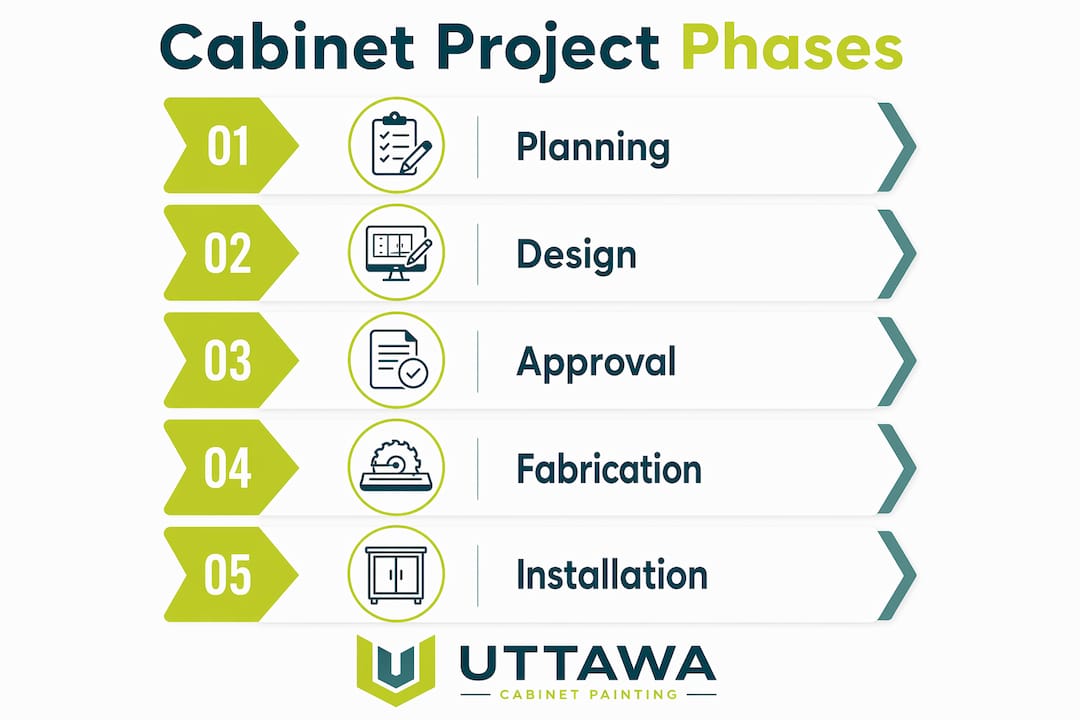
Cabinet projects in Ottawa generally move through four distinct phases:
Design and measurement: Finalizing layouts, selecting materials, and getting contractor approvals. This phase alone can take 2–4 weeks if decisions are slow.
Fabrication or refinishing: Custom cabinets are built in a shop. Painted or refinished cabinets go through prep, priming, and multiple coat applications. This phase runs 2–6 weeks depending on scope.
Finishing and quality checks: Hardware fitting, final coat inspections, and touch-ups before anything leaves the shop or staging area.
Installation: Leveling floors, setting base and upper cabinets, adding trim and hardware. For a standard Ottawa kitchen, this takes 2–4 days when the site is ready.
Planning windows matter as much as the phases themselves. Experts recommend a 12-week planning window for most kitchen remodels, with 16 weeks being the safest option for custom projects and 8 weeks carrying real risk. The table below shows how scope affects your risk level.
Planning Window | Project Type | Risk Level |
8 weeks | Semi-custom, simple layouts | High risk of delays |
12 weeks | Standard custom kitchens | Manageable with clear milestones |
16 weeks | Complex custom or full remodels | Low risk, buffer for surprises |
Unexpected site conditions, such as uneven subfloors or outdated plumbing, can add days or weeks to any phase. Building that reality into your schedule from the start is what separates a smooth project from a stressful one.
How does a timeline help manage scheduling in Ottawa?
A project without a timeline is essentially wishful thinking. Timelines create accountability and reveal the dependencies that mental scheduling completely misses.
Cabinet projects involve multiple trades working in sequence. Your electrician cannot move an outlet until the cabinet layout is locked. Your plumber cannot rough in the sink drain until the base cabinet position is confirmed. Your painter cannot finish walls until cabinets are installed. Each of those handoffs is a potential delay point if no one has mapped the sequence in advance.
Visual Gantt charts help identify scheduling conflicts early rather than scrambling on delivery day. A Gantt chart shows every task as a bar on a calendar, making overlaps and gaps immediately visible. You do not need professional software to use one. A shared spreadsheet or a printed wall calendar works fine for a single kitchen project.

Float days between tasks prevent cascade delays when problems arise. Float is simply a buffer of one or two days between finishing one task and starting the next. Without float, a one-day plumbing delay pushes the electrician, which pushes the cabinet installer, which pushes your move-back-in date by a week.
Pro Tip: Ask your contractor to share a written project schedule before work begins. If they cannot produce one, that tells you something important about how they manage jobs.
The most common scheduling pitfalls Ottawa homeowners face include:
Booking trades back-to-back with no buffer days
Assuming verbal commitments equal confirmed calendar holds
Failing to confirm that all materials are on-site before tradespeople arrive
Skipping a pre-installation site check to catch floor level issues early
What timeline challenges do Ottawa homeowners commonly face?
Hidden site issues are the most frequent source of schedule disruption. Demo day in an older Ottawa home can reveal water damage behind drywall, uneven concrete subfloors, or electrical panels that need upgrading before cabinet installation can proceed. None of those problems are visible during the planning phase. Scheduling float between tasks is the only reliable way to absorb them without blowing your completion date.
Late design changes are the second most common cause of delays. Cabinet decisions drive other trades. Changing a cabinet layout after plumbing rough-in means calling the plumber back, paying for rework, and losing days on your schedule. Locking your layout early is not just good practice. It is the single most effective way to protect your timeline.
Shipping and delivery confusion also catches homeowners off guard. Shipping schedules involve multiple steps, including order release, shipment, receiving, and inspection, and customers often misinterpret shipping estimates as firm promises. A cabinet that ships on Monday does not arrive ready to install on Tuesday.
Pro Tip: Designate a staging area in your home, such as a garage or spare room, where cabinets can be delivered, unpacked, and inspected before installation day. Catching a damaged door panel at delivery is a minor inconvenience. Catching it on installation day shuts down your entire project.
The delivery date differs from order readiness. Your home needs a clear staging zone for inspecting cabinets before installation begins. This step is not optional. Damaged items caught early can be replaced without delaying the installer. Damaged items caught on installation day cannot.
How can Ottawa homeowners plan and track their cabinet timeline?
Start the design conversation about 4 months before your desired completion date. That window gives you time to work through design approvals, material selection, fabrication, and installation without rushing any phase. Rushing approvals is one of the most common causes of delays in custom cabinet projects.
Here is a practical step-by-step approach for Ottawa homeowners:
Set your target completion date first. Work backward from that date to identify when design must be finalized, when orders must be placed, and when trades must be booked.
Request a written project schedule from your contractor. The schedule should show each phase, its duration, and which tasks depend on others being finished first.
Lock your cabinet layout before any rough-in work begins. Changes after this point cost time and money. Review your kitchen layout options carefully before signing off.
Set milestone approval dates. Agree with your contractor on specific dates for design sign-off, material selection, shop production start, and delivery confirmation.
Confirm all materials are on-site before booking trades. Never schedule an installer for a date when cabinets have not yet been received and inspected.
Build in a two-day buffer between each major phase. This float absorbs minor surprises without cascading into major delays.
Check in weekly with your contractor. A short weekly update call keeps everyone aligned and surfaces problems before they become schedule-breaking issues.
Timelines help homeowners plan daily disruptions and organize temporary accommodations during the project. Knowing that your kitchen will be out of service for a specific window lets you arrange a temporary cooking setup, plan meals, and avoid the daily stress of not knowing what comes next.
Understanding why timelines impact kitchen upgrades in Ottawa specifically helps you ask better questions when interviewing contractors. Local factors like winter weather affecting delivery routes, contractor availability during peak renovation season, and permit timelines at the City of Ottawa all add variables that a well-built schedule accounts for in advance.
Key Takeaways
A clear project schedule is the most effective tool for keeping an Ottawa cabinet project on time, on budget, and free of avoidable trade conflicts.
Point | Details |
Plan 12–16 weeks out | Most Ottawa cabinet projects need 12 weeks minimum; custom work needs 16 weeks to reduce risk. |
Lock the layout early | Cabinet decisions affect plumbing, electrical, and framing. Late changes cause costly rework. |
Build in float days | Add 1–2 buffer days between each phase to absorb site surprises without cascading delays. |
Inspect before installation | Designate a staging area and inspect all cabinets at delivery, not on installation day. |
Get a written schedule | Ask your contractor for a written project timeline before any work begins. |
Why the timeline is the real project manager in Ottawa
We have worked on enough Ottawa kitchens to say this with confidence: the homeowners who have the smoothest projects are not the ones with the biggest budgets. They are the ones who treat the timeline as a shared commitment rather than a contractor’s problem.
The most common misconception we see is that a timeline is just a rough estimate. Homeowners assume dates will shift, so they do not hold anyone accountable to them. That mindset is what turns a 10-day cabinet painting project into a 3-week ordeal. When no one owns the schedule, no one protects it.
What I have found actually works is treating each milestone like a small contract. Design sign-off by a specific date. Materials confirmed by a specific date. Trades booked only after delivery is confirmed. That level of discipline feels like overkill until the day a plumber shows up and the cabinets are still sitting in a warehouse.
The other thing worth saying plainly: timelines cannot prevent every problem. Older Ottawa homes hide surprises behind walls that no one could have predicted. The goal is not a perfect schedule. The goal is a schedule with enough float that surprises stay manageable instead of becoming crises. Flexibility and discipline are not opposites. The best project timelines build in both.
— Ottawa
How Ottawacabinetpainting keeps your cabinet project on schedule
Cabinet painting is one of the most time-efficient ways to update an Ottawa kitchen, and Ottawacabinetpainting has built its entire process around minimizing your disruption. The typical Ottawacabinetpainting project runs about ten days, with a clear day-by-day schedule communicated to you before work begins. Every phase, from prep and priming to final coat application, is mapped out so you always know what is happening and when. Ottawacabinetpainting backs that process with a 6-year warranty, because a finish that lasts is only possible when the timeline is respected. See the full process on the interior cabinet painting page, or get a free spray painting quote to start planning your project today.
FAQ
How long does a cabinet project typically take in Ottawa?
Full kitchen cabinet renovations take between 6–12 weeks from design to installation, with the physical installation phase lasting 2–4 days for a standard kitchen.
When should I start planning my Ottawa cabinet project?
Start design conversations about 4 months before your target completion date to allow enough time for design approvals, fabrication, and installation without rushing.
What is the safest planning window for a custom cabinet project?
A 16-week planning window is the safest option for custom cabinet projects, providing buffer time for complex designs and unexpected site conditions.
Why do cabinet projects get delayed?
The most common causes are late design changes, missing float days between trades, and delivery confusion. Locking your cabinet layout early and inspecting deliveries before installation day prevents most of these delays.
Does cabinet painting follow the same timeline as full cabinet replacement?
Cabinet painting follows a much shorter schedule. Ottawacabinetpainting completes most projects in approximately ten days, compared to the 6–12 weeks required for full cabinet replacement. Read more about cabinet painting timelines for Ottawa homeowners.
Recommended

Comments