Staining vs. Painting Kitchen Cabinets in Ottawa: The Real Answer
- Axcell Painting

- 1 day ago
- 8 min read
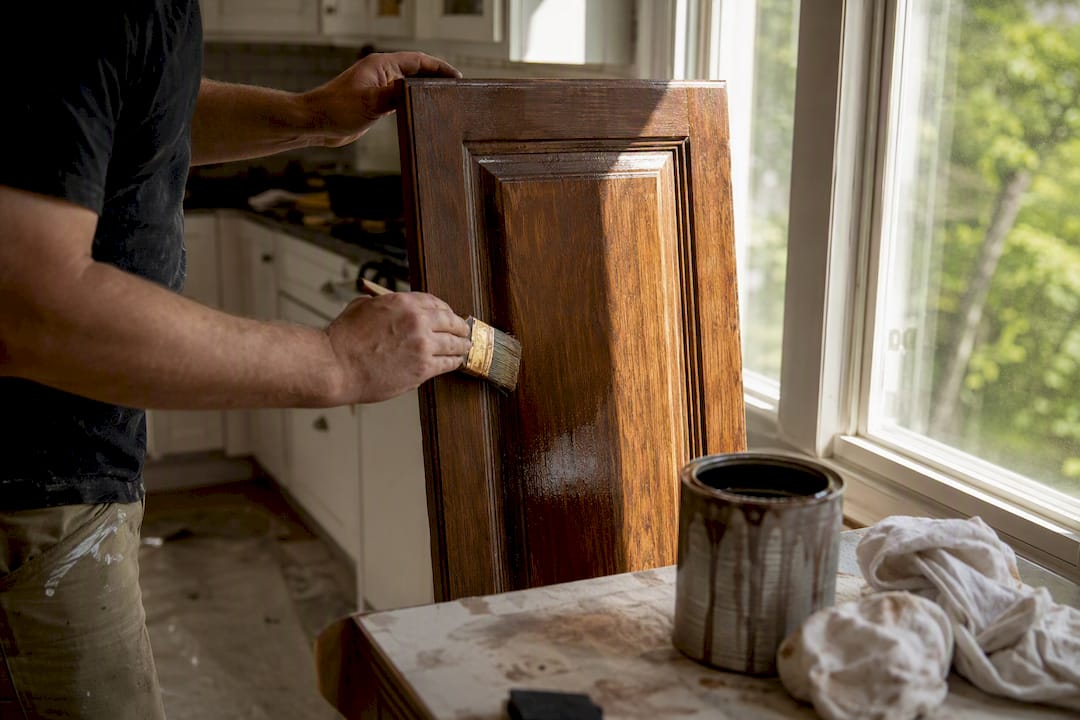
If your cabinets are MDF or you want a specific color, paint is the right call according to the most popular interior doors for a modern farmhouse look, which pairs well with painted finishes (One Day Doors & Closets). If they’re quality hardwood and you want a finish that ages gracefully with minimal upkeep, staining wins. Painted cabinets hide imperfections and open up unlimited color options. Stained cabinets let real wood grain show through, which suits oak, walnut, or cherry far better than a laminate box ever could.
MDF cabinets that need a color change: paint
Solid hardwood you want to showcase: stain
Either finish, done right by a professional, holds up for years
Both finishes fail early without proper prep. That single fact matters more than which one you pick.
Key Takeaways
Material dictates the finish more than personal taste does. MDF requires paint, open-grain hardwood rewards stain, and prep quality determines whether either one lasts.
Point | Details |
Material decides first | MDF and laminate need paint; oak, walnut, and cherry show best under stain. |
Paint costs more | Painted cabinets run about 10–20% higher than stained ones due to extra prep and coats. |
Lifespan depends on prep | Properly prepped finishes last 8–15 years or more; skipped prep can fail in 2–3 years. |
Touch-ups favor stain | Stain markers fix small scratches easily; painted chips need careful color matching. |
Ottawacabinetpainting delivers both | Ottawacabinetpainting offers a roughly 10-day professional process with a 6-year warranty on painted and stained finishes. |
Table of Contents
Staining Versus Painting Kitchen Cabinets: A Quick Checklist
Run through this before you call a contractor:
Check your substrate. MDF or laminate means paint is your only real option; solid wood opens the door to either.
Set your budget. Stain is typically the more affordable finishing option since it skips several labor-intensive steps.
Decide how much upkeep you want. Stain touch-ups are simpler; painted surfaces need more careful repair work.
Picture the look. Want a crisp white or moody navy kitchen? Paint. Want to keep the wood visible? Stain.
A flip house usually calls for paint and broad buyer appeal. A family kitchen that takes daily abuse often does better with stain’s forgiving wear pattern. A showpiece kitchen built around a statement wood species deserves stain, full stop. Plenty of Ottawa homeowners split the difference: painted perimeter cabinets with a stained island for contrast.
Painted Cabinets: Pros, Cons, and What to Expect
Paint gives you total color control. Navy, sage, matte black, warm white. It also works on MDF, which means cabinet boxes that could never take stain suddenly become an option for a full kitchen refresh. The finish reads modern and clean, and it hides minor wood flaws that would show through a clear coat.
The trade-offs are real. Painted finishes cost more to apply professionally, chips are visible against a solid color, and touch-ups require color matching that DIY kits rarely get right. Seams and corners can crack over time if the prep work was rushed.
Unlimited color flexibility
Works on MDF and engineered substrates
Higher labor cost and longer application time
Chips and wear are more visible than on stain
Most pros recommend satin or semi-gloss sheens for cabinets, since they clean easily without showing every fingerprint the way a high-gloss finish does. Spray application produces a noticeably smoother result than brushwork, which is why reviewing your finish options before you commit to a color matters as much as the color itself.
Pro Tip: Ask your contractor whether they spray finish on-site or in a controlled shop environment. The difference shows up in how the paint levels and cures.
Stained Cabinets: Pros, Cons, and What to Expect
Stain lets the wood do the talking. Grain, knots, and natural color variation come through, and that character tends to age well rather than looking dated the way a trendy paint color can. Stain penetrates the wood rather than sitting on top of it, which is part of why minor scuffs and scratches blend into the surface instead of standing out. Touch-ups are also simpler. A stain marker or small reapplication often does the job without a full repaint.
The catch is that stain only works on solid wood species with a substrate that can absorb it. Your color options are limited to wood tones, and the final look depends heavily on the species underneath.
Shows natural wood grain and character
Easier, cheaper touch-ups over time
Limited to wood tones, no true color range
Won’t work on MDF or laminate at all
Oak, walnut, and cherry show beautifully under stain thanks to their open grain structure, typically finished with a clear polyurethane or conversion varnish topcoat.
What Does Cabinet Refinishing Cost: Paint vs. Stain?
Expect to pay more for paint. Painted cabinets typically run about 10 to 20 percent higher than stained cabinets because painting demands more prep, additional coats, and more labor hours overall.
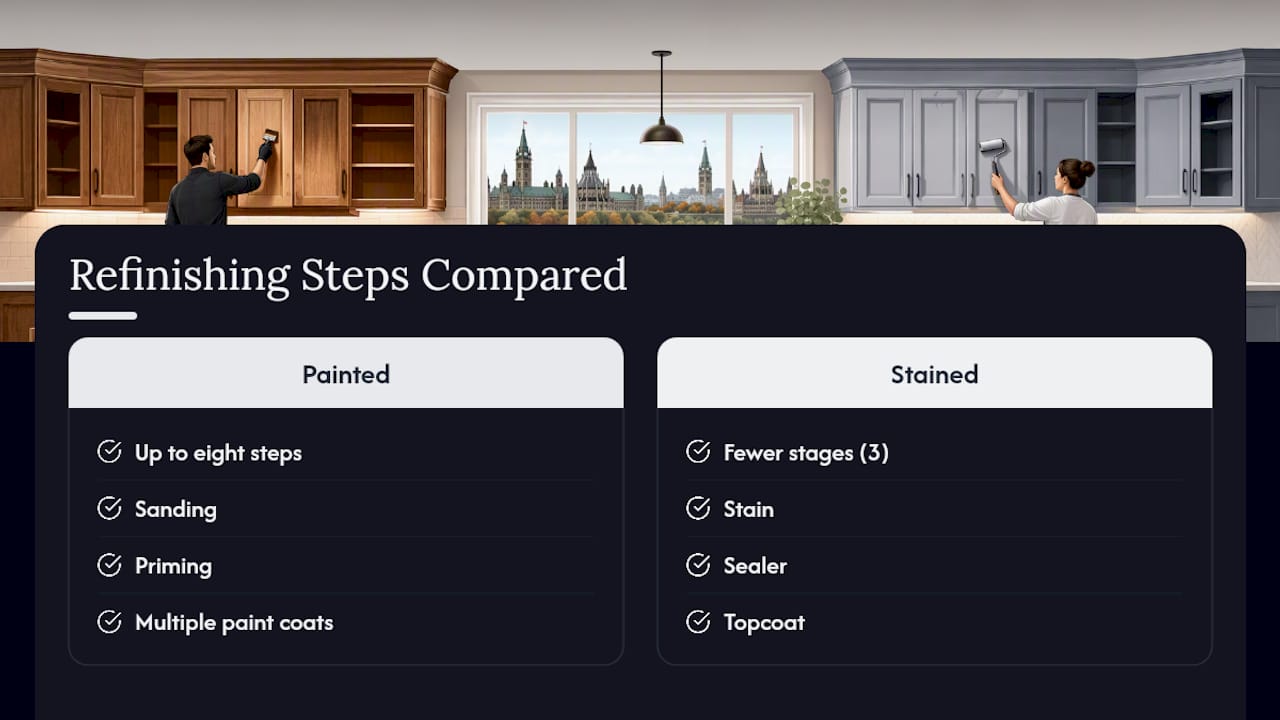
The math behind that premium: stain generally involves fewer finishing stages, sometimes just stain, sealer, and topcoat, while a proper paint job can run through eight steps: sanding, priming, multiple paint coats, sanding between coats, and a final topcoat. Every one of those steps adds time and materials. Custom colors, spray finishing, and the number of doors and drawers on your project all move the final number, so treat any quote as specific to your kitchen’s cost drivers rather than a fixed rate.
How Long Do Painted and Stained Cabinets Actually Last?
Damage shows differently depending on the finish. A chip in paint reveals the substrate underneath in a sharp, obvious contrast. A scratch in stain often blends into the grain pattern and barely registers from across the room.
Touch-ups follow the same pattern. Paint touch-ups need color matching, careful blending, and usually a small brush kit that most homeowners don’t have on hand. Stain touch-up markers are cheap, forgiving, and widely available.
Paint chips are visible; stain scratches often blend in
Paint touch-ups require color matching; stain touch-ups are simpler
Poor prep is the number one cause of early finish failure
High humidity accelerates wear on both finishes
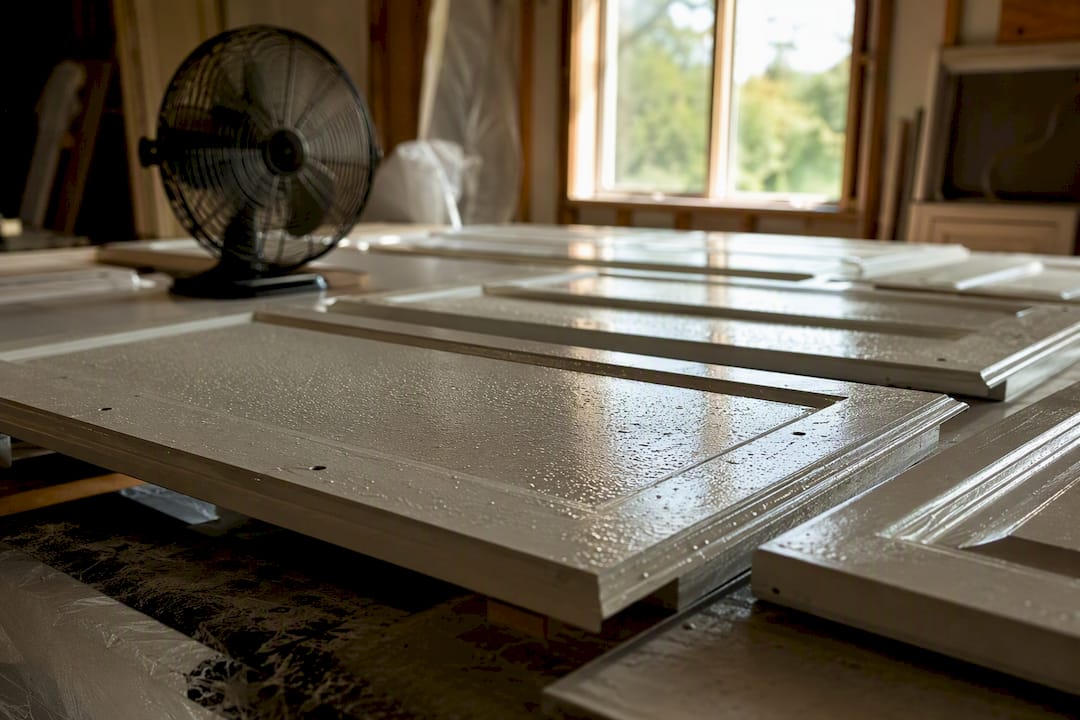
With correct professional prep, both painted and stained finishes typically last 8 to 15 years or longer before needing major rework. Skip the prep, and that lifespan collapses to as little as two or three years. Coastal or high-humidity conditions shorten it further regardless of which finish you choose.
Pro Tip: If you live somewhere humid, ask your contractor about their cure time and ventilation setup. Rushed curing is one of the most common reasons a “professional” finish fails early.
Which Cabinet Material Works Best With Each Finish?
Your substrate decides more than your style preference does. MDF and other engineered woods simply cannot take stain the way solid wood can, so paint becomes the realistic answer for that material every time.
Maple and birch sit in a gray zone. They can technically be stained, but maple in particular needs a conditioner to prevent blotchy, uneven absorption, which adds labor and cost. Many homeowners with maple cabinets choose paint instead, simply to avoid that risk.
MDF and laminate: paint is the only practical choice
Maple and birch: stain is possible but needs conditioning to avoid blotching
Oak, walnut, and cherry: ideal candidates for stain thanks to open grain
If you’re building a kitchen around a wood species with strong grain character, don’t paint over it. That’s the whole reason to choose that wood in the first place.
What Happens During a Professional Cabinet Refinishing Project?
A real refinishing job follows a sequence, not a shortcut:
Clean and degrease every surface to remove kitchen grime and cooking residue.
Strip or deglaze the existing finish so new product actually bonds.
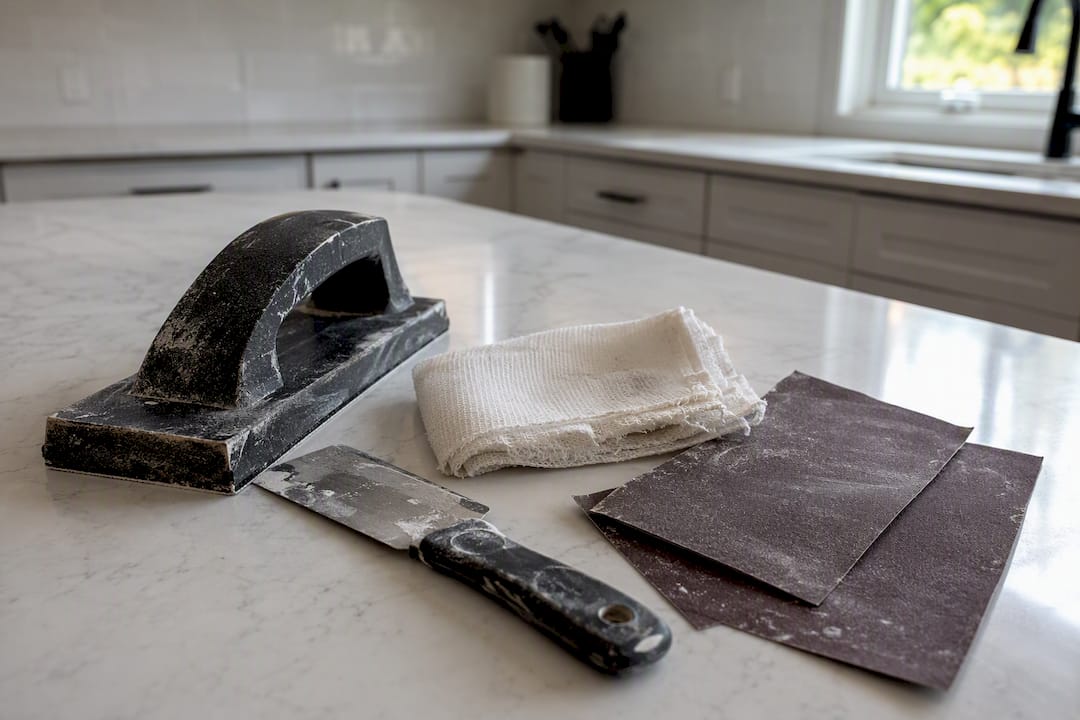
Sand thoroughly, then prime or condition depending on the chosen finish.
Apply multiple coats with sanding between each one.
Finish with a durable topcoat suited to daily kitchen use.
A careful professional timeline runs around ten days from start to finish, which sounds long until you realize that’s what allows proper curing between coats. Spray application, done in that time frame, produces a noticeably smoother and more durable result than a rushed weekend brush job. Skipping steps to save time is exactly how a $3,000 refinish turns into a $3,000 mistake two years later. A written warranty is one of the clearest signs a contractor stands behind their prep work.
How to Choose: Questions to Ask Before You Sign a Quote
Walk into every estimate with a short script:
What’s my cabinet substrate, and does that limit my finish options?
What’s your full finish system: primer, coats, topcoat, and sanding steps?
What warranty do you offer, and what does it actually cover?
What cure conditions do you need in my home, and for how long?
What’s your touch-up policy if a chip or scratch shows up next year?
Run your decision through material first, then budget, then appearance, then long-term maintenance. That order matters because material rules out options before style ever gets a vote.
Watch for red flags. A quote with no visible prep line item, a promise of a single coat, or no warranty at all should send you looking elsewhere. Those shortcuts are exactly what leads to early failure.
Pro Tip: Ask to see photos of a project from at least two years ago, not just fresh work. Fresh paint always looks great. Two-year-old paint tells you the truth.
Ottawa Cabinet Painting: Our Process and When to Call a Pro
We built our process around the parts homeowners can’t see in a quote but absolutely feel in the result. Every project starts with thorough degreasing and deglossing, moves through careful sanding and priming, and finishes with a premium sprayed topcoat rather than a brushed one.
A typical project timeline of around ten days, built around proper cure time rather than a rushed weekend
A 6-year warranty backing the finish we apply
A local, Ottawa-based crew you can actually reach after the job wraps
A before-and-after portfolio you can review before booking
DIY can work fine for a low-stakes stain touch-up on a piece of furniture. It gets riskier fast on MDF substrates, custom color matching, or any kitchen where resale value depends on the finish holding up under a home inspection.
Why Most Cabinet Advice Skips the Part That Actually Matters
Most articles on this topic treat paint versus stain like a style quiz. Pick your favorite look, get your finish. That framing undersells the decision. Material comes first, budget comes second, and style is genuinely the third consideration, not the first.
The conventional advice also glosses over prep quality, and that’s the biggest miss. A well-sprayed, properly primed painted cabinet will outlast a rushed, poorly sealed stain job every time, regardless of which finish looks better on a mood board. Homeowners who choose based on Pinterest photos alone, without asking about substrate or cure time, are the ones calling back in two years with cracked seams or blotchy stain absorption on maple that should have been conditioned first.
If you take one thing from this guide, let it be this: ask about prep before you ask about color. A contractor who walks you through their sanding, priming, and cure process is telling you more about your future kitchen than any paint chip ever will. Pair that with a realistic lifespan expectation, 8 to 15 years when it’s done right, and you’ll make a decision you’re not second-guessing in year three.
— Ottawa
Get a Cabinet Refinishing Quote in Ottawa
Painted or stained, the finish is only as good as the process behind it, and that’s where Ottawacabinetpainting stands apart from contractors who rush the prep to hit a lower price. We handle both painted and stained kitchen cabinets with the same meticulous degreasing, sanding, and spray-finishing process, backed by a 6-year warranty and a project timeline built around proper curing rather than a rushed weekend. If you’re weighing MDF against solid wood, or you just want a straight answer about what your kitchen needs, request a free spray painting quote and we’ll walk your cabinets with you before you commit to either finish.
Sources
Recommended
Comments