10 Day Finish: Sage vs Olive Cabinets with LRV Picks for Ottawa

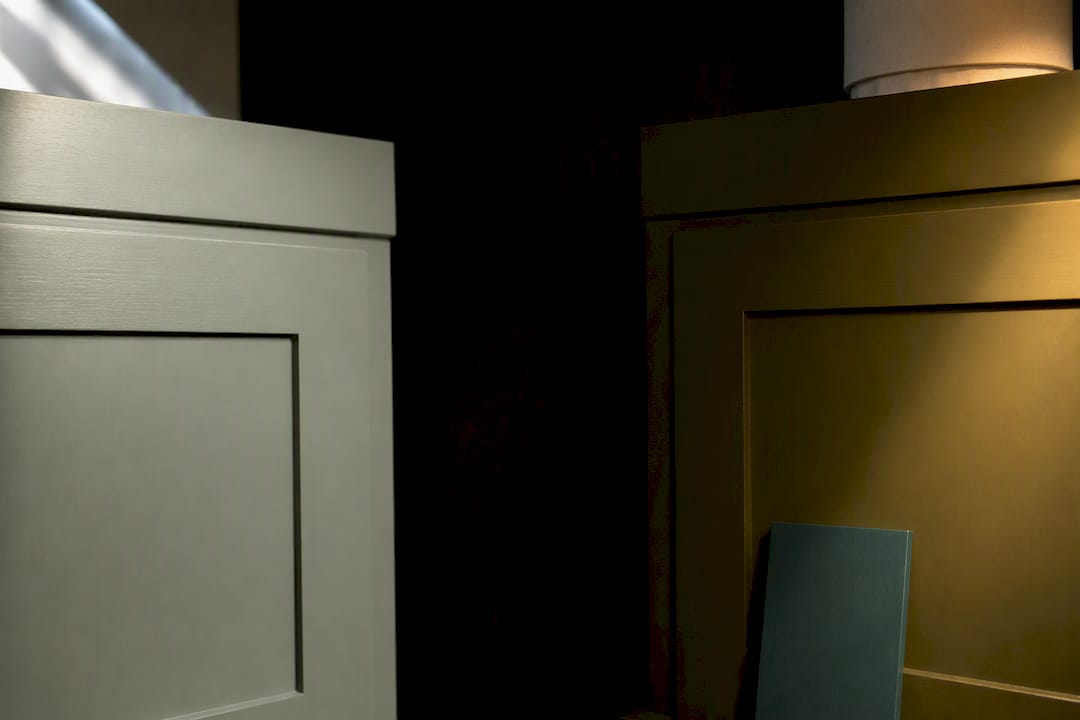
Sage green reads as a muted, gray-leaning neutral, while olive carries a warmer yellow-brown undertone that acts more like a bold statement color. If you’re working with a small or low-light Ottawa kitchen, sage almost always wins for versatility. If your space has warm wood floors and strong natural light, olive can deliver the richer, more dramatic look you’re after. Either way, the details below will help you pick with confidence.
TL;DR:
Sage has an LRV range of 45 to 60, making it suitable for full kitchens at higher reflectance levels to prevent a washed-out appearance.
Olive typically has an LRV below 12, functioning best as an accent or lower cabinets to add depth without overwhelming the space.
Lighting conditions greatly influence color perception, with north-facing kitchens emphasizing sage’s gray undertones and south-facing kitchens warming up olive’s richness.
Professional application ensures even coverage and preserves the true undertone, reducing risks like color shifts or blotchy finishes over time.
For low-light or small kitchens, sage is generally safer, whereas olive works better in larger, warmer spaces with richer materials around the cabinets.
Table of Contents
Sage Green Versus Olive Cabinet Colors Explained: The Core Differences
The difference between these two greens comes down to undertone, and it’s a smaller shift than most people expect. Sage leans toward gray and sometimes even a whisper of blue, which is why designers describe it as “whisper quiet” on cabinetry. It sits back and lets the rest of the kitchen do the talking. Olive leans yellow and brown, closer to the color of the fruit it’s named for, and it tends to feel “collected” and grounded rather than airy. Sage is cooler and more forgiving across lighting conditions, while olive reads warmer and richer under strong light.
Both colors have failure modes worth knowing before you commit a whole kitchen’s worth of cabinets to one.
Too much yellow pushed into a sage chip tips it into avocado, a dated green color often considered undesirable.
Too much gray pulled into an olive chip flattens it into a dull, lifeless “dishwater” tone with no warmth left.
Undersaturating either family on large cabinet runs can make the kitchen feel washed out rather than intentional.
Saturation and Light Reflectance Value (LRV) matter just as much as undertone. LRV measures how much light a color bounces back, on a scale where higher numbers reflect more light and read lighter. Pale sages in the LRV 45 to 60 range behave like soft neutrals, while deep olives under 12 act almost like near-black. Picture a chip wall: soft sage sample chips cluster in the pale, chalky end, while olive chips sit two or three rows down, deeper and more saturated.
How Lighting And LRV Change A Cabinet Color
The same paint chip can look like two different colors depending on where your kitchen faces. North-facing kitchens get cooler, flatter daylight that pulls gray tones forward, so sage can occasionally read a touch cold or blue by midafternoon. South-facing kitchens get warmer, more golden light that flatters olive and can make sage look slightly more yellow than the chip suggested. Evening artificial light, especially warm LED bulbs common in Ottawa homes, tends to push both colors warmer than they appeared at noon.
LRV gives you a practical planning number before you buy a single can of paint. For a full kitchen of cabinets, designers generally recommend staying at LRV 40 or above so the room doesn’t feel closed in. For an island or lower cabinets only, dropping into the LRV 12 to 30 range creates contrast without darkening the whole room.
Here’s the testing sequence that actually works:
Order door-size or large poster-board samples, not tiny chip cards.
Tape them to actual cabinet doors or the wall beside your cabinets.
Check them at morning, midday, and after dark under your kitchen lights.
Hold the sample against your countertop and flooring to check for clashing undertones.
Live with it for at least three full days before deciding.
Pro Tip: Photograph your sample at each time of day. Undertone shifts are often easier to spot in a photo than with the naked eye, since your brain automatically color-corrects what you see in person.
The most common mistake is testing a single small swatch under one bulb and calling it done. Fix it by testing on the largest sample you can get, in the actual room, across at least two lighting conditions.
Pairing Sage And Olive With Flooring, Countertops, And Hardware
Getting the undertone right is only half the job. The materials around your cabinets decide whether the color looks styled or slightly off. Sage pairs naturally with light to mid-toned wood floors, cream or soft white countertops, and warm satin or unlacquered brass hardware, because those lighter, warmer materials keep sage’s gray undertone from tipping cold.
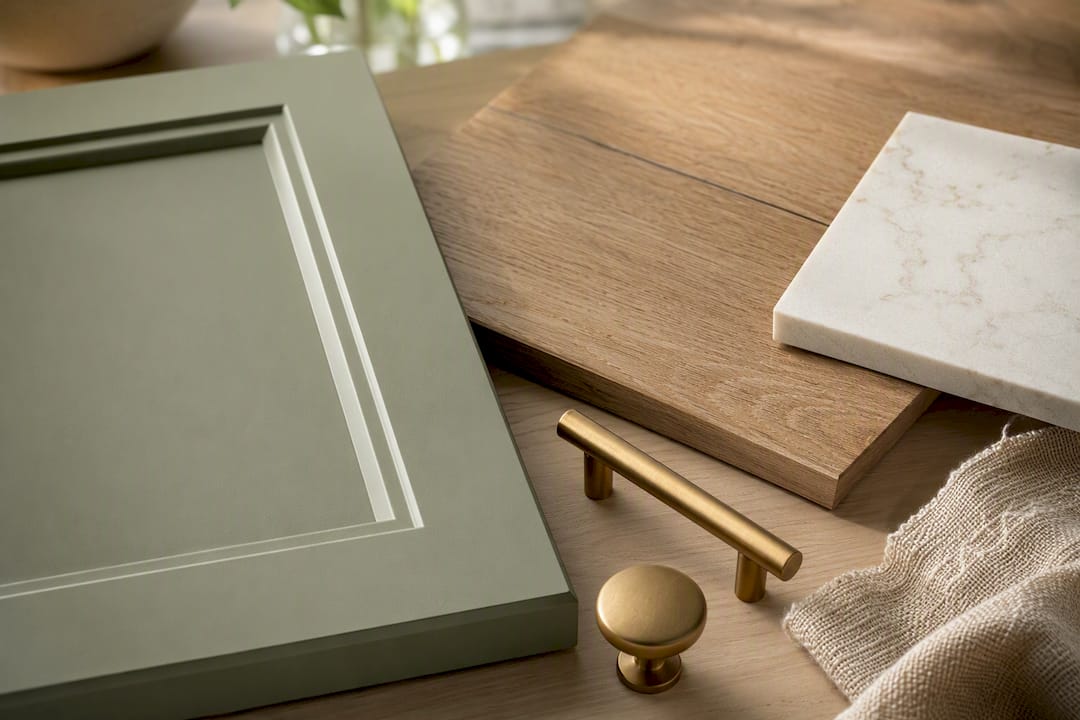
Olive asks for richer company. Mid-to-dark wood tones, warm stone countertops with movement, and matte black or aged brass hardware all deepen olive’s natural warmth instead of fighting it. A pale white quartz counter next to olive cabinets can look chalky by comparison, while a warm-veined stone brings the whole kitchen into balance.
Two-tone kitchens give you a way to get both colors without gambling on one. A common approach:
Paint the island in the bolder color (usually olive) and the perimeter cabinets in the quieter one (sage or a warm white).
Reverse it if your island gets less natural light than the perimeter.
Keep hardware finish consistent across both tones so the kitchen still feels like one design decision, not two.
If you’re in an open-plan Ottawa home where the kitchen flows into a living or dining space, sightlines matter more than they do in a closed kitchen. Olive on a large run of cabinets visible from the couch can dominate a room; sage tends to recede and let adjacent furniture and wall colors share the visual weight. For more two-tone layout ideas, this guide to two-color kitchen cabinet schemes walks through several combinations that work well with both greens.
Which Color Should You Choose For Your Kitchen?
Run through this checklist before you settle on a chip:
Room size and light. Small or dim kitchens usually do better in sage; bright, larger kitchens can carry olive’s depth.
Existing floor tone. Warm wood floors pull toward olive; lighter or cooler-toned floors pull toward sage.
Adjacent rooms. Open sightlines to another living space favor sage’s quieter presence.
Resale plans. If you might sell within a few years, muted sage is the lower-risk pick.
Maintenance tolerance. Both colors show water spots similarly, but darker olive hides fingerprints better than pale sage.
A few rules of thumb make the decision faster. Small or low-light kitchen: sage. Warm wood floors plus a statement island: olive on the island, sage or white on the perimeter. Resale-minded homeowner: a muted, chameleon gray-green that reads as neutral to the widest range of buyers.
If you genuinely can’t choose, the compromise options are real solutions, not consolation prizes: island-only olive, matte black hardware to visually “cool down” a warm olive, or a light sage on uppers with a deeper olive on lowers.
Sample Chips To Test First, With LRV Guidance
Once you know roughly which family you’re leaning toward, request these specific chips as your starting point. They cover the practical range from whole-kitchen neutral to bold accent.
Paint Chip | Family | LRV | Best Use |
Benjamin Moore October Mist | Sage | LRV 45 to 60 | Whole kitchen, first-time green |
Sherwin-Williams Evergreen Fog | Sage | 30 | Whole kitchen or island transition |
Sherwin-Williams Pewter Green | Olive | 12 | Island or lower cabinets |
Sherwin-Williams Ripe Olive | Olive | 6 | Accent island, bright rooms only |
Muted, gray-leaning chips like October Mist and Evergreen Fog behave like soft neutrals and suit full kitchens, while the two lower-LRV olive chips work best where they won’t swallow the whole room in shadow. As a rule, match the chip’s LRV to the job: LRV 40 and up for wraparound cabinetry, LRV under 30 for accents you want to pop.
Finish matters as much as color here. Pair the pale sage chips with warm brass or satin nickel pulls, and reserve matte black hardware for the deeper olive options, where it reinforces the moodier, more traditional feel these darker greens tend to carry.
Why Professional Application Protects Your Color Choice
Choosing the right chip is only step one. How that color gets applied determines whether it looks the way the sample promised a year from now. Cabinet substrates absorb primer unevenly, and skipping proper prep is a recipe for blotchy sheen and a color that shifts subtly across doors.
Professional cabinet painting builds every project around getting that color right the first time:
Thorough prep work, including sanding and appropriate priming, so pigment lays evenly across every door and drawer front.
Premium paint application for a smooth, factory-finished look rather than a brushed, uneven one.
A typical project timeline of around ten days, built to minimize disruption to your household.
A warranty backing the durability of the finish.
Professional-grade prep and application reduce the risk of the undertone surprises that DIY jobs sometimes reveal after the paint cures.
Keeping Sage And Olive Cabinets Looking Sharp
Both color families hold up well with the same basic cleaning routine, but their undertones mask (or reveal) different kinds of daily wear. Pale sage shows grease splatter and fingerprints faster simply because there’s less pigment to camouflage them, especially near the stove and handles. Wipe sage cabinets down with a soft cloth and a mild dish soap solution weekly, and avoid anything abrasive that can burnish a dull patch into a satin or matte finish.
Olive’s deeper pigment hides light smudging better, but it shows dust and hard-water spots more visibly against its warm base, particularly near a sink or coffee station. A microfiber cloth with warm water handles most of that; save degreasers for tougher buildup, and always test in an inconspicuous spot first.
Both colors benefit from the same protective habit: never let cleaning products sit on cabinet surfaces, and dry any water splashes promptly rather than letting them evaporate on their own. Sheen level affects maintenance more than the color itself does. A satin or semi-gloss finish on either sage or olive wipes clean faster and resists staining better than a flat finish, which is part of why professional refinishing typically defaults to a durable satin sheen on kitchen cabinetry rather than a decorative matte.
The Mood Each Color Sets In A Kitchen
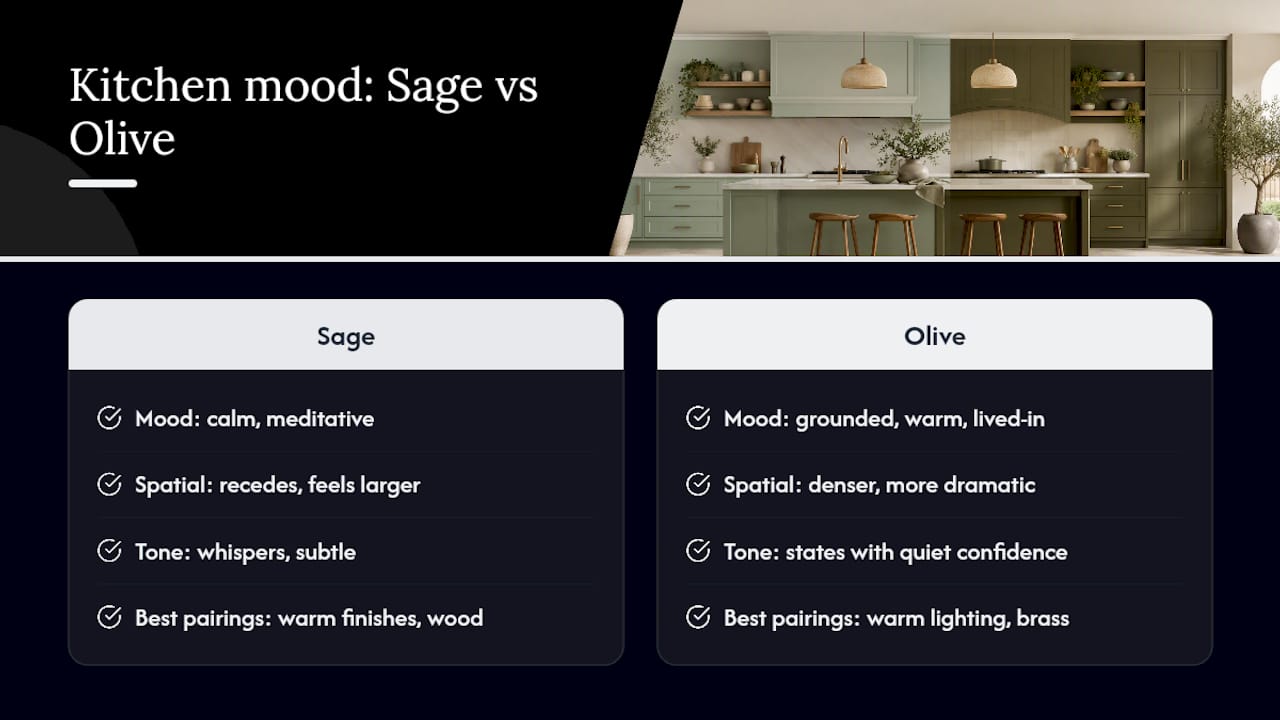
Sage and olive don’t just look different, they change how a kitchen feels to be in. Sage carries a calm, almost meditative quality. It’s the color equivalent of a deep breath, which is part of why it shows up so often in kitchens meant to feel like a retreat rather than a workhorse space. Because it recedes rather than demands attention, sage tends to make a room feel more spacious than it actually is.
Olive does something different. It grounds a room, giving it a sense of history and warmth that reads as lived-in rather than showroom-staged. Where sage whispers, olive states something with quiet confidence. That’s part of why design coverage increasingly frames olive as a darker, more dramatic alternative to sage for homeowners who still want a livable green rather than committing to black cabinetry.
The mismatch to avoid with either color is treating it like a neutral you can ignore once it’s on the wall. Sage paired with cool white marble and stainless steel can feel sterile rather than serene, losing the warmth that makes it appealing in the first place. Olive paired with the wrong lighting temperature, particularly stark cool-white bulbs, can lose its richness and start looking muddy instead of grounded. Choose your finish and lighting with the color’s personality in mind, not against it.
Editor Perspective: Trend Versus Timelessness For Ottawa Kitchens
If you want the safer, longer-term bet, sage remains the smarter default for most Ottawa kitchens, especially anything smaller or light-starved. Olive earns its place when you already have warm wood and generous light working in your favor, and you want cabinets that feel established rather than trendy. Sample large boards, check them after dark, and don’t skip a professional consultation before committing to a whole-kitchen color. Resale-minded homeowners should lean muted; homeowners staying put for the long haul can lean bolder.
— Ottawa
How Ottawacabinetpainting Helps You Choose And Apply Sage Or Olive
Picking between sage and olive gets a lot easier when you’re not guessing alone with paint chips under kitchen lighting. Ottawacabinetpainting offers a color consultation built specifically around your cabinets, your light exposure, and your existing floors and countertops, so the chip you sample is the color you actually get once it’s fully applied.
Every project follows the same meticulous process: thorough prep work, premium paint application, and a smooth, factory-finished result. Most projects run about ten days from start to finish, planned to keep disruption to your household to a minimum, and every finish is backed by a 6-year warranty. That combination of color consultation and skilled application is what separates a cabinet color that looks right on the sample from one that looks right in your actual kitchen. For an idea of what our process covers before you book, take a look at the Ottawa cabinet color consultation process. If you’re ready to see what sage or olive would look like on your own cabinets, request a free spray painting quote and we’ll walk you through the next steps.
Sources
Recommended
Comments