Hire Ottawa Cabinet Resurfacing Pros: Spray Finishes, 10 Day Timeline

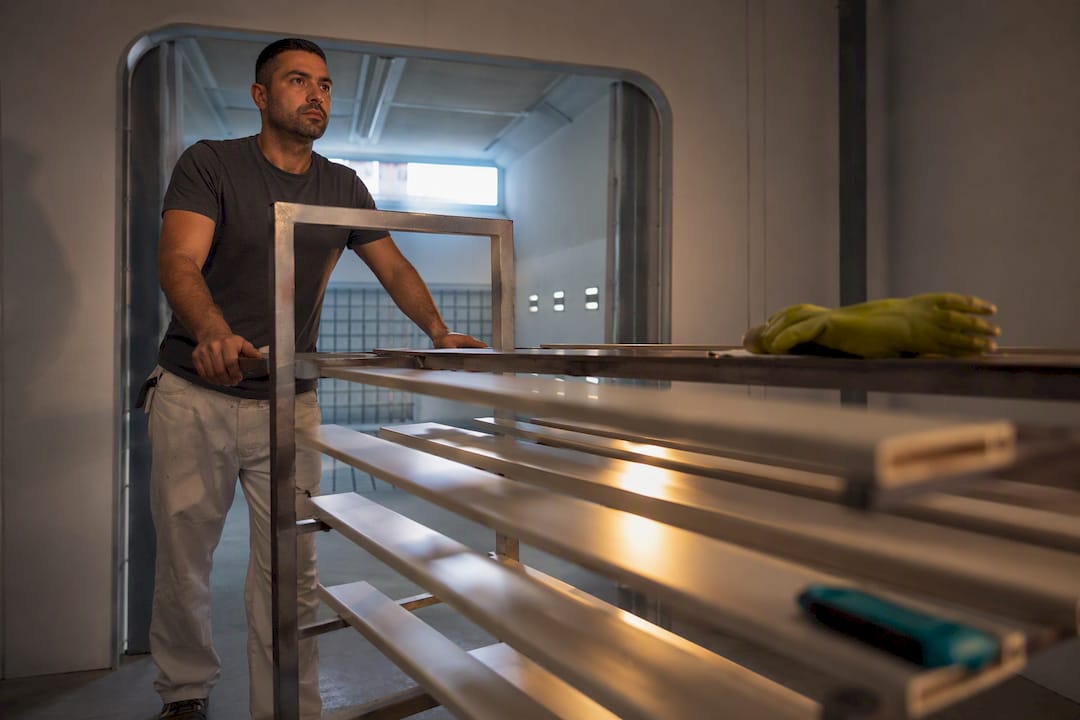
Resurfacing kitchen cabinets through professional painting and refinishing is the right call for most Ottawa homeowners whose cabinet boxes are solid and whose layout already works. It costs a fraction of full replacement and finishes in days, not weeks. Skip it only if you’re dealing with warped boxes, water damage, or a layout overhaul. Otherwise, book a local inspection or quote and see what a pro recommends for your kitchen.
TL;DR:
Cabinets with soft, swollen, or delaminating panels, especially near sinks, require replacement instead of resurfacing due to water damage.
Most projects cost between $2,500 and $5,500 and take around ten days, with spray application adding $500 to $1,500 to the price.
Proper prep, including off-site spraying and multiple coats with curing time, is essential for a durable, high-quality finish that lasts years.
The main cost factors include door count, spray versus brush application, repairs, and number of finish coats; labor represents the majority of the expense.
Exclusive focus on completing the job quickly or cheaply often leads to inadequate prep, materials, or finish quality, reducing longevity.
Table of Contents
Is Your Ottawa Kitchen a Good Candidate for Resurfacing?
Before you call anyone, walk your kitchen with a critical eye. Cabinet resurfacing works because the underlying structure is fine. It’s the surface that’s tired.
Open every door and drawer. Do they swing freely and close flush, or do they stick, sag, or scrape? Alignment problems are usually hinge issues, not box failures, and a pro can fix those during the resurfacing process. What you’re really watching for is structural soundness versus cosmetic wear, because refinishing only makes sense when the boxes underneath are still solid.
Press along the bottom edges of the cabinet boxes, especially under the sink. Swollen, soft, or crumbling particleboard signals moisture damage that paint won’t fix. That’s a replacement conversation, not a resurfacing one.
Here’s a quick self-check before you contact anyone:
Doors and drawers open, close, and align correctly (minor hinge adjustments are fine)
No soft, swollen, or delaminating panels, especially near the sink or dishwasher
Surface issues are limited to scratches, dents, faded color, or old paint
Boxes are square, with no visible warping or separation at the joints
You’re happy with the current layout and just want a new look
If your cabinets pass that list, take clear photos of each cabinet run, close-ups of any damage, and a wide shot of the whole kitchen. Contractors can give you a far more accurate quote from good photos than from a vague phone description.
What Does Professional Cabinet Resurfacing Actually Involve?
A lot happens between “old cabinets” and that smooth, showroom look, and most of it is invisible once the job is done. Here’s the sequence a careful crew follows:
Removal. Doors, drawer fronts, and hardware come off and get tagged so nothing gets mixed up on reinstall.
Degreasing. Kitchen cabinets accumulate cooking grease that regular cleaning never fully removes. This gets stripped before anything else happens, because paint over grease is a recipe for disaster.
Sanding. Mechanical sanding scuffs the surface so primer actually bonds instead of sitting on top and peeling later.
Priming. The right primer depends on the substrate. Wood, laminate, and thermofoil all behave differently, and a shellac-based primer that blocks stains works on some surfaces but is overkill on others.
Spraying. Doors and drawers typically get sprayed off-site or in a controlled spray environment rather than brushed in your kitchen, which controls dust and produces an even, factory-finished look brush-and-roll simply can’t match.
Curing and reinstalling. Coats need real time to harden before hinges and hardware go back on.
Ottawacabinetpainting builds its own process around this exact logic, with a typical ten-day project timeline that gives every coat the cure time it needs instead of rushing reinstallation. A refinishing system built on adhesion primers and cabinet-grade topcoats behaves nothing like the paint in your hallway. It’s engineered to survive daily handling, grease, and steam, and that’s why it holds up so much longer than a DIY wall-paint job.
Pro Tip: Ask whether your cabinet doors will be sprayed off-site. Shouldn’t they at least dry overnight in a dust-free space before they come back into your kitchen? A rushed on-site brush job almost never looks as smooth.
How Much Does Cabinet Resurfacing Cost and How Long Does It Take?
Most Canadian homeowners land somewhere between $2,500 and $5,500 for a full cabinet painting project, with smaller kitchens sometimes coming in around $1,500. That’s the range to keep in your head when quotes start coming back.
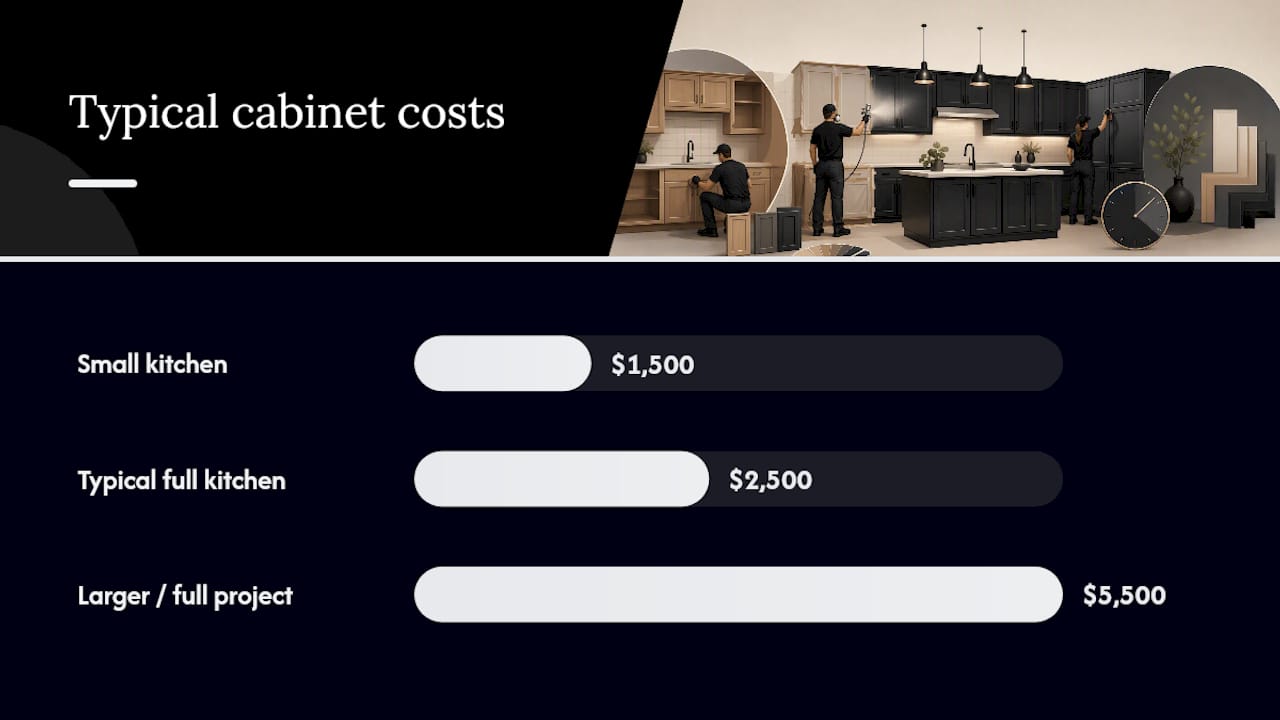
On timeline: a well-run project typically follows a rhythm like prep and removal on day one, degreasing and sanding over the next couple of days, primer and multiple spray coats through the middle stretch, then curing time before doors go back on. A ten-day window isn’t slow. It’s what proper cure times actually require.
On cost drivers, a few things move the number more than anything else:
Door and drawer count (most pros price per unit, not by the hour)
Spray application, which typically adds $500 to $1,500 over brush work
Repairs to doors, drawers, or boxes discovered during prep
Number of finish coats and any hardware replacement
Major color changes, which often need extra coats for full coverage
Labor typically makes up 60% to 75% of a cabinet painting quote, which is worth remembering when you see a bid that looks unusually cheap. A quote that undercuts everyone else by a wide margin is almost always skipping steps, whether that’s degreasing, proper primer, or enough coats to hold up over time. Fast and cheap rarely survives contact with a real kitchen.
How Do You Choose the Right Cabinet Resurfacing Contractor?
Getting three quotes that all say “cabinet painting” doesn’t mean you’re getting three comparable services. The prep work and materials behind the price are what actually separate a five-year finish from a five-month one.
Ask every contractor these questions during your quote:
What does your prep process actually include, step by step?
What primer and topcoat brands do you use, and are they cabinet-specific products?
Do you spray on-site, off-site, or in a dedicated containment area?
How many finish coats are included, and what’s your total timeline?
What repairs are included in the price, and what triggers an extra charge?
What warranty do you offer, and what does it actually cover?
Trust signals worth checking before you sign anything:
A photo portfolio of completed local projects, not stock images
Local reviews or references you can actually verify
A written warranty
Proof of insurance and a detailed written contract, not a verbal agreement
Red flags are just as telling. Watch for vague answers about prep steps, no product names offered, no references, a price that’s dramatically lower than everyone else, or a contractor who won’t let you see cured samples or their spray setup. When comparing bids, normalize everything by door and drawer count, confirm what repairs are baked in, and get the finish system in writing. For a closer look at how local pros evaluate a job before quoting it, Ottawa homeowners upgrading their kitchens can see what that process typically involves.
Resurfacing vs. Replacement: Which One Actually Wins?
For most kitchens, resurfacing wins on nearly every practical measure. Full replacement means demolition, dust, weeks of disruption, and a bill that dwarfs a painting project. Refinishing keeps your existing layout, cuts the mess dramatically, and typically wraps up in days rather than the four to eight weeks a full remodel demands.
The benefits stack up quickly:
Lower cost, often a fraction of full replacement pricing
A finished kitchen in days instead of weeks
No layout changes, no new cabinet boxes to design around
Far less dust, debris, and demolition waste
A professional finish that holds up for years with basic care
Replacement still wins in one scenario: boxes that are structurally compromised, chronic moisture damage, or a kitchen where you actually need the layout to change. If your cabinets don’t fit any of those, refinishing is the smarter money. For a deeper look at where that line falls, Ottawa’s repair-versus-refinish guide breaks it down further.
Why Ottawa Homeowners Choose Professional Resurfacing
Working on kitchens across Ottawa year after year teaches you how this city’s climate treats cabinets. Dry winter heat and humid summers put real stress on wood and finishes, which is exactly why we build every project around proper prep, not shortcuts.
We minimize the chaos in your home while we work, and we stand behind every finish with a 6-year warranty. A kitchen is where a family actually lives, and it deserves a result that still looks sharp years from now, not just on installation day.
— Ottawa
Get a Free Quote from Ottawa Cabinet Painting
You’ve seen what separates a rushed paint job from a finish that actually lasts. Some local professional services bring meticulous prep, spray-applied topcoats, and a multi-year warranty to kitchen cabinet projects, without the demolition or the price tag of a full remodel.
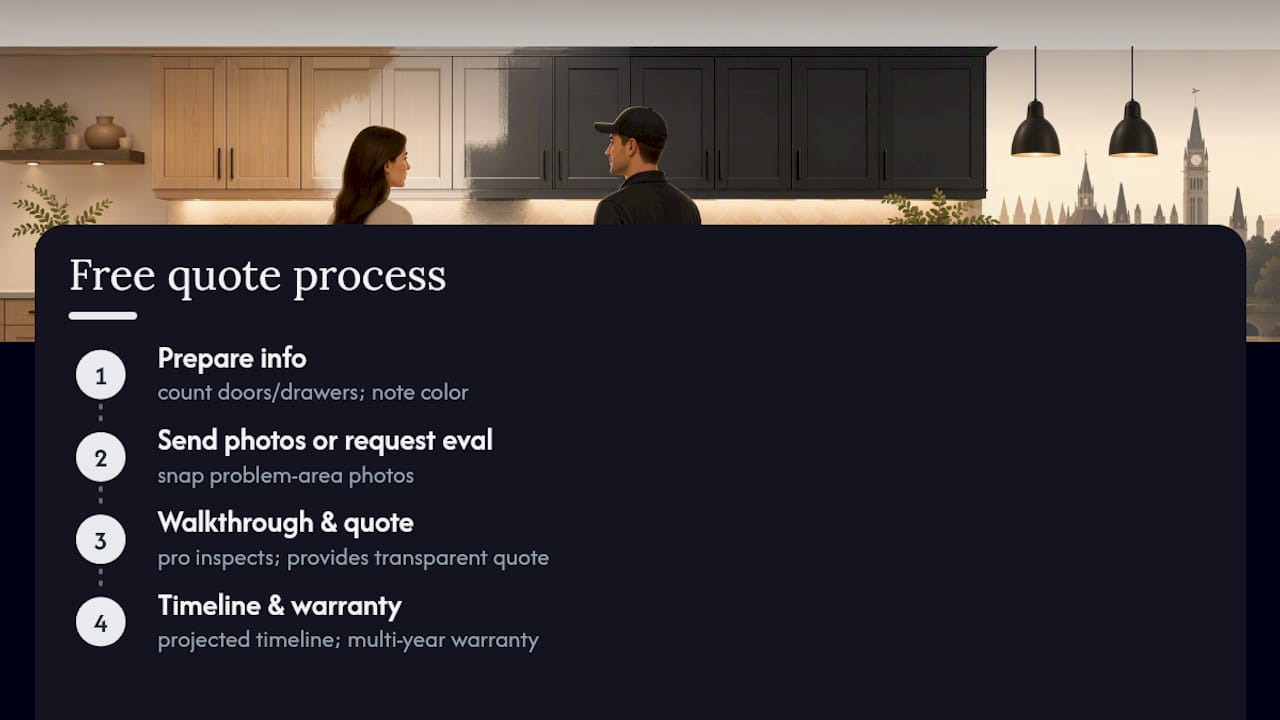
Getting a quote is straightforward. We start with photos or an in-home evaluation, walk your kitchen the way this article just taught you to, and hand you a transparent quote with a projected timeline before you commit to anything. Before you reach out, have your door and drawer count handy, snap a few photos of problem areas, and know whether you’re leaning toward a full color change or a refresh of your current shade.
Ready to see what your kitchen could look like? Get a free spray painting quote and find out what a ten-day turnaround and a real warranty actually feel like.
Sources
Recommended
Comments