Kitchen Cabinets Design Layout: Smart Remodeling Solutions
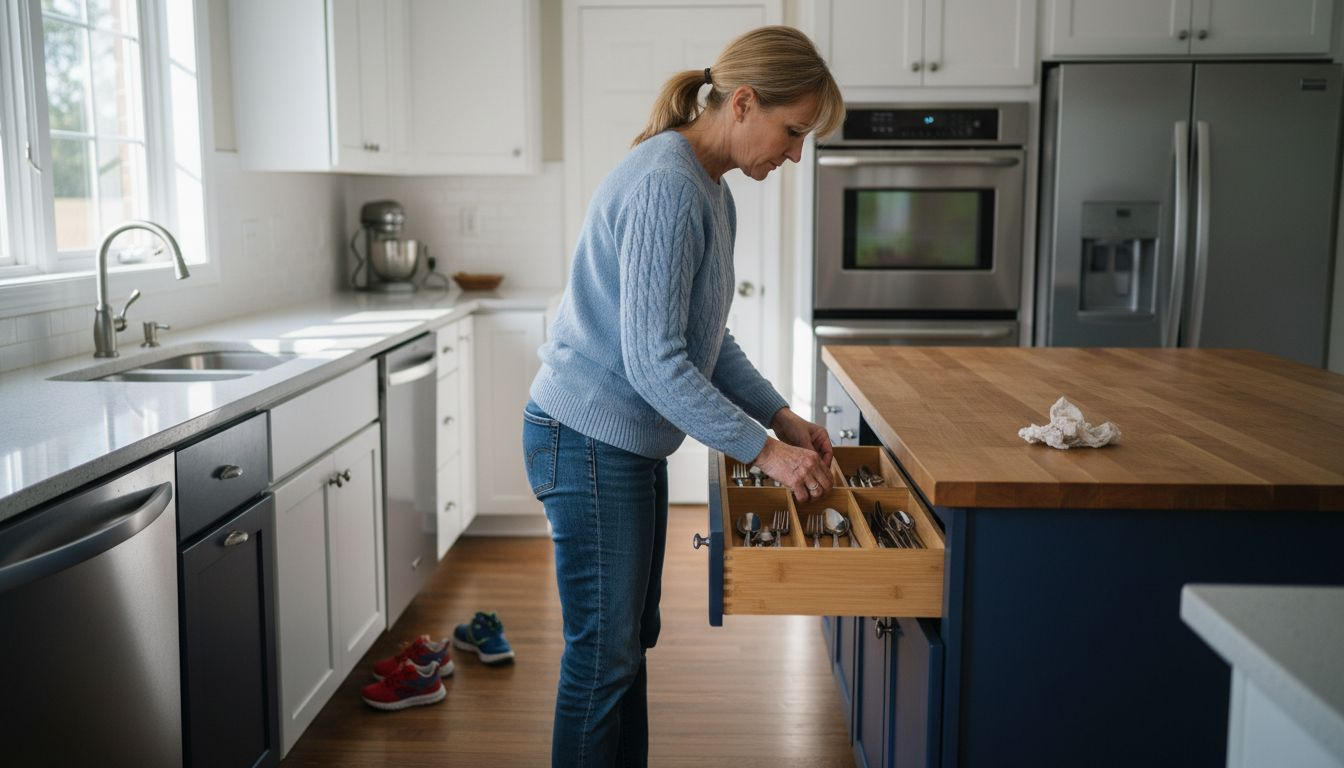
Over 80 percent of American homeowners say kitchen design is their top priority during renovations. Choosing the right kitchen cabinet layout has a direct impact on daily routines and even the overall value of your home. From maximizing storage to creating a smooth workflow, discovering the smartest approach to kitchen cabinet design helps you turn any space into a functional and welcoming heart of the house.
Table of Contents
Key Takeaways
Point | Details |
Kitchen Work Triangle | Efficient kitchen design relies on the kitchen work triangle, connecting the refrigerator, stove, and sink to streamline movement and improve functionality. |
Choosing Layouts | Select from five primary kitchen layouts—Galley, L-Shaped, U-Shaped, Island, and Peninsula—based on space and lifestyle needs for optimal usage. |
Cabinet Functionality | Maximize storage and usability with strategic cabinet design, utilizing vertical space and implementing specialized storage solutions. |
Refinishing vs. Replacement | Consider refinishing existing cabinets as a cost-effective alternative to full replacement, achieving aesthetic updates with lower investment and less time. |
Defining Kitchen Cabinets Design Layout
Understanding kitchen cabinet design layout goes far beyond simple storage placement. It represents a strategic approach to creating functional and aesthetically pleasing cooking spaces that maximize efficiency and workflow. The fundamental principle guiding most modern kitchen designs is the kitchen work triangle, a concept professional designers use to optimize movement and productivity within the cooking area.
The kitchen work triangle concept, derived from residential design principles, focuses on creating an efficient connection between three primary work zones: the refrigerator, stove, and sink. These three points form an imaginary triangle that helps determine optimal cabinet and appliance placement. Proper positioning ensures smooth navigation and minimizes unnecessary steps during meal preparation, which can significantly improve cooking experience and kitchen functionality.
Effective kitchen cabinet design layout considers multiple factors beyond the work triangle. These include available square footage, household cooking habits, number of people using the space simultaneously, and specific storage needs. Homeowners must evaluate their unique requirements, such as whether they prefer open shelving, want to incorporate specialty storage for small appliances, or need dedicated spaces for baking or coffee preparation. Kitchen Cabinets Layout: Maximizing Space and Style provides additional insights into creating personalized kitchen configurations that balance aesthetic appeal with practical functionality.
Pro Kitchen Layout Tip: Measure your current kitchen space precisely and create a scaled drawing before finalizing your cabinet design. This simple step can help you visualize potential layouts and prevent costly mistakes during renovation.
Popular Layout Types and Styles Explained
Kitchen design is an intricate art that transforms functional spaces into personalized culinary environments. Kitchen cabinet layouts are fundamentally influenced by available space, workflow, and design preferences, presenting homeowners with multiple strategic options to optimize their cooking areas. Understanding these layout types becomes crucial when planning a kitchen renovation or redesign.
The five primary kitchen layouts offer distinct advantages for different home configurations and lifestyle needs. Galley Kitchens feature parallel countertops creating an efficient corridor-like design, ideal for smaller spaces and professional-style cooking. L-Shaped Kitchens provide versatile corner configurations that maximize corner spaces and allow for potential breakfast bar or dining area integration. U-Shaped Kitchens deliver maximum storage and workspace, enclosing the cooking zone with continuous countertops and cabinets. Island Kitchens introduce a central workspace that enhances social interaction and provides additional preparation areas. Peninsula Kitchens offer similar benefits to island designs but with a connected countertop extending from an existing wall, making them perfect for open-concept homes with limited square footage.
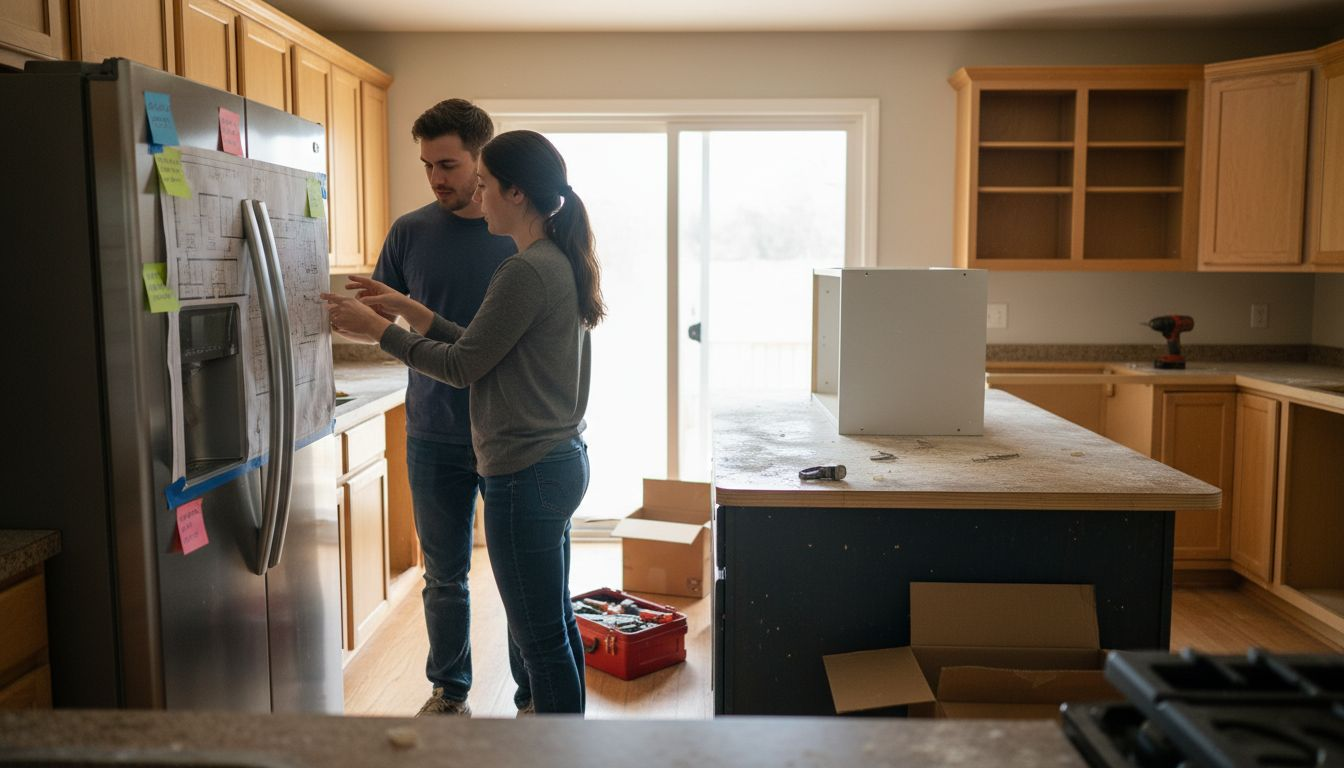
Here’s a quick comparison of popular kitchen layout types and their ideal use cases:
Layout Type | Best For | Key Benefits |
Galley | Compact spaces | Efficient workflow, easy access |
L-Shaped | Open or corner kitchens | Flexible design, social spaces |
U-Shaped | Large, busy households | Maximum storage and counters |
Island | Entertaining, spacious | Added prep space, social hub |
Peninsula | Small open plans | Extra counter, space-saving |
Choosing the right kitchen layout requires careful consideration of your specific household needs, cooking habits, and spatial constraints. Functional Kitchen Layouts: Smart Solutions for 2025 Homes can provide additional insights into matching your layout with your lifestyle. Factors like family size, frequency of cooking, entertainment preferences, and mobility requirements all play significant roles in determining the most suitable kitchen configuration.
Pro Kitchen Design Tip: Always create a scaled drawing of your proposed kitchen layout and test traffic flow by walking through imaginary cooking and preparation scenarios before finalizing your design.
Optimizing Cabinet Functionality and Flow
Designing an efficient kitchen cabinet layout requires strategic planning that goes beyond aesthetic considerations. The ultimate goal is creating a workspace that seamlessly supports cooking processes, reduces unnecessary movement, and maximizes both storage and accessibility. Thoughtful cabinet design transforms kitchens from mere cooking spaces into dynamic, functional environments that adapt to homeowners’ unique lifestyle needs.
Optimal cabinet functionality hinges on several critical design principles. Vertical space utilization becomes paramount, with floor-to-ceiling cabinet configurations allowing maximum storage without compromising floor area. Specialized storage solutions like pull-out pantry units, corner carousel cabinets, and adjustable shelving can dramatically improve kitchen efficiency. Maximizing Kitchen Storage: Smart Solutions for Busy Families highlights innovative approaches to creating intuitive storage systems that reduce clutter and streamline daily cooking routines.
The right cabinet layout should provide a smooth workflow with organized spaces that anticipate user needs. This means strategically positioning cabinets to minimize unnecessary steps, creating dedicated zones for specific tasks like baking, coffee preparation, or meal prep. Consider ergonomic principles such as keeping frequently used items at eye level and heavy items at easily accessible heights. Implement drawer dividers, pull-out spice racks, and custom inserts that transform standard storage into intelligent, purpose-driven spaces that adapt to your specific cooking and lifestyle requirements.
Pro Kitchen Organization Tip: Conduct a week-long kitchen inventory before finalizing your cabinet design, tracking which items you use most frequently and identifying current storage pain points to create a truly personalized organizational system.
Refinishing Cabinets Versus Full Replacement
Homeowners facing outdated kitchen cabinets encounter a critical decision: invest in complete replacement or pursue a more cost-effective refinishing approach. Choosing a classic profile like the Shaker door ensures your investment remains aesthetically relevant for decades, regardless of whether you opt for refinishing or full replacement. Understanding the nuanced differences between these approaches can save significant time and money while achieving a transformative kitchen update.
Full Cabinet Replacement represents the most comprehensive renovation option, involving complete removal and installation of new cabinetry. This approach allows total design flexibility, enables structural modifications, and provides an opportunity to reconfigure kitchen layout entirely. However, full replacement typically costs substantially more, often ranging between $15,000 to $45,000 for an average kitchen. What Is Cabinet Refinishing? A Simple Guide for Homeowners 2025 provides additional context for understanding alternative renovation strategies. Wood cabinets tend to be more expensive during replacement, though they offer exceptional durability and can be refinished multiple times, extending their functional lifespan significantly.
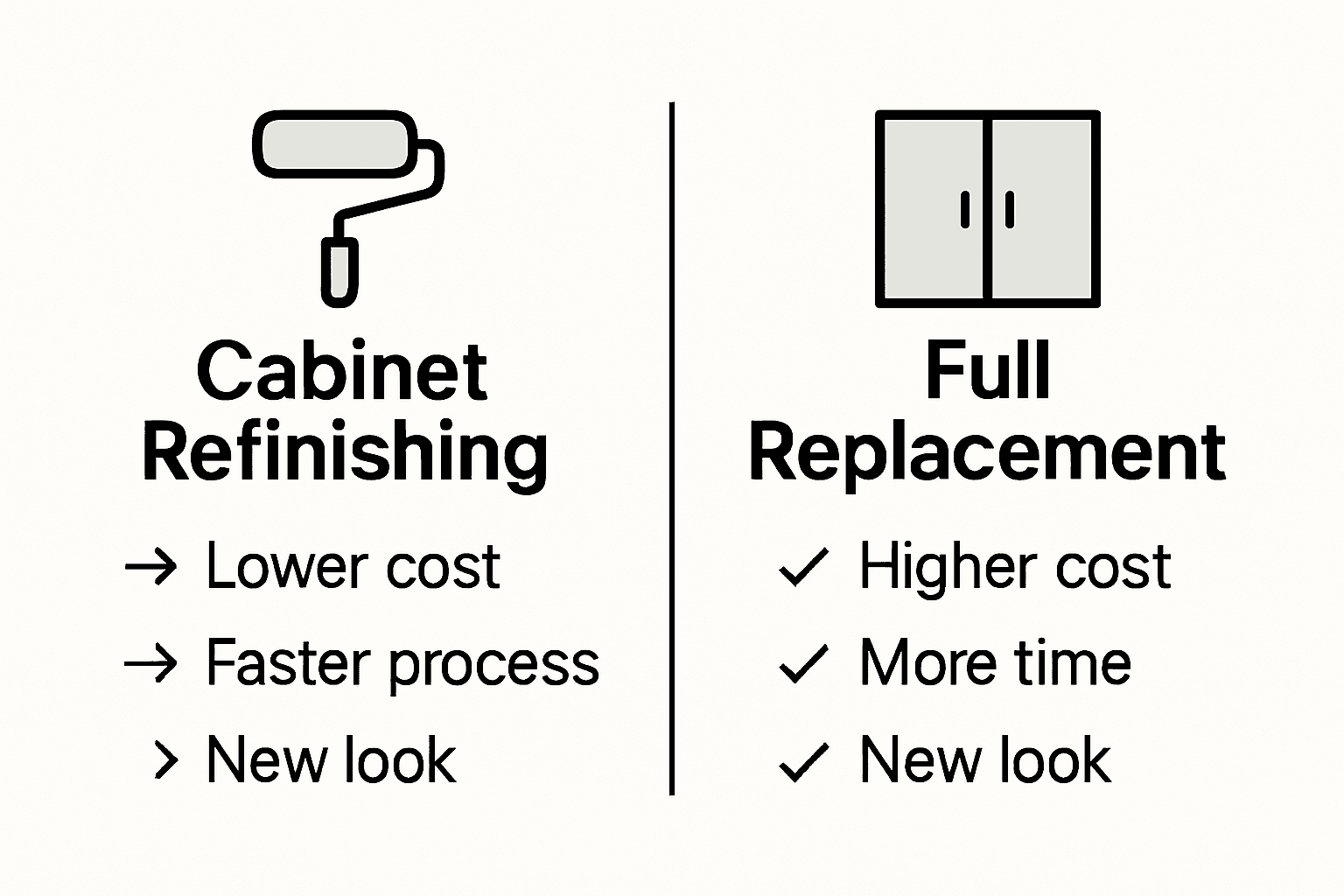
Cabinet refinishing emerges as a strategic alternative for homeowners seeking dramatic visual transformation without enormous financial investment. This process involves professionally cleaning, sanding, priming, and repainting existing cabinet structures, preserving original cabinetry while dramatically updating aesthetic appearance. Refinishing typically costs 30-50% less than full replacement, maintains original cabinet structural integrity, and can be completed in a fraction of the time required for complete cabinet installation. Homeowners can achieve showroom-quality results by selecting premium paint finishes, updating hardware, and addressing minor repairs during the refinishing process.
Compare the advantages and drawbacks of refinishing versus full cabinet replacement:
Factor | Refinishing | Full Replacement |
Cost | 30-50% lower investment | Significant upfront expense |
Project Timeline | Completed in days | May take several weeks |
Customization | Limited to existing layout | Fully redesignable space |
Sustainability | Reuses materials | Often leads to more waste |
Pro Renovation Tip: Always obtain multiple professional quotes and request comprehensive portfolios demonstrating before-and-after refinishing results to ensure you select a contractor capable of delivering high-quality, transformative kitchen cabinet updates.
Common Mistakes When Planning Layouts
The kitchen work triangle principle serves as a critical foundation for effective kitchen design, yet homeowners frequently overlook essential considerations when planning their cabinet layouts. Navigating the complex landscape of kitchen design requires strategic thinking and an understanding of common pitfalls that can transform a potentially functional space into a frustrating cooking environment.
One of the most significant mistakes homeowners make involves inadequate workflow planning. Many individuals fail to consider how they actually move and work within their kitchen, creating layouts that interrupt natural cooking rhythms. Traffic flow becomes compromised when cabinet placement blocks primary movement pathways or creates awkward navigation challenges. 8 Kitchen Organization Ideas for Busy Families highlights the importance of creating intuitive spaces that support realistic daily cooking and meal preparation routines. Critical errors include positioning the refrigerator too far from the cooking area, creating inefficient walking distances, or installing islands that restrict movement between key kitchen zones.
Storage planning represents another area where homeowners frequently miscalculate their needs. Novice designers often underestimate the volume of kitchen items they must accommodate, resulting in insufficient or poorly configured storage solutions. Common mistakes include neglecting vertical space potential, failing to incorporate specialized storage for unique kitchen tools, and not considering ergonomic accessibility when positioning cabinets. Drawers that are too deep, shelves positioned at inconvenient heights, and a lack of pull-out organizational systems can transform what should be an efficient kitchen into a storage nightmare. Successful kitchen layouts prioritize adaptable storage configurations that can evolve with changing household needs and cooking habits.
Pro Design Tip: Create a scaled kitchen layout mockup using painter’s tape on your floor, simulating cabinet and appliance positions to physically test traffic flow and workspace functionality before finalizing your design.
Transform Your Kitchen Cabinet Layout with Expert Refinishing Solutions
Redesigning your kitchen cabinet layout can be overwhelming when facing challenges like inefficient workflow or costly full replacements. This article highlights common pain points such as maintaining your existing kitchen work triangle while maximizing storage and functionality. If you want to preserve your current layout but refresh your cabinets to look high-end and modern, Ottawa Cabinet Painting offers a smart alternative. Our meticulous cabinet refinishing process delivers a silky smooth finish that transforms your space without the expense and disruption of a full renovation.
Make your kitchen the heart of your home again by upgrading your cabinets with long-lasting beauty and functionality. Discover how refinishing can extend the life of your kitchen cabinetry, maintain your personalized design, and save you money. Start your journey today by exploring Professional Cabinet Refinishing by Ottawa Cabinet Painting. For insights on maximizing storage while preserving your layout, check out Maximizing Kitchen Storage: Smart Solutions for Busy Families. Ready to transform your kitchen with confidence and minimal disruption Visit Ottawa Cabinet Painting now to request a quote and take the first step toward your dream kitchen.
Frequently Asked Questions
What is the kitchen work triangle and why is it important?
The kitchen work triangle is a design principle that connects the three main work zones in a kitchen: the refrigerator, stove, and sink. This layout minimizes unnecessary movement and improves overall efficiency, making the cooking process smoother and more enjoyable.
How can I optimize my kitchen cabinet layout for better functionality?
To optimize kitchen cabinet layout, utilize vertical space with floor-to-ceiling cabinets, incorporate specialized storage solutions like pull-out shelves, and position frequently used items at eye level. Additionally, create dedicated zones for specific tasks to streamline workflow and reduce clutter.
Should I refinish my cabinets or replace them entirely?
Refinishing cabinets is a more cost-effective option that maintains the original structure while significantly updating the appearance. However, full replacement allows for complete redesign and structural changes. Choose based on your budget, desired aesthetics, and the condition of your current cabinets.
What are the main types of kitchen layouts and their advantages?
The main kitchen layouts include Galley, L-Shaped, U-Shaped, Island, and Peninsula kitchens. Each offers distinct advantages, such as maximizing storage, enhancing social interaction, and providing efficient workflow tailored to specific household needs.
Recommended
Comments