Kitchen Cabinet Renewal: Cost-Effective Home Upgrades
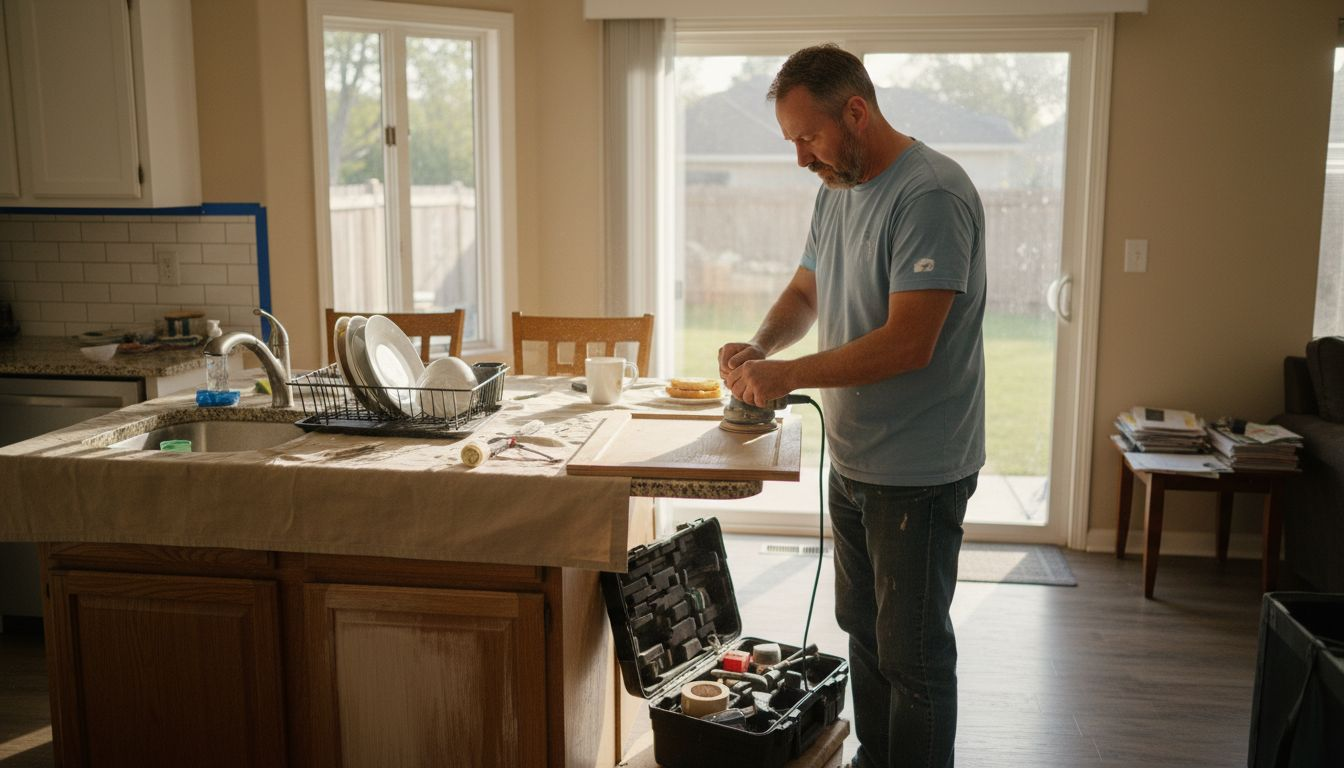
Most American homeowners want a fresh kitchen look without spending a fortune or turning their homes upside down for weeks. Kitchen cabinet renewal has become a popular solution because it offers dramatic results at a fraction of the cost of full remodels. In fact, nearly 70 percent of kitchen makeovers in the United States now incorporate some form of cabinet renewal. Discover how this smart update transforms kitchens quickly, keeps budgets in check, and fits modern American lifestyles.
Table of Contents
Key Takeaways
Point | Details |
Cost Efficiency | Kitchen cabinet renewal offers significant savings compared to complete remodels, with methods ranging from painting to refacing available based on budget needs. |
Minimized Disruption | Unlike extensive renovations, cabinet renewal projects can be completed within days, ensuring minimal interference with household routines. |
Versatile Aesthetic Options | Homeowners can customize their cabinet styles through various techniques, achieving everything from subtle updates to complete transformations. |
Importance of Professional Assistance | Engaging professional services for cabinet renewal ensures quality results, proper techniques, and long-lasting finishes suitable for kitchen environments. |
What Is Kitchen Cabinet Renewal?
Kitchen cabinet renewal represents a strategic home improvement approach that transforms existing cabinetry without the extensive cost and disruption of a complete kitchen remodel. This process involves refreshing the appearance and functionality of kitchen cabinets through carefully targeted modifications. Kitchen cabinet resurfacing enables homeowners to achieve a dramatically updated look while preserving the original cabinet framework.
Typically, kitchen cabinet renewal encompasses several key techniques: refinishing the existing surfaces, replacing cabinet doors and drawer fronts, applying new veneers or laminates, and updating hardware. Homeowners can select from multiple aesthetic approaches ranging from subtle color updates to complete style transformations. The process allows for significant visual upgrades without the substantial expenses associated with full cabinet replacement.
The primary benefits of kitchen cabinet renewal include cost efficiency, minimal disruption to household routines, and the ability to customize kitchen aesthetics quickly. Unlike comprehensive renovations that can take weeks or months, cabinet renewal projects are often completed within days. Homeowners can dramatically enhance their kitchen’s appearance by choosing new colors, finishes, and hardware that reflect contemporary design trends or personal style preferences.
Pro Tip: Research and select a professional cabinet renewal service that offers comprehensive preparation, premium paint application, and a multi-year warranty to ensure long lasting results and protect your investment.
By understanding kitchen cabinet renewal, homeowners can make informed decisions about breathing new life into their kitchen spaces without undertaking a full, expensive remodel.
Differences Between Painting, Refinishing, and Refacing
Homeowners seeking kitchen updates have three primary options for cabinet transformation: painting, refinishing, and refacing. Each method offers unique advantages and addresses different aesthetic and functional needs. Kitchen cabinet restoration techniques vary significantly in scope, cost, and visual impact, making it crucial to understand their distinct characteristics before making a decision.
Painting represents the most straightforward and budget-friendly approach, involving applying a fresh coat of color directly onto existing cabinet surfaces. This method works best for cabinets in good structural condition, providing an instant visual refresh without extensive preparation. Refinishing takes the process a step further by completely stripping the existing finish and applying new stain or paint, which is particularly effective for solid wood cabinets that can withstand more intensive treatment.
Refacing offers the most comprehensive transformation, involving complete replacement of cabinet doors and drawer fronts while applying new veneers to the existing cabinet boxes. Unlike painting or refinishing, refacing provides a near-total visual overhaul without the expense and disruption of full cabinet replacement. Homeowners can dramatically change their kitchen’s appearance by selecting new door styles, colors, and hardware while maintaining the original cabinet layout.
When selecting between these methods, consider factors such as budget, current cabinet condition, desired aesthetic outcome, and long-term durability. Painting works well for minor updates, refinishing suits those seeking deeper restoration, and refacing is ideal for homeowners wanting a comprehensive transformation.
Here is a side-by-side comparison of popular kitchen cabinet renewal methods:
Method | Best For | Typical Lifespan | Change to Appearance |
Painting | Quick, affordable updates | 3-5 years | Minor color refresh |
Refinishing | Restoring solid wood cabinets | 5-8 years | Deep color and grain change |
Refacing | Major visual transformation | 10+ years | Drastic style overhaul |
Pro Tip: Always consult with a professional cabinet restoration expert who can assess your specific cabinets and recommend the most suitable renewal method based on wood type, current condition, and your design goals.
Professional Process for Cabinet Renewal
Professional cabinet renewal is a meticulous process that transforms kitchen spaces with precision and expertise. Cabinet refinishing techniques require careful preparation and systematic execution to ensure outstanding results. The process begins with a comprehensive assessment of existing cabinetry, identifying potential challenges and determining the most appropriate renewal strategy.
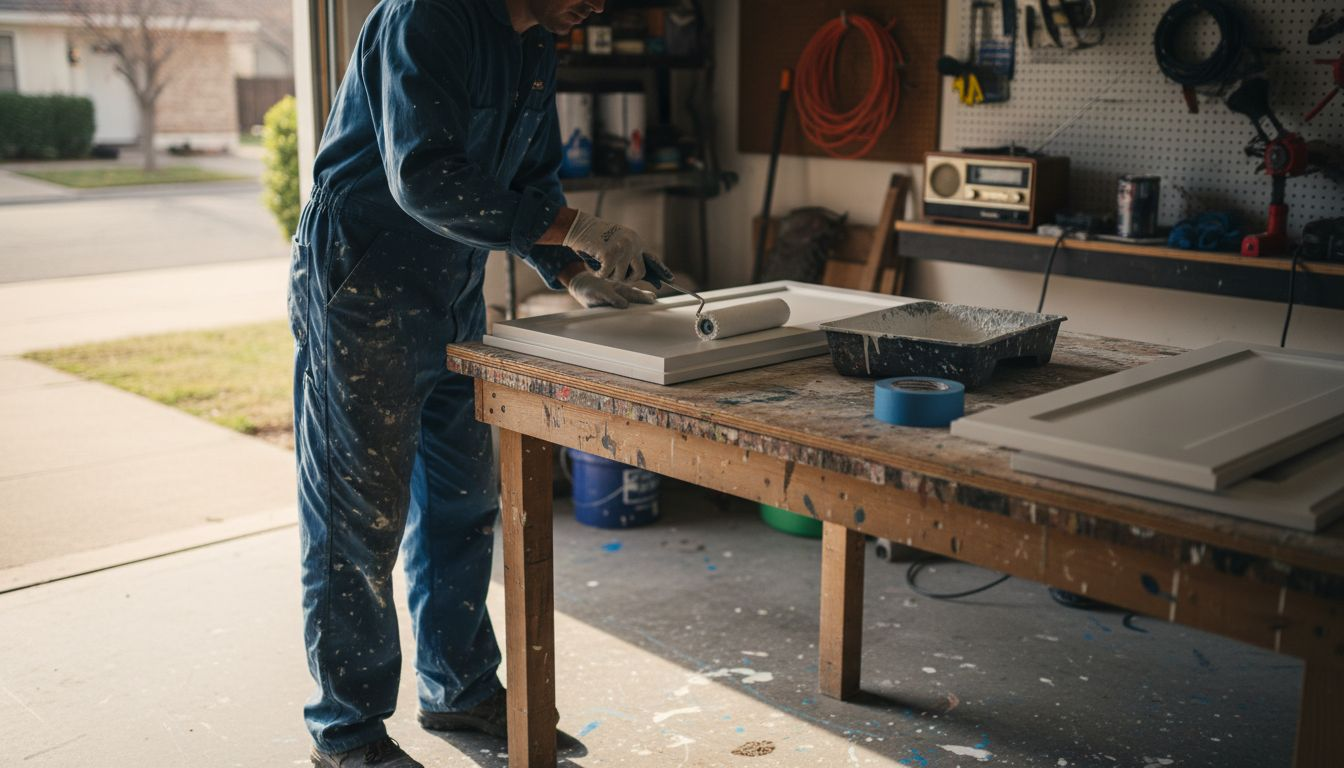
The professional renewal process typically involves several critical stages. Preparation is paramount, which includes protecting surrounding kitchen areas, carefully removing cabinet doors and existing hardware, and creating a controlled workspace. Professionals then thoroughly clean surfaces, addressing years of accumulated grime and wear. Sanding follows, creating an optimal surface for primer and paint adhesion, with technicians using specialized tools to ensure smooth, even preparation across all cabinet surfaces.
Priming and painting represent the most transformative stages of cabinet renewal. Expert technicians apply high-quality, shellac-based primers that create a durable foundation for the final paint layer. Multiple thin, even coats are applied using professional-grade spraying equipment, ensuring a smooth, factory-like finish that eliminates brush marks and provides maximum coverage. The process also allows for precise color matching and customization, enabling homeowners to achieve their desired aesthetic vision.
Final reassembly involves carefully reinstalling cabinet doors, drawer fronts, and selected hardware. Professionals pay meticulous attention to alignment, ensuring each component fits perfectly and functions smoothly. This stage transforms the initial preparation and painting into a cohesive, polished result that dramatically enhances the kitchen’s overall appearance.
Pro Tip: Request color samples and finish demonstrations before final application to ensure the selected color and sheen precisely match your kitchen’s design vision and lighting conditions.
Cost, Timeline, and Disruption Compared
Homeowners considering kitchen cabinet renewal must carefully evaluate the financial and logistical implications of different restoration approaches. Kitchen cabinet restoration options vary significantly in cost, with refinishing typically ranging between $1,500 and $5,000, while more comprehensive approaches like refacing can reach up to $9,980.
Painting represents the most budget-friendly and least disruptive method, requiring minimal time and preparation. Professional painters can often complete the entire project within 3-5 days, with minimal interference to daily household routines. Refinishing takes slightly longer, usually 5-7 days, and involves more intensive surface preparation but still maintains relatively low disruption levels. Refacing is the most time-consuming and expensive option, potentially taking 7-10 days and requiring more substantial workspace modifications.
The cost differential between these methods reflects the complexity of the transformation. Painting offers a quick, economical refresh at approximately $30-$60 per linear foot, while refinishing increases to $50-$100 per linear foot. Refacing represents the most expensive option, ranging from $100-$250 per linear foot, but provides the most dramatic visual change without full cabinet replacement. Homeowners must balance their budget constraints with their desired aesthetic outcome, considering factors like existing cabinet condition, kitchen layout, and long-term design goals.
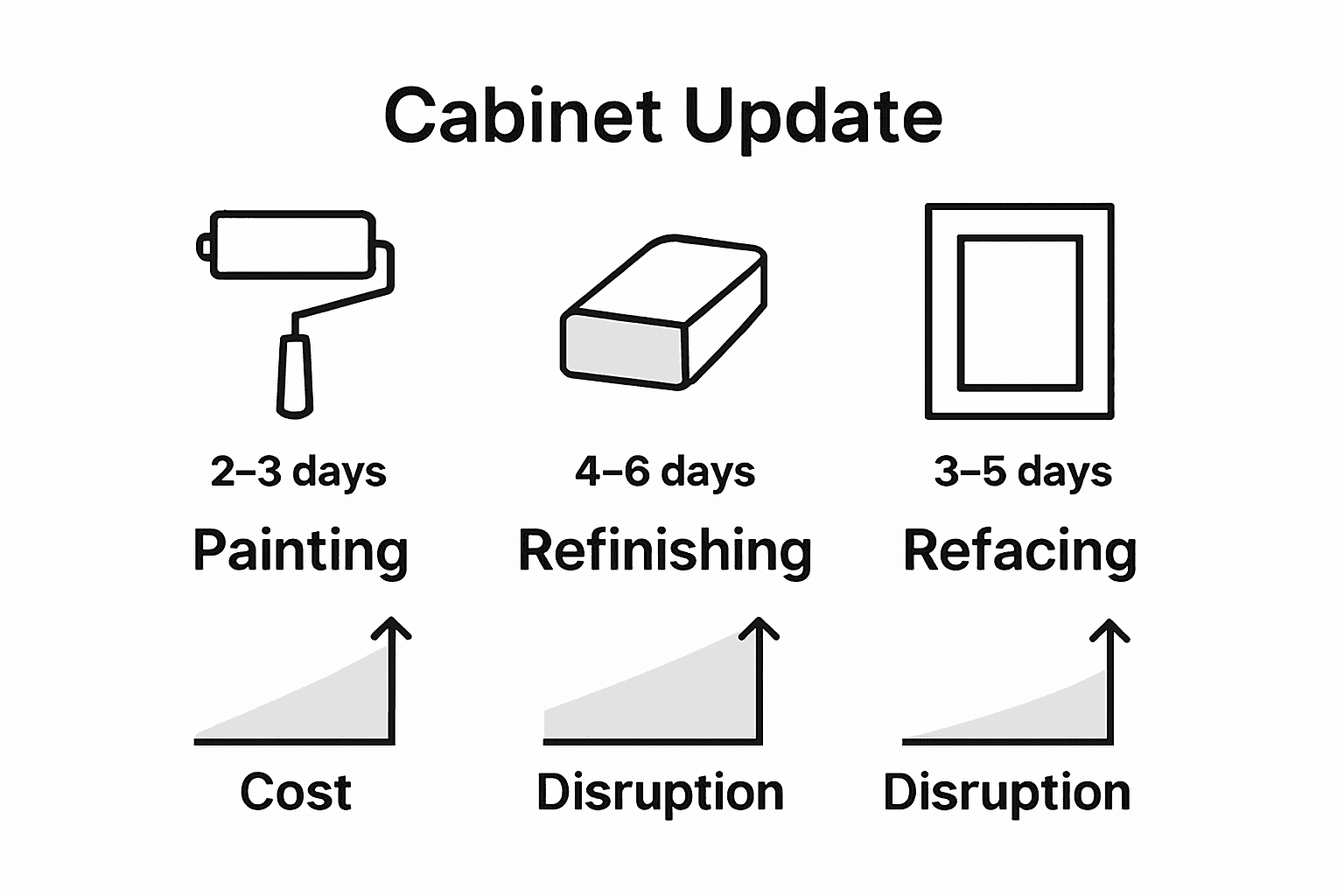
Each renewal method presents unique advantages in terms of cost, timeline, and kitchen disruption. Painting works best for budget-conscious homeowners seeking a quick update, refinishing suits those wanting a more comprehensive restoration, and refacing is ideal for those desiring a near-complete transformation without full replacement.
Pro Tip: Request detailed written estimates from multiple professionals, comparing not just total cost but also projected timeline, preparation requirements, and specific restoration techniques to make the most informed decision.
Common Mistakes and Long-Term Durability
Homeowners embarking on kitchen cabinet renewal must navigate potential pitfalls to ensure lasting results. Cabinet restoration durability challenges vary significantly across different renewal methods, with each approach presenting unique considerations for long-term performance.
Surface Preparation represents the most critical stage where homeowners frequently make costly mistakes. Inadequate cleaning, insufficient sanding, or skipping primer application can lead to premature paint failure, peeling, and uneven finishes. Professional-grade renewals require meticulous surface preparation, including thorough degreasing, careful sanding to create optimal paint adhesion, and applying high-quality shellac-based primers that create a durable foundation for the final finish.
Material selection plays a crucial role in long-term durability. Painting offers the most budget-friendly option but can be the least durable, with higher risks of chipping, scratching, and fading under intense kitchen use. Refinishing provides improved durability by using more robust paint systems and comprehensive surface preparation. Refacing delivers the most durable solution, involving complete replacement of cabinet surfaces with new materials specifically designed to withstand daily wear and tear. Homeowners should consider their specific kitchen environment, including humidity levels, cooking frequency, and household traffic when selecting a renewal method.
Common mistakes that compromise cabinet renewal durability include rushing the preparation process, using low-quality materials, neglecting proper cleaning and maintenance, and failing to address underlying cabinet structural issues. Professional renewal services typically include comprehensive surface assessment, addressing potential wood damage, hardware issues, and structural weaknesses before applying the final finish.
The table below outlines extra factors to consider for a long-lasting renewal result:
Factor | Why It Matters | Recommended Approach |
Surface Preparation | Prevents adhesion failure | Clean, sand, and prime thoroughly |
Material Quality | Affects durability | Choose moisture-resistant finishes |
Kitchen Usage Patterns | Determines wear speed | Opt for robust methods in busy spaces |
Maintenance Routine | Impacts appearance longevity | Use mild cleaners, avoid abrasives |
Pro Tip: Invest in high-quality, moisture-resistant paint systems and commit to gentle cleaning methods using non-abrasive cloths and mild detergents to maximize the longevity of your cabinet renewal investment.
Refresh Your Kitchen Cabinets with Expert Care and Lasting Beauty
If you are facing the challenge of updating your kitchen without the high costs and chaos of a full remodel the article “Kitchen Cabinet Renewal: Cost-Effective Home Upgrades” highlights key pain points homeowners share. You want to preserve your kitchen layout while achieving a high-end, modern look. You also want durability and minimal disruption to daily life. Terms like cabinet refinishing, painting, and refacing explain your options but navigating these choices can feel overwhelming.
At Ottawa Cabinet Painting we specialize in transforming kitchens through professional cabinet painting and refinishing that saves you money while raising your home’s style. Our meticulous process includes thorough surface preparation and premium paint application, delivering a silky smooth finish built to last. We understand the emotional importance of your kitchen as the heart of your home which is why we focus on minimizing disruption with a clear timeline and offer a 6-year warranty for peace of mind.
Ready to renew your kitchen cabinets and enjoy a fresh, durable upgrade without the hassle of full renovation Explore your options with our expert team today at Ottawa Cabinet Painting. Learn more about how cabinet refinishing can breathe new life into your space and request your personalized quote now. Don’t wait to create the warm functional kitchen you deserve.
Frequently Asked Questions
What is kitchen cabinet renewal?
Kitchen cabinet renewal is a cost-effective home improvement method that refreshes existing cabinetry through refinishing, refacing, or painting, without the need for a full kitchen remodel.
How do painting, refinishing, and refacing differ in terms of cost and appearance?
Painting is the most budget-friendly option, offering minor updates. Refinishing provides a deeper restoration at a moderate cost, while refacing involves replacing doors and fronts, resulting in a more dramatic visual transformation at a higher price.
How long does the kitchen cabinet renewal process typically take?
Painting usually takes about 3-5 days, refinishing can take 5-7 days, and refacing may require 7-10 days, with the duration depending on the complexity of the selected method.
What are common mistakes to avoid during the cabinet renewal process?
Common mistakes include inadequate surface preparation, using low-quality materials, neglecting proper cleaning, and overlooking underlying structural issues, all of which can compromise durability and appearance.
Recommended
Comments