Kitchen cabinet durability: smart factors and easy upgrades

TL;DR:
Proper material, construction, finish, and daily habits significantly extend cabinet lifespan in Ottawa.
Refinishing and upgrading hardware provide cost-effective ways to improve durability and appearance.
Managing humidity, minimizing steam and water exposure, and gentle cleaning protect cabinets from environmental damage.
Most Ottawa homeowners assume that worn-looking cabinets are simply old cabinets, and that the only real fix is a full kitchen replacement costing tens of thousands of dollars. That assumption is costing people money they don’t need to spend. The truth is that cabinet durability depends far more on a handful of specific, controllable factors than it does on age or price tag. Whether your cabinets are five years old or twenty-five, the right choices around materials, finish, and daily habits can dramatically extend their life and keep them looking sharp without gutting your kitchen.
Table of Contents
Key Takeaways
Point | Details |
Cabinet materials matter | Solid wood and plywood last longer than MDF or particleboard. |
Finish extends lifespan | Proper painting and sealing can add 8-15 years to your cabinets. |
Prevent everyday damage | Simple habits such as cleaning spills quickly and reducing humidity prevent major problems. |
Upgrades over replacement | Affordable updates like painting and new hardware provide durability without full renovation. |
What determines kitchen cabinet durability?
When we talk about durability in kitchen cabinets, we mean resistance to three main forces: physical damage like scratches and dents, wear from daily use, and environmental stress from heat and moisture. A cabinet that holds up well over time manages all three. Understanding which factors drive durability is the first step toward making smarter decisions.
Here are the core factors that determine how long your cabinets will last:
Cabinet material: Solid wood, plywood, MDF (medium-density fiberboard), and particleboard all respond differently to moisture, weight, and impact. Plywood and solid wood tend to hold up better in humid environments.
Construction quality: How the cabinet box is assembled matters enormously. Dovetail joints, reinforced back panels, and sturdy shelving all contribute to long-term structural integrity.
Finish type: Paint, lacquer, and sealant act as the cabinet’s first line of defense. A poor finish lets moisture penetrate the wood, which accelerates warping and cracking.
Hardware quality: Hinges, drawer slides, and handles take thousands of uses per year. Low-quality hardware wears out fast and puts stress on the cabinet frame.
Kitchen environment: Steam from cooking, humidity from Ottawa’s climate shifts, and cleaning product residue all chip away at cabinet surfaces over time.
Ottawa’s climate is worth calling out specifically. We experience significant humidity swings between summer and winter, and moisture and humidity are key threats to kitchen cabinet longevity. Cabinets that aren’t properly sealed or are made from moisture-sensitive materials like raw particleboard can start failing within just a few years in our conditions.
Here’s a quick look at how material and finish choices affect durability:
Material | Moisture resistance | Average lifespan | Finish compatibility |
Solid wood | Moderate to high | 20 to 30 years | Excellent |
Plywood | High | 15 to 25 years | Very good |
MDF | Low to moderate | 10 to 20 years | Good with proper sealing |
Particleboard | Low | 5 to 15 years | Fair |
You can also explore cabinet refinishing durability in more detail to understand how refinishing interacts with each of these material types.
The impact of materials and construction
Once you know which factors matter, the next step is learning which materials and construction methods perform best in Ottawa homes. Not all cabinets are built the same, and the difference between a cabinet that lasts 10 years and one that lasts 30 often comes down to what’s inside the box.
Solid wood is the gold standard for durability. It handles moisture better than engineered options, it can be sanded and refinished multiple times, and it holds screws and hardware securely. The downside is cost. Solid wood cabinets are the most expensive option, but they also have the longest lifespan.
Plywood is our preferred recommendation for homeowners who want durability without the full cost of solid wood. It resists warping and holds up well to Ottawa’s humidity swings. Plywood is made from layered wood veneers glued together in alternating directions, which gives it excellent structural strength in all directions.
MDF is smooth, consistent, and takes paint exceptionally well. That’s why it’s popular for painted cabinet doors. However, MDF is vulnerable to water damage at its edges and seams. If water gets in, it swells and crumbles. Proper sealing and a quality finish are non-negotiable with MDF.
Particleboard is the least durable option. It’s found in many budget cabinets and flat-pack furniture. It absorbs moisture quickly, loses its structural integrity when wet, and doesn’t hold screws as well as other materials. As sustainable construction tips confirm, material selection plays a significant role in cabinet longevity, and particleboard is rarely the right choice for a kitchen that sees real daily use.
Beyond material, construction details make a major difference:
Dovetail joints on drawer boxes are far stronger than stapled or nailed joints and resist pulling apart under load.
Reinforced back panels keep the cabinet box square over time, preventing racking and misalignment.
Sturdy shelf supports prevent shelves from sagging under the weight of dishes and appliances.
“The quality of the material and how it’s assembled determines not just how long a cabinet lasts, but how easy it is to repair and upgrade later. A well-built cabinet can be refreshed multiple times. A poorly built one often can’t be saved at all.” This is something we see regularly in Ottawa homes, where a professional assessment reveals that the structure is sound but the finish has simply failed.
If you’re wondering whether your existing cabinets are worth upgrading, the answer often depends on what they’re made of. You can learn more about can all kitchen cabinets be painted to understand which materials respond best to refinishing.
How finish and paint contribute to cabinet longevity
While materials matter, what’s on the outside, especially the finish, can be the easiest place to improve cabinet durability affordably. A quality paint job is not just about looks. It creates a protective barrier that shields the cabinet material from moisture, grease, UV light, and physical wear.
Painted finishes can add 8 to 15 years to cabinet life if properly applied. That’s not a small number. It means that a cabinet you were considering replacing could realistically serve you for another decade or more with the right finish work.
Here’s how to get the most durability out of a cabinet finish:
Thorough surface preparation: Sand, clean, and degrease every surface before applying any product. Skipping this step is a recipe for peeling and chipping within a year or two.
Apply a shellac-based primer: This type of primer bonds aggressively to difficult surfaces, blocks stains and tannins from bleeding through, and creates a stable base for topcoats.
Apply two coats of quality paint: Thin, even coats dry harder and adhere better than one thick coat. Each coat needs adequate dry time before the next is applied.
Finish with a protective topcoat: A clear topcoat adds an extra layer of protection against scratches, moisture, and cleaning products. It’s especially valuable in high-traffic kitchens.
Allow full cure time: Paint may feel dry to the touch in hours, but it takes days or even weeks to fully cure and reach its maximum hardness. Rushing this step leads to damage that looks like poor workmanship.
Choosing the right sheen level also matters more than most homeowners realize. Your kitchen paint finish choices directly affect how cleanable and durable the surface is in daily use.
Pro Tip: Choose a semi-gloss or satin finish for kitchen cabinets. Higher sheen levels repel moisture more effectively, wipe clean with less effort, and hold up better against the steam and grease that kitchens produce daily. The impact of cabinet paint sheen on long-term durability is real and measurable.
Everyday threats (and how to minimize them)
Even perfect cabinets age faster if daily threats aren’t managed. These practical tips help protect your investment and are things any Ottawa homeowner can start doing right away.
The most common everyday threats to cabinet durability include:
Steam from cooking: Repeated steam exposure softens finishes and penetrates wood grain over time, especially on cabinets near the stove or dishwasher.
Dripping water: Water that sits on cabinet surfaces or seeps into joints causes swelling, staining, and finish breakdown. This is especially true for humidity and spills in older Ottawa homes.
Hard door slams: Every slam sends a shockwave through the cabinet frame, loosening joints and wearing out hinges faster than normal use.
Abrasive cleaners: Scrubbing pads and harsh chemical cleaners strip finish and leave microscopic scratches that accumulate into visible dullness and damage.
Here are the habits that make the biggest difference:
Install soft-close hinges on all cabinet doors. They eliminate slamming entirely and extend hinge life significantly.
Run a vent hood every time you cook. It captures steam and grease before they settle on cabinet surfaces.
Wipe up spills immediately. Even a small amount of water left sitting can start compromising the finish within minutes on vulnerable materials.
Use felt pads on hardware. They reduce the impact of doors closing and prevent scratching on adjacent surfaces.
Clean with a soft, damp cloth and a mild dish soap solution. Avoid anything abrasive or solvent-based unless specifically recommended for your finish type.
Pro Tip: If your kitchen tends to feel humid, especially in summer, consider placing a small dehumidifier nearby or ensuring your HVAC system is maintaining consistent indoor humidity levels. Keeping humidity between 35 and 50 percent is ideal for wood-based cabinet materials. You can find more detailed guidance in our expert cabinet care tips.
Cost-effective upgrades for longer-lasting cabinets
Now let’s look at practical and affordable ways you can get more years out of your cabinets without gutting your kitchen. The good news is that the most impactful upgrades are rarely the most expensive ones.
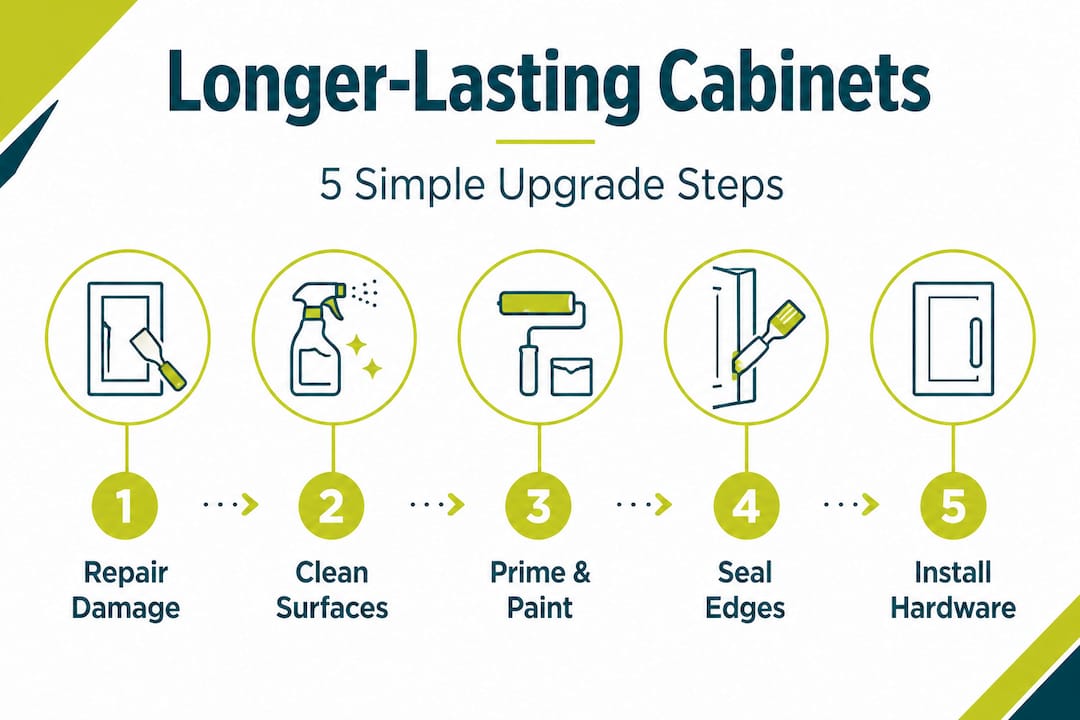
Here are the five upgrades we recommend most often to Ottawa homeowners:
Professional cabinet painting or refinishing: This is the single highest-impact upgrade available. Professional painting can extend cabinet lifespan by up to 15 years. A properly painted cabinet gets a fresh protective layer, a refreshed appearance, and a surface that’s easier to clean and maintain going forward.
Hardware replacement: New handles, pulls, and hinges are inexpensive and make a dramatic visual difference. Upgrading to soft-close hinges and full-extension drawer slides also improves function and reduces wear on the cabinet frame.
Edge and joint caulking: Gaps at the edges of cabinet doors and along joints allow moisture to enter. Sealing these with a paintable caulk is a low-cost fix that prevents significant damage over time.
Touch-up kits for minor damage: Small chips and scratches don’t need a full repaint. Quality touch-up kits matched to your cabinet color can address isolated damage before it spreads or worsens.
Shelf liner installation: Adding liner to cabinet interiors protects shelves from moisture, spills, and the constant weight of dishes and cookware. It’s inexpensive and easy to replace when worn.
Understanding the full range of painted kitchen cabinets lifespan helps you make a confident decision about whether refinishing makes sense for your specific situation. And if you’re weighing your options, reviewing available cabinet paint finish options gives you a clear picture of what a professional finish actually involves.
Why cabinet durability is about smart choices, not big budgets
Here’s something we’ve observed consistently over years of working in Ottawa kitchens: the cabinets that fail earliest are rarely the oldest ones. They’re the ones that were neglected, painted with the wrong products, or built from the wrong materials for their environment. Meanwhile, we’ve seen 30-year-old solid wood cabinets that, after a proper refinishing, look and perform better than brand-new budget replacements.
The conventional wisdom says that newer is better and that spending more guarantees a better result. We’d push back on that. A high-end new cabinet installed without attention to humidity control, proper sealing, and daily care will deteriorate faster than a well-maintained older cabinet that gets the right treatment.
What actually determines long-term cabinet performance is knowledge applied consistently. Knowing that MDF needs sealed edges. Knowing that semi-gloss holds up better than flat paint in a kitchen. Knowing that slamming doors and steam exposure are slow killers. These insights don’t cost anything, and acting on them costs very little.
We’ve also seen homeowners spend $30,000 on a full kitchen renovation only to have their new cabinets start chipping within two years because the painter used the wrong primer or skipped the topcoat. The price of the cabinet doesn’t protect it. The process does.
If you want to understand how long does cabinet paint last under real-world Ottawa conditions, the answer almost always comes back to preparation and process quality, not to how much was spent on the cabinets themselves.
Ready for longer-lasting cabinets? Here’s how we help
At Ottawa Cabinet Painting, we specialize in giving your existing cabinets a new life with a factory-finished look that holds up for years. Our process covers everything from thorough surface preparation and shellac-based priming to premium topcoats that protect against Ottawa’s humidity and daily kitchen wear. You can browse our before and after results to see what a professional refinishing actually looks like, or explore our expert cabinet refinishing services to understand what’s included. When you’re ready to take the next step, get a free spray painting quote and find out exactly what it would cost to transform your kitchen without the chaos of a full renovation.
Frequently asked questions
How long do painted kitchen cabinets really last?
Professionally painted kitchen cabinets can last 8 to 15 years with proper preparation and ongoing maintenance, making refinishing one of the most cost-effective upgrades available.
What is the most durable kitchen cabinet material?
Solid wood and high-quality plywood are generally the most durable options, as material selection plays a significant role in how well cabinets hold up to Ottawa’s climate and daily use.
How does humidity affect my kitchen cabinets?
High humidity causes warping, swelling, and finish breakdown, and since moisture and humidity are key threats to cabinet longevity, controlling indoor humidity is one of the most effective protective steps you can take.
Can cabinet refinishing really save money compared to replacement?
Yes. Refinishing costs a fraction of full cabinet replacement and can add a decade or more to your cabinets’ lifespan, all without the disruption of a full kitchen renovation.
What upgrades are most effective for improving durability?
Professional painting, upgrading to soft-close hardware, and sealing joints are the most impactful steps, and professional painting alone can extend cabinet lifespan by up to 15 years when done correctly.
Recommended
Comments