Full Kitchen Renovation Cost: What Ottawa Homeowners Should Know

Most Ottawa families struggle to keep up with kitchen trends, especially when full renovations can easily start at $45,000 and take months to finish. For busy households, the idea of tearing apart the heart of your home just to modernize the look feels overwhelming and out of reach. Focusing on cost-effective cabinet painting offers a simple, efficient way to dramatically refresh your kitchen’s style while keeping daily routines intact and your budget protected.
Table of Contents
Key Takeaways
Point | Details |
Full Kitchen Renovation | A full kitchen renovation involves comprehensive upgrades, transforming both the structure and appearance of the kitchen. It requires careful budgeting, considering size, materials, and professional installations. |
Project Types | Kitchen renovations can be categorized as refresh, minor remodel, or full renovation, each impacting timelines and costs. Understanding these distinctions is essential for selecting the right approach. |
Cost Drivers | Major price factors include kitchen size, material quality, layout changes, and professional installation. Homeowners must plan for permits and unexpected costs by setting aside a contingency reserve. |
Renovation vs. Refinishing | Choosing between full renovation and cabinet refinishing depends on your needs for structural changes versus simple aesthetic updates. Evaluate current functionality to make an informed decision. |
Defining Full Kitchen Renovation Cost
A full kitchen renovation means a complete transformation of your kitchen space, not just a fresh coat of paint or new hardware. It involves redesigning and replacing major components to create a modern, functional kitchen that meets current building codes and your family’s needs.
When you commit to a full renovation, you’re investing in comprehensive upgrades that typically include:
New cabinetry or cabinet refacing
Countertop replacement
Flooring installation
Updated electrical and plumbing systems
New lighting fixtures
Appliance replacement
Possible layout redesign
Backsplash installation
The scope differs dramatically from cabinet painting or minor updates. A full renovation transforms your kitchen from the ground up, affecting both the structure and appearance.
Ottawa homeowners face specific considerations when budgeting for this level of work. Your kitchen size plays a direct role in final costs—a modest 100-square-foot kitchen costs less to renovate than a sprawling 200-square-foot space. Material selection matters tremendously. Premium granite countertops and custom cabinetry increase expenses significantly compared to laminate and stock options.

Comprehensive kitchen upgrades in Canada typically require professional installation to ensure code compliance and durability in our climate. Layout changes add complexity and cost since plumbing and electrical systems need relocation.
Contingency planning is critical. Most renovation experts recommend setting aside 10-20% of your total budget for unexpected issues—hidden water damage, outdated wiring, or structural problems discovered during demolition.
A full kitchen renovation transforms your entire kitchen, not just its appearance—expect changes to layout, systems, and functionality alongside aesthetics.
Your renovation goals shape the cost scope significantly. Are you upgrading to increase home resale value, improve daily functionality, or modernize outdated design? Each goal influences material choices and scope decisions.
Understanding this distinction helps you decide whether a full renovation makes sense for your situation or if alternatives like cabinet painting versus a complete renovation better fit your timeline and budget.
Pro tip: Before committing to a full renovation, document what specifically frustrates you about your current kitchen—poor layout, lacking storage, outdated style—so you can prioritize which upgrades deliver the most value for your family’s needs.
Types of Kitchen Renovation Projects
Not all kitchen updates are created equal. Your options range from quick cosmetic refreshes to complete structural overhauls, and choosing the right project type directly impacts your timeline, budget, and final results.
Kitchen projects typically fall into three main categories based on scope and complexity:
Kitchen refresh: Surface-level improvements without structural changes
Minor remodel: Some system upgrades and small layout adjustments
Full renovation: Significant structural work with electrical and plumbing relocation
Each approach serves different goals and budgets. Understanding these distinctions helps you select what actually makes sense for your situation.
Here’s a concise comparison of kitchen project types and what each typically involves:
Project Type | Timeline | Structural Changes | Permit Needs |
Kitchen Refresh | 2-3 weeks | None | Not required |
Minor Remodel | 4-8 weeks | Partial (some systems) | Possible |
Full Renovation | 8-12 weeks | Major (layout & systems) | Required |
Kitchen Refresh
A refresh targets cosmetic improvements. You’re updating the look without touching the bones of your kitchen. This might include cabinet painting or refacing, new hardware, fresh paint, updated lighting fixtures, and simple backsplash work.
Refreshes keep your existing layout intact. Your plumbing and electrical systems stay exactly where they are. No permits required, minimal disruption, and work typically completes within two to three weeks.
Busy Ottawa families often choose refreshes because they transform appearance dramatically while maintaining kitchen functionality throughout the project.
Minor Remodel
A minor remodel incorporates some system upgrades alongside cosmetic changes. You might relocate a few outlets, upgrade your sink and faucet, replace some appliances, or make small layout adjustments. Kitchen refreshes versus minor remodels involve different levels of structural involvement.
These projects take longer than refreshes—typically four to eight weeks. You may need permits for electrical or plumbing work. Material choices sit in the mid-range, balancing cost with quality.
Minor remodels work well when you need functional improvements without a complete kitchen redesign.
Full Renovation
A full renovation means comprehensive structural transformation. Kitchen renovation projects in Canada at this level involve relocation of plumbing and electrical systems, complete cabinetry replacement, new flooring, countertops, and often layout redesign.
This requires permits, professional coordination, and typically eight to twelve weeks of work. Your kitchen remains largely unusable during the project. Costs increase significantly because of structural work and system upgrades.
Full renovations make sense when you’re addressing major functionality issues, adding value for resale, or modernizing a significantly outdated space.
Your project type determines timeline, budget, permits, and return on investment—choose based on your actual kitchen needs, not just aesthetic desires.
Ottawa homeowners should evaluate current kitchen conditions honestly. Are you frustrated with appearance alone, or do you need functional improvements? Does your layout waste space? Do systems need updating for safety or efficiency?
Answering these questions guides you toward the appropriate project type and prevents over-investing in upgrades you don’t actually need.
Pro tip: Start by listing what frustrates you most about your current kitchen, then match that priority to the appropriate project type—this prevents spending renovation money on improvements that don’t solve your real problems.
Key Features Affecting Renovation Price
Your kitchen renovation cost doesn’t follow a simple formula. Multiple factors interact to drive the final price, and understanding these variables helps you make informed decisions about where to invest your budget.
The most significant price drivers include:
Consider how these cost factors can impact your renovation budget in Ottawa:
Price Factor | Typical Impact | Why It Matters |
Kitchen Size | Higher material/labor | More area to improve |
Material Upgrades | Raises total cost | Premium lasts longer |
Layout Changes | Adds complexity/cost | May need utility relocation |
Permit & Inspection Fees | Increases upfront cost | Ensures legal compliance |
Contingency Reserve | Avoids surprise costs | Handles hidden issues |
Kitchen size and layout complexity
Material quality and selections
Extent of structural or system upgrades
Lighting design and ventilation improvements
Professional installation and permits
Fixture and appliance choices
Contingency planning reserves
Kitchen Size and Layout
Square footage matters enormously. A 100-square-foot kitchen costs substantially less to renovate than a 250-square-foot space simply because you’re purchasing fewer materials and requiring less labor time. Layout complexity adds another layer—an open floor plan renovation costs differently than repositioning walls and moving utilities.
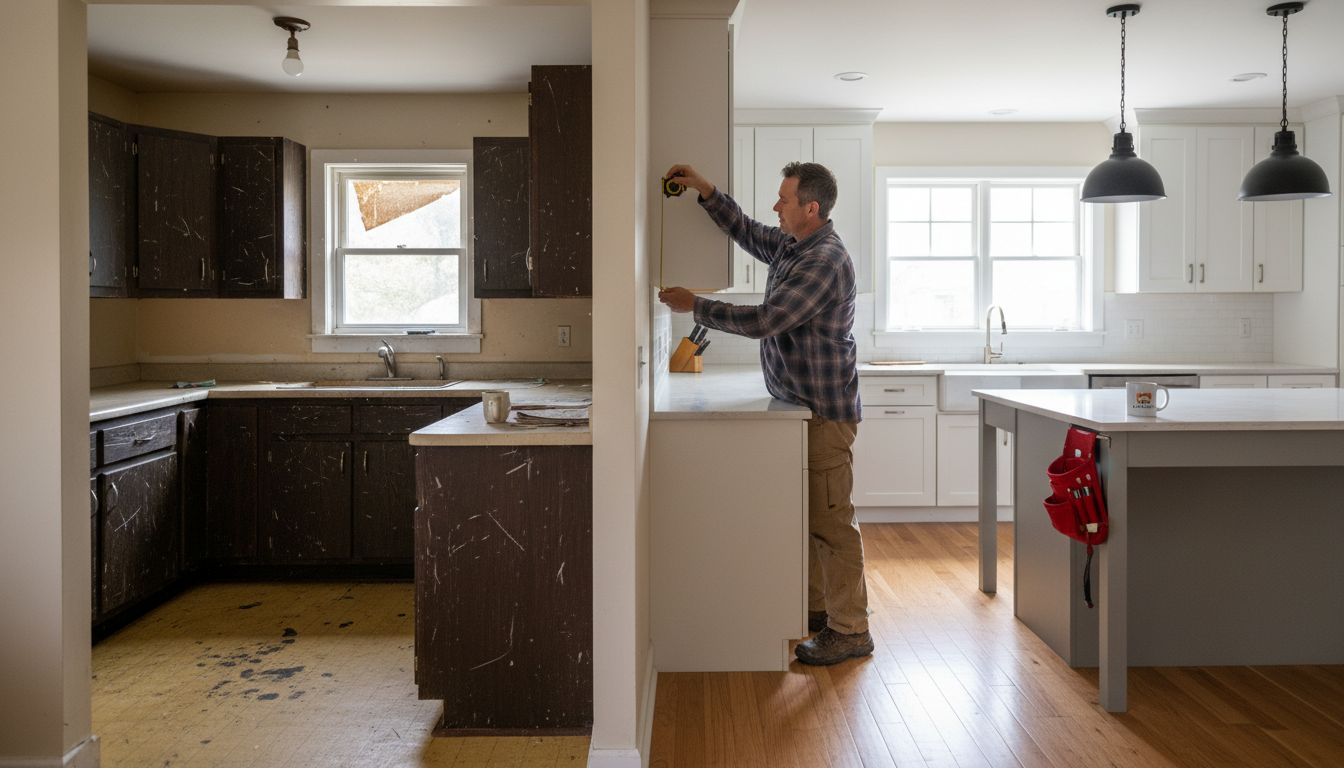
Layout changes involving plumbing or electrical relocation multiply expenses quickly. Moving a sink location or adding an island requires licensed professionals and increased material costs.
Material Selections
Material choice directly determines your budget outcome. Laminate countertops cost far less than granite, quartz, or marble. Stock cabinetry runs cheaper than semi-custom or fully custom options. Vinyl flooring differs dramatically from hardwood or tile in both cost and durability.
Durable, climate-appropriate materials justify higher upfront costs in Ottawa’s climate. Premium finishes withstand temperature fluctuations and humidity changes better than budget alternatives, reducing long-term repair expenses.
Consider your kitchen’s timeline. Are you planning to stay 5 years or 25 years? This influences whether premium materials make financial sense for your situation.
Systems and Upgrades
Kitchen renovation price factors include electrical upgrades, plumbing modifications, and ventilation improvements. Adding outlets, upgrading to modern appliances, or installing a new range hood increases costs but enhances daily functionality.
Lighting design affects both aesthetics and utility bills. Professional lighting design costs more upfront but creates better task lighting and ambiance while reducing long-term energy consumption.
Professional Installation and Permits
Professional installation ensures code compliance and durability, preventing future repair expenses that dwarf initial savings from DIY attempts. Permits add cost but protect your home value and insurance coverage.
Budget estimates should include permit fees, inspections, and professional labor coordination across multiple trades.
Contingency Reserve
Set aside 10-20% of your total budget for unexpected discoveries. Hidden water damage, outdated wiring requiring replacement, or structural issues found during demolition are common.
Smart renovation budgeting means accounting for material costs, labor, permits, and a contingency cushion—not just the visible upgrades.
Ottawa homeowners often underestimate hidden costs. Professional assessment before committing prevents shocking surprises mid-project.
Pro tip: Prioritize your must-haves versus nice-to-haves before selecting materials, then allocate budget accordingly—this prevents expensive scope creep that consumes your contingency reserve.
Comparing Renovation to Cabinet Refinishing
When facing an aging kitchen, Ottawa homeowners often wonder whether to invest in a full renovation or pursue a more targeted cabinet refinishing approach. The answer depends on your budget, timeline, and what’s actually broken or outdated.
These two options sit at opposite ends of the kitchen improvement spectrum:
Cabinet refinishing: Surface-level cabinet updates, hardware changes, modest countertop work
Full renovation: Complete structural redesign, new cabinetry, system upgrades, layout changes
Understanding the differences helps you choose what aligns with your family’s actual needs and financial reality.
Cost Comparison
Cost represents the most striking difference between these approaches. Cabinet refinishing in Canada typically ranges from $18,000 to $35,000 for comprehensive surface improvements including cabinet painting, new hardware, and countertop replacement.
Full kitchen renovations commonly start at $45,000 and climb much higher depending on scope and materials. A typical full renovation costs $60,000 to $100,000 or more in Ottawa.
For busy families watching their budgets, cabinet refinishing offers dramatic visual transformation at a fraction of renovation costs.
Timeline and Disruption
Cabinet refinishing completes in approximately 10 business days with minimal household disruption. Your kitchen remains largely functional throughout the process. No permits required means no waiting for inspections.
Full renovations typically require 8 to 12 weeks of active work. Your kitchen becomes a construction zone during this period. Permits, inspections, and coordination across multiple trades extend timelines significantly.
Families with young children or tight schedules often find refinishing’s quick timeline more practical than renovation’s extended chaos.
Structural and Functional Changes
Cabinet refinishing preserves your existing layout completely. Your cabinetry, plumbing, and electrical systems remain unchanged. This approach works beautifully when your kitchen’s bones are sound but appearance needs updating.
Full renovations allow layout redesign, electrical system upgrades, plumbing relocation, and structural improvements. If your kitchen lacks storage, has poor traffic flow, or needs updated systems, renovation addresses these functional issues that refinishing cannot.
Cabinet Quality Considerations
Refinishing extends the life of existing cabinets through professional painting or staining, assuming the underlying cabinet box construction remains solid. Quality existing cabinetry—with plywood box construction and solid joinery—responds beautifully to refinishing.
Renovation allows replacing cabinets entirely, choosing from stock, semi-custom, or fully custom options that match your design vision and budget precisely.
The Right Choice for Your Situation
Choose refinishing when your cabinets are structurally sound but aesthetically tired. Your layout functions well. Your systems work properly. You need a dramatic visual refresh without major expense or disruption.
Choose renovation when structural issues exist, layout frustrates you, systems need upgrading, or you’re planning to stay long-term and want comprehensive improvements.
Cabinet refinishing transforms appearance for 30-50% of renovation cost; full renovation transforms both appearance and function but demands significantly more time and money.
Many Ottawa families benefit from honest assessment: Does your kitchen need cosmetic updating or functional overhaul? The answer guides your decision toward the right investment.
Pro tip: Get professional assessments from both refinishing specialists and renovation contractors—comparing their recommendations helps you understand whether your cabinets can handle refinishing or truly need replacement.
Common Cost Mistakes to Avoid
Kitchen renovation budgets frequently spiral out of control, not because homeowners are careless, but because predictable mistakes create expensive surprises. Learning what catches most people off-guard helps you protect your financial plan.
The most costly mistakes include:
Underestimating permit and inspection costs
Overlooking structural or system upgrades needed for code compliance
Skipping contingency reserves entirely
Misjudging mechanical work complexity and expenses
Choosing unsuitable materials that fail prematurely
Neglecting detailed planning and measurements
Ignoring ventilation and lighting design needs
Permit and Code Compliance Oversights
Many Ottawa homeowners budget for materials and labor but forget about permits. Common kitchen renovation mistakes include underestimating permit costs and overlooking local building code requirements.
Skipping permits creates serious problems. Non-compliant work requires costly revisions. Insurance may deny claims on unpermitted work. Resale value suffers when inspections reveal code violations.
Budget 5-10% of your project cost for permits and inspections. This protects your investment and avoids expensive corrections later.
Mechanical Work Underestimation
Plumbing and electrical work consistently costs more than homeowners expect. Moving a sink location, upgrading electrical capacity, or installing new ventilation involves licensed professionals and material expenses that multiply quickly.
Don’t assume your existing systems can handle new appliances or layout changes. Professional assessment prevents discovering mid-project that electrical panels need upgrading or plumbing requires rerouting.
Inadequate Contingency Planning
Setting aside only 5% contingency reserves almost guarantees budget overruns. Hidden water damage, outdated wiring discovered during demolition, or structural issues demand immediate attention and expense.
Plan for 10-20% contingency funds. This cushion prevents choosing cheaper alternatives mid-project when unexpected expenses emerge.
Material Selection Mistakes
Choosing trendy but unsuitable materials creates long-term problems. Flooring that can’t handle Ottawa’s temperature fluctuations fails prematurely. Countertops with poor durability require expensive replacement. Cabinetry materials that don’t perform in your climate lead to warping and deterioration.
Prioritize durability and climate-appropriateness over trendy aesthetics. Your kitchen operates in Ottawa’s specific climate conditions year-round.
Planning and Design Oversights
Detailed planning including accurate measurements prevents functionality problems and expensive corrections. Skipping floor plans, ignoring workflow efficiency, or neglecting storage solutions leads to kitchens that frustrate you daily.
Lighting design and ventilation often receive insufficient attention. Poor lighting creates functional problems. Inadequate ventilation causes moisture issues that damage cabinetry and finishes.
Budget mistakes compound: underestimate permits, skip contingency, ignore systems work, and suddenly your $50,000 budget becomes $75,000.
Proper planning prevents surprises. Professional consultations identify potential issues before they become expensive problems.
Pro tip: Create a detailed budget spreadsheet including permits, contingency (15% minimum), structural assessment, mechanical work estimates, and material selections—then add another 10% cushion before committing to the project.
Transform Your Kitchen Without Full Renovation Costs
Facing the overwhelming cost and disruption of a full kitchen renovation is a common challenge for Ottawa homeowners. If you identify with the frustrations of outdated cabinetry, limited storage, or an uninspiring look but want to avoid the chaos and expense of moving plumbing or electrical systems, there is a smarter option. The article highlights full renovations as involving structural changes, long timelines, and high costs. If your kitchen layout functions well but the cabinets feel tired or worn, professional cabinet refinishing can bring a fresh, high-end look without replacing everything.
At Ottawa Cabinet Painting, we specialize in expert cabinet painting and refinishing that transforms your kitchen’s appearance with minimal disruption, durable finishes, and a timeline of about ten days. By investing in premium materials and thorough preparation, we deliver a silky smooth finish that modernizes your space and helps you avoid the extended downtime and high budgets linked with full renovations. To explore how our services can refresh your kitchen and save you time and money compared to a full renovation, visit our main landing page. Ready to elevate your kitchen without the chaos of structural changes Explore your refinishing options today and secure a warm, functional kitchen that feels brand new.
Frequently Asked Questions
What factors influence the cost of a full kitchen renovation?
Several key factors can impact the cost of a full kitchen renovation, including kitchen size, material selections, extent of structural upgrades, layout changes, and professional installation needs.
How long does a full kitchen renovation typically take?
A full kitchen renovation usually takes between 8 to 12 weeks, depending on the complexity of the project, layout changes, and the need for permits and inspections.
What is the difference between a kitchen refresh and a full renovation?
A kitchen refresh involves surface-level changes like cabinet painting and new hardware without structural modifications, whereas a full renovation includes comprehensive changes that may necessitate relocating plumbing and electrical systems.
How can I avoid common budgeting mistakes during my kitchen renovation?
To avoid budgeting mistakes, it’s crucial to account for permits, set a contingency reserve of about 10-20%, accurately estimate structural work needs, and plan for durable, climate-appropriate materials.
Recommended

Comments