Explaining Paint Curing Times for Ottawa Cabinet Projects

TL;DR:
Paint curing time is the period when paint fully hardens through chemical cross-linking after surface drying. Rushing this process can cause permanent damage like peeling, blushing, or soft finishes on cabinets. Environmental factors such as temperature and humidity significantly influence curing, requiring careful control for optimal results.
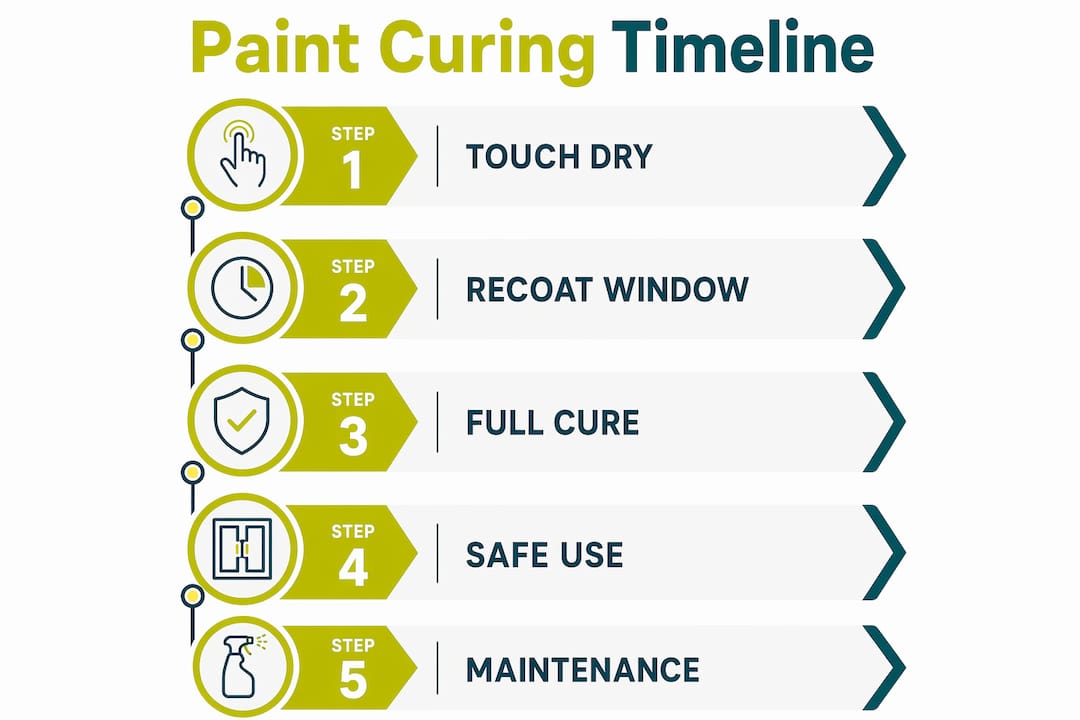
Paint curing time is defined as the period it takes for paint to fully harden through chemical cross-linking, reaching its maximum durability long after the surface feels dry to the touch. For Ottawa homeowners refinishing kitchen cabinets, explaining paint curing times correctly is the difference between a finish that lasts a decade and one that chips within months. Touch dry typically occurs 30 minutes to 2 hours after painting, but full cure can take 7 to 30 or more days depending on paint type and conditions. Brands like Sherwin-Williams formulate their acrylic and oil-based paints with specific cure windows that most DIYers simply ignore. Skipping this knowledge is a recipe for disaster on cabinet surfaces that take daily punishment.
Explaining paint curing times: drying vs. curing
The most common misconception homeowners carry into a cabinet project is treating drying and curing as the same thing. They are not.
Drying is the evaporation of water or solvent from the paint film. Run your finger across the surface and it feels solid. That is drying. Curing is a separate chemical process called polymer cross-linking that continues long after the surface feels dry. During curing, the paint molecules bond together into a hard, protective network. That network is what gives your cabinet doors their scratch resistance and washability.
Here is why the distinction matters for cabinets specifically:
A cabinet door can feel completely dry within two hours of painting.
Closing that door against the frame before full cure causes the paint film to stick, deform, or peel.
Wiping the surface with a cleaning cloth too soon can leave permanent marks.
Placing items on a painted shelf before curing is complete causes dents that will not recover.
Rushing the curing stage is the number one cause of soft finishes that fail within a year. That is not an opinion. It is what cabinet painters see repeatedly on jobs where the homeowner moved too fast.
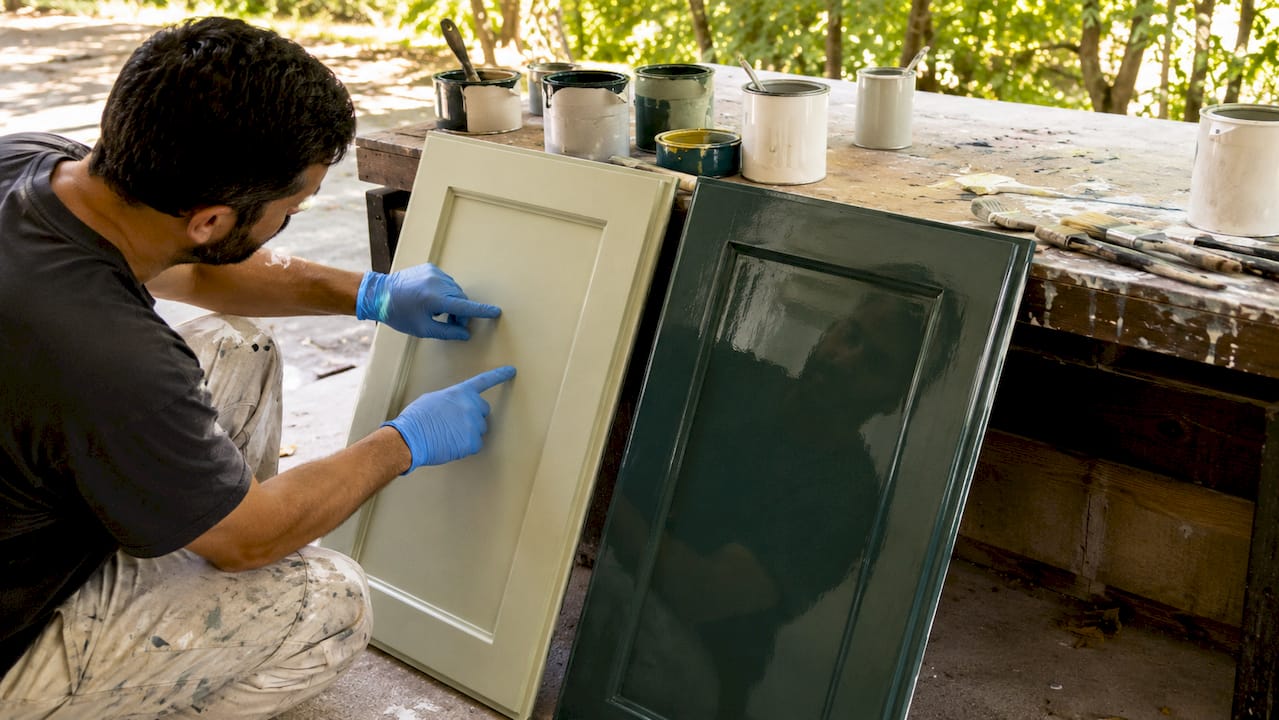
Pro Tip: Run your thumbnail lightly across a hidden area of the painted surface. If it leaves a mark, the paint has not cured. If the surface resists, you are in good shape.
Understanding drying versus curing is the foundation of every good cabinet finishing decision you will make.
How long does paint take to cure in Ottawa?
Curing timelines vary by paint chemistry, and knowing the numbers helps you plan your project around real life.
Paint Type | Touch Dry | Recoat Window | Full Cure |
Water-based acrylic/latex | 30 min–1 hour | 2–4 hours | 14–30 days |
Oil-based alkyd | 6–8 hours | 24 hours | 7–30 days |
Chalk paint | 30–60 minutes | 1–2 hours | 30+ days |
Water-based paints require 14 to 30 days to fully cure, while oil-based paints may reach full cure in 7 to 30 days under ideal conditions. The ideal conditions are a temperature of around 70°F (21°C) and relative humidity near 50%. Ottawa kitchens in winter often sit well below those benchmarks, which extends every number in that table.
Oil-based paints cure faster in terms of days, but they require strict ventilation because the solvents are stronger. Water-based acrylics, which Sherwin-Williams and most professional cabinet painters favor today, are lower odor but need more patience on the back end.
Pro Tip: Mark your calendar the day you paint. Write the 14-day and 30-day dates on a sticky note inside a cabinet door. You will thank yourself when the urge to start loading dishes hits on day five.
For a deeper look at which paint types hold up best on cabinet surfaces, the guide on durable cabinet paint options covers formulations worth knowing before you buy.
How do temperature and humidity affect curing in Ottawa?
Ottawa’s climate creates real challenges for paint curing that you will not read about on a paint can label.
Temperatures below 55°F stall the curing chemical reaction entirely. The cross-linking process slows to a near stop, leaving paint in a semi-soft state that is vulnerable to damage. Ottawa winters regularly push unheated garages and poorly insulated kitchens below that threshold, especially during cabinet projects that require open windows for ventilation.
High humidity compounds the problem. Humidity above 50–60% physically hinders solvent evaporation and cross-linking, trapping solvents inside the paint film. Those trapped solvents cause bubbles or cloudiness, called blushing, that can appear weeks after painting. You will think the job looked fine, then notice the finish going milky in spots.
Practical steps to control your environment during cabinet curing in Ottawa:
Keep your kitchen temperature at or above 65°F throughout the full cure window.
Run a dehumidifier if your home’s humidity exceeds 50% during humid Ottawa summers.
Use a box fan to improve airflow across painted surfaces. Active airflow helps more than simply raising the temperature.
Avoid painting on rainy days when interior humidity spikes.
Do not close windows completely, but do not let cold drafts hit wet paint directly.
Airflow is the underrated variable. Most DIYers focus on temperature and forget that moving air carries away the evaporating solvents that need to escape for curing to proceed normally.
Best practices for Ottawa DIYers to protect cabinet finishes during curing
Knowing the timeline is only useful if you act on it. These steps protect your cabinet finish through the full cure window.
Wait the full cure time before heavy use. Do not load cabinets with dishes, pots, or heavy items for at least 14 days after painting with water-based acrylics. The paint film is still soft and will dent under weight.
Leave cabinet doors ajar for 7–14 days. Closing cabinet doors too soon causes blocking, where the paint on the door bonds to the paint on the frame. Use small foam spacers or folded paper to keep a gap while the finish hardens.
Clean only with a damp cloth before 30 days. Detergents and solvents before 30 days can soften the paint film and cause cloudiness. A barely damp, lint-free cloth is all you need for the first month.
Skip wax and sealant for at least 30 days. Applying wax too early traps residual solvents inside the film, preventing full curing and dulling the finish. Wait 30 to 90 days before any wax or topcoat product.
Watch for warning signs. If the finish feels tacky after a week, smells strongly of solvent, or shows small bubbles, your curing environment needs correction. Increase temperature, improve airflow, and give it more time before touching the surface.
Pro Tip: Tape a small piece of plastic wrap flat against a painted surface and leave it overnight. If moisture collects underneath in the morning, your humidity is too high for proper curing.
Once your cabinets are fully cured, the guide on caring for newly painted cabinets walks you through long-term maintenance that keeps the finish looking sharp for years.
What happens when paint does not cure properly?
Skipping or shortening the cure window does not just delay results. It causes permanent damage that no amount of cleaning or polishing will fix.
Proper curing stages include dry-to-touch, tack-free, and fully cured, and each stage requires different handling. Treating a tack-free surface like a fully cured one is where most damage happens.
The consequences of insufficient curing on cabinets include:
Soft, tacky finishes that pick up fingerprints and dent under normal contact.
Blocking damage where door faces bond to frames and tear the paint film when opened.
Blistering and peeling caused by trapped solvents expanding under the film.
Cloudiness or blushing from moisture interference during the cross-linking stage.
Reduced adhesion that causes the finish to separate from the substrate within months.
If you realize you rushed the cure, stop using the cabinets immediately. Increase room temperature, run a fan, and give the finish as much additional time as possible. In severe cases, the only real fix is sanding back and repainting. That is a far more expensive outcome than simply waiting the recommended time in the first place.
For context on how finish choice affects long-term durability, the overview of cabinet paint finish options is worth reading before your next project.
Key takeaways
Paint curing time requires patience, environmental control, and correct handling protocols to produce a cabinet finish that holds up to daily use for years.
Point | Details |
Drying is not curing | Drying is surface evaporation; curing is chemical hardening that takes 14–30 days. |
Temperature and humidity matter | Keep rooms above 65°F and humidity near 50% throughout the full cure window. |
Leave doors ajar | Use spacers to keep cabinet doors open for 7–14 days to prevent blocking damage. |
Delay cleaning and sealing | Use only a damp cloth for 30 days; wait 30–90 days before applying any wax or sealant. |
Rushing causes permanent damage | Soft finishes, peeling, and blushing are the direct result of cutting the cure time short. |
What we have learned from Ottawa cabinet projects
After working on cabinet finishes across Ottawa kitchens, the pattern we see most often is this: homeowners do everything right during the painting stage and then undo it in the first two weeks after. They load the cabinets on day three. They wipe down a door with an all-purpose cleaner on day seven. They close every door tight because the kitchen looks finished and they want their space back.
We understand that impulse completely. A freshly painted kitchen is exciting. But the finish you see on day two is not the finish you have on day thirty. The paint is still building its hardness. Every shortcut taken in that window shows up later as a dent, a peel, or a sticky door that tears the paint when you open it.
Ottawa’s climate adds a layer of difficulty that warmer cities do not face. Cold winters mean heated kitchens with dry air, which actually helps curing. But spring and fall bring humidity swings that can stall the process without warning. We always tell homeowners to run a dehumidifier during those shoulder seasons and not to judge the finish by how it looks at day seven.
The homeowners who get the best long-term results are the ones who treat the cure window as part of the project, not as the waiting period after the project. Patience here is not passive. It is the last and most important step in getting a factory-quality finish that holds up for years.
For tips on protecting your investment after curing completes, the guide on protecting painted cabinets in Ottawa covers exactly what to do next.
— Ottawa
Professional cabinet painting in Ottawa with proper curing built in
If managing temperature, humidity, airflow, and cure windows sounds like more than you want to take on alone, Ottawacabinetpainting handles every stage of the process for you. Our team controls the painting environment from prep through final cure, using premium water-based acrylics applied by spray for a factory-smooth finish that lasts. We back every project with a 6-year warranty because we know the curing process was done right. Request your free spray painting quote today, or explore our full interior cabinet painting services to see what a professionally cured finish looks like in Ottawa kitchens.
FAQ
What is paint curing time for kitchen cabinets?
Paint curing time is the period required for paint to fully harden through chemical cross-linking after drying to the touch. For cabinet projects, water-based acrylics typically need 14–30 days to reach full cure under ideal conditions.
How long does paint cure before I can close cabinet doors in Ottawa?
Leave cabinet doors ajar for at least 7–14 days after painting to prevent blocking, where the paint on the door bonds to the frame. Use small foam spacers to maintain a gap during this window.
What is the difference between paint drying and curing?
Drying is the evaporation of water or solvent from the paint surface, which happens within hours. Curing is the chemical hardening process that follows and can take several weeks to complete fully.
Can I clean painted cabinets before the paint fully cures?
Use only a barely damp, lint-free cloth for the first 30 days. Detergents and chemical cleaners before full cure can soften the film and cause permanent cloudiness or blushing.
Does Ottawa’s climate affect how long cabinet paint takes to cure?
Yes. Temperatures below 55°F stall the curing reaction, and humidity above 50–60% slows solvent evaporation. Ottawa homeowners should keep kitchens above 65°F and run a dehumidifier during humid spring and fall months to stay on schedule.
Recommended
Comments