What it really costs to paint bathroom cabinets in Ottawa

TL;DR:
Professional bathroom cabinet painting costs CAD $200-$1200 in Ottawa, saving significantly over replacement.
Proper prep, paint choice, and application method are crucial for durable, long-lasting results.
DIY can save money but risks lower quality, shorter lifespan, and potential failures without proper techniques.
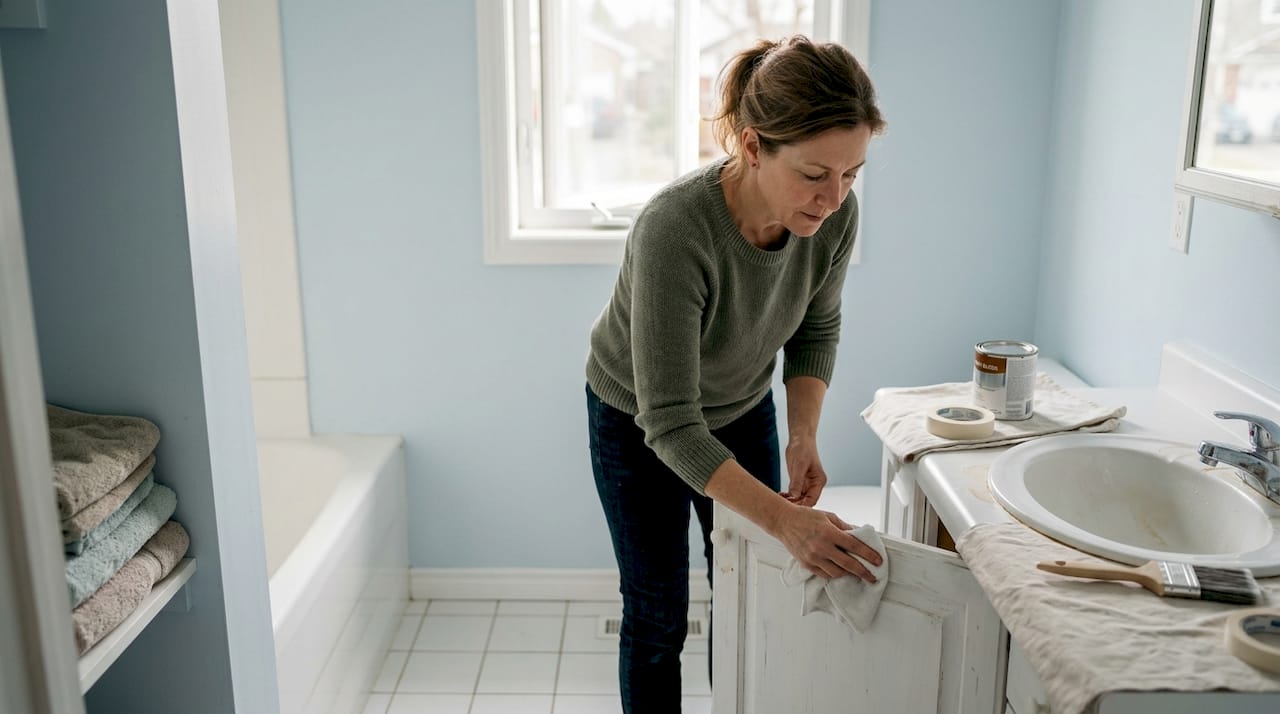
Most Ottawa homeowners assume that refreshing their bathroom cabinets means spending thousands of dollars on a full renovation. That assumption is costing people real money. Professional bathroom cabinet painting in Ottawa can run as little as a few hundred dollars, and even a larger, more detailed project rarely approaches the cost of full replacement. If your cabinets are structurally sound but look tired, dated, or just plain wrong for your space, painting them is one of the smartest upgrades you can make. This guide breaks down real Ottawa pricing, explains what drives costs up or down, and helps you decide whether DIY or professional work is the right call for your bathroom.
Table of Contents
Key Takeaways
Point | Details |
Affordable upgrade | Painting bathroom cabinets in Ottawa costs far less than replacement and delivers a big visual impact. |
DIY saves but risks durability | DIY jobs cut costs by up to 80 percent, but skipping key prep steps leads to finish failures. |
Pro quality lasts longer | Professional work with the right materials and prep gives a flawless finish that can last for years. |
Key cost factors | Cabinet material, prep quality, and paint type have the biggest influence on final price and results. |
How much does it cost to paint bathroom cabinets in Ottawa?
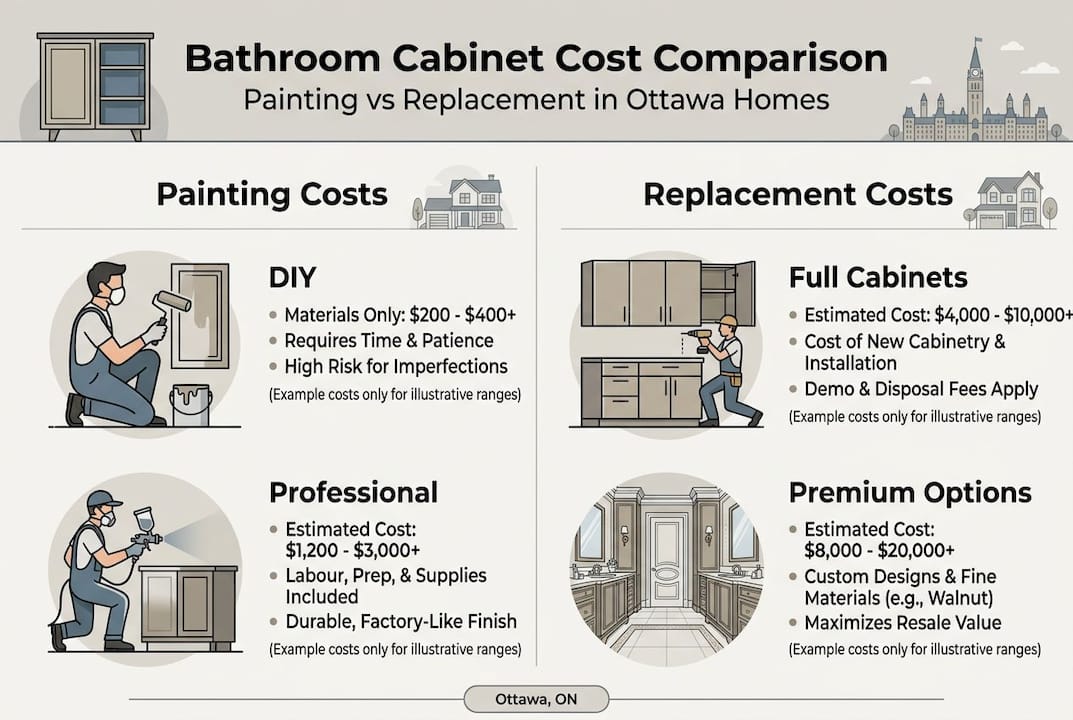
Let’s put real numbers on the table. Professional painting of bathroom cabinets ranges from CAD $200 to $1,200 depending on cabinet size, material, and the complexity of the job. A small single-vanity bathroom with four to six doors will sit at the lower end of that range. A larger double-vanity setup with extra drawers and detailed trim will push toward the higher end.
For Ottawa homeowners curious about the Ottawa painting costs in the broader market, bathroom cabinets are consistently cheaper to paint than kitchen cabinets. Why? Fewer doors, smaller surface area, and less daily traffic. That means less product, less labor time, and a lower final invoice.
If you’re leaning toward doing it yourself, DIY painting can cost $60 to $600, saving up to 80% compared to hiring a professional. That range covers primer, paint, sandpaper, brushes or a small sprayer, and painter’s tape. The savings are real, but so are the risks, which we’ll cover shortly.
Here’s a quick-reference table to orient your budget:
Project size | DIY estimate | Professional estimate |
Small vanity (4-6 doors) | $60-$150 | $200-$450 |
Medium vanity (6-10 doors) | $150-$300 | $450-$800 |
Large/double vanity (10+ doors) | $300-$600 | $800-$1,200 |
Professional painting costs 70 to 85% less than full cabinet replacement, which can run $3,000 to $8,000 or more for a bathroom. That’s a significant gap. If you’re weighing your options, should you paint bathroom cabinets is a question worth exploring before committing to anything.
Pro Tip: The cheapest quotes you’ll find often skip critical prep steps like degreasing, sanding, and priming. Skipping prep shortens paint life dramatically, sometimes to just one or two years. A slightly higher quote that includes proper preparation is almost always the better investment.
Key cost factors at a glance:
Number of cabinet doors and drawers
Cabinet material (wood, MDF, laminate, thermofoil)
Paint type and primer required
Whether hardware is removed and reinstalled
Professional spray finish vs. brush and roller application
Factors that impact bathroom cabinet painting costs
Understanding general prices is helpful, but what actually drives those costs up or down? Let’s dig into the main factors.
The number of doors and drawers is the most straightforward driver. More surfaces mean more prep time, more product, and more labor. A single-door medicine cabinet is a very different job from a full double-vanity with six drawers and decorative trim.
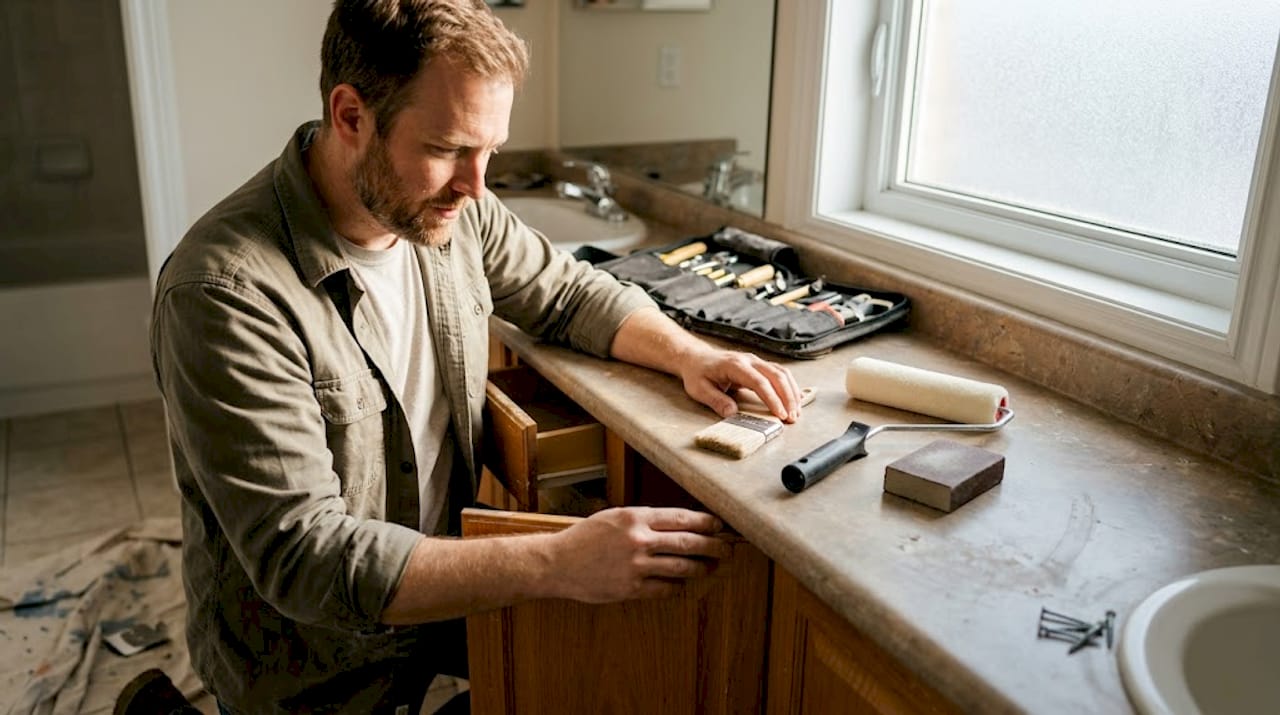
Cabinet material is where things get more nuanced. Solid wood and MDF (medium-density fiberboard) are the most paint-friendly surfaces. Laminate and thermofoil are trickier. Edge cases like laminate or thermofoil need special adhesion primers and specific products to bond correctly. Oak, with its open grain, often requires grain filler before painting to achieve a smooth finish. These extra steps cost more, but skipping them is a recipe for peeling and failure.
Here’s a comparison of low vs. high-complexity projects:
Factor | Low complexity | High complexity |
Material | Solid wood or MDF | Laminate, thermofoil, or oak |
Size | Small single vanity | Large double vanity |
Finish type | Brush/roller | Off-site spray finish |
Hardware | Basic knobs | Decorative pulls, hinges |
Estimated cost | $200-$450 | $800-$1,200 |
Moisture and ventilation are factors unique to bathrooms. Bathrooms are humid environments, and that humidity puts stress on paint. Professionals account for this by selecting moisture-resistant paints and primers. The benefits of hiring cabinet painters include this kind of product knowledge that most DIYers simply don’t have going in.
The method of application also affects price. Brush and roller work is faster and cheaper but leaves texture. Off-site spray finishing produces a factory-smooth result but requires more setup and time. For cabinet painting service details on what a full professional process looks like, it’s worth reviewing before requesting quotes.
“Low quotes skip prep and quality products, leading to paint failure in one to three years. A properly executed professional job lasts seven to fifteen years.”
That lifespan difference is the real cost comparison homeowners should be making.
DIY vs professional: What do you pay for?
Once you know what influences price, the next question is whether to DIY or hire a professional. Let’s unpack the true differences.
DIY can save 70 to 80% compared to professional painting, but it comes with real trade-offs in finish quality, durability, and your own time.
Here’s what a professional process typically includes:
Full disassembly of doors, drawers, and hardware
Thorough degreasing and cleaning of all surfaces
Sanding to create proper adhesion
Shellac-based primer application for stain blocking and bonding
Off-site spray finishing for a smooth, factory-quality coat
Curing time before reinstallation
Reinstallation of all hardware and components
Warranty coverage, often three to six years
When you decide to DIY or hire a pro, the honest question is whether you can replicate steps one through eight at home. Most homeowners can manage cleaning and sanding. Spray finishing, however, requires equipment, practice, and a dust-free environment. Brush and roller application is accessible but rarely produces the same smooth result.
DIY mistakes that lead to failure:
Skipping degreasing before sanding
Using wall paint instead of cabinet-grade enamel
Not allowing adequate dry time between coats
Reinstalling doors before paint has fully cured
Pro Tip: Prep is 90% of success. The single biggest cause of DIY cabinet painting failures is rushing through or skipping the preparation phase. If you’re going the DIY route, spend more time on prep than you think you need.
For homeowners who want a showroom-quality result without the risk, choosing Ottawa Cabinet Painting means your cabinets are finished off-site in a controlled environment, returned looking factory new, and backed by a warranty. That’s a very different outcome than a weekend DIY project.
Materials and methods that make a difference
Whether you’re doing it yourself or hiring out, the right materials and methods make all the difference. Here’s what actually works in humid Ottawa bathrooms.
The most important decision is paint type. For humid bathrooms, semi-gloss or satin waterborne alkyd or urethane enamel delivers the best combination of moisture resistance and durability. These paints cure to a hard, wipeable surface that stands up to steam and splashing. Standard wall paint, even premium brands, is not formulated for this kind of punishment.
Recommended products that perform well in Ottawa bathrooms:
Benjamin Moore Advance (waterborne alkyd, self-leveling, hard cure)
Sherwin-Williams Emerald Urethane (excellent moisture resistance)
BIN shellac-based primer (ideal for stain blocking and bonding on tricky surfaces)
Zinsser Bulls Eye 1-2-3 (water-based primer for MDF and wood)
For best paint for cabinets guidance, waterborne alkyds consistently rank at the top for cabinet work because they brush and roll more smoothly than latex and cure harder than standard water-based paints.
Primers are not optional. On raw wood or MDF, a quality primer seals the surface and improves adhesion. On laminate or thermofoil, a bonding primer is the only thing standing between your paint and eventual peeling. On oak, a grain-filling primer or skim coat creates the smooth surface needed for a clean finish.
“Skipping degreasing, sanding, or priming causes almost all cabinet painting failures. These steps aren’t optional, they’re the foundation.”
Ventilation during and after painting matters too. Paint in a well-ventilated space and keep the bathroom ventilated during the curing period, which can take seven to thirty days for full hardness depending on the product. For more practical guidance, our cabinet painting tips cover product selection and application in more detail.
The overlooked value of a pro paint job
After exploring all the costs and methods, here’s what most guides don’t tell you, and what actually matters for Ottawa homeowners.
Most people compare quotes based on upfront price alone. That’s understandable, but it misses the full picture. A professional job that lasts twelve years and a DIY job that needs redoing in three years are not the same value, even if the DIY option costs less today. Painting bathroom cabinets is 70 to 85% cheaper than replacement and delivers high ROI without renovation chaos, but only when the work is done correctly.
We’ve seen bathrooms where homeowners painted their own cabinets and were happy for about eighteen months. Then the doors near the sink started peeling, the finish near the hinges chipped, and the whole project needed to be redone. That’s not a savings story. That’s a double spend.
A true professional job eliminates those hidden costs. Off-site spray finishing, proper curing, and a real warranty mean you’re not thinking about your cabinets again for years. For Ottawa households where the bathroom is used daily by the whole family, that peace of mind has genuine cabinet painting value that doesn’t show up in a simple price comparison.
Ready to transform your bathroom cabinets?
If you’ve read this far, you already know that painting your bathroom cabinets is one of the most cost-effective upgrades available to Ottawa homeowners. The next step is seeing what it would actually cost for your specific space. At Ottawa Cabinet Painting, we provide free, no-obligation quotes with clear, upfront pricing and no surprises. You can get a free cabinet painting quote directly on our site, browse our before and after transformations to see real Ottawa results, or explore our full range of interior painting services. We handle the entire process off-site, so your bathroom stays functional and mess-free throughout.
Frequently asked questions
Is it worth painting bathroom cabinets instead of replacing them?
Painting saves homeowners up to 85% compared to full replacement and delivers a premium, updated look in just a few days rather than weeks of renovation disruption.
How long does professional bathroom cabinet paint last?
A properly prepped and painted cabinet can last seven to fifteen years, and most professional services back their work with a three to six year warranty.
What’s the best type of paint for bathroom cabinets?
Semi-gloss or satin waterborne alkyd or urethane enamel is the top choice for bathroom cabinets because it resists moisture, cures hard, and cleans easily.
Can I paint laminate or thermofoil bathroom cabinets?
Yes, but laminate and thermofoil need adhesion primer specifically formulated for non-porous surfaces to ensure the paint bonds properly and lasts long-term.
Recommended
Comments