From $2,500: Ottawa Cabinet Painting and Refinishing in 10 Day Turnaround

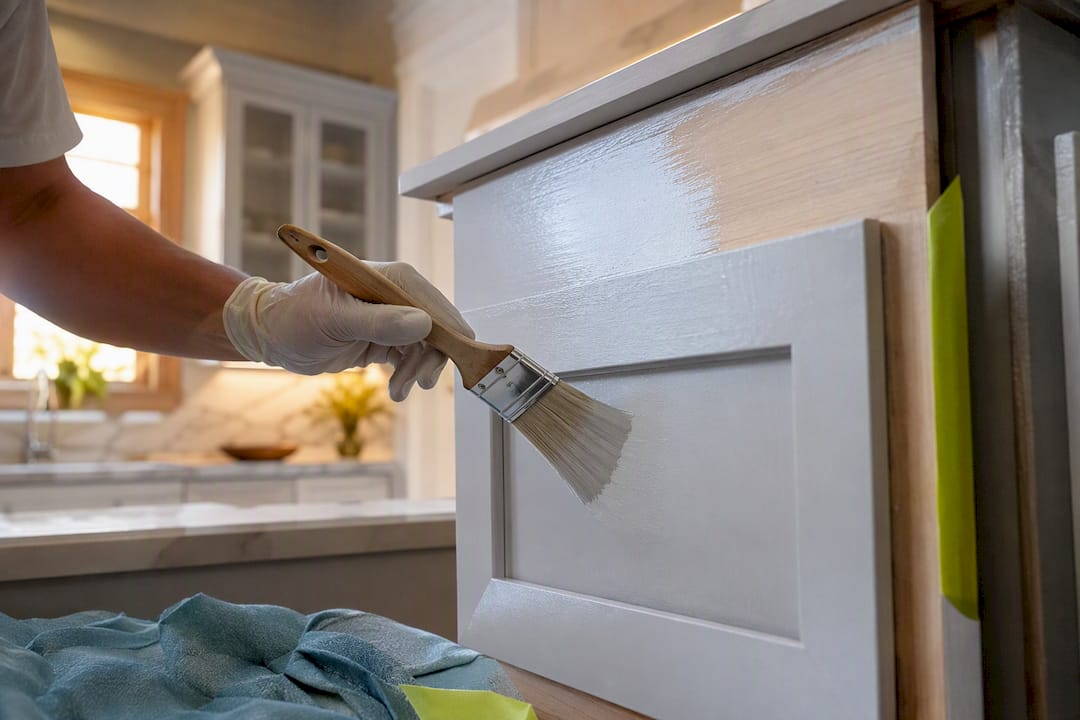
For most Ottawa homeowners chasing a modern color change, professional cabinet painting and refinishing is the more cost-effective route than full replacement, running roughly $2,500 to $5,000 for an average kitchen. Choose painting when you want a new color and a smooth, factory-style finish. Choose refinishing (restaining) when the wood grain underneath is worth keeping. Hire a pro when you need spray-quality results, structural repairs, or a finish built to last close to a decade.
TL;DR:
The cost to professionally paint kitchen cabinets in Ottawa ranges from $2,500 to $5,000 for an average-sized kitchen, with larger projects reaching up to $8,500.
Spray finishes significantly improve smoothness and durability but add an extra $500 to $1,500 to the total cost, especially on high-touch surfaces.
Cabinet painting lasts approximately eight to ten years if properly done, while DIY jobs often need repainting within three to five years.
Proper preparation, including cleaning, sanding, repairs, and primer, is essential for a long-lasting and high-quality finish.
Replacing or refacing cabinets is more suitable for structural issues or layout changes, while painting remains the most cost-effective for cosmetic upgrades.
Table of Contents
What Do Cabinet Painting and Refinishing Actually Mean?
The terms get used loosely, and that causes real confusion when you’re comparing quotes. Cabinet painting applies an opaque coating, usually a cabinet-grade enamel, that hides the wood grain and lets you change color entirely. Refinishing (often called restaining) strips or lightly sands the existing finish and applies new stain or clear coat, keeping the wood grain visible. Refacing replaces door and drawer fronts while keeping the existing boxes. Resurfacing is a broader term some pros use interchangeably with refacing or refinishing, so always ask a contractor which one they mean.
Material matters as much as terminology:
Solid wood cabinets accept both painting and refinishing well, since the grain and surface hold stain or enamel evenly.
MDF (medium-density fiberboard) cabinets paint beautifully but can’t be refinished with stain, since there’s no real wood grain to expose.
Laminate and thermofoil cabinets need painting with a specialized bonding primer. They cannot be refinished.
Veneer cabinets can go either way, but thin veneer risks sand-through during refinishing prep.
Whichever route fits your cabinets, expect a smooth, even finish that looks close to factory work when the prep is done right, and expect visible brush or roller texture if it isn’t.
What Does Cabinet Painting Cost in Ottawa?
Professional cabinet painting typically runs $30 to $60 per door and drawer front, with an average mid-size kitchen landing between $2,500 and $5,000. Larger kitchens with more doors, drawers, and specialty finishes can push toward $8,500 on the high end.
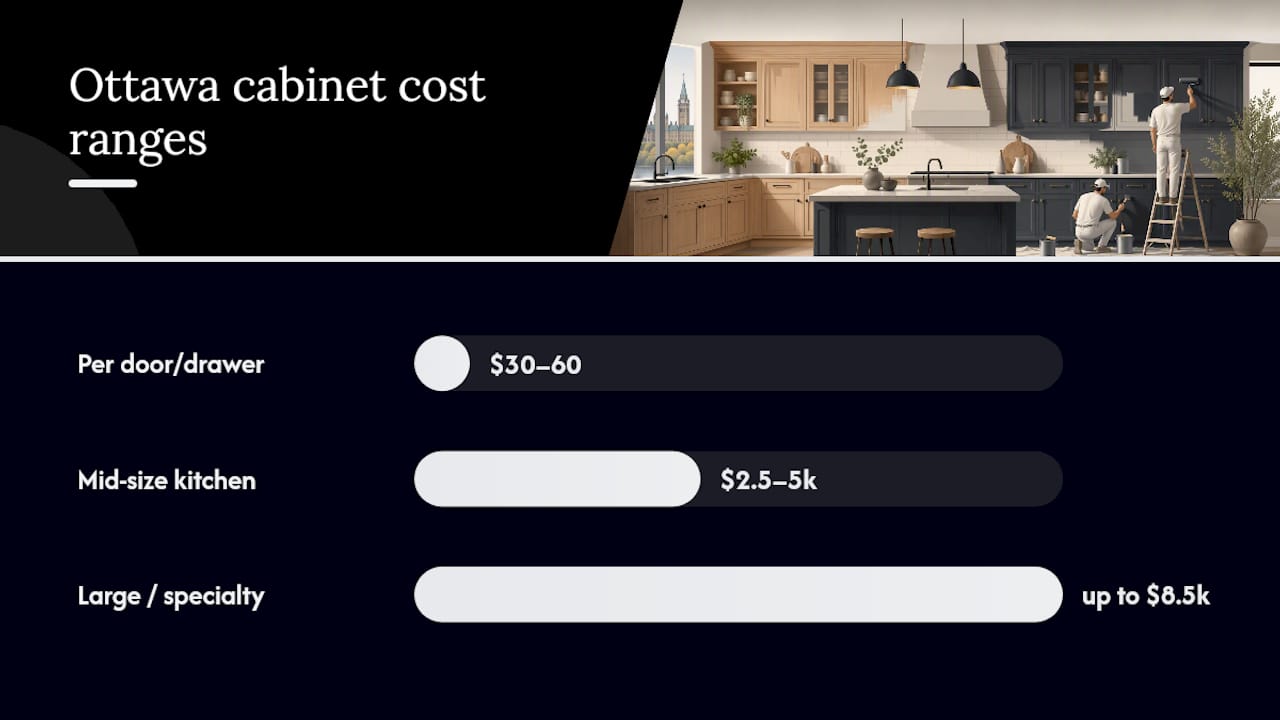
The number that surprises most homeowners: labor typically accounts for a substantial majority of a professional quote, not materials. That’s why door and drawer count drives price far more than square footage or paint brand. A kitchen with 40 small doors will usually cost more to paint than one with 20 large doors, even if the total cabinet surface area is similar.
Common cost drivers to watch for on a quote:
Spray finish upcharge: spraying adds $500 to $1,500 over brush-and-roll, but delivers a noticeably smoother, more durable coat.
Bonding primer for thermofoil or laminate: this is not optional on those surfaces, and skipping it is the single most common cause of early peeling.
Structural repairs: water damage, loose joints, or delaminating edges get billed separately from the paint job itself.
Hardware replacement: swapping hinges, pulls, or knobs is a small add that often makes the biggest visual difference.
If you’re pricing DIY, budget for cabinet-grade enamel (not standard wall paint), sandpaper or liquid deglosser, a quality sprayer or foam roller, and painter’s tape. Materials alone usually land between $300 and $600 for a mid-size kitchen. The catch is time and skill: a rushed DIY job often needs repainting within three to five years, while professional work regularly holds up for eight to ten. Our own breakdown of DIY cabinet painting costs, tools, and steps walks through that math in more detail if you’re weighing it yourself.
How Does the Professional Painting Process Work?
A properly run job follows a sequence, and skipping steps is exactly how homeowners end up with peeling, uneven color, or a sticky finish six months later.
Consultation and quote. A pro measures your doors and drawers, notes the substrate (wood, MDF, thermofoil), and discusses finish and sheen.
Door and drawer removal. Everything gets numbered and pulled to a controlled workspace, whether that’s a garage setup or an off-site shop.
Cleaning and degreasing. Kitchen cabinets accumulate cooking grease that new paint won’t bond to, so this step gets skipped at your own risk.
Sanding or deglossing, plus repairs. Any dents, water spots, or loose joints get fixed before a drop of primer goes on.
Primer application, including bonding primer where the surface demands it.
Finish coats, sprayed or brushed depending on the plan.
Cure time, often 24 to 48 hours between coats and longer before rehanging.
Reinstallation of doors, drawers, and hardware.
Shop-sprayed doors typically deliver the smoothest, most factory-like result because dust, humidity, and temperature stay controlled, and boxes often get painted on-site while doors cure elsewhere. On-site spraying can match that quality but requires serious masking and ventilation. Brush-and-roll work is faster and cheaper but tends to leave slight texture, which some homeowners actually prefer for a farmhouse look.
Pro Tip: Ask your contractor how they minimize kitchen downtime. A well-run job keeps your cabinet boxes usable throughout most of the process, since only doors and drawers leave the house.
Which Finish Should You Choose, and How Long Will It Last?
Three finish categories cover most kitchens, and each trades off cost against durability differently.
Cabinet-grade latex/acrylic enamel is the most common pro choice: durable, low odor, and easy to clean once cured.
Alkyd enamel cures to a harder, more washable film than standard latex paint, making it a strong pick for heavily used kitchens.
Lacquer or 2K polyurethane delivers the closest thing to a factory finish, at a higher cost and typically only through spray application.
The detail that trips up DIYers most often: thermofoil and laminate cabinets need a bonding primer before any paint goes on, or the finish can peel within months regardless of how good the topcoat is. MDF needs careful edge sealing to prevent swelling, and tight-grained oak needs extra sanding passes to knock down its natural texture before primer.
Expect a professionally painted kitchen to hold its finish for roughly eight to ten years with normal use. DIY jobs, even careful ones, more often need attention within a few years. Either way, simple maintenance (wiping spills quickly, avoiding abrasive scrubbers) extends the life of the coating substantially. Our guide to kitchen paint finish choices breaks down sheen options if you want to go deeper on the decision.
When Should You Replace or Reface Instead?
Painting and refinishing solve a cosmetic problem. They don’t fix a structural one, and the difference matters before you spend money.
Red flags that mean replacement or refacing deserves a serious look:
Water damage that’s caused swelling, soft spots, or delamination in the cabinet boxes themselves.
Widespread warping across multiple doors, not just one or two.
A layout change you actually want, like removing a wall cabinet or adding an island.
If none of those apply, painting almost always costs less than refacing and dramatically less than full replacement. A simple hardware swap or replacing just a few damaged doors can also stretch your budget further without touching the rest of the kitchen. For a deeper look at when refinishing beats replacement on cost alone, see our piece on refinishing as a cost-effective kitchen upgrade.
Why We Recommend a Professional Timeline, Not a Rush Job
Some cabinet painting companies build their process around a timeline of about ten days, allowing proper preparation and curing for a reason: real prep takes real time. Proper cleaning, sanding, repairing, and priming before applying finish coats determines whether a kitchen looks sharp in year one and still looks sharp in year eight. Many professional painters include a warranty on their work, and plan the workflow so your kitchen stays functional through most of the process. Boxes typically stay in place while doors and drawers cure off-site.
Before you sign with any contractor, ask for a written scope and before-and-after photos from real jobs. A vague quote is often a warning sign of a vague process.
— Ottawa
How to Get a Clear, Comparable Quote
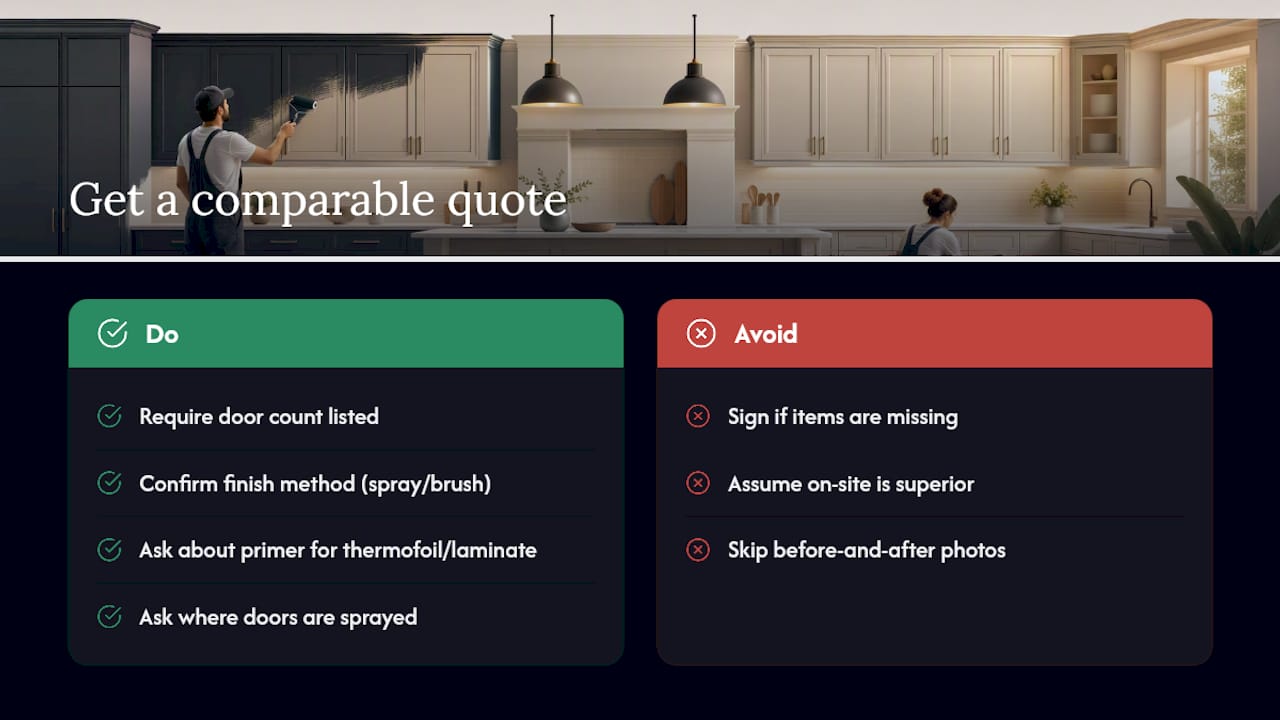
A trustworthy quote spells out door count, finish method (spray versus brush), primer type, whether spraying happens in a shop or on-site, and warranty length. If a quote is missing any of those, ask before you sign.
Three questions put you in a strong position when comparing bids: Is bonding primer included if my cabinets are thermofoil or laminate? Will doors be sprayed off-site or on-site, and what’s the difference in price and finish? What does the warranty actually cover, and for how long?
Some cabinet painting companies answer all three upfront, with a process built around minimizing disruption and a warranty backing the result. Browse real before-and-after transformations to see the finish quality for yourself, then request a free, no-obligation quote for your kitchen. If you’re still deciding between painting and full refinishing, our overview of cabinet refinishing benefits can help you land on the right scope before you request pricing.
Sources
Recommended
Comments