Does Cabinet Color Affect Lighting? Key Insights for Ottawa Homes
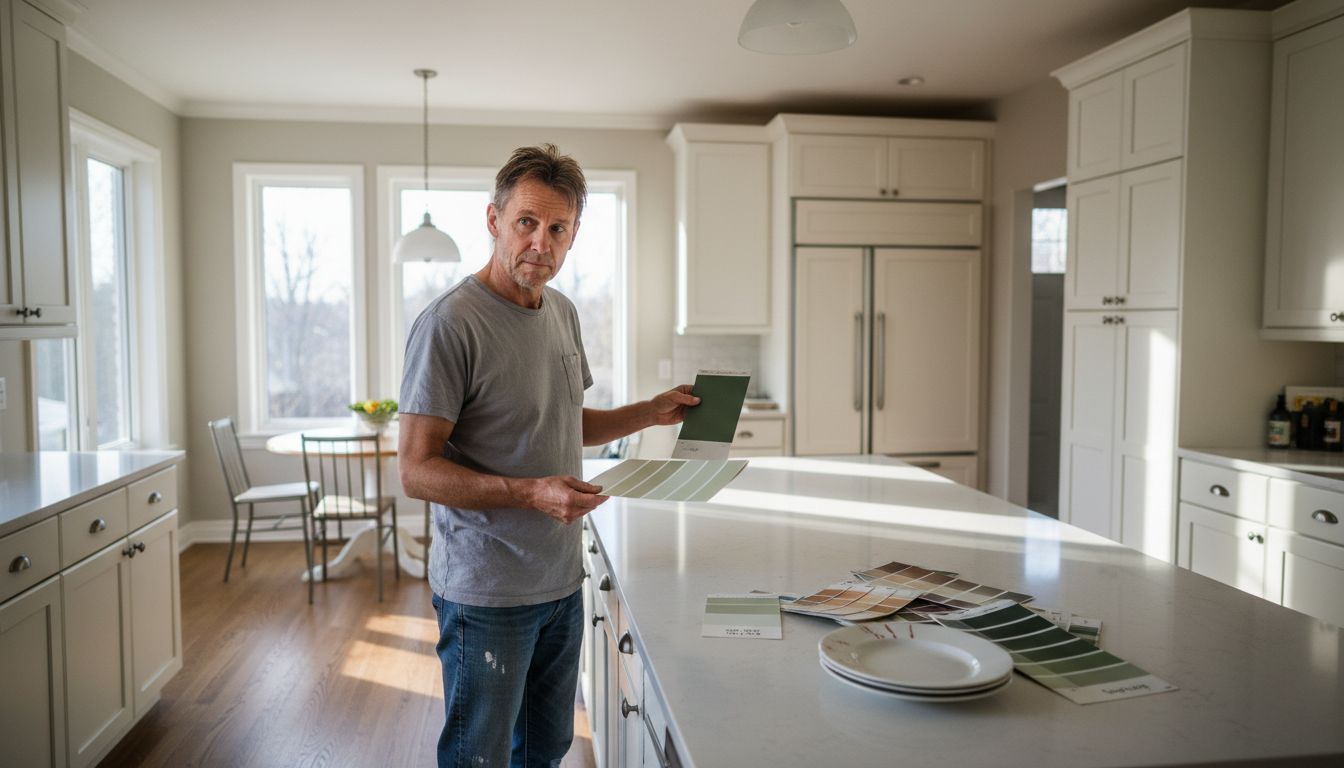
Finding the right cabinet color can completely change how light fills your Ottawa kitchen, making it brighter and more welcoming without costly renovations. Cabinet color directly affects light reflection, with lighter shades bouncing more light and dark tones absorbing it, as confirmed by the Phong reflection model. Discover how choosing the right color and finish gives your kitchen a fresh look while creating a more inviting atmosphere through strategic light reflection.
Table of Contents
Key Takeaways
Point | Details |
Cabinet Color Affects Light | Lighter cabinet colors reflect more light, making spaces feel larger and brighter, while darker colors absorb light and create a more intimate atmosphere. |
Surface Finish Matters | Glossy finishes enhance light reflection significantly compared to matte finishes, impacting how bright the kitchen feels. |
Natural vs. Artificial Lighting | Combining both light sources is essential; light-colored cabinets can amplify available light, enhancing the kitchen’s brightness. |
Avoid Common Mistakes | Selecting dark colors for small spaces or ignoring the interplay between color and finish can lead to a gloomy kitchen environment. |
How Cabinet Color Influences Light Reflection
Cabinet color plays a critical role in shaping how light behaves within Ottawa home interiors, directly impacting the perception of brightness and spatial ambiance. Understanding how different colors interact with light can help homeowners make strategic design choices that enhance their kitchen’s illumination. Phong reflection models demonstrate that surface color significantly influences light diffusion and absorption.
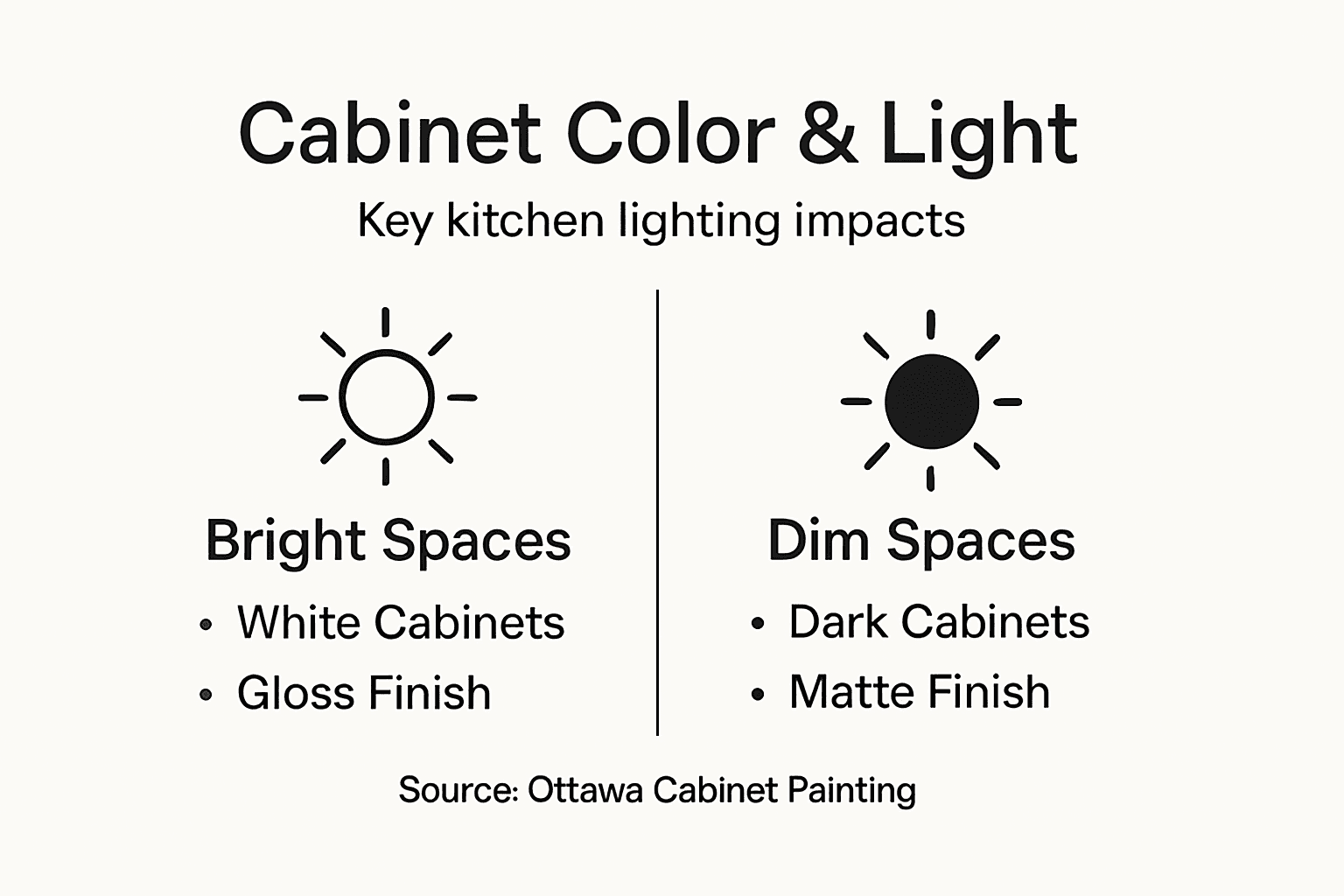
Light reflection varies dramatically based on cabinet color and surface texture. Lighter colored cabinets - such as whites, creams, and soft pastels - naturally reflect more ambient light, creating an expansive and bright atmosphere. Dark-toned cabinets like deep blues, charcoal grays, or rich woods tend to absorb more light, resulting in a more intimate and dramatic kitchen environment. Light reflection measurements confirm that smooth, light-colored surfaces enhance ambient lighting more effectively than darker, matte finishes.
The reflection characteristics depend on multiple factors beyond simple color selection. Surface finish plays a crucial role - glossy surfaces reflect more light than matte finishes, amplifying the base color’s reflective properties. A white glossy cabinet will create more luminosity compared to a white matte cabinet, even though they share the same base color. Ottawa homeowners should consider not just color, but also sheen and texture when selecting cabinet finishes to optimize their kitchen’s lighting.
Pro tip: When selecting cabinet colors, use a white poster board to test how different paint samples reflect light in your specific kitchen environment, accounting for your unique natural and artificial lighting conditions.
Types of Cabinet Colors and Their Lighting Impact
In Ottawa homes, cabinet colors serve as powerful tools for manipulating interior lighting dynamics. Kitchen lighting design reveals that color selection dramatically influences how spaces feel and function. White and light-colored cabinets act as natural light amplifiers, reflecting and dispersing illumination throughout the kitchen, while darker tones absorb light and create more intimate environments.
The spectrum of cabinet colors offers distinct lighting characteristics. Crisp white cabinets create the most expansive lighting effect, bouncing light across surfaces and making smaller kitchens appear larger and more open. Cream and soft beige tones provide similar benefits with slightly warmer undertones. Medium-toned woods like maple or oak strike a balanced approach, offering moderate light reflection while maintaining visual warmth. Home design experts suggest that dark navy, charcoal, or deep green cabinets intentionally absorb light, generating a sophisticated and cozy atmosphere that works beautifully in larger kitchen spaces.
Beyond basic color selection, surface finish plays a crucial role in light interaction. Glossy finishes amplify light reflection, making even medium-toned cabinets appear brighter, while matte finishes soften light and reduce glare. Homeowners should consider not just color but also sheen when designing their kitchen’s lighting environment. Combining different cabinet colors and finishes can create layered lighting effects that add depth and visual interest to the space.
Pro tip: Use a smartphone camera with a brightness filter to preview how different cabinet colors will actually reflect light in your specific kitchen before making a final selection.
Role of Natural Versus Artificial Lighting
In Ottawa homes, understanding the interplay between natural and artificial lighting is crucial for creating optimal kitchen environments. Artificial light research demonstrates that lighting significantly impacts human perception, mood, and functionality. Natural daylight offers dynamic illumination that changes throughout the day, providing full-spectrum light that artificial sources struggle to replicate, while artificial lighting ensures consistent brightness during darker hours and in areas with limited natural light.
The unique characteristics of Ottawa’s climate present specific lighting challenges. During long winter months with limited daylight, artificial lighting becomes essential in maintaining a bright and welcoming kitchen space. Strategic placement of lighting fixtures can compensate for reduced natural light, using a combination of ambient, task, and accent lighting to create depth and dimension. Health design experts suggest that integrating both natural and artificial light sources helps maintain consistent illumination and supports optimal human circadian rhythms.
Cabinet color plays a critical role in maximizing both natural and artificial light effectiveness. Light-colored cabinets with reflective surfaces can amplify available light, making rooms feel brighter and more spacious. Homeowners can enhance lighting by strategically placing mirrors, using glass-front cabinets, and selecting finishes that bounce light effectively. This approach is particularly important in Ottawa homes where maximizing light can combat the psychological effects of long, dark winters and create a more inviting kitchen environment.
Pro tip: Install adjustable LED lighting under cabinets and use dimmer switches to create layered lighting that can adapt to different times of day and seasonal light variations.
Paint Finishes: Gloss, Satin, and Matte Effects
Cabinet paint finishes are critical in determining how light interacts with kitchen surfaces in Ottawa homes. Paint sheen variations reveal distinct characteristics that dramatically influence room brightness and visual appeal. Glossy finishes reflect the most light, creating vibrant, luminous surfaces that make colors appear more intense and spaces feel more open, while matte finishes absorb light, generating a softer, more subdued atmosphere.
Coating reflection techniques demonstrate that each finish type offers unique lighting properties. High-gloss finishes provide maximum light reflection, making them ideal for smaller kitchens or spaces with limited natural light. These surfaces create a sleek, modern look but can also highlight surface imperfections. Satin finishes offer a balanced approach, providing moderate reflectivity with a subtle sheen that conceals minor surface irregularities. Matte finishes deliver the most understated appearance, diffusing light and creating a sophisticated, contemporary aesthetic that minimizes glare and visual distractions.
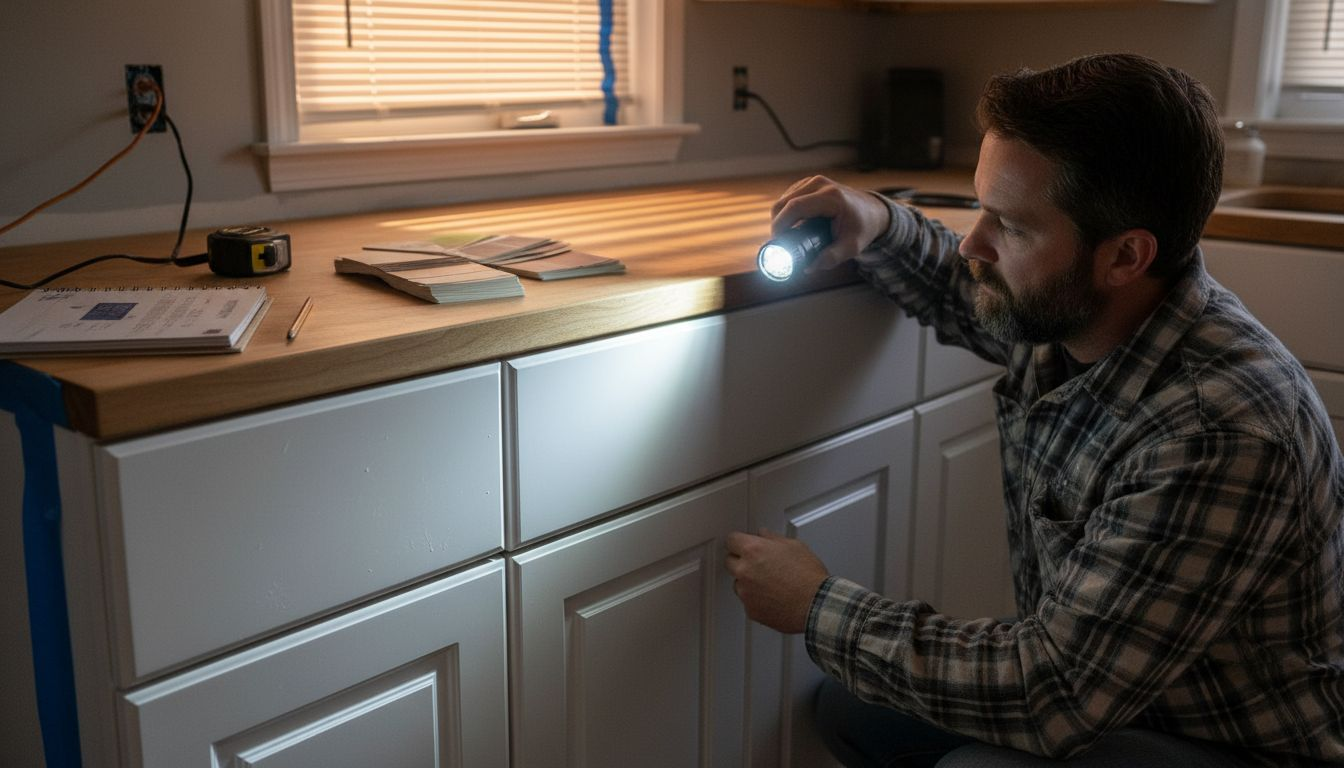
Selecting the right finish involves considering both aesthetic preferences and practical lighting needs. In Ottawa’s variable lighting conditions, homeowners should evaluate how different finishes interact with their specific kitchen environment. Glossy finishes work exceptionally well in darker spaces, amplifying available light, while matte finishes can create a warm, intimate feel in larger, well-lit kitchens. The surface texture, cabinet color, and room orientation all play crucial roles in determining the most effective finish for optimal light reflection and visual impact.
Here is a comparison of how different cabinet paint finishes influence light reflection and kitchen ambiance:
Paint Finish Type | Light Reflection Level | Visual Effect on Space | Ideal Kitchen Condition |
Glossy | Very high | Bright, spacious | Small or low-light |
Satin | Moderate | Balanced, subtle glow | Medium or varied light |
Matte | Low | Soft, cozy | Large or well-lit |
Pro tip: Test paint samples under different lighting conditions and times of day to understand how each finish truly performs in your specific kitchen environment.
Choosing Colors to Maximize Kitchen Brightness
Ottawa homeowners can strategically select cabinet colors to transform their kitchen’s lighting and atmosphere. Kitchen color trends reveal that lighter hues are essential for creating bright, expansive spaces, particularly important during the region’s long, dark winters. Whites, soft creams, light grays, and pale pastels act as natural light amplifiers, reflecting both artificial and natural illumination to make kitchens feel more open and welcoming.
Lighting design principles emphasize that color selection goes beyond aesthetic preferences. Reflective surfaces and lighter cabinet colors can significantly reduce the need for additional lighting, improving energy efficiency. Pale yellow undertones can add warmth to white cabinets, creating a soft, inviting glow, while light sage and mint greens introduce a subtle, natural freshness that brightens the space without feeling sterile.
The science of color and light interaction is complex. Highly reflective cabinet colors work best when complemented by strategic lighting placement. Consider under-cabinet LED strips, pendant lights, and recessed ceiling fixtures that can further enhance the light-reflecting properties of your chosen cabinet color. Glossy finishes in light colors will amplify this effect, creating a luminous kitchen environment that feels larger and more vibrant. Texture also plays a crucial role - smooth surfaces reflect more light than textured ones, so consider the finish alongside the color.
Pro tip: Use a large white poster board to test paint samples in your actual kitchen, observing how different colors interact with your specific lighting conditions throughout the day.
Common Mistakes When Selecting Cabinet Color
Color selection strategies reveal critical pitfalls that Ottawa homeowners often encounter when choosing kitchen cabinet colors. One of the most significant errors is selecting dark cabinet colors for small or poorly lit spaces, which can dramatically reduce perceived room size and absorb much-needed light. Dark charcoal, deep navy, or rich brown cabinets might look sophisticated in design magazines, but they can create a cramped, oppressive atmosphere in kitchens with limited natural illumination.
Another common mistake involves neglecting the critical relationship between cabinet color, finish, and lighting. Architectural color principles emphasize the importance of understanding how different finishes interact with light. Matte finishes in dark colors can create a particularly challenging lighting scenario, absorbing light and making spaces feel smaller and less inviting. Homeowners should consider not just color, but also how the surface texture and sheen will impact overall room brightness, especially in Ottawa’s variable lighting conditions.
Many people also fail to consider how cabinet colors coordinate with existing kitchen elements and lighting fixtures. A poorly chosen cabinet color can clash with wall colors, countertops, and flooring, creating visual discord that disrupts the room’s overall aesthetic balance. This is particularly important in smaller kitchens, where every design choice has a significant impact. Consider the entire color palette, including the undertones of whites, grays, and neutral tones, to ensure a harmonious and light-enhancing environment.
This summary highlights common mistakes when selecting cabinet colors and their practical effects:
Mistake Type | Impact on Lighting | Consequence for Space |
Dark colors in small kitchens | Absorb too much light | Space appears smaller |
Ignoring finish and sheen | Poor light diffusion | Room feels gloomy |
Mismatched with existing décor | Causes visual imbalance | Reduces cohesion and appeal |
Overlooking lighting conditions | Inaccurate color perception | Dissatisfying final look |
Pro tip: Collect large paint samples and place them in your kitchen at different times of day to observe how natural and artificial lighting truly affects the color’s appearance.
Enhance Your Kitchen Lighting with Expert Cabinet Painting
The article highlights how cabinet color and finish dramatically influence the way light reflects and fills your kitchen space in Ottawa. If you are struggling with a dim or cramped kitchen atmosphere because of dark cabinetry or outdated finishes that absorb light, you are not alone. Many homeowners face the challenge of balancing style with optimal light reflection to create a warm and inviting environment. A key insight is that lighter cabinet colors paired with the right glossy or satin finishes can maximize brightness and transform the feel of your kitchen without the need for a costly renovation.
At Ottawa Cabinet Painting, we specialize in revitalizing your existing cabinets with premium paint and finish options designed to enhance light reflection and elevate your kitchen’s ambiance. Our meticulous process ensures a silky smooth finish that brightens your space while protecting your cabinets for years to come. Avoid the stress and expense of full cabinet replacement and instead achieve a high-end look tailored to your lighting needs. Ready to brighten your kitchen and enjoy a more spacious feel? Discover how our expert refinishing services can bring your vision to life today by visiting Ottawa Cabinet Painting. Request your personalized quote now and take the first step toward a beautifully illuminated kitchen that feels like the true heart of your home.
Frequently Asked Questions
How does cabinet color influence lighting in my kitchen?
Cabinet color has a significant impact on how light behaves in your kitchen. Lighter colors reflect more light, creating a brighter and more expansive atmosphere, while darker colors absorb more light, resulting in a cozier, more intimate space.
What finish should I choose for my cabinets to enhance lighting?
Glossy finishes reflect the most light, making them ideal for smaller or darker kitchens. Satin finishes offer moderate reflectivity, while matte finishes absorb light and create a soft, subdued feel. Choosing a high-gloss finish in light colors can amplify brightness in your kitchen.
Are there specific cabinet colors that can create a brighter kitchen?
Yes, lighter colors such as whites, creams, and soft pastels are excellent for creating a bright kitchen. These colors act as natural light amplifiers, reflecting both artificial and natural light effectively.
What common mistakes should I avoid when selecting cabinet colors?
Avoid choosing dark colors for small or poorly lit kitchens, as they can absorb too much light and make the space feel cramped. Additionally, neglecting the relationship between color, finish, and lighting can lead to a gloomy atmosphere. Always consider how your chosen colors will coordinate with existing kitchen elements.
Recommended
I hadn’t really considered how much cabinet color can change the way lighting feels in a kitchen. The point about darker cabinets absorbing more light, while lighter shades reflect it and can make a room feel brighter, makes a lot of sense, especially in a smaller kitchen. I also liked the suggestion to look at the cabinets at different times of day because natural light can completely change how a color appears. It’s one of those details that seems minor until you’re actually choosing a paint color. Even a Statement Of Purpose Writing Service UK has to consider how presentation affects perception, which made that connection interesting to me.
I've been exploring different coding discussions and noticed that programming often comes up as one of the more structured but challenging skills for beginners. In one post, the help in hr assignments was mentioned in the middle of talking about how people handle tricky programming tasks. It's interesting because even though programming follows clear rules, applying those rules in real problems can still be confusing at times. I personally struggle most with combining logic and syntax correctly, especially when multiple conditions or loops are involved. One small mistake can stop the program from running, which makes debugging feel like a long process. I think the key issue is not understanding concepts but remembering how to apply them properly under pressure.…
I read your post and it highlights how small design and communication changes can strongly affect understanding and results. I’ve also seen that careful presentation improves clarity in many situations. Some students refer to Civil Engineering assignment help UK when dealing with complex academic topics. Overall, focusing on detail and structure helps improve both learning outcomes and overall performance significantly.
I thought the discussion about how cabinet colors can influence the way natural and artificial light behaves in a room was particularly interesting, especially the point about lighter shades helping a space feel more open and reflective. It’s one of those design details that seems simple at first but can completely change how a kitchen or living area feels throughout the day. I found myself wondering whether people are usually more surprised by the effect of color on brightness or by the way different finishes alter the look of the same shade under changing light conditions. The article also highlights how understanding small details can make a big difference in decision-making, much like when people seek Help with Assignment Writing…
The post about cabinet color and lighting explains how different colors can change the look and brightness of a space, showing how design choices affect mood and visibility in a home. It made me think about how small details can change understanding in any subject. As a student, I sometimes struggle to organize nursing assignments clearly and once came across Do My Nursing Assignment while looking for study guidance. It reminded me that clarity and structure are important in both design and academic writing.