Best Finish for Kitchen Cabinets: Durable Style Ottawa
Busy Ottawa families want kitchens that shine without the stress or mess of a full renovation. Many homeowners believe any cabinet finish will protect against daily moisture, steam, and spills, but that’s not always the case. Choosing the right finish is key to maintaining both beauty and durability in Ottawa’s challenging climate. This guide uncovers the truth behind common cabinet finish myths and highlights which options offer a truly cost-effective, high-end upgrade for your kitchen.
Table of Contents
Key Takeaways
Point | Details |
Understanding Finishes | Kitchen cabinet finishes protect wood from moisture and wear while contributing to aesthetic appeal. Different types provide varying levels of durability and maintenance requirements. |
Importance of Quality | Investing in high-quality finishes pays off long-term by reducing the frequency of refinishing and maintenance, especially in Ottawa’s challenging climate. |
Myth Busting | Common misconceptions about cabinet finishes may lead to poor choices; for instance, all finishes do require some maintenance, and not all protect equally against moisture. |
Climate Considerations | Ottawa’s variable climate necessitates careful selection of finishes to ensure they withstand humidity and temperature changes without deterioration. |
Cabinet Finishes Defined and Misconceptions
Kitchen cabinet finishes do far more than look pretty. They protect wood from moisture, mold, and daily wear while defining your kitchen’s entire aesthetic. Yet most homeowners misunderstand what finishes actually do and how to maintain them.
Let’s clear up the confusion.
What Cabinet Finishes Actually Are
Kitchen cabinet finishes are protective coatings applied to wood surfaces. They create a barrier against moisture, chemicals, and physical damage. Without proper finishes, your cabinets absorb humidity, swell, and deteriorate quickly in Ottawa’s variable climate.
Common finish types include:
Water-based coatings (acrylic latex) - eco-friendly, lower VOC, dries fast
Stains - enhance wood grain appearance while offering basic protection
Varnishes - traditional, durable, but yellows over time
Lacquers - factory-quality gloss, extremely durable finish
Sealers - additional protection layer against moisture and chemicals
Each finish type protects wood differently and affects durability and appearance in unique ways.
Kitchen cabinet finishes must guard against moisture, mold, and daily wear—but knowledge of finish types helps you choose protection that matches your lifestyle.
The Big Misconceptions
Here’s what Ottawa homeowners get wrong about cabinet finishes:
Misconception #1: “Some finishes require zero maintenance.” False. No finish is maintenance-free. Even premium finishes need regular cleaning and occasional touch-ups. High-quality finishes simply last longer between refinishes.
Misconception #2: “All finishes protect equally against moisture.” Not true. Water-based coatings offer different moisture resistance than lacquers. Complex kitchen environments require understanding finish durability to prevent swelling and mold near sinks and dishwashers.
Misconception #3: “Laminate cabinets need the same finish as wood.” Wrong. Surface treatments like laminates don’t require traditional finishes because the laminate IS the protective layer. Applying finish to laminate is unnecessary and wastes money.
Misconception #4: “You can use any finish on any cabinet.” Incorrect. Your kitchen’s moisture levels, traffic patterns, and humidity determine which finish actually works. A finish perfect for a low-use dining room fails miserably in a busy Ottawa kitchen.
Why This Matters for Your Specific Kitchen
Ottawa’s climate creates real challenges. Winters mean dry indoor heating; summers bring humidity spikes. Your kitchen endures temperature swings, cooking steam, and splashing water daily.
This means your finish must handle specific demands:
Resist moisture penetration from dishwashers and sink areas
Withstand temperature fluctuations without cracking
Handle chemical exposure from cleaners and food oils
Support daily contact without chipping or peeling
When understanding finish options properly, you avoid costly mistakes. A cheap, unsuitable finish might look acceptable for six months, then deteriorate rapidly.
Pro tip: Before choosing any finish, ask yourself how much moisture your cabinet area experiences daily. Cabinets next to the sink need dramatically different protection than cabinets in a pantry.
Types of Kitchen Cabinet Finishes Explained
Not all cabinet finishes are created equal. The finish you choose dramatically impacts how your cabinets look, feel, and hold up to Ottawa’s demanding kitchen environment. Understanding the differences helps you pick the right protection for your lifestyle.
Paint Finishes
Paint offers unlimited color choices and creates a uniform, modern appearance. It covers wood grain completely, giving you a clean, sleek look in any shade you want.
Paint finishes come in different sheens that affect both durability and maintenance:
Matte - hides fingerprints and scratches well but needs gentle cleaning
Satin - balanced shine with good durability and moderate cleanup ease
Semi-gloss - highly durable, easy to clean, popular for busy kitchens
High-gloss - showroom-quality shine, extremely durable but shows every fingerprint
The sheen level you choose affects not only looks but also maintenance demands. Kitchen cabinet paint sheen directly impacts how much upkeep your cabinets require once installation finishes.
Stain Finishes
Stain enhances wood’s natural grain and character while offering basic protection. You see the wood texture beneath, creating warmth that painted cabinets can’t match.
Stains work best when you want to celebrate your wood’s beauty rather than hide it. They require skill to apply evenly and need regular maintenance to stay protected.
Clear Coat and Lacquer Finishes
Clear coats (polyurethane, varnish) sit on top of stain, adding protection and depth. They let wood grain show through while creating a protective barrier.
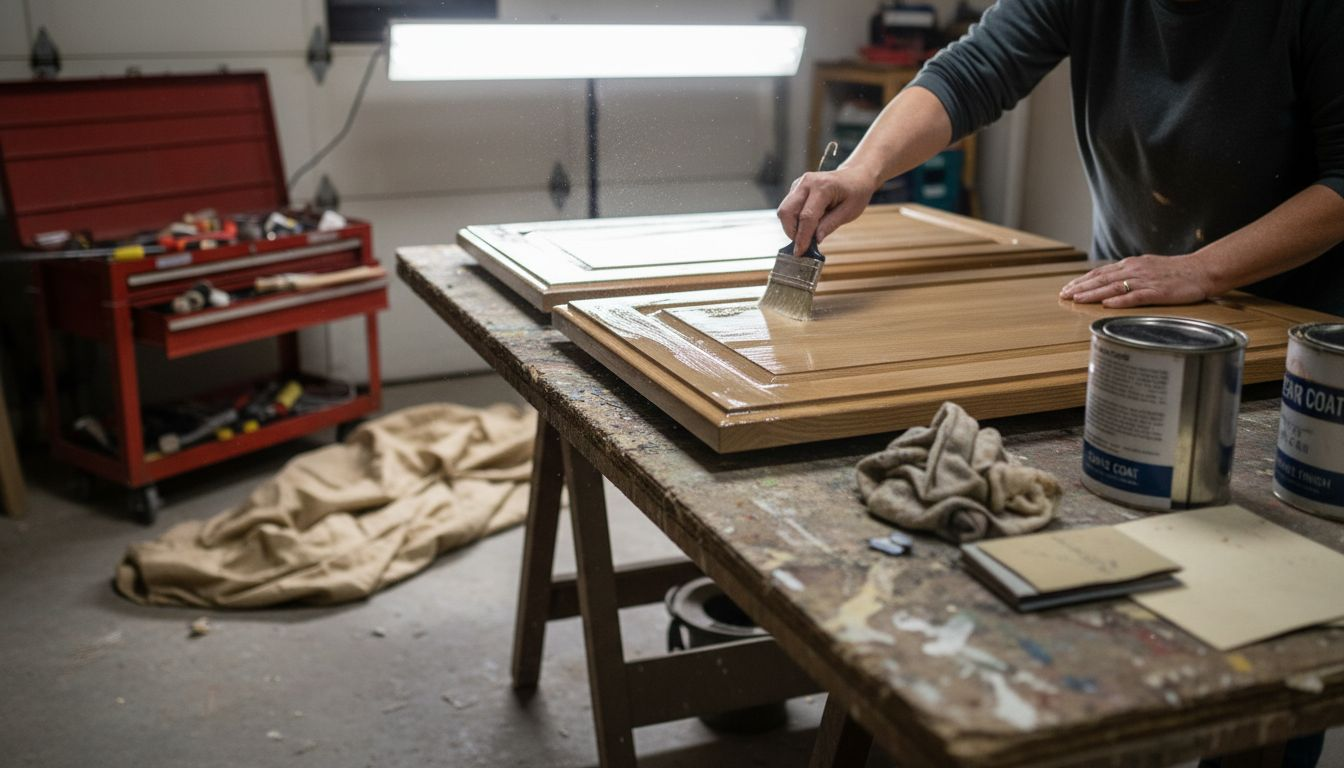
Lacquers create that factory-finished gloss you see on high-end cabinetry. They’re extremely durable, resist moisture effectively, and deliver the ultra-smooth finish homeowners love in modern kitchens.
Texture and Specialty Finishes
Textured finishes add visual interest and mask minor wear and scratches beautifully. Options include hand-applied textures, glazed effects, and distressed looks that hide daily use.
These finishes work exceptionally well in Ottawa kitchens because they camouflage the small dings and marks that busy families accumulate.
Here is a comparison of popular kitchen cabinet finish types and their core impacts:
Finish Type | Visual Effect | Durability Level | Maintenance Effort |
Matte Paint | Conceals flaws well | Moderate | High, gentle cleaning |
Semi-Gloss | Soft shine, modern look | High | Low, easy cleaning |
High-Gloss | Reflective, sleek look | Very high | Very low, shows marks |
Stain + Clear | Natural wood grain visible | Medium to high | Moderate, re-oiling may help |
Lacquer | Smooth, professional gloss | Very high | Very low, wipes clean |
Textured/Glazed | Rustic, hides scrapes | Moderate | Medium, dust can settle |
The best finish balances aesthetics with maintenance reality—choose based on how much cleaning effort you’re willing to invest monthly.
How to Choose Between Finish Types
Your kitchen’s actual use determines which finish works best:
High-traffic kitchens - semi-gloss or lacquer for easy cleaning
Show kitchens - high-gloss or lacquer for dramatic shine
Warm, natural style - stain with clear coat for character
Hide imperfections - matte, textured, or glazed finishes
Pro tip: Visit your local paint supplier and request samples of different finishes on actual wood. See how each sheen and texture looks in your kitchen’s lighting before committing to the entire project.
How Cabinet Finishes Impact Durability and Cleaning
Your cabinet finish does two critical jobs: it protects your investment and determines how much elbow grease you’ll spend maintaining them. A quality finish makes cleaning effortless; a poor one turns simple upkeep into a nightmare.
How Finishes Protect Your Cabinets
A proper cabinet finish acts as your wood’s bodyguard against the kitchen’s harshest enemies. Without it, moisture penetrates wood, causing swelling, warping, and eventual failure.
High-quality finishes shield cabinets from:
Moisture absorption that leads to swelling and mold
Water stains and discoloration from spills
Sunlight fading that dulls colors over years
Grease buildup that attracts grime
Physical scratches from daily contact
A high-quality finish repels water effectively and prevents permanent discoloration from common kitchen accidents like spilled juice or coffee.
The Durability Connection
Finish quality directly determines cabinet lifespan. Budget finishes peel, chip, and deteriorate within 3-5 years. Premium finishes protect cabinets for 10-15 years with proper care.
Ottawa’s climate makes this especially critical. Winter’s dry heating combined with summer humidity creates constant moisture stress. Cheap finishes can’t handle these swings.
Better finishes cost more upfront but save money long-term by eliminating early refinishing needs.
Cleaning Ease Varies by Finish Type
Glossy finishes (semi-gloss, high-gloss, lacquer) are cleaning champions. Stains wipe off easily without damaging the surface. They repel grease naturally, keeping cabinets looking fresh longer.
Matte finishes require gentler handling. Aggressive scrubbing can damage the coating. Fingerprints show more easily, requiring frequent light cleaning.
Textured finishes hide dirt beautifully but trap grime in crevices. Cleaning takes longer because you can’t just wipe and move on.
Choose finish gloss based on cleaning commitment:
High-gloss or lacquer - for busy families wanting easy maintenance
Semi-gloss or satin - for balanced appearance and moderate cleanup
Matte or textured - if you prefer hiding imperfections over frequent cleaning
Real Impact on Kitchen Life
A finish that wipes clean in 30 seconds saves you hours monthly. Understanding durable cabinet paint options helps you avoid frustration and early replacement costs.
Cabinets finished with premium lacquer or semi-gloss paint resist the daily abuse: splattering pasta sauce, sticky fingers, steam from boiling water. You clean once, they stay clean.
Cabinets finished with thin, cheap coatings show every splash immediately. You clean repeatedly because stains reappear within days.
Pro tip: Wipe spills immediately after they happen, regardless of finish type, and avoid abrasive scouring pads that scratch even premium finishes—use soft microfiber cloths instead.
Comparing Costs and Avoiding Mistakes
Cabinet costs vary dramatically based on materials and finishes. The cheapest option today often becomes the most expensive mistake tomorrow. Smart budgeting means understanding where money goes and what actually protects your investment.
Understanding Cabinet Cost Factors
Cabinet prices depend on several interconnected choices, not just one decision. Most Ottawa homeowners underestimate how these pieces fit together.
Key cost drivers include:
Material choice - solid wood costs more than engineered wood or MDF
Cabinet construction quality - solid frames last longer than particle board
Finish type and quality - premium lacquers cost more than basic paint
Customization level - stock sizes cost less than semi-custom or fully custom
Labor and installation - professional application costs more but delivers better results
Solid wood cabinets offer superior durability but command premium prices. Engineered wood options like plywood and MDF provide cost-effective alternatives when paired with quality finishes.
The False Economy of Budget Finishes
Choosing cheap finishes to save money upfront is like buying tires with no tread. You’ll pay far more replacing them than spending extra initially.
Selecting low-quality finishes results in premature cabinet failure and forces expensive replacements within years. Worse, cheap finishes fail during Ottawa’s harsh seasonal transitions when humidity swings stress the coating.
A quality finish costs 15-25% more but lasts 3-5 times longer. The math is simple: spending extra on finish saves money overall.
Choosing budget finishes to save money upfront guarantees higher long-term costs through early replacement and constant maintenance.
Common Mistakes That Cost Extra
Most homeowners make predictable errors that inflate costs:
Mistake #1: Underestimating maintenance costs. You budget for cabinet purchase but not for ongoing upkeep, repairs, and eventual refinishing.
Mistake #2: Ignoring Ottawa’s humidity challenges. Selecting finishes unsuitable for our climate leads to moisture damage, swelling, and mold within 3-4 years.
Mistake #3: Confusing material with finish quality. Expensive wood with cheap finish fails faster than modest wood with premium finish.
Mistake #4: Rushing the finish selection. Picking finishes without testing samples in your kitchen’s lighting and humidity causes regret after installation.
Smart Budgeting for Better Outcomes
Balance budget, durability, and maintenance by planning for the full cabinet lifecycle, not just purchase price.
Consider this approach:
Determine your realistic long-term kitchen budget
Allocate 30-40% to materials and construction
Allocate 30-40% to professional finishing and installation
Reserve 20-30% for maintenance, touch-ups, and future refinishing
Understanding finish and material costs prevents premature replacement and maintains kitchen aesthetics for decades rather than years.
Quality cabinets with proper finishes become investments. Budget cabinets with cheap finishes become expenses.
Pro tip: Request quotes that separate cabinet costs from finishing costs separately—this shows you exactly where money goes and makes it easier to upgrade finishes without replacing entire cabinets.
Choosing the Right Finish for Ottawa Kitchens
Ottawa’s climate is brutal on kitchen cabinets. Winter’s dry heating saps moisture while summer humidity floods the air. Your finish must handle both extremes without failing. Picking the right one transforms your kitchen from struggling to thriving.
Understanding Ottawa’s Unique Challenges
Ottawa homeowners face environmental pressures that don’t exist in stable climates. Temperature swings from minus 20 degrees Celsius in winter to plus 25 degrees in summer stress cabinet finishes constantly.
Additional challenges include:
Seasonal humidity shifts that cause wood expansion and contraction
Dry indoor heating that cracks and peels inferior finishes
Summer moisture that triggers mold and swelling
Salt air from winter road treatments near kitchens
Extended heating season requiring durable interior coatings
A finish suitable for mild climates fails miserably in Ottawa. You need coatings engineered for Canadian conditions, not generic options.
Use this table to understand how climate challenges in Ottawa affect cabinet finish choice:
Climate Factor | Potential Cabinet Issue | Best Finish Solution |
Dry winter heating | Cracking, peeling | Lacquer or moisture-resistant paint |
Summer humidity | Swelling, mold | High-quality semi-gloss or lacquer |
UV exposure | Fading, discoloration | UV-resistant clear coats |
Proximity to moisture | Repeated water contact | Durable, water-resistant finish |
The Ottawa Advantage: Moisture-Resistant Finishes
High-quality moisture-resistant paints and lacquers perform exceptionally well in Ottawa’s variable climate. These finishes repel the humidity swings that destroy lesser coatings.
Moisture-resistant finishes create a protective barrier that prevents wood absorption. This stops swelling, warping, and the mold growth that plagues poorly finished cabinets.
Choose finishes specifically formulated for Canadian climates—generic options won’t survive Ottawa’s seasonal extremes.
Best Finish Combinations for Ottawa Homes
Successful cabinet projects pair quality materials with appropriate finishes. The combination matters more than either choice alone.
Recommended combinations include:
Plywood or engineered wood + semi-gloss or lacquer = excellent durability
Solid wood + moisture-resistant paint = beauty with climate protection
Premium engineered wood + high-gloss lacquer = showroom look lasting years
Budget plywood + quality satin finish = best value for tight budgets
Pair durable materials with climate-appropriate finishes. Skip the combination of cheap materials with budget finishes—it’s a recipe for disaster.
Matching Finish to Your Kitchen’s Specific Needs
Your kitchen’s location within your home influences finish selection. An island kitchen near heat sources needs different protection than a galley kitchen.
Consider these factors:
Proximity to heat sources - kitchens near fireplaces need heat-resistant finishes
Humidity zones - cabinets near sink areas need maximum moisture protection
Traffic patterns - high-traffic kitchens benefit from gloss finishes that hide wear
Natural light exposure - sunny kitchens need UV-resistant finishes
The best cabinet paint finishes for modern Ottawa kitchens balance these competing demands while delivering the aesthetic you want.
Why Professional Guidance Matters
Choosing finishes requires understanding Ottawa’s specific climate pressures. Wrong choices waste money and force premature refinishing.
Professional cabinet painters know which finishes survive Ottawa winters and summers. They’ve seen what works and what fails in real kitchens across the city.
Pro tip: Visit homes in your Ottawa neighborhood that had cabinet refinishing done 5-10 years ago and ask owners how their finishes held up—real experience beats any salesperson’s pitch.
Elevate Your Ottawa Kitchen Cabinets with the Right Durable Finish
Choosing the best finish for your kitchen cabinets is more than a design decision. As the article explains, Ottawa’s unique climate challenges and daily kitchen use demand finishes that resist moisture, temperature swings, and wear. If you want cabinets that stay beautiful and last longer without constant maintenance or costly replacements, understanding finish options is just the first step. The real solution lies in expert application of premium finishes tailored to your home’s needs.
At Ottawa Cabinet Painting, we specialize in transforming your existing cabinetry with thoughtfully selected, moisture-resistant, and durable finishes that match Ottawa’s climate and your kitchen lifestyle. Our meticulous prep work and use of high-quality paints and lacquers ensure a silky smooth finish that protects against humidity, stains, and daily wear. You avoid the chaos and expense of full renovation, preserving your kitchen’s layout while upgrading its appearance and durability.
Don’t wait for costly damage to force a redo. Protect your cabinets with finishes designed to withstand Ottawa’s environment. Explore how our professional cabinet painting and refinishing services deliver long-lasting beauty in just about ten days. Ready for a kitchen that looks high-end and feels warm and functional every day? Contact us now to get your personalized quote and experience the difference quality finishes can make.
Frequently Asked Questions
What is the best finish for kitchen cabinets in a humid climate?
High-quality moisture-resistant finishes such as semi-gloss and lacquer work best in humid climates, as they repel humidity and prevent issues like swelling and mold.
How do I maintain the finish on my kitchen cabinets?
Regular cleaning is essential for maintaining cabinet finishes. Use a soft microfiber cloth for general cleaning and avoid abrasive materials that can scratch the finish. Additionally, consider periodic touch-ups and reapplication of protective coatings as needed.
What are the differences between paint and stain finishes for cabinets?
Paint finishes provide a uniform, modern look and are available in various sheens that affect both appearance and maintenance. Stain finishes enhance the natural grain of wood, offering a warm aesthetic while providing basic protection. Your choice should depend on your desired look and how much wood grain you wish to showcase.
How do different finish types impact cabinet durability?
The type of finish directly affects cabinet durability. Premium finishes like high-gloss and lacquer offer excellent protection and can last 10-15 years with proper care, while budget options may deteriorate within 3-5 years, leading to costly replacements.
Recommended
Comments